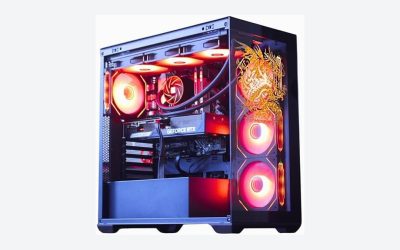
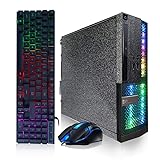
- Top Pick: STGAubron Gaming PC Desktop,Core I7,RX 580 8G,16G RAM,512G SSD
- Best Value: YAWYORE Gaming PC Desktop Computer AMD R5 5600GT 16GB 1TB NVMe Towers WiFi
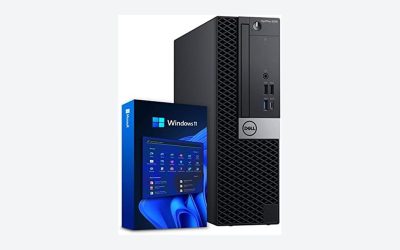
- Premium Choice: Dell PC Treasure Box RGB Desktop Computer Intel Quad Core I5 up to 3.6G, 16G, 512G SSD, WiFi & Bluetooth, RGB Gaming PC Keyboard & Mouse, DVD, Windows 11 Pro (Renewed) (Diamond Black)
Affiliate disclosure: As an Amazon Associate we earn from qualifying purchases. This post contains affiliate links — if you buy through them we may earn a small commission at no extra cost to you. This never affects our recommendations.
- Best Beginner Pre-Built: iBUYPOWER Y40 — Plug and Play Starter
- Best Starter Build: Ryzen 5 7600 + RTX 4060 — DIY Beginner Build
- Budget Beginner Option: Ryzen 5 5600 + RX 6700 XT — Previous Gen Value
- PC Gaming vs Console: Why Switch?
- What Every Beginner Needs to Know
- Frequently Asked Questions
- Related Articles
- Related Articles
Building or buying your first gaming PC feels overwhelming — hundreds of components, confusing acronyms, and endless conflicting advice. This guide cuts through the noise with clear recommendations for beginner gaming PC builds and pre-built systems at every budget. Whether you want to plug in and play immediately or want the satisfaction of building your own system, there’s a beginner-friendly path to PC gaming that fits your goals and budget.
As an Amazon Associate we earn from qualifying purchases at no extra cost to you.




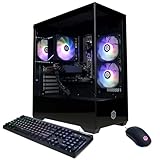
In a hurry? See the top-rated Gaming PC for Beginners deals available right now:
🛒 Check Gaming Pc For Beginners Prices on Amazon →🛒 Best Price Today on Amazon
Prime members get fast, free shipping on everything above, plus member-only deals. New members get a 30-day free trial — cancel anytime.
Start 30-Day Prime Free Trial →See Today’s Amazon DealsBest Beginner Pre-Built: iBUYPOWER Y40 — Plug and Play Starter
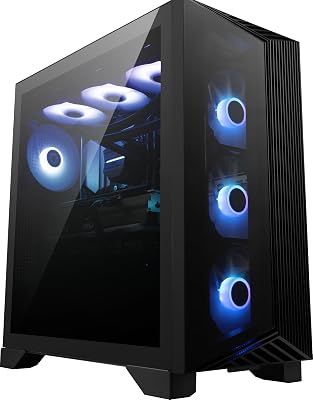
For beginners who want zero assembly complexity, iBUYPOWER’s Y40 series provides a complete, tested gaming system ready to plug in and play within minutes of unboxing. Their entry configurations include a Ryzen 5 or Intel Core i5, 16GB DDR4/DDR5, an RX 7600 or RTX 4060 GPU, and 1TB NVMe SSD — sufficient hardware for 1080p gaming at high settings in modern titles. Windows 11 Home is pre-installed. Best beginner gaming PC pre-built option for those who want immediate gaming without assembly.
Best Starter Build: Ryzen 5 7600 + RTX 4060 — DIY Beginner Build
Building this combination provides better components for the money compared to equivalent pre-built pricing and teaches the fundamental PC building skills that make future upgrades and maintenance straightforward. Ryzen 5 7600 handles 1080p gaming without CPU bottleneck, RTX 4060 delivers 60–144 FPS in modern titles at 1080p high settings, and the B650 AM5 platform ensures future Ryzen upgrade compatibility. First-time builders who follow a step-by-step YouTube build guide complete this system in 3–4 hours. Best beginner self-build gaming PC for those comfortable with light assembly.
Budget Beginner Option: Ryzen 5 5600 + RX 6700 XT — Previous Gen Value
Previous-generation AM4 components deliver strong 1080p gaming performance at lower prices than current-gen equivalent hardware. The Ryzen 5 5600 on B550 motherboard with RX 6700 XT handles the majority of modern game titles at 1080p ultra settings at 60+ FPS. B550 AM4 boards and Ryzen 5000 CPUs are well-documented — beginner build guides are abundant and troubleshooting resources are comprehensive. Best budget beginner gaming PC build using value previous-gen components.

PC Gaming vs Console: Why Switch?
PC gaming offers advantages that consoles cannot match: upgradeability (replace GPU or CPU without replacing the entire system), higher frame rates (144Hz, 165Hz, 240Hz gaming beyond console 60Hz limits), mouse precision for FPS games, access to a larger game library (including older titles), free online multiplayer (no subscription required), and the ability to use the same machine for work and gaming. Initial cost is higher but long-term cost efficiency favors PC as components and games on sale routinely offer better value than console alternatives.
What Every Beginner Needs to Know
Key Components Explained Simply
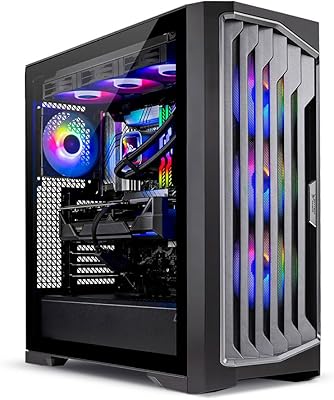
CPU (Processor): The brain of the PC. Higher single-core speeds = better gaming. AMD Ryzen and Intel Core are the two brands. GPU (Graphics Card): Renders game visuals. The most important component for gaming performance. NVIDIA RTX and AMD RX are the brands. RAM: Short-term memory. 16GB is the gaming minimum in 2025. Storage (NVMe SSD): Where games are installed. 1TB minimum, 2TB recommended. Motherboard: Connects everything together. Must match your CPU socket. PSU (Power Supply): Provides power to all components. Never cheap out here.
Resolution and Frame Rate Goals
1080p/60FPS: entry gaming — any GPU from $200+ achieves this in most titles. 1080p/144FPS: smooth competitive gaming — RTX 4060 or RX 7600 class GPU required. 1440p/60–144FPS: mainstream enthusiast gaming — RTX 4070 or RX 7700 XT. 4K/60FPS: premium gaming — RTX 4080/4090 or RX 7900 XTX territory.
Frequently Asked Questions
How much should a beginner spend on a gaming PC?
$600–800 builds a capable 1080p gaming PC. $800–1200 achieves smooth 1080p high-refresh-rate or 1440p gaming. $1200–1600 covers 1440p high refresh rate with headroom. Beyond $1600, you’re investing in 4K gaming or future-proofing rather than baseline need. Most beginners are well-served in the $700–1000 range.
Is it better to buy a pre-built or build your own?
Pre-built: easier, zero assembly risk, immediate warranty support, but costs 10–20% more than equivalent DIY components. DIY: saves money, educational, upgradeable, but requires research and 3–4 hours of assembly time. For beginners with patience and access to YouTube build guides, DIY is the better long-term investment. For those wanting immediate gaming with zero technical involvement, pre-built is completely valid.
Do I need Windows for gaming?
Most games require Windows — Steam’s Proton layer has improved Linux compatibility significantly, but many competitive titles (Valorant, PUBG) don’t support Linux due to anti-cheat restrictions. Windows 11 Home ($100–130 retail, or included with most pre-builds) remains the standard gaming OS. Windows 10 continues to receive security updates through October 2025.
Related Articles
Looking for more on this topic? Browse the hand-picked guides below — each one applies the same scoring rubric used in this review.