

RTX 5070 Ti Graphics Card Review 2026: The 1440p Sweet Spot?
The GeForce RTX 5070 Ti is NVIDIA’s upper mid-range card from the Blackwell generation. It sits between the RTX 5070 and the RTX 5080 and targets players who want strong 1440p performance at high refresh rates, with enough headroom to handle demanding ray-traced games. This guide explains who the card suits, what matters in its specification, and how it compares with its closest rivals, so you can decide whether it deserves a place in your build.
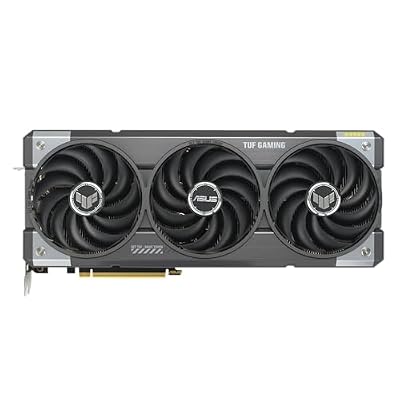
Start by checking the listing above. Partner RTX 5070 Ti cards differ in cooler design, factory clocks, card length and warranty, and the card shown may be a close match rather than the exact model you want. Confirm the exact model name, dimensions and price on the card itself. The buying logic in this guide holds for the whole RTX 5070 Ti family, so it stays useful whichever board you pick.


Who the RTX 5070 Ti Is Built For
The RTX 5070 Ti is for the gamer with a 1440p monitor who wants more than the basics. At that resolution it can drive high settings and high refresh rates in most current titles, and it leaves room for ray tracing with upscaling turned on. It is also a reasonable choice for 4K players who accept lower settings or rely on upscaling, although the RTX 5080 and 5090 are better suited to native 4K.
The card is less compelling if your monitor is 1080p. At that resolution a cheaper card will hold most titles at high frame rates, and the extra headroom goes unused. It is also a weaker choice if you mainly play esports titles, where a faster CPU and a high-refresh monitor often matter more than the graphics card.
Specs That Shape the Real Experience
The RTX 5070 Ti carries 16GB of GDDR7 memory. That capacity is the main reason it looks attractive for the next few years, because newer games and high-resolution texture packs use more VRAM than older titles did. Sixteen gigabytes gives comfortable room at 1440p, while 12GB cards can run into limits in some demanding games at high settings.
Board power is rated at about 300W, which is manageable for a mid-to-high-end system. NVIDIA’s guidance points to a 750W power supply for the card, and that is a sensible minimum. A quality 750W unit with solid 12V output is enough for many builds, but a stronger CPU or extra drives may push you toward 850W. Do not buy a budget power supply just because the wattage matches.
The card also supports DLSS with frame generation in supported games. Upscaling is the feature most buyers will use every day, because it lets the card keep frame rates high while ray tracing is enabled. Frame generation can raise the displayed frame rate, but it adds latency, so it is best used when the base frame rate is already comfortable.
1440p Performance: What to Expect
This guide does not publish frame-rate numbers. Results vary with the game, the driver, the CPU, the memory setup and the in-game settings, so a single figure from an article is rarely useful for your own system. What you can expect is a card that handles 1440p high-refresh gaming well in most titles, with ray tracing enabled through upscaling in many of them.
The main trade-off is at the highest settings in the most demanding ray-traced games. There, the RTX 5070 Ti will need upscaling, and some players will prefer to lower one or two settings to hold a stable frame rate. That is normal for a card in this class and does not make it a poor purchase. Many players never notice the difference during play.
Thermals depend heavily on case airflow. A card in this class usually runs cooler and quieter than the flagship models, but a closed case with poor intake will still raise temperatures. If you want to check your numbers after building, our guide on how to check GPU and CPU temperature walks through the monitoring steps. For users who want to tune the card, our notes on undervolting an RTX 5070 for cooler temps cover the same architecture and the cautious approach to take.
RTX 5070 Ti Against Its Closest Rivals
Three cards are the most common comparison points: the RTX 5070, the RX 9070 XT and the RX 9070. The table below shows how they line up. Price is given as a reminder to check the live listing, because street prices shift.
| Card | Memory | Typical board power | Best for | Typical price range |
|---|---|---|---|---|
| RTX 5070 Ti | 16GB GDDR7 | About 300W | 1440p high refresh with ray tracing | Check current price |
| RTX 5070 | 12GB GDDR7 | About 250W | 1440p with a tighter budget | Check current price |
| RX 9070 XT | 16GB GDDR6 | About 304W | Raster-heavy 1440p gaming | Check current price |
| RX 9070 | 16GB GDDR6 | About 220W | Value 1440p and efficient builds | Check current price |
RTX 5070 Ti or RTX 5070
The RTX 5070 is cheaper and uses less power, but it carries 12GB of memory instead of 16GB. For 1440p play in lighter titles that difference may never show. In newer, heavier games at high settings, the extra memory on the 5070 Ti gives it more room to breathe and makes it the safer choice if you plan to keep the card for several years. If the budget is tight, our guide to RTX 5070 versus RTX 5070 Ti sets out the trade-off in more detail.
RTX 5070 Ti or RX 9070 XT
The RX 9070 XT is a strong rival in raster performance and has the same 16GB memory size. The choice between the two often comes down to the games you play, the features you use and the price on the day you buy. NVIDIA’s advantage lies in ray tracing support and DLSS, while AMD’s cards use FSR upscaling. Our comparison of RTX 5070 and RX 9070 and our RX 9070 XT review give a fuller picture.
Buying Checklist
Before you buy an RTX 5070 Ti, confirm five things. First, make sure your monitor is 1440p or 4K, since a 1080p display wastes most of the card. Second, check your power supply and its 12V rail capacity against the 750W guidance. Third, measure the card length and thickness against your case. Fourth, confirm that your CPU is not so old that it will hold the card back in your favourite games. Fifth, choose the partner model based on warranty, cooler design and price.

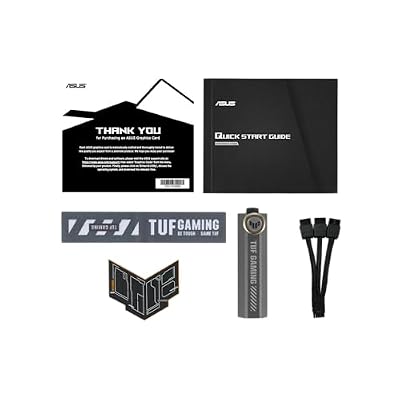
ASUS TUF Gaming GeForce RTX 5070 Ti 16GB GDDR7 OC Edition Graphics Card | PCIe 5.0, HDMI/DP 2.1, 3.125-slot, Military-grade Components, Protective PCB Coating, Axial-tech Fans




As an Amazon Associate we earn from qualifying purchases. Product prices and availability are accurate as of the date/time indicated.
Buying from a reputable seller matters for any graphics card, and especially for a card that sells at a noticeable premium above the base model. Check the warranty length, the return window and whether the warranty is tied to the original buyer. Keep the original packaging for a few weeks in case you need to return the card for any reason.
If you are still choosing a card for a smaller budget, the best GPUs for 1440p gaming guide compares more options at different price points, and the best graphics card for 1440p gaming roundup covers the wider field.
For more context, see our RTX 5070 Ti review and the graphics card hierarchy, which places this card among the rest of the range.
Frequently Asked Questions
Is the RTX 5070 Ti good for 1440p gaming?
Yes. The card is well matched to 1440p high-refresh gaming, and its 16GB of memory gives it room for demanding titles. Most players will get a smooth experience at high settings with upscaling enabled, and very few will need more than this class of card for 1440p.
Does the RTX 5070 Ti need a 750W power supply?
NVIDIA recommends 750W for the card, which is a sensible minimum. A good 750W unit with solid 12V output works for many builds. If your CPU draws a lot of power or you run many drives and peripherals, choose an 850W unit for extra headroom.
Is 16GB of VRAM enough for the next few years?
For 1440p gaming, 16GB is a comfortable amount for the current generation of games. Nobody can predict every future title, but a card with 16GB is less likely to hit memory limits than a 12GB card at the same settings. That is the main reason many buyers prefer the 5070 Ti over the base 5070.
Should I buy the RTX 5070 Ti now or wait?
If your current card struggles at 1440p and you want a long-lived upgrade, buying now is reasonable. If your current card is adequate, waiting costs you nothing. Check the live price before you buy, because prices move and a deal that looks good today may not last.







