

Gigabyte AORUS RTX 5090 Review 2026: Is the AORUS Flagship Right for Your Build?
The Gigabyte AORUS brand is Gigabyte’s premium graphics card line. It focuses on large cooling systems, strong build quality and a styling direction that stands out in a case with a glass side panel. Applied to the GeForce RTX 5090, the AORUS design gives buyers the flagship Blackwell GPU in a package aimed at enthusiasts who care about cooling, component quality and the look of the finished system. This guide explains who the AORUS RTX 5090 suits, what to check before buying and how it compares with other flagship partner cards.
The card in the listing above may be a close match for the AORUS RTX 5090 rather than the exact variant you want. Gigabyte sells several RTX 5090 designs under the AORUS and related names, and they differ in cooler design, factory clocks and card length. Check the exact model name, dimensions, warranty and price on the card itself. The advice in this guide applies to the AORUS RTX 5090 family in general, so it holds whichever model you choose.


Who the AORUS RTX 5090 Suits
The AORUS RTX 5090 suits a builder who wants the top GeForce card and cares about cooling and component quality. It is a good match for a 4K gamer who plays demanding ray-traced titles and wants a stable, well-cooled card in a large case. It also fits a creative professional who uses GPU-accelerated rendering or local AI workloads and wants the 32GB of memory from a brand with a reputation for thorough cooling designs.
It is less suitable for a buyer who needs a compact card or a tight budget. The 5090 is large and expensive in any form, and the AORUS models sit toward the upper end of the partner market. If your case is small or your priorities are price per frame, consider a card in the RTX 5080 class instead.
Specs and What They Mean
The RTX 5090 carries 32GB of GDDR7 memory on a 512-bit memory bus. That capacity does not change between partner models, so the AORUS card gives you the same memory headroom as any other RTX 5090. The extra memory is most useful for 4K gaming with high-resolution textures, large projects in creative applications and local AI models that need to fit in VRAM.
Board power is rated at 575W for the reference design, and partner boards may run slightly different limits depending on factory settings. NVIDIA recommends a 1000W power supply for the RTX 5090. That recommendation applies to the AORUS card as well, and a quality 1000W unit with good 12V output is the right choice for a high-end system.
The power connector is a 12V-2×6 design. Seat it fully at the card end, avoid sharp bends close to the connector and check the seating again after you move the case. Do not use a damaged adapter or a cheap cable, because a poor connection at this power level is a real risk.
Cooling, Noise and Thermal Behaviour
Cooling is where a premium AORUS design earns its place. Large heatsinks and multiple fans help keep the core and memory temperatures under control during long sessions, and they can keep fan noise lower than a smaller cooler working harder. How much this matters depends on your case airflow. In a well-ventilated case the cooler has room to do its job, while in a closed case the card can still run warm regardless of its design.
Check fan behaviour and fan curves in the software that ships with the card, and set a curve that suits your priorities. A more aggressive curve keeps temperatures lower, while a gentler one keeps the room quieter. Neither is wrong, but the right choice depends on how loud you can tolerate the system under load.
GIGABYTE GeForce RTX 5080 Gaming OC 16G Graphics Card, WINDFORCE Cooling System, 16GB 256-bit GDDR7, GV-N5080GAMING OC-16GD Video Card


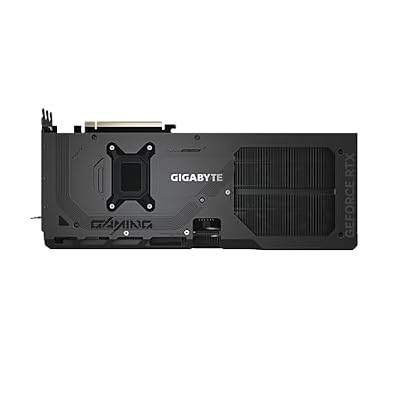


As an Amazon Associate we earn from qualifying purchases. Product prices and availability are accurate as of the date/time indicated.
Monitor the card after you build. Our guide on how to check GPU and CPU temperature explains how to watch core temperature, hot spot and fan speed over a long session, so you can tell whether the cooler is coping well.
Case, Power and Installation Checklist
Measure your case before you order. Check the card length, slot thickness and height, and confirm there is room for the power cable at the card end. A large AORUS card can block a front fan or touch a drive cage in a tight case. A large case with strong front intake and good exhaust is the safest pairing for a card of this size.
Check the power supply next. A 1000W unit from a reputable manufacturer, with solid 12V output and a clean 12V-2×6 cable, is the correct starting point. Our roundup of the best 1000W power supplies for RTX 5090 builds lists options worth considering.
Plan the CPU cooler at the same time as the card. A high-end processor and a flagship GPU generate a lot of heat together, and the case must move that heat out. Our overview of CPU coolers for RTX 5090 builds helps you match cooling to the rest of the system.
AORUS RTX 5090 Against Other Flagship Cards
The table below compares the AORUS RTX 5090 with the reference RTX 5090, a rival partner card and the RTX 5080. Prices are a reminder to check the live listing, because flagship prices move often.
| Card | Memory | Typical board power | Best for | Typical price range |
|---|---|---|---|---|
| Gigabyte AORUS RTX 5090 | 32GB GDDR7 | About 575W | Premium cooling and build quality | Check current price |
| RTX 5090 (reference design) | 32GB GDDR7 | About 575W | Buyers who want the base flagship | Check current price |
| ASUS TUF RTX 5090 | 32GB GDDR7 | About 575W | Quiet, durable flagship performance | Check current price |
| RTX 5080 | 16GB GDDR7 | About 360W | High-end 4K or strong 1440p at lower cost | Check current price |
AORUS RTX 5090 or ASUS TUF RTX 5090
The two cards use the same flagship core and the same memory. The choice comes down to cooler design, styling, warranty terms and price on the day you buy. Compare the cooler specification on each listing and check the warranty in your region. Our best GPU for gaming guide covers cheaper alternatives in more depth.
AORUS RTX 5090 or RTX 5080
The RTX 5080 costs less, draws less power and fits into smaller cases more easily. For most 1440p players and many 4K players, it is the more practical purchase. Choose the AORUS RTX 5090 when you need the 32GB of memory, the highest 4K headroom or the creative workload benefits. Our RTX 5080 review explains the smaller card’s strengths.
Buying Checklist
Before you buy, confirm the case fits, the power supply is 1000W or more from a trusted brand, and the monitor can use the performance. Check the warranty length, the seller’s return policy and whether the warranty is tied to the original buyer. Keep the packaging, invoice and serial number until you are satisfied the card runs cool and stable in your system.
Support the card properly once it is installed. A heavy flagship card should not rely on the motherboard slot alone, so use the support bracket if your case includes one. This reduces stress on the slot and the power connector over time. Check the connector seating after the first few sessions, since a card that shifts slightly can loosen the connection.
If you are comparing flagship options more broadly, the best GPU for 4K gaming guide and the RTX 5090 review on this site give useful context on how the 5090 performs against other top-end choices.
If a flagship is more than your build needs, our best graphics card for 1440p gaming guide and our RX 9070 XT review show cheaper cards that still play most titles well.
Frequently Asked Questions
Is the Gigabyte AORUS RTX 5090 better than the reference card?
It has the same core and memory as the reference RTX 5090. The main differences are cooler design, factory clock settings and build quality. Check the specific model’s clock speeds and cooler specification before you decide.
How much power supply does the AORUS RTX 5090 need?
NVIDIA recommends a 1000W power supply for the RTX 5090, and that applies to the AORUS model. Choose a quality unit with solid 12V output and a properly seated 12V-2×6 cable.
Is the AORUS RTX 5090 quiet under load?
Noise depends on the cooler, the case and the fan curve you set. A large cooler can keep fans gentle at moderate loads, but the result varies, so check measurements under sustained load and set a fan curve that suits your tolerance.
Does the AORUS RTX 5090 fit in a standard case?
Many standard cases can hold a flagship card, but you should measure first. Check the card length, slot thickness and height, and confirm the front fans and drive cages are not blocked. A large case with strong airflow is the safest choice.







