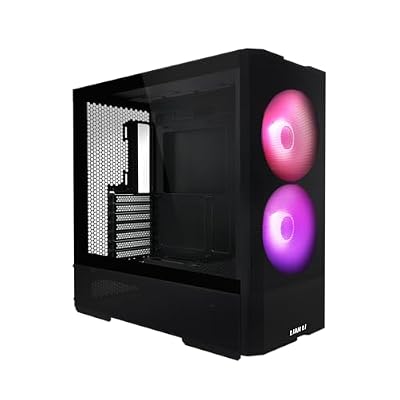
FormD T1 SFF Case Review 2026: What to Check Before You Buy a Small Form Factor Case
If you are searching for a FormD T1 SFF case, you want a compact chassis that holds a full gaming system without taking over your desk. Small form factor cases are harder to build in than full towers, so the choice matters for cooling, GPU fit and power supply options. This guide walks through what a FormD T1 style SFF case needs to deliver in 2026 and how to judge a listing before you spend money.
This is a buying guide, not a detailed research. We have not built in this case, and we could not confirm that a product sold under this exact name is a released model with published dimensions or cooling specs. The hero listing below is the closest match we found for the query. Treat the card as the source of truth for the model, size and price, and check the seller’s spec sheet before ordering. Everything in this article applies to small form factor cases in general, so the advice holds even if the listing turns out to be a different chassis.
What a Small Form Factor Case Has to Do Well
An SFF case is defined by its volume and its board support, not by a fixed size. Most builds in this class use a Mini-ITX motherboard, which measures 170 x 170mm. That single board size drives almost every other decision: how many expansion slots you get, how long a graphics card can be, how much room the CPU cooler has, and which power supply fits. A case that handles Mini-ITX well still has to give the graphics card enough clearance and the air enough path to leave the chassis.
The three things that most often go wrong in a small build are GPU length, CPU cooler height and power supply format. Many compact cases list a maximum graphics card length, and that number varies widely from one chassis to another. Check it against the exact card you plan to buy, not the model name on the box. Cooler height works the same way: a tall tower air cooler can conflict with the top panel or a radiator, so compare the stated clearance with the cooler’s height. Finally, many SFF cases require an SFX or SFX-L power supply rather than a standard ATX unit, which narrows your options and can affect price.
Cooling Layout in a Compact Chassis
Heat is the main enemy of a small build. A compact case holds less air and has less surface area for passive dissipation, so the fans have to move air efficiently through the whole machine. Look for a front or bottom intake that can take a 120mm or 140mm fan, a clear exhaust path at the rear, and a top or side vent for hot air. Mesh panels generally breathe better than solid glass, but a well-designed glass panel with ventilation can still work. The trade-off is simple: more open airflow usually means more dust and slightly more noise.
Power Supply and Cable Routing
Because SFF cases are tight, cable management is not optional. Modular power supplies help, and so does choosing a unit with a short cable run to the board. Plan the route before you install the motherboard. A tidy build also makes it easier to clean dust filters and to swap a component later. If the case calls for an SFX unit, check its wattage and efficiency rating against your GPU’s power draw, and leave headroom for future upgrades.
FormD T1 SFF Case Comparison by Class
The table below groups SFF cases by what they are built for. It uses broad categories rather than model-by-model claims, because listings in this segment change often. Use it to decide which class fits your build, then compare the exact chassis on its spec sheet.
| Case class | Best for | Typical trade-off | Typical price range |
|---|---|---|---|
| Ultra-compact mesh-front SFF | Maximum cooling airflow in a small footprint | Tight GPU clearance and more dust | Check current price |
| Premium SFF with full-length GPU support | High-end cards in a compact chassis | Larger volume and fewer compact options | Check current price |
| Glass-panel SFF | Showcase builds with visible components | Panel can limit airflow unless vented | Check current price |
| Budget SFF chassis | First small build on a tighter budget | Fewer fan slots and basic cable management | Check current price |
If you are still deciding on the form factor itself, our guide to ATX vs micro-ATX vs Mini-ITX motherboards explains the size trade-offs in detail. For a wider view of compact options, the best ITX and mini gaming cases roundup compares chassis across price tiers.
Matching the Case to Your Components
Graphics Card Length and Thermals
A compact card with a large cooler can be the hardest part to fit. If you plan to run a high-power GPU, the cooler design matters as much as the card length. Air-cooled cards with thick heatsinks need more intake and exhaust area than slim designs. Our notes on undervolting a current NVIDIA card for cooler temperatures show one way to reduce heat without changing the case, and that can make a tight SFF build more comfortable to run.
CPU Cooler Height and Radiator Support
Choose the cooler after you have the case dimensions in hand. Low-profile tower coolers suit most compact chassis, while top-mounted radiators need a clear mount and enough room for the tubes. Our roundup of air CPU coolers for gaming covers the height and performance trade-offs, and the budget AIO liquid cooler guide explains when a radiator is worth the extra space.
Build Planning for a Small Chassis
A compact build rewards planning. Start with the motherboard and power supply, then check the graphics card length, then the cooler, and only then the storage layout. Many builders reverse this order and find that the card no longer fits. Our guide to how to build a gaming PC in 2026 walks through the order of assembly, and the Mini-ITX gaming PC build guide shows a complete parts list for a small chassis.
Plan the storage too. Compact cases often have limited drive mounts, so count your M.2 slots on the board and any SATA drive bays before you buy. A fast NVMe drive is usually the easiest storage choice in a small build. If you want to compare drives, our overview of the best gaming SSDs lists the main options by speed and price.
Who Should Buy an SFF Case Like This?
An SFF case is a good match for people who want a small desk footprint, a clean look and a system they can carry to a LAN event or move between rooms. It is a poor match for anyone who wants to run a very large GPU with a high-wattage CPU and no compromises on temperatures. In that case a mid-size or full-size chassis will give you more room and more cooling options, and you will spend less time tuning airflow.
If you are not sure whether a small build is worth the trade-offs, our best mini gaming PC guide compares finished compact systems with custom builds. The best gaming PC cases under 200 list is useful if you want a larger chassis on a budget instead.
Top Picks for a Small Form Factor Build
Small builds need compact parts that fit tight spaces. These picks cover a case, an SFX power supply and two low profile coolers.
JONSBO C6-ITX Mini ITX Mesh Case
A handled mesh Mini ITX case with a compact footprint. It suits a portable build and gives airflow through the mesh panels.
As an Amazon Associate we earn from qualifying purchases at no extra cost to you.

LIAN LI SP750 V2 750W SFX Power Supply
An SFX unit rated 80 Plus Gold. Compact cases often need this size of power supply, and 750W leaves room for a strong graphics card.

Noctua NH-L9x65 chromax.Black Low-Profile Cooler
A low-profile cooler with a 65mm height in a black finish. It fits tight cases with limited clearance and is known for quiet operation.

Thermalright AXP90 X36 Low Profile ITX Cooler
A low-cost cooler at just 36mm tall. It suits very slim cases where even a 65mm cooler would not fit.
JOYJOM Aluminum Mini ITX Case with PCIe 3.0 Riser
A compact aluminum Mini ITX case that includes a PCIe 3.0 riser. It is a lower-priced route into small builds, and the riser helps with layout.

In small cases, measure everything twice; cooler height, power supply length and card thickness all decide whether the build closes.
Frequently Asked Questions
Is a FormD T1 SFF case a good choice for a high-end GPU?
It depends on the card and the chassis listing you buy. Check the maximum GPU length and the cooler clearance on the spec sheet, then compare them to the exact card’s dimensions. A high-power card needs good intake and exhaust, so plan for airflow before you buy.
Do I need an SFX power supply for a small form factor case?
Many SFF cases are designed around SFX or SFX-L units, but not all of them. Confirm the supported power supply format on the spec sheet before buying. If the case takes an SFX unit, make sure its wattage and efficiency rating suit your components.
Can I run a tower air cooler in a Mini-ITX SFF case?
Often yes, but only with a low-profile or short tower model that fits under the case’s stated cooler height limit. Measure the cooler against the chassis clearance, and check that the side or top panel will still close with the cooler installed.
Is this case suitable for a first build?
An SFF build is harder than a standard mid-tower build because the space is tight. If this is your first PC, consider a mid-size chassis first. If you still want a compact system, choose a case with generous documentation and a clear parts-compatibility list.
Final Recommendation
For most buyers, the right SFF case is the one whose spec sheet confirms your exact GPU length, cooler height and power supply format, with enough airflow for your CPU and graphics card. Rank your priorities before you shop: fit first, cooling second, looks third. Use the hero listing as a starting point, verify its dimensions against your parts, and compare it with the class guidance above. If the numbers do not line up, choose a larger chassis rather than forcing a tight fit, because a case that is slightly bigger than you need will always run cooler and be easier to build in.