Best ITX Motherboard Gaming 2026: Mini-ITX Buying Guide
A Mini-ITX motherboard is the smallest standard desktop board, measuring about 170 by 170 millimetres. It makes compact gaming PCs possible, but it also sets firm limits. A Mini-ITX board has one memory pair, one main PCIe slot and fewer rear ports and M.2 connections than larger boards. This guide explains what a gaming ITX board can and cannot do, how to choose one for a small build, and which trade-offs matter most before you buy.
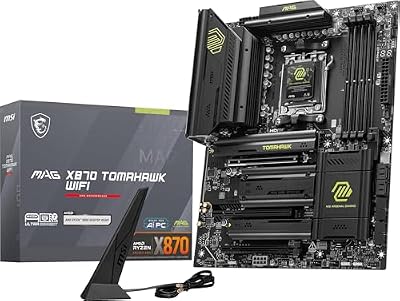
This is a buying guide, not a thermal or benchmark test. We have not measured every board in the cards below, and small builds depend heavily on cooling, power supply and graphics card choice. Use the product cards as a starting point, then check the socket, memory speed, M.2 layout, power delivery and case compatibility on the product page. The hero listing is the closest match to the ITX gaming search, so read it as a representative of the size class rather than a guarantee of one specific model.
What Mini-ITX Means for a Gaming Build
Mini-ITX lets you build a complete gaming PC in a small chassis. It suits a desk, a living room or any space where a full tower would be out of place. The graphics card, processor and cooling still decide most of the performance. A well-designed ITX build can handle modern games at sensible settings, provided the cooling and power are planned carefully.
The limits are real. One PCIe slot means one graphics card and no room for add-in expansion cards. Two memory slots mean that you cannot upgrade to four sticks later. Fewer M.2 slots mean less room for extra storage. Many ITX boards also have fewer rear ports. If your plans include more drives or a second card, a larger board is the better choice.
Plan the Case, Cooler and Power First
Small builds are about fit and airflow. Choose the case first, then the graphics card, then the cooler and power supply. Measure the maximum graphics card length and the cooler height, because compact cases often limit both. A short power supply in a compact form factor can help with cable management. A poor airflow design can turn a strong graphics card into a loud and hot system.
Graphics card and thermal planning
Many compact cases limit card length to a few hundred millimetres, and some cards need more space than the case allows. Check the manufacturer’s dimensions and the case’s clearance. Thermal planning is also important. A board with a larger heatsink over its power stage and a compact cooler with good airflow can make a difference in long sessions.
Memory, Storage and Ports on Mini-ITX
Most Mini-ITX boards use two memory slots. That is enough for a standard gaming kit, but it means you need to buy the right capacity from the start. Check the memory speed list on the product page, because small boards can have different memory routing from larger models. For storage, most ITX boards offer at least one M.2 slot, and some include two. Check whether the second slot shares lanes with a port.
Rear I/O and networking
Mini-ITX boards usually have fewer rear ports than ATX boards. Count the USB ports, video outputs and networking options you need. If you use many peripherals, a USB hub or a board with a larger rear panel may be useful. Wi-Fi and multi-gigabit Ethernet are available on some models, so check the specifications before you assume either.
Comparison Criteria for Mini-ITX Boards
The table below lists the criteria that matter most for small builds. It uses general descriptions and ranges rather than fixed prices, because retail prices change often and vary by region.
| Criterion | What to check | Why it matters | Typical price range |
|---|---|---|---|
| Board size | 170 by 170 mm class | Must fit the case | Varies by model |
| Memory | Two slots and qualified kits | Capacity planning from day one | Check current price |
| Power stage | Heatsink and reviews under load | Stable performance in a small case | Often a premium feature |
| M.2 slots | Count and lane sharing | Storage expansion | Varies by model |
| Graphics clearance | Maximum card length in the case | Choice of graphics card | Check your case |
| Rear I/O | USB and video outputs | Peripheral needs | Varies by model |
Who Should Buy a Mini-ITX Board
Mini-ITX suits buyers who want a compact gaming PC and accept the trade-offs. It is a strong choice for a desk-sized build, a living room PC or a project where size matters more than expansion. It also suits builders who enjoy planning airflow and fitting parts tightly, because the process rewards careful choices.
Who Should Avoid Mini-ITX
If you plan to add more storage, a second card or a future memory upgrade, a larger board will serve you better. Mini-ITX is also a poor choice for a first build if you want the easiest possible assembly. A micro-ATX or ATX board gives more room, and the extra space makes cable routing and cooling simpler.
Related Guides
More reading for this build: gaming motherboard guide budget gaming motherboards gaming motherboards overview cheap gaming motherboards AMD motherboards for gaming.
Frequently Asked Questions
Can a Mini-ITX board run a high-end graphics card?
Often yes, but the case must fit the card and the power supply must provide enough headroom. Check the card length, the cooling and the power requirements before you buy. Thermal planning matters more in a small case.
Do Mini-ITX boards support four memory sticks?
Most do not. Two slots are common, so plan your memory capacity from the start. Check the product page for the exact number of slots.
Is Mini-ITX good for a first gaming PC?
It can be, but it is less forgiving than ATX. Small cases and tight layouts make assembly harder. If this is your first build, a micro-ATX or ATX board is often easier to work with.
For case and layout ideas, read the best ITX mini gaming cases and the best ITX gaming PC build guide. If you want a prebuilt compact option, see the best mini PC for gaming. For board size trade-offs, read our ATX, micro-ATX and Mini-ITX comparison.