Intel Z890 Motherboard Review 2026: LGA1851 Buying Guide for Gaming Builds
The Intel Z890 is the top-tier chipset for the LGA1851 socket, the platform used by Intel Core Ultra 200S desktop processors. If you are building a gaming PC around a Core Ultra chip and want the option to overclock, Z890 is the chipset Intel positions for that job. This guide explains what Z890 offers, where it makes sense, and when a cheaper LGA1851 board is the smarter buy.
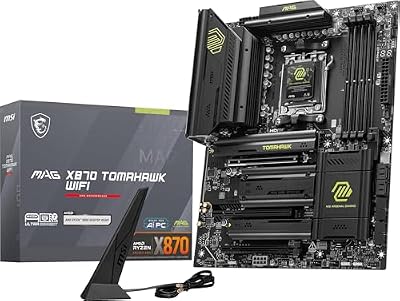
This is a buying guide, not a lab test. We have not run hands-on benchmarks on every board listed here, and specifications differ between manufacturers even when the chipset is the same. Use the product cards as a starting point, then confirm the exact model, memory support, slot layout and price on the product page before you order. The hero listing is the closest match to the Z890 category in our search, so treat it as a reference for the class of product, not a guarantee of one specific model.
What the Z890 Chipset Does
A chipset controls how much of the platform you can use. It decides which processors are supported, whether CPU overclocking is allowed, how many lanes the board can route to storage and expansion slots, and which extra features the manufacturer can build in. In Intel’s LGA1851 lineup, Z890 sits above B860 and H810. It is the chipset you pick when you want the full feature set and expect to upgrade parts over several years.
For gaming, the chipset does not add frames by itself. The graphics card and the processor do most of that work. What Z890 gives you is headroom: more memory tuning options, more ways to connect storage, and typically stronger power delivery on the better boards. If your system will run at stock settings for its whole life, you are paying for features you may not use. Our guide to the best Intel motherboard for gaming covers the wider range of Intel boards, including cheaper options.
LGA1851 Platform Basics Before You Buy
LGA1851 is a different socket from the LGA1700 platform used by earlier Intel desktop chips, so a Z890 board will not accept older processors. Check the processor support list on the board page before you buy. Core Ultra 200S processors use DDR5 memory only, so a Z890 board with DDR4 slots is not a valid option for this platform. Confirm that your memory kit is DDR5 and that it appears on the board’s memory support list.
Memory support and tuning
Memory is one of the few areas where Z890 boards can differ in a noticeable way. The chipset supports memory tuning, but the board’s trace layout and DIMM design decide how high you can push speeds in practice. Most buyers will be happy with a well-known DDR5 kit from the qualified list. If you plan to chase high frequencies, read the manual for the number of DIMM slots, because two-slot and four-slot designs behave differently at high speeds.
PCIe and storage lanes
The processor provides the PCIe 5.0 lanes for the graphics card and, on many boards, one fast M.2 slot. The chipset adds further lanes for extra M.2 drives, USB ports and networking. Two Gen5 M.2 slots are not always available, and some slots share bandwidth with other ports or SATA connectors. Read the manual before you plan the storage layout, especially if you want several fast NVMe drives running at once.
Board Features Worth Comparing
Once the chipset is fixed, the rest of the board decides how the system behaves. Power delivery, cooling, networking and rear I/O differ most between models in the same chipset tier. A board with a strong power stage and a good heatsink holds its boost behaviour better through long gaming sessions. A cramped layout can make graphics card installation and cable routing harder than it needs to be.
Power delivery and cooling
Look for a board with a sizeable voltage regulator heatsink and a clear description of its power phases. Higher-end Core Ultra 200S processors draw more power under load, so weak power delivery can limit performance on those chips. This matters most for K-series processors you plan to overclock. Lower-tier chips run well on simpler boards, which is why the power stage should match the processor you actually buy.
Networking, USB and rear I/O
Many Z890 boards include Wi-Fi 7 and multi-gigabit Ethernet. Check which Wi-Fi standard is listed and whether antennas are included. Count the USB ports you need as well. A board with several USB-C ports and a full front panel header is useful if you use fast external drives. If you do not need these extras, a simpler board saves money without affecting gaming performance.

Intel® Core™ Ultra 9 Desktop Processor 285K, 24 Cores (8P + 16E), up to 5.7 GHz


As an Amazon Associate we earn from qualifying purchases. Product prices and availability are accurate as of the date/time indicated.
Comparison Criteria for Z890 Boards
The table below lists what to compare when you shortlist Z890 boards. It uses checks and ranges rather than fixed prices, because retail prices change often and differ by region.
| Criterion | What to check | Why it matters for gaming | Typical price range |
|---|---|---|---|
| Chipset | Z890 on the spec sheet | Enables CPU overclocking on K-series chips | Upper end of LGA1851 boards |
| VRM and heatsink | Heatsink size and phase count | Sustains boost behaviour under long loads | Varies widely within the tier |
| Memory | DDR5 support list and maximum speed | Affects frame rates in CPU-bound games | Check current price |
| M.2 slots | Number of slots and PCIe generation | Storage speed and future expansion | Check current price |
| Wi-Fi and LAN | Wi-Fi 7 and multi-gigabit Ethernet | Network speed for online play and downloads | Often a premium feature |
| Rear I/O | USB-C and USB port count | Connectivity for peripherals and storage | Varies by model |
Who Should Buy a Z890 Board
A Z890 board makes sense for three types of buyer. The first is the enthusiast who plans to overclock a Core Ultra K-series processor and wants full tuning options. The second is the builder who expects to keep the platform for several years and wants room to add storage and networking. The third is the buyer who needs strong connectivity, such as several USB-C ports or multi-gig Ethernet. For these buyers, the extra cost is easier to justify.
Who Should Skip Z890
If you are building a non-overclocked system with a standard processor, Z890 is more chipset than you need. A B860 or H810 board can run the same processor at stock settings and leave more of the budget for the graphics card, which affects gaming performance more than the motherboard does. The same applies to a compact build where the extra expansion slots will never be used. Our guide to the best budget gaming motherboard shows where cheaper boards still perform well.
Related Guides
More reading for this build: Core Ultra 7 265K review value gaming boards motherboard choices for a gaming PC AMD motherboards for gaming.
Frequently Asked Questions
Is Z890 required for Core Ultra 200S?
No. Core Ultra 200S processors also run on other LGA1851 chipsets, including B860 and H810. Overclocking support depends on the chipset, so check the spec sheet. If you do not plan to overclock, a lower chipset tier often gives better value.
Does a Z890 board improve gaming frame rates?
Not directly. The motherboard enables features and stability, while the graphics card and processor decide most frame rates. A better board helps when it lets you run memory and power settings reliably at higher limits.
Should I buy Z890 now or wait for a newer platform?
If you need a complete build now, a current Z890 board is a reasonable choice. Waiting only makes sense if you already know the next socket you want, because a new socket means a new board and usually a new processor.
For a broader view, read our Intel versus AMD gaming comparison and the Core Ultra 9 285K review. Our full list of gaming motherboards helps you compare the Z890 class against AMD options.