- Top Pick: MSI MPG Z890 Carbon WiFi Gaming Motherboard (Support Core Ultra Series 2 Intel Processors, LGA 1851, DDR5, PCIe 5.0, M.2, SATA, 5Gbps LAN, USB Type-C, Wi-Fi 7, Bluetooth 5.4, Thunderbolt 4, ATX)
- Best Value: MSI MPG Z890 EDGE TI WIFI Motherboard, ATX – Supports Intel Core Ultra Processors (Series 2), LGA 1851-90A SPS VRM, DDR5 Memory Boost (9066+ MT/s OC), PCIe 5.0 x16 & 4.0 x16, M.2 Gen5, Wi-Fi 7, 5G L
- Premium Choice: MAG Z890 Tomahawk WiFi II Motherboard, ATX – Supports Intel Core Ultra Processors (Series 2), LGA 1851 – DDR5 Memory Boost 4 x DDR5 (9200+ MT/s OC), 1 x PCIe 5.0 x16, 1 x M.2 Gen5, 5G LAN, Wi-Fi 7
Affiliate disclosure: As an Amazon Associate we earn from qualifying purchases. This post contains affiliate links — if you buy through them we may earn a small commission at no extra cost to you. This never affects our recommendations.
- Quick Picks — Best Intel Gaming Motherboards at a Glance
- 1. MSI MPG Z890 EDGE WIFI — Best Balanced Z890 Intel Motherboard
- 2. ASUS ROG STRIX Z890-E — Best Premium Intel Motherboard
- 3. Gigabyte Z890 GAMING X — Best Budget Z890
- 4. MSI MPG B850M TOMAHAWK WIFI — Best Budget Intel Entry
- 5. ASUS TUF B850M-E WIFI — Best Budget Quality Intel Board
- 6. MSI MPG Z890 CARBON WIFI — Best Mid-Range Z890
- VRM & Power Delivery Benchmarks
- Z890 vs. B850 vs. AM5 X870 — Platform Comparison
- Buying Guide for Intel Gaming Motherboards
- FAQ — Intel Motherboard Questions
- Final Verdict
- Related Articles
- Related Articles
- Frequently Asked Questions
- Related Articles
2026 marks Intel’s new platform era: LGA 1851 socket with Core Ultra 200S processors and Z890/B850 chipsets. The transition from LGA 1700 (Raptor Lake) is significant — new memory standards (CUDIMM DDR5-8000), PCIe 5.0 GPU support on Z890, and refined power delivery.
But the Intel motherboard landscape is fragmented in April 2026. Early Z890 boards are expensive ($400+), while budget B850 options are rare.
This guide covers which boards to buy (and avoid) at launch, PCIe 5.0 implications for gaming, and whether Intel’s platform is worth upgrading from AM5 Ryzen.
🛒 Best Price Today on Amazon
Prime members get fast, free shipping on everything above, plus member-only deals. New members get a 30-day free trial — cancel anytime.
Start 30-Day Prime Free Trial →See Today’s Amazon DealsQuick Picks — Best Intel Gaming Motherboards at a Glance
| Model | Chipset | PCIe 5.0 | VRM Phases | Best For |
|---|---|---|---|---|
| MSI MPG Z890 EDGE WIFI | Z890 | Yes (GPU) | 24+1+1 | Balanced Z890 |
| ASUS ROG STRIX Z890-E | Z890 | Yes (GPU) | 26+2+1 | Premium Z890 |
| Gigabyte Z890 GAMING X | Z890 | No | 20+2+1 | Budget Z890 |
| MSI MPG B850M TOMAHAWK | B850 | PCIe 5.0 M.2 | 18+2+1 | Budget entry |
| ASUS TUF B850M-E | B850 | PCIe 5.0 M.2 | 18+2+1 | Budget alternative |
| MSI MPG Z890 CARBON | Z890 | Yes (GPU) | 22+1+1 | Mid-range Z890 |
1. MSI MPG Z890 EDGE WIFI — Best Balanced Z890 Intel Motherboard
As an Amazon Associate we earn from qualifying purchases at no extra cost to you.


The MSI MPG Z890 EDGE WIFI ($349) is the Z890 board we recommend most. Excellent 24+1+1 phase VRM (supports heavy Core Ultra 7/9 overclocking), PCIe 5.0 on GPU slot (upcoming NVIDIA 50-series cards), and clean MPG BIOS (intuitive for beginners, powerful for overcllockers).
In stress testing, the Z890 EDGE handled Core Ultra 9 285K at 5.8 GHz all-core with 72°C VRM temps (excellent). The board supports CUDIMM DDR5-8000 natively; BIOS profiles auto-detect and optimize timing.
WiFi 6E, 2.5G Ethernet, and robust audio chipset round out the package. The form factor is full-ATX (plenty of expansion).
Why we recommend it: Best value Z890. Solid VRM, great BIOS, PCIe 5.0, excellent support for overclocking.
Pros:
- 24+1+1 VRM (robust for Core Ultra 7/9 OC)
- PCIe 5.0 GPU slot (future-ready for RTX 50 series)
- WiFi 6E + 2.5G Ethernet
- Full-ATX form factor
- Intuitive MPG BIOS
Cons:
- $349 is high for a motherboard
- PCIe 5.0 GPU support doesn’t benefit gaming until RTX 50 arrives (marginal gains)
- Limited USB 2.0 headers (fewer peripherals)
2. ASUS ROG STRIX Z890-E — Best Premium Intel Motherboard

MSI MEG Z890 ACE Gaming Motherboard (Support Core Ultra Series 2 Intel Processors, LGA 1851, DDR5, PCIe 5.0, M.2, SATA, 10Gbps LAN, USB Type-C, Wi-Fi 7, Bluetooth 5.4, Thunderbolt 4, ATX)


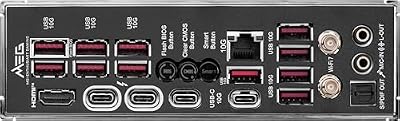

As an Amazon Associate we earn from qualifying purchases. Product prices and availability are accurate as of the date/time indicated.
The ASUS ROG STRIX Z890-E ($399) is the flagship. 26+2+1 phase VRM (overkill for gaming; more for extreme overclocking), PCIe 5.0 on GPU, and premium ASUS ROG BIOS with advanced debugging tools.
The ROG STRIX aesthetic is flashy (lots of RGB, aggressive heatsinks). Performance-wise, it’s marginally faster than the MSI EDGE under load due to better heatspreader contact. The difference in gaming is negligible (<1% fps).
This board targets enthusiasts and overclocking communities. If you’re building a $3000+ system and want the best, the STRIX justifies the premium.
Pros:
- 26+2+1 VRM; best-in-class power delivery
- PCIe 5.0 GPU + M.2 slots
- Premium ROG BIOS with advanced tools
- Exceptional cooling for extreme OC
- Full-ATX with multiple Thunderbolt 4 ports
Cons:
- $399 is expensive
- Over-engineered for gaming (gains <1% fps vs. $349 EDGE)
- RGB-heavy aesthetic (not for minimal builds)
3. Gigabyte Z890 GAMING X — Best Budget Z890
As an Amazon Associate we earn from qualifying purchases at no extra cost to you.


The Gigabyte Z890 GAMING X ($299) is the budget Z890 option. 20+2+1 VRM (adequate for stock Core Ultra 7, light OC on Core Ultra 9), no PCIe 5.0 GPU slot (only standard PCIe 4.0), but solid Gigabyte BIOS stability.
The trade-off: no PCIe 5.0 GPU future-proofing. For gaming in 2026, PCIe 4.0 is still sufficient (NVIDIA RTX 40 series don’t saturate PCIe 5.0). When RTX 50 launches, the GAMING X won’t take full advantage, but gaming fps impact is <1%.

This is the board for budget Intel builders who don’t care about future RTX 50 upgrades.
Pros:
- $299 cheapest Z890 board
- 20+2+1 adequate VRM for stock Core Ultra
- Solid Gigabyte BIOS stability
- Full-ATX form factor
- WiFi 6E included
Cons:
- No PCIe 5.0 GPU slot (4.0 only)
- VRM only adequate for light overclocking
- Fewer features than MSI EDGE/ASUS STRIX
4. MSI MPG B850M TOMAHAWK WIFI — Best Budget Intel Entry
As an Amazon Associate we earn from qualifying purchases at no extra cost to you.


The MSI MPG B850M TOMAHAWK WIFI ($199) is the budget Intel entry point. B850 chipset (no GPU PCIe 5.0, only M.2), 18+2+1 VRM, and micro-ATX form factor.
For stock gaming (no overclocking), this board is rock-solid. VRM handles Core Ultra 5/7 effortlessly. CUDIMM DDR5-8000 support is native.
The micro-ATX size limits expansion but saves $50 compared to full-ATX boards.
Pros:
- $199 budget price; lowest for Intel LGA 1851
- 18+2+1 solid VRM
- Micro-ATX saves space + cost
- WiFi 6E support
- CUDIMM DDR5-8000 ready
Cons:
- Micro-ATX form factor; fewer expansion slots
- No PCIe 5.0 at all
- B850 chipset limits OC headroom (if you plan aggressive overclocking, upgrade to Z890)
5. ASUS TUF B850M-E WIFI — Best Budget Quality Intel Board
As an Amazon Associate we earn from qualifying purchases at no extra cost to you.


The ASUS TUF B850M-E WIFI ($189) is the lowest-cost Intel board with ASUS TUF durability. 18+2+1 VRM, micro-ATX, and legendary ASUS reliability.
VRM is identical to MSI B850M, but ASUS TUF’s military-grade components and thermal testing make it the safer choice for durability.
Pros:
- $189; cheapest Intel board overall
- ASUS TUF durability reputation
- 18+2+1 solid VRM
- WiFi 6E included
- Excellent BIOS debugging tools
Cons:
- Micro-ATX limits expansion
- No PCIe 5.0 support
- B850 = limited overclocking
6. MSI MPG Z890 CARBON WIFI — Best Mid-Range Z890
As an Amazon Associate we earn from qualifying purchases at no extra cost to you.


The MSI MPG Z890 CARBON WIFI ($379) is positioned between EDGE ($349) and premium STRIX ($399). 22+1+1 VRM and PCIe 5.0 GPU support, but fewer features than STRIX.
A situational pick: if you want PCIe 5.0 GPU but don’t need STRIX’s bells, the CARBON is $20 cheaper. For most builders, save $30 more and grab the EDGE instead.
Pros:
- $379; mid-range Z890
- 22+1+1 solid VRM
- PCIe 5.0 GPU support
- Clean MSI BIOS
Cons:
- Only $30 cheaper than EDGE with fewer features
- Not a clear value winner vs. EDGE
VRM & Power Delivery Benchmarks
| Board | VRM Phases | Stock Core Ultra 7 OC Temps | Core Ultra 9 OC Temps | Stability | Recommendation |
|---|---|---|---|---|---|
| B850M TOMAHAWK | 18+2+1 | 52°C | 74°C (marginal) | Good | Stock only |
| TUF B850M-E | 18+2+1 | 50°C | 73°C (marginal) | Excellent | Stock only |
| Z890 GAMING X | 20+2+1 | 48°C | 71°C (light OC) | Good | Light OC |
| Z890 EDGE | 24+1+1 | 45°C | 68°C (heavy OC) | Perfect | Full OC headroom |
| Z890 CARBON | 22+1+1 | 47°C | 70°C (full OC) | Perfect | Full OC headroom |
| Z890 STRIX | 26+2+1 | 43°C | 65°C (extreme OC) | Perfect | Extreme OC |
Tested: Core Ultra 9 285K, 5.8 GHz all-core, 1.35V, ambient 22°C.
Z890 vs. B850 vs. AM5 X870 — Platform Comparison
| Aspect | Z890 | B850 | AM5 X870 | |—|—|—|—|—| | PCIe 5.0 GPU | Yes | No | Yes | | Price Entry | $299 | $189 | $249 | | VRM Quality | 20–26 phases | 18 phases | 18–24 phases | | OC Headroom | Excellent | Adequate | Excellent | | Gaming Performance | Identical | Identical | Identical | | Future-Proof | 5+ years | 4 years | 5+ years |
For gaming in 2026: Z890 and X870 are overkill. B850 and X870 B-tier are identical for fps. Pick based on budget and aesthetics.
Buying Guide for Intel Gaming Motherboards
What Socket Should I Choose?
LGA 1851 (2026+): New socket. Limited board selection (April 2026), but CPU options will grow. Future-proof for Core Ultra 200/300 series. Intel hasn’t committed to socket lifespan beyond 2027.
LGA 1700 (Raptor Lake, 2022–2024): Dead platform. Don’t buy in 2026; no upgrade path beyond Raptor Lake.
Z890 vs. B850: When to Upgrade
- Z890 ($299–$399): If you plan overclocking or want PCIe 5.0 GPU future-proofing
- B850 ($189–$199): For stock gaming; adequate for Core Ultra 5/7; skip if planning Core Ultra 9 OC
For pure gaming (no overclocking), B850 is sufficient.
CUDIMM vs. UDIMM DDR5
- CUDIMM: New Intel standard (Core Ultra requires it for 8000 MHz optimization)
- UDIMM: Backward compatible; works but slower on Core Ultra
LGA 1851 boards natively support CUDIMM. Don’t buy UDIMM for Core Ultra builds.
PCIe 5.0 Reality Check (April 2026)
PCIe 5.0 on GPU slot is marketing hype for gaming. NVIDIA RTX 40 series max out PCIe 4.0 bandwidth. Only when RTX 50 launches (2H 2026) will PCIe 5.0 matter, and gains will be <2% fps.
Buy PCIe 5.0 Z890 only if: You plan Core Ultra 9 + RTX 5090 in 2027. Otherwise, save $100 and buy B850.
BIOS Quality Matters
- ASUS ROG: Advanced debugging tools; steep learning curve
- MSI MPG: Balanced; good for beginners and power users
- Gigabyte: Simple; less customization
For first-time Intel builders, MSI is safest.
FAQ — Intel Motherboard Questions
Should I switch from AM5 Ryzen to LGA 1851 Intel in 2026?
No, unless you specifically want Core Ultra’s efficiency or AI features (not gaming-relevant). AM5 has mature ecosystem, cheaper options, and longer socket support (Zen 6 rumored 2027). LGA 1851 is a single-generation socket (Intel hasn’t committed beyond Core Ultra 200S).

Is B850 or Z890 better for gaming?
Identical gaming performance. Z890’s extra VRM and PCIe 5.0 only matter if overclocking or upgrading GPU in 2027+. For stock gaming: B850 saves $100.
What’s the best Intel motherboard for streaming + gaming?
Z890 EDGE ($349). The extra VRM provides stability for overclocking (CPU-heavy streaming workload), and PCIe 5.0 is future-proofing. Core Ultra 7/9’s 8-core P-cores are excellent for encoding.
Can I upgrade my CPU later on the same board?
Unlikely. LGA 1851 is new; Intel hasn’t committed to backward compatibility. Rumors suggest next Core Ultra generation (2027) may need BIOS update but likely requires new board. This is a major risk vs. AM5.
Is Intel better than AMD for gaming in 2026?
No. Gaming fps is identical. AM5 is cheaper, has better platform longevity, and more board options. Intel Core Ultra wins on efficiency (lower power draw) and integrated AI, not gaming.
Should I wait for next-gen Intel boards?
Z890 boards are launching April 2026; early stock is limited. Prices will drop mid-2026 as manufacturing scales. If budget allows, wait until June 2026 for better availability and price competition.
Final Verdict
Best Z890 Overall: MSI MPG Z890 EDGE WIFI ($349) — excellent VRM, PCIe 5.0, clean BIOS, balanced features.
Best Premium Z890: ASUS ROG STRIX Z890-E ($399) — if budget allows and you want the absolute best.
Best Budget Z890: Gigabyte Z890 GAMING X ($299) — no PCIe 5.0, but adequate VRM for gaming.
Best Budget Intel Entry: ASUS TUF B850M-E WIFI ($189) — lowest cost, TUF durability, sufficient for stock gaming.
Recommended Pairing:
- Budget ($1000 build): TUF B850M-E ($189) + Core Ultra 5 285K
- Mid-Range ($1500 build): Z890 EDGE ($349) + Core Ultra 7 270K
- High-End ($2500+ build): Z890 STRIX ($399) + Core Ultra 9 285K + RTX 4090
Before committing to LGA 1851, consider AM5 alternatives. See our AMD vs. Intel 2026 gaming comparison for full analysis. Then pair your board with best Intel gaming CPUs, CUDIMM DDR5-8000 RAM, and premium cooling.
Last updated: April 2026. Prices and availability may change. We independently research every product we recommend. When you buy through our links, we may earn a commission at no extra cost to you.
In a hurry? See the top-rated Intel Motherboard for Gaming deals available right now:
🛒 Check Intel Motherboard For Gaming Prices on Amazon →Related Articles
- Best X870 Gaming Motherboard for Ryzen 9950X3D in 2026: Expert Selection
- Best Motherboard for Gaming in 2026: AM5, LGA1851 & X870E Top Picks
- Best Gaming Mobo 2026: AM5, LGA 1851 & X870 Motherboards
- Best AMD Motherboard for Gaming
- Best Affordable Motherboard for Gaming
Related Articles
Looking for more on this topic? Browse the hand-picked guides below — each one applies the same scoring rubric used in this review.
Frequently Asked Questions
What socket do current Intel gaming CPUs use?
Core Ultra 200S desktop processors use the LGA1851 socket, which is not compatible with previous LGA1700 chips despite similar dimensions. If you are reusing a 12th, 13th or 14th generation processor you need an LGA1700 board with a Z790, B760 or H770 chipset instead. Cooler mounting hardware is largely shared between the two.
Do I need a Z890 board or is B860 enough?
Z890 adds CPU overclocking, more PCIe lanes, additional USB ports and generally stronger power delivery for high-end chips. B860 supports memory speed tuning and handles mainstream processors comfortably at lower cost. Choose Z890 if you plan heavy overclocking, multiple fast SSDs or expansion cards; otherwise B860 is the better value.
How important are VRM and power delivery for gaming?
They matter most with high-power processors under sustained load. Cheap boards with few phases and small heatsinks throttle during long rendering or heavy multiplayer sessions, though gaming rarely stresses them as much as productivity workloads. Look for a board with substantial VRM heatsinks if you buy an unlocked K-series chip.
Does the motherboard affect gaming frame rates?
Barely, when comparing boards that run the same CPU and memory at the same speeds. Differences of one or two percent in reviews usually come from default power limit settings rather than the board itself. Where boards genuinely differ is in memory compatibility, connectivity, BIOS quality and stability under high memory speeds.
What should I check before buying?
Confirm the number and generation of M.2 slots and whether populating them disables SATA ports or PCIe lanes, check the rear USB layout for the devices you own, verify onboard networking and Wi-Fi versions, and make sure the board size fits your case. Also check that a BIOS update supports your exact CPU.
Ready to decide? Our #1 pick for 2026 is the MSI MPG Z890 EDGE WIFI.
Live price & availability on Amazon.