Gigabyte X870E AORUS Ultra Review: Flagship AM5 Board Buying Guide
The Gigabyte X870E AORUS Ultra is part of the AORUS flagship line, the premium tier of Gigabyte’s AM5 motherboards. Boards in this tier are built on the X870E chipset and aim at builders who want the strongest power design, the most storage and networking options and the most complete BIOS tools that Gigabyte offers. This guide is written as a buying framework for the AORUS Ultra class. It explains what the flagship tier adds, which features matter for gaming and for creators, and where the premium is hard to justify.
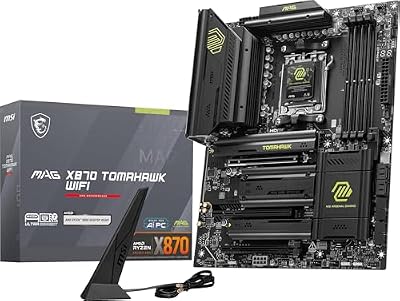
The listing above is the closest match for the AORUS Ultra X870E name used here. Gigabyte revises boards and changes bundles, and regional versions can differ. Check the exact model on the card, confirm the included accessories and look up the current price before buying. The reasoning below is intended to hold for the AORUS Ultra family in general.

What the AORUS Flagship Tier Adds
Flagship AM5 boards separate themselves with three things: a heavier power delivery design, more heatsink coverage across the board, and a larger set of connectivity options. The AORUS Ultra follows that pattern. The extra power headroom is useful for high-core Ryzen processors under long load, and the cooling layout is designed to keep fast storage and the power stages stable. The connectivity set typically includes more rear USB ports, faster networking on many revisions and onboard wireless.
None of those features raises frame rates by itself. A flagship board runs the same Ryzen processor and graphics card at the same speed as a mainstream X870 or B850 board. The difference shows up when your workload uses the extras: long renders, heavy multitasking, several fast drives or a capture card running alongside a game.
Who Actually Uses a Flagship Board
Creators and streamers are the clearest fit. A system that records gameplay, edits video and runs a fast storage pool all at once can use the extra lanes and I/O. A gamer with a single graphics card and one drive is paying for headroom that will not change frame rates. In that case, a cheaper X870E or X870 board is the better purchase.
Power Delivery and Thermal Design
A premium VRM matters most when the processor stays under heavy load. High-core Ryzen chips can draw a large amount of current during rendering, compiling or simulation, and a board with a larger power stage keeps the voltage steady so the processor holds its clocks. For a gaming-only build, the VRM headroom is rarely the limit. For a creator running a flagship processor for hours, it can make a real difference in consistency.
Heatsink coverage is the second thermal factor. A fast PCIe 5.0 drive can throttle under sustained writes without a heatsink, and a flagship board usually offers heatsinks over several M.2 slots. Check the manual for the heatsink layout, and confirm which slot sits under the graphics card so that a large card does not block the drive you plan to use. Our PCIe 5.0 NVMe guide explains which drives benefit from that cooling.
BIOS Tools and Setup Experience
Gigabyte’s BIOS tools are one of the practical strengths of its premium boards. Features such as BIOS Flashback let you update firmware without a working processor installed, which can save a build when a new chip will not post on an older BIOS. That matters on AM5, where a new processor may need a recent BIOS. Before you buy, check the CPU support list on the manufacturer site and confirm that the board revision supports your chip.
Once the system runs, enable the EXPO profile for your DDR5 kit and confirm the speed. Our DDR5-6000 roundup lists kits that run well on AM5, and our 32GB DDR5 guide covers capacity choices. Two sticks at a high speed usually perform better for gaming than four sticks at a lower speed, so start there.
Storage Layout and Expansion
The AORUS Ultra class offers several M.2 slots, and the layout matters. Put the fastest drive on the slot wired to the processor, and use the chipset-connected slots for bulk storage or a secondary game library. Some slots share lanes with SATA ports, so using one can disable others. The manual explains the sharing rules, and reading it before you install drives will save time.
For a gaming system, a PCIe 4.0 drive is fast enough for most tasks. Faster PCIe 5.0 drives help most in large sequential transfers, which is useful for creators and not necessarily for players. If you do buy a PCIe 5.0 drive, cool it properly with the board’s heatsink or an aftermarket one.
Connectivity and Rear Panel
The rear I/O on a flagship board usually covers a large set of USB ports, multiple Ethernet options on some revisions and onboard Wi-Fi. Those features are useful if your router supports the same wireless standard and your peripherals use the faster ports. A wired Ethernet connection is still the most reliable choice for competitive online games, so keep the cable in place where you can.
Audio is good for headsets and speakers. Unless you use high-impedance headphones or a dedicated audio interface, the onboard codec is adequate. Do not pay a large premium for audio hardware you will not use.
Comparison Table: AORUS Ultra Versus Other AM5 Tiers
The table below compares the AORUS Ultra class with other boards you are likely to shortlist. Prices are shown as tiers because retailers change them often. Use the cards in this guide to check the current price for each listing.
| Board class | Best for | Typical price tier | What to verify before buying |
|---|---|---|---|
| AORUS Ultra X870E class | Creators and heavy multi-device builds | Premium (check current price) | M.2 lane sharing, CPU support list, rear I/O count |
| Other X870E boards | High-end builds with a leaner feature set | Upper mid-range to premium | VRM size, heatsink coverage, networking standard |
| X870 boards | Gaming builds without chipset-level PCIe 5.0 needs | Mid-range | Storage layout and memory support |
| B850 boards | Mainstream gaming builds | Budget to mid-range | Memory speed and VRM for your processor |
For a cheaper route onto the same chipset family, our X870 guide for high-end Ryzen chips covers the boards that suit the largest processors without the flagship price. If you are comparing across brands, the AMD motherboard guide for gaming places the AORUS Ultra alongside its rivals.
Who Should Buy the AORUS Ultra Class
This board suits a creator or power user who runs a flagship Ryzen processor under heavy load and wants a strong power design, storage flexibility and a mature BIOS. It also suits a builder who wants a long-lived platform and plans to add storage or devices over time. It is a poor fit for a single-GPU gaming build on a budget. The money is better spent on a faster processor, a better graphics card or a higher-refresh monitor.
For gaming choices in particular, our CPU guide for gaming shows which processors deliver the frame rates you are paying for, and that matters more than the board tier.
Pre-Purchase Checklist
Confirm the socket and chipset match your processor. Check the CPU support list and the BIOS version for your chip. Verify the memory list for the kit you plan to buy. Map out the M.2 and SATA layout and note which ports share lanes. Count the rear devices you need and confirm the board has them. Finally, measure the case, the cooler height and the graphics card length before you commit.
Related reading: our general motherboard guide, our CPU cooler guide, our gaming motherboard roundup.
Frequently Asked Questions
Is the AORUS Ultra worth it for gaming only?
Usually not. A gaming build with one graphics card and one drive will run the same frame rates on a cheaper board. The flagship tier earns its price when you use its power headroom, storage and I/O.
What does BIOS Flashback help with?
It lets you update the BIOS without a processor installed, which helps when a new chip will not post on an older firmware version. Check whether your board revision includes the feature before you rely on it.
Does this board support fast DDR5 memory?
AM5 boards in this tier generally support fast DDR5. Check the memory support list for your revision and the kit you plan to buy, then enable the EXPO profile.
Should I use the onboard Wi-Fi or Ethernet for gaming?
Ethernet is the more stable choice for online games. Use Wi-Fi where a cable run is not practical, and check that your router supports the same standard.
Final Verdict on the Gigabyte X870E AORUS Ultra Class
The Gigabyte X870E AORUS Ultra class is a flagship AM5 option for creators, power users and builders who want the strongest power design and the most storage flexibility on the platform. It is not a faster gaming board by itself, and that is the honest trade-off. Buy it when your workload uses the extra headroom and the I/O. Choose a cheaper X870E, X870 or B850 board when your build is mostly about the graphics card. Check the listing above for the current model and price, confirm the CPU and memory lists, and match the board to how you will use the system.