

X870E vs X870 Motherboard Comparison: Which AM5 Chipset Is Worth Your Money?
X870E and X870 are the two upper tiers of the AM5 chipset family, and the choice between them is one of the most common decisions a builder faces before buying a Ryzen platform. Both support the same processor families and the same DDR5 memory technology, and both handle a high-end graphics card without a frame rate penalty. The difference is chipset-level PCIe 5.0 capability, which X870E offers in greater amounts. This comparison explains what that difference means in practice, which builds actually use it and which buyers are paying for capability they will never touch.
The comparison is a buying framework, not a benchmark report. We have not run X870E and X870 boards side by side in a test lab. The product cards shown are the closest matches for the board classes discussed here, so confirm the exact model, revision and price before ordering. Where a point depends on a specific board or BIOS version, the text says so.

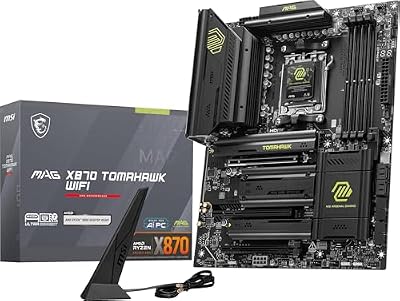
The Core Difference: Chipset-Level PCIe 5.0
Every AM5 board has PCIe lanes that come directly from the processor. The graphics card and, on many boards, the primary M.2 drive use those lanes. The chipset provides a second set of lanes that handles the remaining devices. On X870E, the chipset contributes more PCIe 5.0 capability than on X870, so more of the board’s expansion can run at the newest speed.
In day-to-day gaming, that difference is small. A single graphics card and one primary NVMe drive already run from CPU-attached lanes, so the chipset upgrade does not change the frame rate. The difference shows up when several high-speed devices compete for bandwidth at the same time. That is the scenario X870E is designed for, and it is the scenario most gamers never reach.
What Happens When You Add Several Fast Devices
Consider a build with a graphics card, a primary PCIe 5.0 drive, a second fast drive for a game library, a capture card and a high-speed network adapter. On X870, some of those devices may share lanes or run at a lower speed, depending on the board’s layout. On X870E, more of them can run at full speed simultaneously. The manual is the best source for the exact lane allocation on any given board, and it is worth reading before you commit.
Where X870 Covers Most Builds
For a gaming PC with one graphics card, one primary drive and a standard set of USB peripherals, X870 is the efficient choice. It gives you the same gaming performance as X870E at a lower cost, and it keeps the platform modern. The main things to check are the VRM design for your processor, the M.2 layout and the memory support list. Our X870 guide for 9950X3D-class chips covers what to look for at the top end of the range.
X870 also suits a builder who wants more than a mainstream B850 board but does not need the full X870E expansion. It typically offers a richer power design and more M.2 slots than B850, which helps when you plan a larger storage setup later.
Where X870E Earns Its Premium
X870E is worth paying for in three situations. The first is a multi-device build that runs several PCIe 5.0 devices at the same time, such as a capture card, multiple drives and a fast network adapter. The second is a creator or streamer who needs maximum storage and I/O flexibility. The third is a builder who plans to keep the platform for several years and wants the most expansion room available on AM5.
The premium is harder to justify for a gaming-only build. Frame rates come from the processor and the graphics card, and the chipset tier does not change them. If the extra money would be better spent on a faster processor or a higher-refresh monitor, choose X870 and put the difference there.
Comparison Table: X870E Versus X870
The table below compares the two chipset tiers across the factors that matter for a buying decision. Prices are shown as tiers because retailers change them often. Use the cards in this guide to check the current price of each listing.
| Factor | X870E | X870 |
|---|---|---|
| Chipset PCIe 5.0 capability | Higher, for several fast devices at once | Sufficient for one graphics card and one or two drives |
| Gaming frame rate with one GPU | Same as X870 | Same as X870E |
| Best for | Multi-device builds, creators, long-life platforms | Most gaming builds with a high-end processor |
| Typical price tier | Premium (check current price) | Upper mid-range to premium |
| What to verify | Lane allocation in the manual, rear I/O needs | M.2 layout, VRM size for your CPU, memory list |
Pick X870 or X870E? A Simple Decision Path
Start with your devices. If your build has one graphics card and one or two drives, choose X870. If it has several high-speed devices running at once, choose X870E. Next, look at your processor. A high-core chip under long, heavy load benefits from a stronger power design, and both tiers offer options for that, so check the VRM notes on the specific board. Finally, look at your budget. If the X870E premium would take money from the graphics card or monitor, the gaming result is better with X870.
For a broader view of the AM5 platform, our AM5 motherboard guide for gaming explains how the chipset tiers fit together. If you are still choosing a processor, our 2026 gaming CPU guide shows which chips benefit from a premium board and which run just as well on X870.
Board Examples Across Both Tiers
Some boards sit clearly in one tier, and others are harder to place. The Taichi-class board in the list above is aimed at builders who want a feature-heavy X870E design, while a board like the ASUS TUF X870-Plus targets a sturdier X870 build at a lower price. Our ASRock X870E Taichi review and our ASUS TUF X870-Plus review explain how those boards differ in practice. Read each card’s specifications before deciding, because the exact features depend on the specific model.
Memory, Storage and Cooling Checks for Either Tier
Whichever tier you choose, check the memory support list for the kit you plan to buy. Two sticks of DDR5 at a high speed usually perform better for gaming than four sticks at a lower speed. Our DDR5 RAM guide for gaming covers kit choices that suit AM5 builds. For storage, put your fastest drive on the processor-connected slot, and check whether any M.2 slot shares lanes with SATA ports. For cooling, confirm the cooler height against the memory slots and the case, and check whether a long graphics card blocks the M.2 sockets under it. Our CPU cooler guide for gaming covers coolers that fit typical AM5 builds.
Related reading: our motherboard guide for gaming, our CPU guide for gaming.
Frequently Asked Questions
Does X870E give higher frame rates than X870?
No, not for a single graphics card. Frame rates depend on the processor and the graphics card. X870E adds chipset-level PCIe 5.0 capability, which matters for multi-device builds rather than gaming frame rates.
Is X870 enough for a high-end gaming PC?
Yes. A high-end graphics card and a flagship processor run at full speed on X870. Choose X870E only if you need its additional expansion.
Which tier is better for a streamer?
It depends on the devices. A streamer running a capture card, a fast game drive and a high-speed network adapter together may benefit from X870E. A streamer with a simpler setup gets the same result on X870.
Can I upgrade from X870 to X870E later?
Not by swapping the chipset, because the chipset is part of the board. If you think you may need the extra expansion, buy X870E now or confirm that your planned devices will fit within X870’s capability.
Final Verdict: X870E or X870?
For most gamers, X870 is the better buy. It delivers the same gaming performance with one graphics card and gives you a strong power design and storage layout at a lower price. X870E is the right choice when your build runs several high-speed devices at once, or when you are building a long-life creator platform that will use the extra I/O. Confirm the lane allocation for your planned devices, check the memory list and the CPU support list, and check the current price on the card before ordering.







