

- Top Pick: NETGEAR Nighthawk WiFi 6 Router (RAX120) 12-Stream Dual-Band Gigabit Router, AX6000 Wireless Speed (Up to 6 Gbps), Coverage Up to 3,500 sq.ft. and 30 Devices
- Best Value: Netgear Nighthawk AX12 Dual-Band 12-Stream Wi-Fi Router RAX120-100NAS (Renewed)
- Premium Choice: NETGEAR Nighthawk Dual-Band WiFi 7 Router (RS90) – Router Only, BE3600 Wireless Speed (up to 3.6 Gbps) – Covers up to 2,000 sq. ft., 50 Devices – 2.5 Gig Internet Port – Free Expert Help
The NETGEAR Nighthawk RAX120 is a high-end dual-band WiFi 6 router built around an AX6000 12-stream design with both Gigabit and 2.5 Gbps wired ports, at an asking price around $300. It is a NETGEAR flagship within the WiFi 6 generation, aimed at buyers who want a high-stream design and NETGEAR’s mature management software without stepping up to WiFi 6E or WiFi 7. This Nighthawk RAX120 review covers the WiFi standard, range, ports, gaming features and overall value, and explains where it fits versus the WiFi 6E and WiFi 7 routers covered elsewhere in this guide.
- NETGEAR Nighthawk RAX120 at a Glance
- WiFi Standard and Speed Class
- Range, Coverage and Mesh Capability
- Ports, USB and Wired Backhaul
- Gaming Latency, QoS and Security Features
- Who Is the Nighthawk RAX120 For?
- Pros and Cons
- Is the Nighthawk RAX120 Worth It?
- Frequently Asked Questions
- More Gaming Router Reviews
- Related Articles
- Related Articles
- Related Guides
🛒 Best Price Today on Amazon
Prime members get fast, free shipping on everything above, plus member-only deals. New members get a 30-day free trial — cancel anytime.
As an Amazon Associate we earn from qualifying purchases.

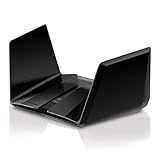




NETGEAR Nighthawk RAX120 at a Glance
| Component | Specification |
|---|---|
| WiFi standard | WiFi 6 (802.11ax) |
| Band class | AX6000 |
| Bands | Dual-band 12-stream (2.4 GHz + 5 GHz) |
| Coverage | Large homes |
| WAN port | 1x Gigabit |
| LAN ports | Gigabit + 2.5 Gbps |
| USB | Yes |
| Mesh-capable | Yes |
| Price | Around $300 |
WiFi Standard and Speed Class
The Nighthawk RAX120 is a dual-band WiFi 6 router with a 12-stream radio design — far more stream capacity than the 4- and 6-stream routers at mainstream prices. Its AX6000 class pools about 6 Gbps of theoretical throughput across 2.4 GHz and 5 GHz, with the 5 GHz radio engineered for high real-world speeds when many devices are connected. With more than 4,140 customer reviews on Amazon, the RAX120 has a very large body of real-world feedback for a premium router, which is a useful signal that the hardware and firmware are stable.
Stream count matters most in busy households: a higher-stream router can serve more devices simultaneously without each one having to wait its turn, which translates to lower wireless latency under load. NETGEAR positions the RAX120 as a premium WiFi 6 router rather than a WiFi 6E or WiFi 7 model: it does not include the 6 GHz band, so buyers who specifically want WiFi 6E or WiFi 7 features should look elsewhere — see our best WiFi 6E routers guide. For buyers who value a high-stream WiFi 6 design from a well-known networking brand, the RAX120 still makes sense in 2026.
Range, Coverage and Mesh Capability
The RAX120 is built for large homes, with antennas and amplifiers tuned to push a strong signal across a substantial footprint. Its 12-stream radio design genuinely helps in busy households because the router can sustain more simultaneous client connections without each device fighting for airtime, which translates to more consistent performance under load. It supports NETGEAR’s mesh ecosystem to extend coverage further.
The Nighthawk app makes the initial setup straightforward — most buyers can have the router online and configured within a few minutes — and the same app handles ongoing management, firmware updates and security monitoring from a phone. For very large multi-floor homes, a dedicated mesh kit remains the cleaner starting point — see our best mesh WiFi systems guide.
Ports, USB and Wired Backhaul
The Nighthawk RAX120 includes both Gigabit and 2.5 Gbps wired ports, which is one of its standout features at this price. The 2.5 Gbps port can be used as a LAN port for a multi-gig-equipped gaming PC or NAS, removing the wired bottleneck that affects Gigabit-only routers. USB connectivity is included for shared storage and printer use.
For gamers, the multi-gig LAN capability and a wired connection between the router and a gaming PC remain the single most effective way to keep latency low and consistent — the RAX120 supports that out of the box. Having a 2.5 Gbps port without giving up the Gigabit ports is a flexible mix that suits households with a single fast-network device alongside several Gigabit-only devices, which is the common reality for now.
Gaming Latency, QoS and Security Features
NETGEAR routers are popular among gamers in part because of the Nighthawk app, which gives clear QoS controls so gaming traffic can be prioritised, and the NETGEAR Armor security feature set, which monitors connected devices for threats. WiFi 6 itself reduces airtime contention versus WiFi 5, and the RAX120’s 12-stream design gives more headroom than mainstream 4-stream routers when many devices are active simultaneously.
QoS is most useful in households where bandwidth is competed for — a gaming session running while another family member is on a video call or streaming 4K. Prioritising the gaming device through the Nighthawk app is straightforward and noticeable in practice. For wider context on tuning a network for low latency, see our low-latency gaming network guide.
Who Is the Nighthawk RAX120 For?
The Nighthawk RAX120 is for the buyer who wants a premium WiFi 6 router from NETGEAR with a 2.5 Gbps wired port and a high-stream radio design, but does not specifically need WiFi 6E or WiFi 7. If you live in a larger home with many connected devices, value NETGEAR’s mature app and security features, and need multi-gig wired networking for a gaming PC or NAS, the RAX120 is a sensible choice.
Buyers with very large device counts also benefit specifically from the 12-stream radio design, because each additional simultaneous client adds less load to the router than on a 4-stream model. It is not the right router for buyers who specifically need 6 GHz spectrum or WiFi 7 features — for those, see the BE550 or our best WiFi 7 routers guide.
Pros and Cons
Pros: 12-stream WiFi 6 dual-band; AX6000 class; both Gigabit and 2.5 Gbps wired ports; USB connectivity; NETGEAR Armor security; Nighthawk app with QoS; large body of positive customer reviews.
Cons: WiFi 6 only — no 6 GHz; not WiFi 7; premium price for a WiFi 6 router; physically large.
Is the Nighthawk RAX120 Worth It?
At around $300 the NETGEAR Nighthawk RAX120 is a premium WiFi 6 router that earns its place in 2026 for buyers who want NETGEAR’s app, security and high-stream design without stepping up to WiFi 6E or WiFi 7. The combination of AX6000-class dual-band WiFi 6, a 2.5 Gbps LAN port and Nighthawk software makes it well suited to large, busy homes with many connected devices.
Buyers who do want 6 GHz or WiFi 7 should look at other routers in this guide; for everyone else it earns a recommendation. The price reflects the high-stream radio design and NETGEAR’s positioning as a premium brand — buyers comparing pure value can find cheaper WiFi 6 routers, but the RAX120 targets households where a high-capacity dual-band radio justifies the premium. See also our best gaming routers guide.
Frequently Asked Questions
Is the NETGEAR Nighthawk RAX120 good for gaming?
Yes. It pairs a high-stream WiFi 6 radio with a 2.5 Gbps LAN port and the Nighthawk app’s QoS, so a gaming PC or console can be prioritised on a wired multi-gig connection.
Does the RAX120 support WiFi 6E or WiFi 7?
No. The RAX120 is a WiFi 6 router and does not include the 6 GHz band or WiFi 7 features such as MLO.
Does the RAX120 have a multi-gig port?
Yes. It includes a 2.5 Gbps wired port that can be used for a multi-gig LAN connection to a gaming PC or NAS.
Does the RAX120 work with NETGEAR mesh?
Yes. It supports NETGEAR’s mesh ecosystem to extend coverage if a single router is not enough for the home.
More Gaming Router Reviews
- NETGEAR Nighthawk RAXE300 WiFi 6E Router Review
- NETGEAR Nighthawk RS90 WiFi 7 Router Review (BE3600)
- Amazon eero Pro 6E Mesh WiFi Router Review
- Amazon eero 7 Dual-Band Mesh WiFi 7 Router Review
- ASUS RT-AX82U Gaming Router Review (AX5400)
- TP-Link Archer AX21 WiFi 6 Router Review (AX1800)
- TP-Link Archer AX55 WiFi 6 Router Review (AX3000)
- TP-Link Archer AXE75 WiFi 6E Router Review (AXE5400)
Affiliate Disclosure: As an Amazon Associate, we earn from qualifying purchases. If you click a link and make a purchase, we may earn a small commission at no extra cost to you. Prices and availability are accurate as of publication and may change.
Related Articles
Looking for more on this topic? Browse the hand-picked guides below — each one applies the same scoring rubric used in this review.
Ready to decide? Our #1 pick for 2026 is the WiFi standard.
Live price & availability on Amazon.


