- Top Pick: NETGEAR Nighthawk M7 5G Mobile Hotspot with eSIM, WiFi 7, Up to 3.6 Gbps
- Best Value: NETGEAR Nighthawk 5G Mobile Hotspot M7 | eSIM or SIM | Portable WiFi 7 Router for Travel in 140+ Countries | 5G/4G LTE | 3.6Gbps Speed | Cloud Care Networks Powered by AT&T, T-Mobile, Verizon (MH7150)
- Premium Choice: NETGEAR Nighthawk M6 Pro Mobile Hotspot 5G mmWave, 8Gbps, Unlocked, AT&T & T-Mobile, International Roaming, Portable WiFi Device for Travel, 5G Modem Wireless Router (MR6500) (Renewed)
The NETGEAR Nighthawk M7 is NETGEAR’s flagship 5G mobile hotspot — a self-contained cellular router with an integrated 5G modem, WiFi 7 wireless, an eSIM slot, a colour touchscreen and a sizeable internal battery. It is the device travellers reach for when they want a portable cellular hotspot that does not depend on hotel or cafe WiFi at all. This NETGEAR Nighthawk M7 review covers the wireless standard, cellular support, modes, portability and overall value.

NETGEAR Nighthawk M7 5G Mobile Hotspot with eSIM, WiFi 7, Up to 3.6 Gbps | Unlocked Portable Travel Router, 140 countries, 32 Devices, Enhanced Security, 10 hr Battery, AT&T, T-Mobile, Verizon, MH7150




As an Amazon Associate we earn from qualifying purchases. Product prices and availability are accurate as of the date/time indicated.
🛒 Best Price Today on Amazon
Prime members get fast, free shipping on everything above, plus member-only deals. New members get a 30-day free trial — cancel anytime.
As an Amazon Associate we earn from qualifying purchases.
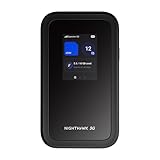


NETGEAR Nighthawk M7 at a Glance
| Component | Specification |
|---|---|
| Form factor | Pocket — palm-size with touchscreen and battery |
| WiFi standard | WiFi 7 (802.11be), dual-band/tri-band capable |
| Max speed | Multi-gigabit on WiFi 7 in optimal conditions |
| Cellular | 5G (sub-6 GHz) with eSIM and physical SIM |
| VPN support | OpenVPN-style remote management |
| Ethernet ports | 1x Gigabit/2.5GbE class on flagship models |
| Battery | Built-in rechargeable (sized for long sessions) |
| Modes | 5G Hotspot / WiFi tethering / Ethernet uplink |
| Approx price | Around $700–$800 |
Performance & Range
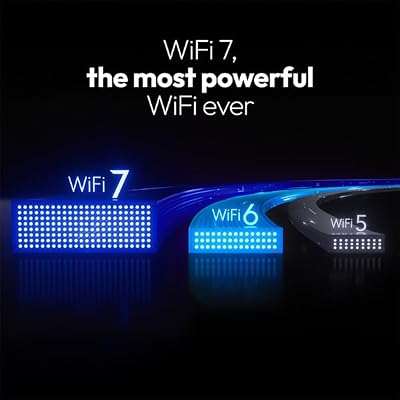
The Nighthawk M7 is a flagship mobile hotspot, and the specifications reflect it: a built-in 5G sub-6 GHz cellular modem on the uplink side, WiFi 7 (802.11be) on the wireless side, and a fast wired port for cabled clients or backhaul. In coverage with a strong 5G signal, the M7 can deliver multi-hundred-megabit and gigabit-class throughput from the cellular network — comfortably faster than typical hotel WiFi and competitive with home broadband on the move. WiFi 7 on the wireless side means even the most modern phones, tablets and laptops can take full advantage of the cellular speed without the wireless link becoming the bottleneck.
Range from the internal antennas is single-room — the M7 is designed to sit on the desk next to the devices it serves rather than to cover a building. For travellers who specifically need a small temporary network in a car, a hotel room, a tradeshow booth or a co-working space, that is exactly the right design. For home use, see our best WiFi 7 routers guide.
VPN Capabilities — OpenVPN / WireGuard / Tailscale
The Nighthawk M7 runs NETGEAR’s own firmware rather than OpenWrt, and its VPN story is more about enterprise remote-management features than the consumer-facing OpenVPN/WireGuard/Tailscale stack found on the GL.iNet routers in this guide. Power users who want full client-side VPN tunnelling of every connected device through OpenVPN, WireGuard or Tailscale will get a more capable result by running the M7 as a cellular uplink and placing a GL.iNet Beryl AX or Slate AX in front of it as the LAN-side router.
That combination is genuinely worth considering for travellers who want both the M7’s integrated 5G and the GL.iNet routers’ VPN flexibility. For users who simply want a fast cellular connection without VPN tunnelling, the M7 stand-alone is more than enough. For deeper VPN guidance, see our low-latency gaming network guide.
Modes — Hotel WiFi / Repeater / Bridge
The M7’s primary mode is 5G hotspot — it brings up its own private WiFi network on the wireless side and connects to the cellular network on the uplink side, with the internal battery letting it work entirely on its own without any external power source for hours at a time. It can also use a wired Ethernet uplink in scenarios where wired internet is available, or pair with an external antenna for marginal cellular coverage.
It is not a hotel-WiFi-mode router in the GL.iNet sense — its job is to replace hotel WiFi rather than to share it. For travellers whose main pain point is hotel WiFi captive portals and per-device login limits, the GL.iNet Opal or Beryl AX is the better fit. For travellers who would rather skip hotel WiFi entirely and use cellular instead, the M7 is the right tool. For deeper home-mesh setups, see our best mesh WiFi systems guide.
Battery & Portability
The Nighthawk M7’s built-in rechargeable battery is one of the largest in any travel router or hotspot — sized for full working sessions away from an outlet, with all-day standby for occasional bursts of use. The colour touchscreen on the top of the device shows connection status, data usage and battery level at a glance, which is a genuinely useful feature for travellers tracking cellular data caps. USB-C charging is current and convenient, and the M7 can also be powered continuously from an outlet for in-room or in-car deployments.
Physically the M7 is larger than the small GL.iNet and TP-Link travel routers because of the battery, the touchscreen and the integrated cellular antennas, but it remains genuinely pocket-portable. For travellers who want one device that does everything — cellular, WiFi 7, battery, touchscreen — rather than a combination of separate devices, the M7’s integration is the appeal.
Use Cases — Travel / Coffee Shop / Tradeshow
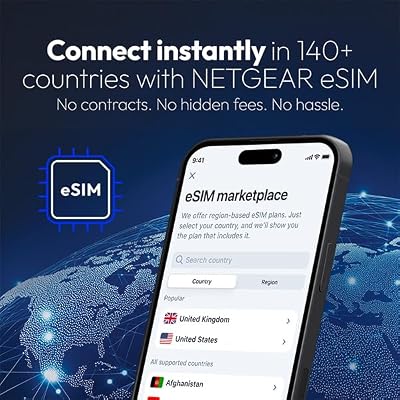
The Nighthawk M7 is built for the traveller who needs cellular-first internet wherever they go. Core use cases are extensive international travel where hotel WiFi is unreliable, frequent in-vehicle use, tradeshows and pop-up offices where wired internet is impractical, and remote-work scenarios where a single fast and reliable cellular connection underpins the day. With the eSIM slot, travellers can switch between carriers in different countries without juggling physical SIM cards, which is a meaningful workflow improvement for international use.
It is the wrong device for buyers whose only need is to share hotel WiFi with several devices — for that the GL.iNet Opal at one tenth the price is the right choice. For travellers who genuinely depend on always-on cellular internet, the M7 is the flagship pick. For more on travel network performance, see our low-latency gaming network guide.
Verdict
At around $700–$800 the NETGEAR Nighthawk M7 is a flagship product, and value here is measured in how completely it replaces hotel WiFi, public WiFi and other unreliable connections with a single trusted cellular link. For frequent travellers, remote workers and anyone whose work depends on always-on connectivity away from home, the combination of 5G, WiFi 7, eSIM, touchscreen and a serious battery is genuinely well-judged. The price reflects flagship status.
It is not the right device for occasional travellers who mainly use hotel WiFi — the GL.iNet Opal or Beryl AX at a fraction of the price is the better fit. For travellers who specifically need cellular as their primary uplink, the Nighthawk M7 earns a strong recommendation. Compare alternatives in our best gaming routers guide.
Frequently Asked Questions
Does the NETGEAR Nighthawk M7 have a built-in 5G modem?
Yes. It includes an integrated 5G sub-6 GHz cellular modem with both eSIM and a physical SIM slot, which makes it a stand-alone mobile hotspot rather than a router that needs an external modem.
Does the NETGEAR Nighthawk M7 have a battery?
Yes. It includes a sizeable built-in rechargeable battery sized for full working sessions away from an outlet, with USB-C charging.
Does the NETGEAR Nighthawk M7 support WiFi 7?
Yes. It is one of the first mobile hotspots to support WiFi 7 (802.11be) on the wireless side, which lets modern WiFi 7 client devices take full advantage of fast 5G uplink speeds.
What is the difference between the M7 and a GL.iNet travel router?
The M7 includes a cellular modem and battery and is a stand-alone hotspot. GL.iNet travel routers depend on an external uplink (hotel WiFi, Ethernet or a separate USB modem) and emphasise VPN flexibility through OpenWrt firmware.
More Travel Router Reviews
- GL.iNet GL-MT3000 Beryl AX Review: WiFi 6 Travel Router (2.5GbE)
- GL.iNet GL-AXT1800 Slate AX Review: WiFi 6 Travel Router
- GL.iNet GL-MT6000 Flint 2 Review: WiFi 6 OpenWrt Router
- TP-Link N300 TL-WR841N Wireless Extender Review
- TP-Link AC1900 Smart WiFi Router Review (Archer A8)
- GL.iNet GL-MT300N-V2 Mango Review: Pocket VPN Travel Router
- TP-Link Roam 6 AX1500 Review: Portable WiFi 6 Travel Router
- TP-Link N300 Nano Travel Router Review (TL-WR802N)
Affiliate Disclosure: As an Amazon Associate, we earn from qualifying purchases. If you click a link and make a purchase, we may earn a small commission at no extra cost to you. Prices and availability are accurate as of publication and may change.