- Top Pick: GL.iNet GL-MT300N-V2 (Mango) Portable Mini Travel Wireless Pocket VPN WiFi Router – 2X Ethernet Ports | USB 2.0 | OpenWrt | OpenVPN/Wireguard for Public & Hotel Wi-Fi | Easy to Set up via Admin Panel
- Best Value: GL.iNet GL-MT3000 Beryl AX Wi-Fi 6 Travel Router, 2.5G WAN, VPN, OpenWrt
- Premium Choice: GL.iNet GL-SFT1200 Opal Travel Router, AC1200 Dual-Band Wi-Fi
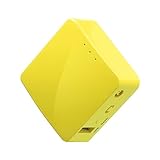
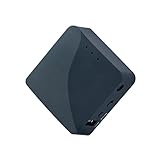
The GL.iNet GL-MT300N-V2 Mango is the entry point into GL.iNet’s well-loved family of pocket travel routers — a credit-card-size OpenWrt router with built-in WireGuard, OpenVPN and Tor support at an asking price around $30. It is the router travellers and tinkerers reach for when they want hotel-WiFi security on the cheap. This GL.iNet Mango review covers the wireless standard, VPN capabilities, modes, portability and overall value.

GL.iNet GL-MT300N-V2 (Mango) Portable Mini Travel Wireless Pocket VPN WiFi Router - 2X Ethernet Ports | USB 2.0 | OpenWrt | OpenVPN/Wireguard for Public & Hotel Wi-Fi | Easy to Set up via Admin Panel


As an Amazon Associate we earn from qualifying purchases. Product prices and availability are accurate as of the date/time indicated.
🛒 Best Price Today on Amazon
Prime members get fast, free shipping on everything above, plus member-only deals. New members get a 30-day free trial — cancel anytime.
As an Amazon Associate we earn from qualifying purchases.


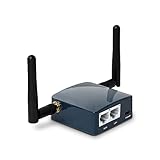

GL.iNet Mango at a Glance
| Component | Specification |
|---|---|
| Form factor | Pocket — credit-card-size plastic chassis |
| WiFi standard | WiFi 4 (802.11n), 2.4 GHz only |
| Max speed | 300 Mbps wireless |
| Cellular | None (tether to USB modem or phone) |
| VPN support | OpenVPN + WireGuard + Tor (OpenWrt) |
| Ethernet ports | 1x WAN + 1x LAN, 100 Mbps |
| Battery | None — USB-powered via micro-USB |
| Modes | Router / Repeater / Bridge / AP / WISP / Hotel WiFi |
| Approx price | Around $30 |
Performance & Range
The Mango is built around a single-band 2.4 GHz WiFi 4 (802.11n) radio rated at 300 Mbps, which is modest by 2026 standards but more than enough for the typical hotel WiFi connection it sits on top of. Real-world throughput is limited by the 100 Mbps Ethernet ports rather than the wireless radio, so think of the Mango as a pocket gateway for a single laptop, phone or tablet rather than a high-throughput home router. Range from the small internal antennas is correspondingly limited to a hotel room or coffee-shop table — this is a router built to be close to the device it serves rather than to cover a building.
The trade-off is the price and the size. At around $30 and small enough to disappear in a coat pocket, the Mango is the cheapest realistic way into the OpenWrt-based GL.iNet ecosystem, and it punches above its hardware spec because the software lets it do things larger consumer routers cannot. For higher wireless throughput in a similar pocket form, see the Opal or Beryl AX further down — or our best gaming routers guide for home use.
VPN Capabilities — OpenVPN / WireGuard / Tailscale
VPN is the Mango’s signature feature. GL.iNet ships every router in the family with a forked OpenWrt firmware that includes OpenVPN, WireGuard and Tor clients out of the box — no command-line setup required. You install your VPN provider’s profile through the web GUI or mobile app, flip a switch, and every device connected to the Mango is tunnelled through the VPN. For travellers using hotel, airport or cafe WiFi, this is the easiest way to extend a paid VPN subscription to phones, consoles and tablets that would otherwise need a per-device app.
WireGuard is the more important of the two protocols for travel use because it is dramatically faster and uses less CPU than OpenVPN — important on the Mango’s modest processor. Recent GL.iNet firmware versions also include built-in Tailscale and AdGuard Home, which lets the Mango join a mesh-VPN of personal devices and block ads at the DNS level for the whole tunnel. The Mango will not saturate a gigabit link with VPN on — the modest CPU caps WireGuard throughput well below 100 Mbps — but for hotel WiFi that rarely exceeds 50 Mbps, the headroom is fine.
Modes — Hotel WiFi / Repeater / Bridge
The Mango supports the full GL.iNet mode set: standard router mode for its own private network, repeater mode to extend an existing WiFi network, bridge/AP mode to add wireless to a wired connection, WISP mode for upstream wireless ISPs, and a dedicated hotel-WiFi mode that handles the captive-portal login problem cleanly. Hotel-WiFi mode is the one most travellers will use most often — when you walk into a room and the hotel WiFi requires a per-device login, the Mango clones the MAC address of your laptop, completes the portal authentication once, and then shares the connection with every other device behind it.
That single trick justifies the router for travellers with several devices, because most hotel WiFi plans charge per device or limit the number of connections per room. The Mango becomes the one authenticated device and every other gadget rides behind it on a clean private network. For multi-room or whole-house coverage at home, the Mango is the wrong tool — see our best mesh WiFi systems guide. For occasional travel use, it is the right tool.
Battery & Portability
The Mango does not include an internal battery — it is powered by micro-USB from any 5V/1A source, which means it runs happily from a phone charger, a laptop USB port or any USB power bank. That is a deliberate design choice: skipping an internal battery keeps the router small, light and cheap, and lets the user choose their own power source. Pair it with even a small power bank and the Mango works in a pocket without an outlet, which is exactly the workflow many travellers want.
Physically it is small enough to forget you are carrying — roughly the footprint of a credit card and a few millimetres thick — which is a genuine selling point for travel use. The plastic chassis feels light rather than premium, but it is durable enough for everyday carry. If you specifically want a battery built into the router itself, see the Roam 6 further down. For everyone else, the Mango plus a power bank is a flexible and very portable combination.
Use Cases — Travel / Coffee Shop / Tradeshow
The Mango is built for three core scenarios. The first is travel: hotel WiFi, airport WiFi and rented apartments where the network is shared, untrusted and often limited to one device per login. The Mango’s combination of hotel-WiFi mode and built-in VPN solves both problems in one device. The second is the coffee-shop or co-working desk, where you want every device on a private encrypted tunnel rather than dropping naked traffic onto a public network — connect to the cafe WiFi via the Mango once and your phone, tablet and laptop all tunnel through the VPN automatically.
The third is the tradeshow or temporary office, where you want a small portable network behind a single uplink — Ethernet from a booth port or wireless repeater from the venue WiFi — and a private network for your team’s devices. In each case the Mango’s value is in the software and the form factor rather than raw speed: it is a Swiss-army-knife pocket router rather than a high-throughput device. For deeper guidance on network tuning for gamers travelling with a console, see our low-latency gaming network guide.
Verdict
At around $30 the GL.iNet GL-MT300N-V2 Mango is one of the easiest recommendations on this list for travellers who want a cheap, capable, software-rich pocket router. It will not satisfy buyers who need WiFi 6, gigabit Ethernet, an internal battery or cellular support — those buyers should look at the Roam 6, Beryl AX or Nighthawk M7 further down — but for the price it brings genuine OpenWrt flexibility, WireGuard and OpenVPN, Tailscale, hotel-WiFi mode and a credit-card form factor.
It is the natural starting point in the GL.iNet ecosystem and the router most travellers buy first before deciding whether they need to step up. For occasional travel, coffee-shop use and tinkering with VPN configurations, it earns a strong recommendation at the price. Buyers who want more wireless headroom should compare the Opal or Beryl AX in this guide, or browse our best budget routers guide.
Frequently Asked Questions
Is the GL.iNet Mango good for travel?
Yes. It is small, USB-powered, supports hotel-WiFi mode to bypass per-device login limits, and includes built-in OpenVPN, WireGuard and Tailscale clients for VPN-protected travel use.
Does the GL.iNet Mango have a battery?
No. It is powered by micro-USB from any 5V/1A source — a phone charger, laptop USB port or USB power bank. Pair it with a small power bank for pocket use without an outlet.
How fast is WireGuard on the GL.iNet Mango?
WireGuard throughput on the Mango’s modest CPU is capped well below 100 Mbps in practice, but that is fine for typical hotel and cafe WiFi connections of 10–50 Mbps.
What is hotel-WiFi mode on GL.iNet routers?
It clones the MAC address of one of your devices, completes the hotel captive-portal login once, and then shares the connection with all your other devices behind the router on a private network.
More Travel Router Reviews
- TP-Link Roam 6 AX1500 Review: Portable WiFi 6 Travel Router
- TP-Link N300 Nano Travel Router Review (TL-WR802N)
- TP-Link AC750 Portable Nano Travel Router Review (TL-WR902AC)
- TP-Link N150 3G/4G Portable Travel Router Review (TL-MR3020)
- GL.iNet GL-SFT1200 Opal Review: Dual-Band Travel Router
- NETGEAR Nighthawk M7 5G Mobile Hotspot Review (WiFi 7)
- GL.iNet GL-MT3000 Beryl AX Review: WiFi 6 Travel Router (2.5GbE)
- GL.iNet GL-AXT1800 Slate AX Review: WiFi 6 Travel Router
Affiliate Disclosure: As an Amazon Associate, we earn from qualifying purchases. If you click a link and make a purchase, we may earn a small commission at no extra cost to you. Prices and availability are accurate as of publication and may change.