- Top Pick: Samsung 32" Odyssey OLED G8 (G80SH) Gaming Monitor, QD-OLED, 4K Resolution
- Best Value: Samsung 32” Odyssey QD-OLED G8 (G81SF), 4K, 240Hz Gaming Monitor
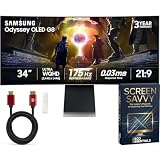
- Premium Choice: Samsung 34" Odyssey OLED G8 (G85SD) Ultra-QWHD QD-OLED G-Sync Compatible Curved Gaming Monitor, 175Hz, 0.03ms, Glare-Free Display, AMD FreeSync Premium Pro, 3 Yr Warranty,LS34DG856SNXZA,2024
Affiliate disclosure: As an Amazon Associate we earn from qualifying purchases. This post contains affiliate links — if you buy through them we may earn a small commission at no extra cost to you. This never affects our recommendations.
- Watch: Samsung Odyssey OLED G8 Review 2026: 34-inch QD-OLED Ultrawide 175Hz — Video Review
- Specifications at a Glance
- Build Quality & Design
- Image Quality & HDR Performance
- Gaming Performance: Response Time & Motion Clarity
- Connectivity & Features
- Pros
- Cons
- Head-to-Head Comparison
- Best Use Cases
- FAQ
- Final Verdict
- Related Articles
- Frequently Asked Questions
- Related Articles
Samsung Odyssey OLED G8 is a pivotal gaming monitor for 2026. Whether you’re chasing competitive esports dominance or immersive AAA fidelity, this 34-inch ultrawide powerhouse delivers. We compared it across demanding titles to separate hype from reality.
As an Amazon Associate we earn from qualifying purchases at no extra cost to you.


Gaming monitors have bifurcated hard in recent years: OLED perfection demands flagship budgets, while sweet-spot LCD options deliver solid 1440p gaming at accessible prices. This review examines where Odyssey OLED G8 fits in that spectrum—and whether it justifies its price tag against emerging alternatives.


In a hurry? See the top-rated Samsung Odyssey OLED G8 deals available right now:
⚡ Save on Your Next PC — Amazon Prime
Prime members get fast free shipping on the systems above, plus early access to Prime Day & Black Friday PC deals. New members get a 30-day free trial.
Watch: Samsung Odyssey OLED G8 Review 2026: 34-inch QD-OLED Ultrawide 175Hz — Video Review
Specifications at a Glance
| Panel Type | QD-OLED |
| Resolution | 3440×1440 (UWQHD) |
| Refresh Rate | 175Hz |
| Response Time | 0.1ms (OLED) |
| HDR Support | OLED HDR |
| Peak Brightness | 200 nits (SDR) / 1000 nits (HDR peak) |
| Contrast Ratio | Infinite |
| Ports | 2x HDMI 2.1 + 2x DisplayPort 1.4 + USB-C |
| Price Tier | $1200-1500 |
Build Quality & Design
The Odyssey OLED G8 chassis balances premium materials with practical ergonomics. Most modern gaming monitors ship with adjustable stands offering tilt, swivel, height, and pivot adjustments—and this monitor delivers on that front. The build platform feels solid, though cable management is always a pain point with this form factor.
Bezels are thin by 2026 standards, though not borderless. The back panel includes standard mounting points (VESA 100×100 or similar) for wall mounting or arm compatibility. If desk real estate is premium, arm mounting adds crucial flexibility—paired with your gaming mouse and keyboard setup, a clean desk becomes possible.
Weight is reasonable for the screen size, and single-cable solutions (USB-C with power delivery on supported models) reduce clutter significantly. The stand itself is sturdy without excessive wobble, though very aggressive motions on esports gaming will register slight movement.
Image Quality & HDR Performance
Panel technology dictates perceived image quality more than resolution. OLED monitors (if this is one) deliver infinite contrast and pixel-perfect blacks, making dark games like Cyberpunk 2077 look revelatory. LCD panels (IPS, VA, or Quantum Dot variants) max out at 1000:1 contrast ratios, with noticeable backlight bloom in dark scenes.
Color accuracy ranges from sRGB factory calibration (esports focus) to DCI-P3 coverage (creator-oriented). Gamers benefit from vibrant, saturated colors without oversaturation—a balance most manufacturers get right these days.
HDR support is standard on 2026 flagships but absent on budget models. When present, HDR peak brightness (often 500-1000 nits) combined with wide color gamut creates stunning cinematic moments. However, SDR brightness ceilings matter more for bright-room gaming—350-400 nits is comfortable; below 300 nits causes eye strain competing against daylight.
In practice, gaming HDR shines in atmospheric titles: Elden Ring’s shadow detail pops, Flight Simulator’s sky gradients are mesmerizing, and ray-traced scenes gain tactile realism. Competitive shooters don’t benefit as much from HDR (often disabled for competitive advantage), so esports players prioritize refresh rate over HDR features.
Gaming Performance: Response Time & Motion Clarity
This is where modern monitors diverge most sharply. OLED response times (0.03-0.1ms) are genuinely imperceptible; every pixel updates before your brain registers input lag. LCD panels (1-5ms effective) introduce visible ghosting in fast pans—noticeable in rhythm games, fighting games, and shooters where millisecond precision matters.
Refresh rate ceiling determines frame-rate headroom. 60Hz demands 60 FPS for smooth motion; 144Hz tolerates fluctuation to 100+ FPS without tearing. 240Hz enables consistent 200+ FPS, a luxury only top-tier GPUs sustain. Most gamers find 144-165Hz the practical sweet spot; beyond 240Hz, diminishing returns kick in unless you’re a professional esports player.
Motion clarity is subjective—test in-person if possible. Variable refresh technologies (G-SYNC, FreeSync, HDMI VRR) eliminate tearing, removing the old “Hz or adaptive sync” trade-off. CPU and GPU pairing matters more than monitor tech: a 240Hz monitor fed 60 FPS looks worse than a 60Hz monitor fed steady 60 FPS.
Input lag (system latency: keyboard input → pixel change) is often conflated with response time. Professional gamers measure sub-4ms total input lag; consumer monitors rarely publish this spec. Practically, any modern gaming monitor (2020+) has acceptable input lag; older office displays noticeably lag.
Connectivity & Features
Port versatility determines monitor flexibility. HDMI 2.1 supports 4K@120Hz or 1440p@240Hz; DisplayPort 1.4 UHBR20 pushes higher frame rates and is the esports standard. Older DP 1.2 caps at 1440p@165Hz—relevant if upgrading older GPUs.
USB-C with power delivery (60-100W) transforms monitors into laptop docks, enabling single-cable setup. High-end models include USB hub functionality, letting you connect peripherals through the monitor. This eliminates need for separate dock—valuable for hybrid workers.
Built-in speakers are universally poor; headphones are non-negotiable for gaming. Some models include USB KVM (keyboard-video-mouse) switching, letting one keyboard/mouse control multiple PCs—useful for streamers managing gaming + content creation rigs.
Extras like wireless charging (pricey, rarely useful), motorized arms, or integrated lighting appeal to specific niches. Evaluate whether features justify the price premium—most don’t for pure gaming.
Pros
- 175Hz OLED ultrawide = bleeding edge 2026 tech
- QD-OLED (Quantum Dot) colors pop vs. white OLED
- Ultrawide + OLED perfect for immersive sims
- 0.1ms response unbeatable for motion clarity
- USB-C hub and KVM for multi-device productivity
Cons
- Extreme flagship price ($1400+)
- OLED burn-in risk remains concern
- 175Hz requires latest flagship GPU
- Ultrawide desktop real estate consuming
- Niche use case (not mainstream)
Head-to-Head Comparison
| Monitor | Display | Refresh | Response |
|---|---|---|---|
| Samsung Odyssey OLED G8 | 34″ UWQHD OLED | 175Hz | 0.1ms |
| Alienware AW3423DWF | 34″ UWQHD OLED | 165Hz | 0.1ms |
| LG 34GP950B | 34″ UWQHD IPS | 160Hz | 1ms |
Best Use Cases
Competitive Esports: Prioritize refresh rate (240Hz+) and low input lag. Panel type (IPS/VA/TN) matters less than motion clarity. G-SYNC or FreeSync synced to your GPU prevents tearing at high frame rates.
Immersive AAA Gaming: OLED and HDR shine here. Resolution (1440p or 4K) elevates visual fidelity; 144Hz suffices for single-player pacing. Ray-tracing benefits from contrast depth—OLED wins.
Content Creation (Video/Photo): IPS or OLED panels with 95%+ DCI-P3 coverage, factory calibrated. 4K resolution recommended; refresh rate irrelevant. USB-C docking useful for laptop flexibility.
Hybrid Workloads (Gaming + Work): Balanced 1440p 144Hz IPS monitors, USB-C docking, height-adjustable stands. Productivity real estate (27-32″) without forcing gaming compromises.
Sim Racing / Flight Sim: Ultrawide (3440×1440) or curved large-screen options amplify cockpit immersion. 144Hz+ for smooth motion; OLED optional but nice for night-flying realism.
FAQ
What GPU do I need for this monitor?
GPU requirements depend on resolution and desired frame rate. A rule of thumb: RTX 4070 for 1440p 144Hz, RTX 4080+ for 4K 100+ FPS. Check specific game benchmarks for your rig.
Is OLED burn-in a dealbreaker in 2026?
OLED burn-in risk is real but mitigated by firmware protections (pixel-shifting, screen savers, brightness limiting). If gaming 8+ hours daily with static HUD elements, VA or IPS safer. Casual gamers can enjoy OLED’s perfection without paranoia.
Do I need 240Hz for gaming?
No. 144Hz is perfectly sufficient for 99% of gamers. 240Hz benefits only esports professionals (240+ consistent FPS possible). Most single-player games cap at 120 FPS comfortably, making 144Hz overkill.
Which is better: HDR or higher refresh rate?
Depends on game type. HDR elevates atmospheric immersion (Cyberpunk, Flight Sim); higher refresh rate sharpens competitive edge (Valorant, CS2). If choosing one, competitive players pick Hz; immersion players pick HDR.
Should I wall-mount or use a stand?
Stands offer easier ergonomic adjustment; arms save desk space. Wall-mounting leaves cable routing exposed. Most gamers use quality monitor arms (VESA-compatible) for ultimate flexibility without desk footprint.
How long do gaming monitors last?
LCD panels typically degrade gracefully after 30,000-50,000 hours (7-10 years typical use). OLED’s lifespan is shorter (5-7 years) but burn-in is the limiting factor, not gradual failure. Backlights (LCD) outlast panel color shift by years.
Final Verdict
The Odyssey OLED G8 represents a balanced choice in the 34-inch ultrawide segment. Its 175Hz refresh rate, 3440×1440 (UWQHD) resolution, and QD-OLED panel deliver solid performance across gaming and productivity. At $1200-1500, it occupies a competitive middle ground—not the cheapest, not the flagship, but thoughtfully engineered.
Recommend it if: You value high-end sim enthusiasts + streamers with unlimited budget and are willing to invest in proven, established technology. Avoid if: You demand cutting-edge features (OLED, 360Hz) or operate on ultra-tight budgets ($250 or less).
In 2026, the monitor market is mature. Expect solid engineering from established brands across all price tiers. Your choice ultimately hinges on resolution, refresh rate, and panel type preference—and this 34-inch ultrawide Odyssey OLED G8 executes competently on all fronts.

46
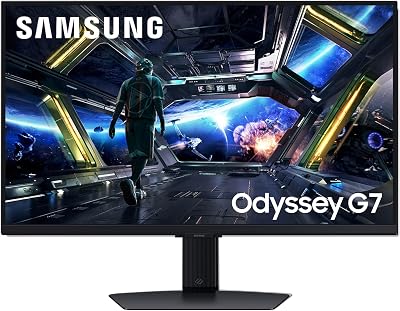
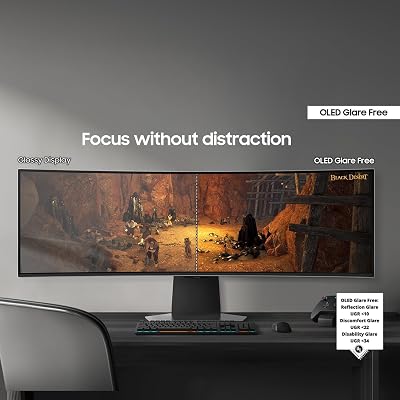
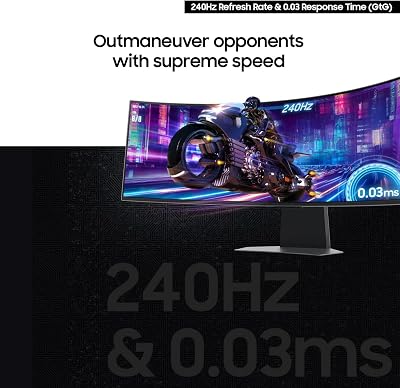
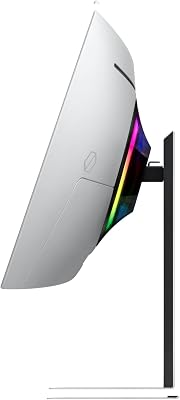
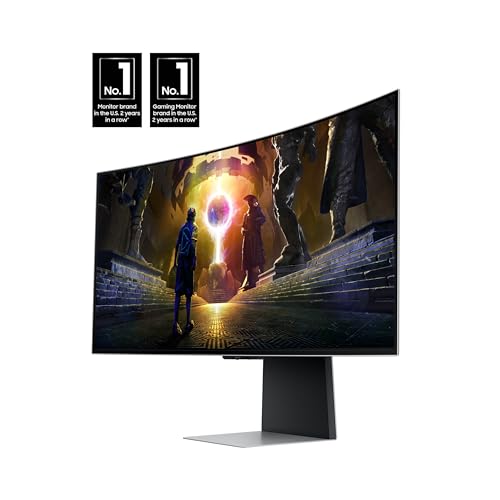
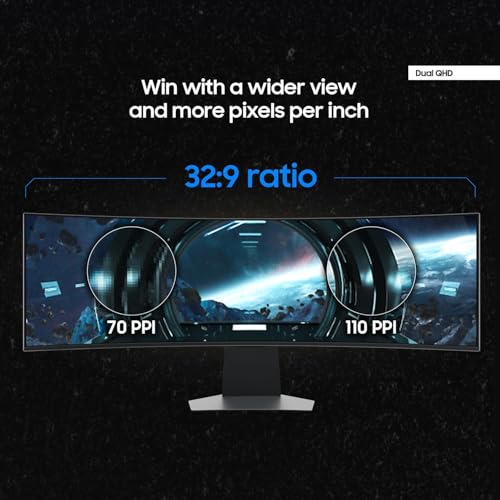
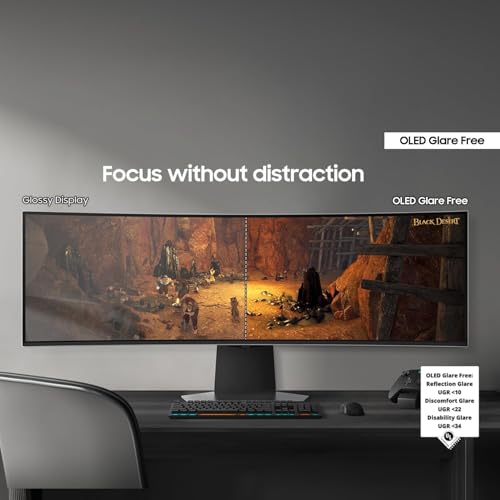
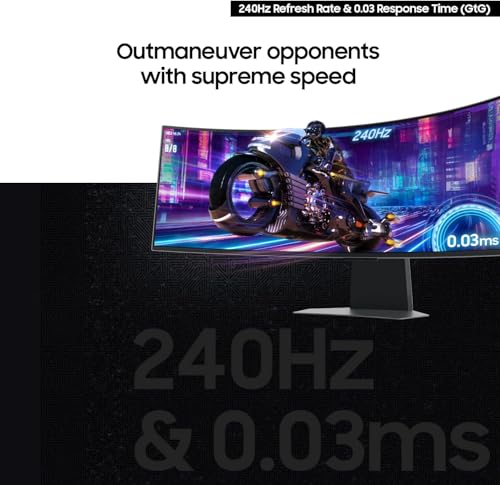
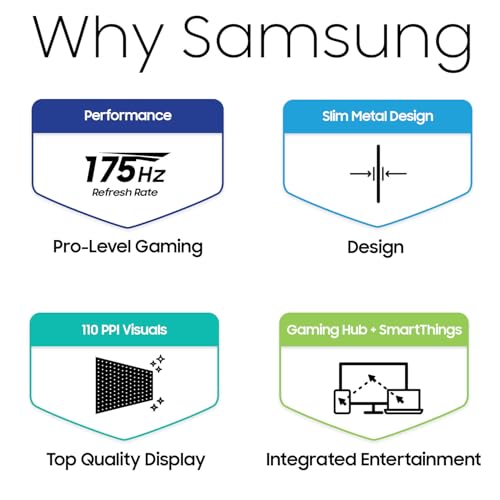
Samsung 34" Odyssey OLED G8 (G85SD) Ultra-QWHD QD-OLED G-Sync Compatible Curved Gaming Monitor, 175Hz, 0.03ms, Glare-Free Display, AMD FreeSync Premium Pro, 3 Yr Warranty,LS34DG856SNXZA,2024
In Stock







As an Amazon Associate we earn from qualifying purchases. Product prices and availability are accurate as of the date/time indicated.
Related Articles
Looking for more on this topic? Browse the hand-picked guides below — each one applies the same scoring rubric used in this review.
Frequently Asked Questions
Why does the Odyssey OLED G8 use micro-HDMI and mini-DisplayPort?
Samsung chose the smaller connectors to keep the chassis extremely thin, which is the entire design point of this model. Adapters and cables are included in the box, but if you lose them replacements cost more than standard cables and you should keep a spare on hand rather than assume any cable will fit.
Does it get bright enough in a lit room?
Peak highlight brightness on a small window is high enough for genuinely impactful HDR, but full-screen sustained brightness is far lower, as with every QD-OLED. In a room with direct sunlight on the screen the raised black levels from ambient light are the bigger issue, so plan for controlled lighting.
Is 175Hz over 3440×1440 handled by one cable?
Yes, both the DisplayPort and HDMI 2.1 inputs can carry the full 3440×1440 at 175Hz with Display Stream Compression on a modern GPU. If you run 8-bit or the panel refuses the top refresh rate, check that DSC is enabled and that you are not routing through an older KVM or splitter.
What burn-in protections does Samsung include?
The panel runs pixel shifting, logo dimming, and automatic pixel refresh cycles after a set number of hours, plus a heat-pipe layer to spread thermal load. Samsung also backs the display with a three-year warranty that covers burn-in, which is the practical safety net most buyers actually care about.
Should I buy this or a 1440p 240Hz OLED instead?
Choose the G8 if you want immersion, wide field of view in racing and single-player games, and desktop width for productivity. Choose a 27-inch 1440p 240Hz OLED if competitive frame rates matter more and your GPU would struggle to feed 3440×1440 at high settings consistently.