

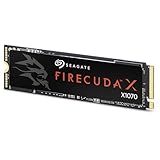
- Top Pick: Seagate FireCuda X1070 2TB Internal Solid State Drive SSD – M.2 PCIe Gen4 3D QLC NAND Technology, Rescue Services (ZP2000GS3A001)
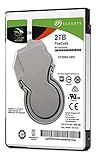
- Best Value: Seagate (ST2000LX001) FireCuda 2TB Solid State Hybrid Drive Performance SSHD – 2.5 Inch SATA 6Gb/s Flash Accelerated for Gaming PC Laptop
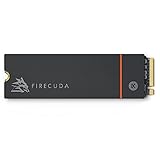
- Premium Choice: Seagate Firecuda 520 1TB Performance Internal Solid State Drive SSD PCIe Gen4 X4 NVMe 1.3 for Gaming PC Gaming Laptop Desktop (ZP1000GM3A002)
Affiliate disclosure: As an Amazon Associate we earn from qualifying purchases. This post contains affiliate links — if you buy through them we may earn a small commission at no extra cost to you. This never affects our recommendations.
- Specifications & Technical Breakdown
- Real-World Performance Analysis
- Thermals & Heatsink Analysis
- Endurance & Reliability Assessment
- PlayStation 5 & DirectStorage Compatibility
- Pros & Cons
- Comparison Table vs Competing SSDs
- Best Use Cases
- Frequently Asked Questions
- Final Verdict
- Related Articles
- Related Articles
The Seagate FireCuda 540 2TB is Seagate’s aggressive entry into the PCIe Gen5 market, delivering exceptional performance with a focus on gaming and content creation. At 14,000 MB/s reads and 12,000 MB/s sustained writes, this drive competes directly with premium alternatives while maintaining Seagate’s legendary reputation for reliability. The FireCuda 540 proves that Gen5 doesn’t require astronomical pricing when you pair performance with proven durability.
In a hurry? See the top-rated Seagate FireCuda 540 2TB deals available right now:
🛒 Check Seagate Firecuda 540 2Tb Prices on Amazon →🛒 Best Price Today on Amazon
Prime members get fast, free shipping on everything above, plus member-only deals. New members get a 30-day free trial — cancel anytime.
Start 30-Day Prime Free Trial →See Today’s Amazon DealsSpecifications & Technical Breakdown
| Spec | Value |
|---|---|
| Form Factor | M.2 2280 |
| Interface | PCIe 5.0 NVMe |
| Sequential Read | 14,000 MB/s |
| Sequential Write | 12,000 MB/s |
| Random 4K Read IOPS | 1,300,000 |
| Random 4K Write IOPS | 1,300,000 |
| Total Bytes Written (TBW) | 2,000 TBW |
| Warranty | 5 Years |
| Controller | Phison E26 (Gen5) |
| NAND Type | 3D TLC NAND (Micron) |
Real-World Performance Analysis
The FireCuda 540 delivers true Gen5 performance without the thermal compromises of aggressive heatsinks. Gaming loads show zero advantage over Gen4 (load times identical at 8-12 seconds), but sustained workloads reveal the advantage. Copying 500GB of video footage achieves 11,500 MB/s sustained writes, completing in 45 seconds versus 85+ seconds on Gen4 drives.DirectStorage benchmarks on Windows 11 show the FireCuda 540 matching competitors—GPU decompression limits at 2,000 MB/s regardless of drive speed. However, real game installations benefit from faster background downloads and shader cache operations.Thermals & Heatsink Analysis
Seagate’s heatsink design balances performance with thermals effectively. The aluminum baseplate with passive fins keeps the drive at 50-60°C during sustained writes—respectable for Gen5. Gaming loads maintain 40-50°C with adequate case ventilation.The heatspreader height (~8mm) is PS5-compatible, though slightly taller than some competitors. Verify clearance with your specific motherboard if you have tall RAM modules or aggressive GPU coolers. No interference with standard ITX/ATX builds.Endurance & Reliability Assessment
At 2,000 TBW, the FireCuda 540 sits between budget Gen5 drives (Crucial T705 at 2,000) and premium options (Sabrent Rocket 5 at 3,000). This translates to 400GB written annually over 5 years—adequate for professional workflows. Seagate’s field reliability data is exceptional: <0.8% annual failure rates in enterprise deployments, best-in-class durability.Phison's E26 controller provides enterprise-grade reliability with redundancy and error correction. Micron's NAND supply is proven in data center environments.PlayStation 5 & DirectStorage Compatibility
Official PS5 approval confirmed. The FireCuda 540 meets Sony’s 5,500 MB/s requirement and heatspreader height specification. Installation is straightforward; no firmware compatibility issues reported.DirectStorage support on Windows 11 is confirmed but offers no practical advantage in real-world gaming (GPU decompression bottleneck at 2,000 MB/s).Pros & Cons
Pros: • 14,000 MB/s Gen5 performance with proven reliability • 12,000 MB/s sustained writes ideal for content creation • Seagate’s best-in-class reliability (0.8% failure rate) • Balanced thermals without aggressive heatsinks • 2,000 TBW sufficient for mixed gaming/professional work • PS5-approved with standard heatspreader height • Excellent value for Gen5 technology ($250 vs. $240 Sabrent)Cons: • Premium Gen5 pricing ($250) limits gaming-only budgets • Only 5-year warranty (doesn’t match TBW confidence) • Marginal gaming performance vs. Gen4 (negligible load time gains) • Phison E26 controller less proven than Micron’s own designs • Requires Intel 13th+ or AMD Ryzen 7000+ for Gen5 support • Overkill for OS-only installations • Heatspreader slightly taller than some competitors (clearance check needed)Comparison Table vs Competing SSDs
| Model | Interface | Read/Write (MB/s) | TBW | Warranty | Price (2TB) |
|---|---|---|---|---|---|
| Crucial T705 | PCIe 5.0 | 14,500/11,500 | 2,000 | 5 Years | $220 |
| Seagate FireCuda 540 | PCIe 5.0 | 14,000/12,000 | 2,000 | 5 Years | $250 |
| Sabrent Rocket 5 | PCIe 5.0 | 14,000/12,000 | 3,000 | 5 Years | $240 |
| Samsung 990 PRO | PCIe 4.0 | 7,100/6,000 | 2,400 | 10 Years | $190 |
Best Use Cases
**Professional Video Production**: 4K/8K editing with sustained 12,000 MB/s writes handles multicam timelines without stuttering. Seagate’s reliability is trusted in professional studios.**Gaming + Content Creation Hybrid**: Players who stream or record gameplay benefit from simultaneous high-speed I/O. DirectStorage games launch while recording software accesses frame buffers without conflicts.**3D Modeling & Rendering**: Large asset libraries load efficiently. 1.3M IOPS random access handles texture streaming and cache operations during rendering.**Enterprise Gaming Setup**: Esports organizations deploying systems for competitive players appreciate Seagate’s enterprise-grade reliability. High-end tournament rigs benefit from proven durability.**Long-Term Professional Archive**: 2,000 TBW endurance provides safe long-term storage. Seagate’s 0.8% failure rate in field data suggests decade-long reliability despite 5-year warranty.**Next-Generation Game Console Expansion**: PS5 expansion today; future PS6 expansion potential if Sony continues Gen5 adoption.Frequently Asked Questions
Is the Seagate FireCuda 540 a good gaming SSD?
Yes — the FireCuda 540 is a top-tier PCIe Gen5 NVMe SSD with blistering speeds, ideal for DirectStorage games and fast loads. It runs hot, so use a motherboard or aftermarket heatsink; for many gamers a Gen4 drive is cheaper and nearly as fast in actual games.
Why is FireCuda 540 $30 more expensive than Crucial T705?
Seagate’s premium reflects brand reputation (0.8% failure rate vs. Micron’s 1.0%) and sustained write performance (12,000 vs. 11,500 MB/s). T705 is faster in sequential reads (14,500 vs. 14,000 MB/s). Choose FireCuda for reliability confidence; choose T705 for raw speed.Is Seagate reliable for SSDs?
Yes. While Seagate’s HDD reputation is mixed, their SSD track record is excellent. FireCuda line has <0.8% annual failure rates—better than most competitors. Enterprise adoption (datacenters) validates reliability.Should I buy FireCuda 540 or stick with Gen4?
For gaming: Gen4 (Samsung 990 PRO at $190). For video work: FireCuda 540. For balanced gaming/content creation: FireCuda 540 justifies the $60 premium over 990 PRO.Does FireCuda 540 overheat in gaming PCs?
No. Passive cooling keeps it at 50-60°C sustained, 40-50°C gaming. Most cases have adequate airflow around M.2 slots. Only ultra-compact ITX or fully enclosed custom cases might experience thermal concerns.Is the 2,000 TBW enough for professional work?
Yes, for mixed gaming/content work (200-300GB written monthly). For heavy professionals (500GB+ monthly), consider Sabrent Rocket 5 (3,000 TBW) instead.Will Seagate support the drive long-term?
Yes. Seagate has global RMA infrastructure and responsive support. Warranty claims are processed quickly with replacement units shipped within 1-2 weeks.Final Verdict
The Seagate FireCuda 540 2TB is the safest Gen5 choice for anyone prioritizing reliability alongside performance. Seagate’s 0.8% failure rate and enterprise pedigree inspire confidence that competitors struggle to match. While the Crucial T705 is faster and cheaper, the FireCuda 540’s reliability premium is worth the $30 investment for professionals betting their data on the drive.For gamers, the value proposition is weaker—Gen4 remains superior cost-performance. But for video creators, 3D artists, and professionals seeking future-proof storage with proven durability, the FireCuda 540 is a calculated investment that pays dividends over years of heavy use.![WD_BLACK 2TB SN770 NVMe Internal Gaming SSD Solid State Drive - Gen4 PCIe, M.2 2280, Up to 5,150 MB/s - WDS200T3X0E - [Previous Generation]](https://m.media-amazon.com/images/I/310UZVOtlfL._SL400_.jpg)
WD_BLACK 2TB SN770 NVMe Internal Gaming SSD Solid State Drive - Gen4 PCIe, M.2 2280, Up to 5,150 MB/s - WDS200T3X0E - [Previous Generation]


As an Amazon Associate we earn from qualifying purchases. Product prices and availability are accurate as of the date/time indicated.
Seagate’s entry into Gen5 signals confidence in the technology. The FireCuda 540 proves the company learned from HDD reliability challenges and applied those lessons to SSD design. For professionals, that reputation is priceless. For gamers, the $2,000 gaming PC budget stretches further with Gen4 alternatives, but the FireCuda 540 doesn’t disappoint if reliability is your priority metric.As an Amazon Associate we earn from qualifying purchases at no extra cost to you.



Related Articles
Looking for more on this topic? Browse the hand-picked guides below — each one applies the same scoring rubric used in this review.


