

- Top Pick: ASUS Pro WS WRX90E-SAGE SE EEB Workstation Motherboard, AMD Ryzen™ Threadripper™ PRO 7000 WX-Series, ECC R-DIMM DDR5, 32 Power-Stage,7xPCIe 5.0×16, PCIe 5.0 M.2, 10Gb & 2.5Gb LAN, Multi-GPU Support
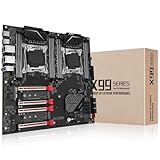
- Best Value: SHANGZHAOYUAN X99 MD8 Dual CPU Motherboard Intel LGA 2011-V3 DDR4 E-ATX
- Premium Choice: ASUS Pro WS W680-ACE IPMI Intel LGA1700 ATX workstation motherboard,2x PCIe 5.0×16 slot,DDR5,ECC memory,2×2.5 Gb Lan,3xM.2 slots,SlimSAS,BMC header,THUNDERBOLT4 Header,IPMI Expansion card bundled,ACCE
🛒 Best Price Today on Amazon
Prime members get fast, free shipping on everything above, plus member-only deals. New members get a 30-day free trial — cancel anytime.
- Top Server Motherboards Picks for 2026
- Best Server Motherboards at a Glance
- 1. ASUS Pro WS W890-SAGE Intel W890 (LGA 4710-2) CEB Workstation Motherboard
- 2. GIGABYTE B650 AORUS Elite AX AMD AM5 ATX Motherboard
- 3. GIGABYTE Z790 AORUS Elite AX LGA 1700 ATX Motherboard
- 4. MSI MAG B550 Tomahawk Gaming Motherboard (AMD AM4)
- 5. MSI B550M PRO-VDH WiFi ProSeries Motherboard (AMD AM4)
- 6. GIGABYTE B550 Gaming X V2 AMD AM4 ATX Motherboard
- How to Choose a Server Motherboard (and Spot One That Isn’t)
- Related Guides
- Frequently Asked Questions
- Related Guides
- Related Articles
Top Server Motherboards Picks for 2026
Here are our current top server motherboards picks, compared on real Amazon owner reviews, price, and features. Live prices update below.
As an Amazon Associate we earn from qualifying purchases at no extra cost to you.




Prime
Best Seller
GIGABYTE X870 AORUS Elite WIFI7 ICE AMD AM5 LGA 1718 Motherboard, ATX, DDR5, 4X M.2, PCIe 5.0, USB4, WIFI7, 2.5GbE LAN, EZ-Latch, 5-Year Warranty


‘Server motherboard’ means something specific, and it is worth being blunt about it up front. A true server or workstation board is built for reliability and uptime: it supports ECC (error-correcting) memory to catch data errors, usually includes a BMC with IPMI for out-of-band remote management, and accepts server-class CPUs such as Intel Xeon or AMD EPYC. Most of the boards people search for under this term are actually excellent consumer gaming boards — great for a home server, but not the genuine article. This guide is honest about that distinction so you buy the right class of board for the job.
Our list is led by the one true workstation-class board here and then covers the consumer boards that make capable, affordable home-server and NAS hosts — clearly labelled as such. We chose picks on the criteria that actually matter for always-on machines: memory support and whether ECC is on the table, connectivity and expansion (PCIe lanes, M.2, SATA, networking), platform longevity, and value, with prices spanning from around $90 to around $1,000. Below is an at-a-glance comparison that flags exactly which board is a real server platform and which are consumer boards suited only to home-server duty, followed by a closer look at each and a buyer’s guide to choosing correctly.
Best Server Motherboards at a Glance
| Motherboard | Best For | Standout Spec / Honest Note | Approx Price |
|---|---|---|---|
| ASUS Pro WS W890-SAGE | TRUE server/workstation board | W890, Xeon + ECC, workstation expansion | around $999 |
| GIGABYTE B650 AORUS Elite AX | Modern home server (consumer) | AM5, DDR5, often ECC-tolerant; NOT a true server board | around $138 |
| GIGABYTE Z790 AORUS Elite AX | Intel home server (consumer) | LGA1700, lots of M.2; NOT a true server board | around $190 |
| MSI MAG B550 Tomahawk | Reliable AM4 home server | AM4, robust VRM; consumer, not a server board | around $160 |
| MSI B550M PRO-VDH WiFi | Compact budget home server | Micro-ATX value; consumer, not a server board | around $100 |
| GIGABYTE B550 Gaming X V2 | Cheapest home-server base | AM4 ATX budget; consumer, not a server board | around $90 |
1. ASUS Pro WS W890-SAGE Intel W890 (LGA 4710-2) CEB Workstation Motherboard

27
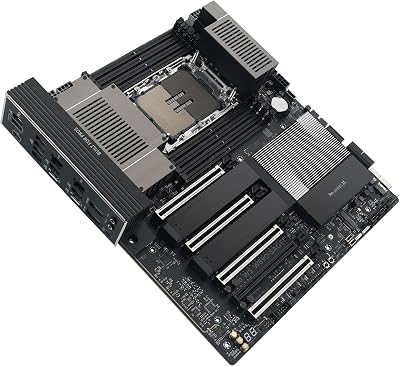
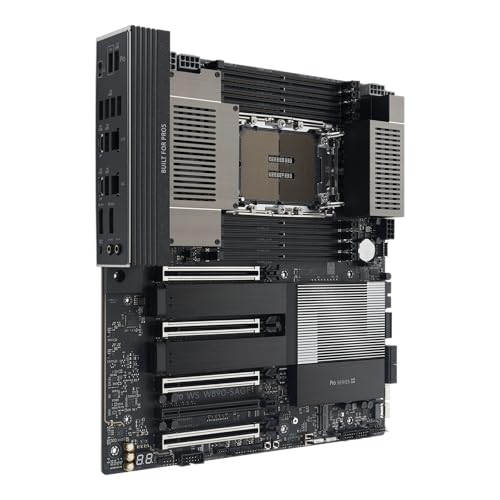
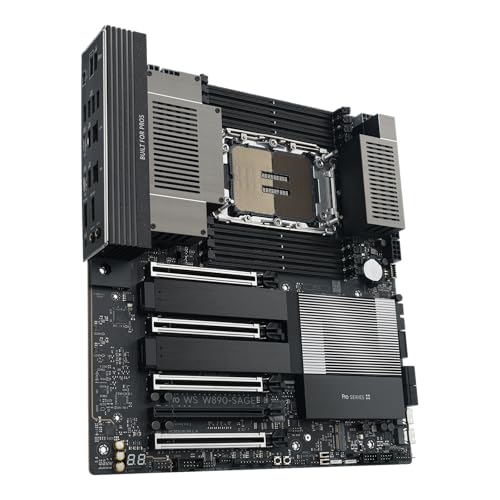
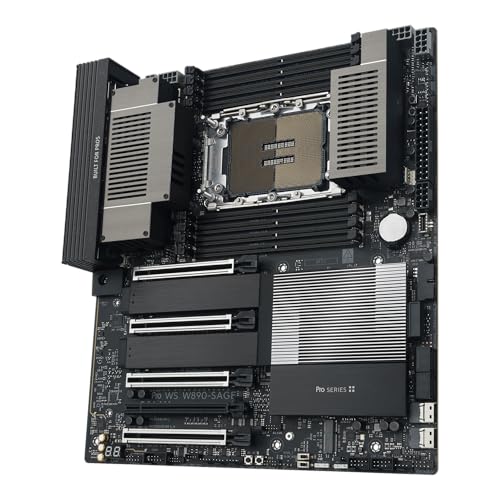
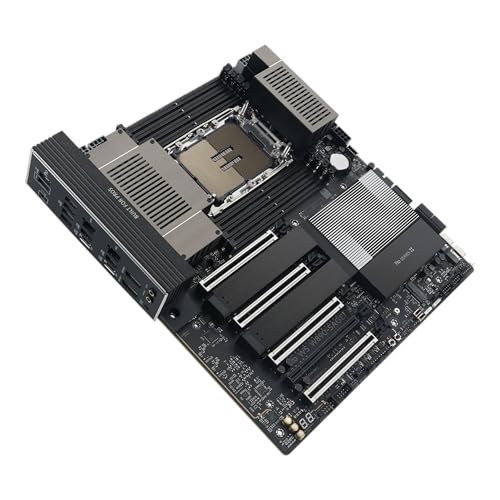
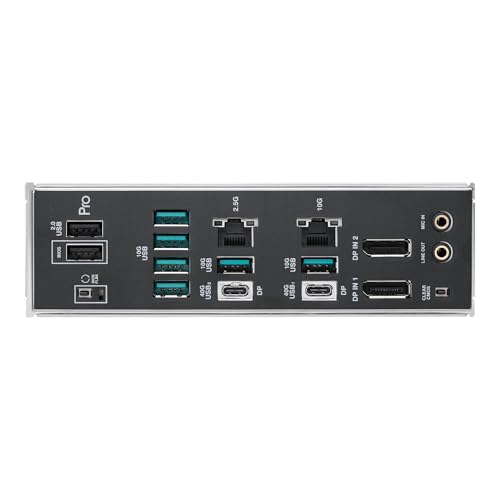
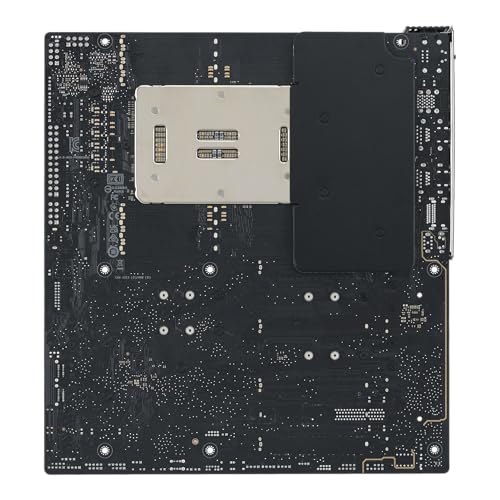
ASUS Pro WS W890-SAGE Intel? W890 (LGA 4710-2) CEB Workstation Motherboard, PCIe 5.0 x16, M.2, SlimSAS, 10Gb+2.5Gb LAN, Ready for IPMI Expansion Card, 12+(2+2)+1+2 Stages, USB4?, USB 20Gbps Type-C
In Stock
Updated: May 27, 2026




As an Amazon Associate we earn from qualifying purchases. Product prices and availability are accurate as of the date/time indicated.
The ASUS Pro WS W890-SAGE is the only genuine server-class board on this list, and it is the standout for anyone who needs the real thing. Built on Intel’s W890 workstation chipset with the LGA 4710-2 socket, it supports Intel Xeon processors and ECC memory, and brings the heavy PCIe lane count, abundant storage, and robust power delivery that workstation and entry-server duty demand. At around $999 it is priced like the professional platform it is, not a consumer board.
This is the board to choose when you actually need server-grade reliability: ECC memory to protect against data corruption, the expansion to run multiple GPUs, accelerators or HBAs, and a Xeon platform built for sustained, round-the-clock workloads. It targets workstations, render nodes, virtualization hosts and small servers where uptime and data integrity are non-negotiable. If you have been searching for a ‘server motherboard’ and you mean it literally — Xeon, ECC, serious expansion — this ASUS Pro WS is the one true platform here and the right place to spend.
Pros: Genuine workstation platform: Intel W890 with Xeon and ECC support, heavy PCIe expansion, server-grade build.
Cons: Expensive and requires costly Xeon CPUs and ECC memory; overkill for a simple home media server.
2. GIGABYTE B650 AORUS Elite AX AMD AM5 ATX Motherboard

15
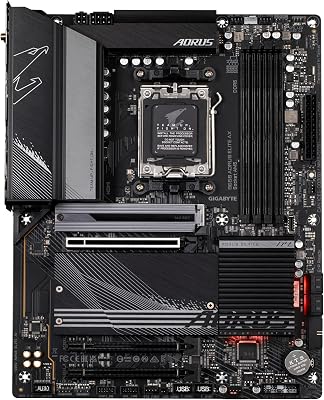
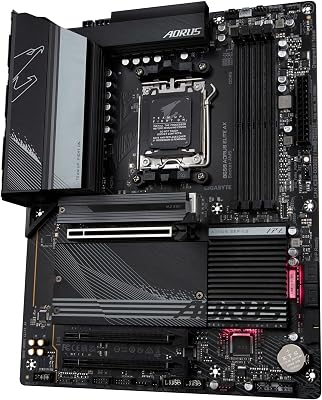
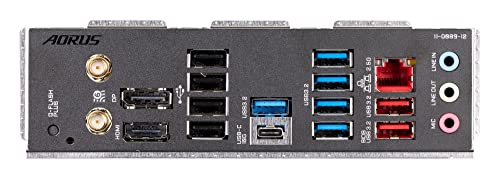
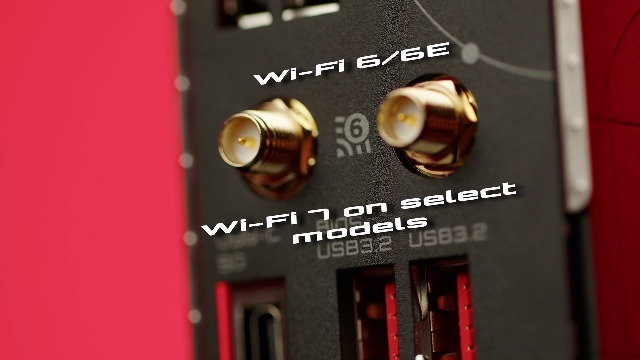
GIGABYTE B650 AORUS Elite AX AMD AM5 ATX Motherboard, Support Ryzen 9000/8000/7000 Series, DDR5, 14+2+1 Power Phase, PCIe 5.0 M.2, USB-C 3.2 Gen 2, WIFI6E, 2.5GbE, EZ-Latch, Q-Flash, RGB Fusion
In Stock
$149.99
Save $10.00
Updated: July 24, 2026



As an Amazon Associate we earn from qualifying purchases. Product prices and availability are accurate as of the date/time indicated.
The GIGABYTE B650 AORUS Elite AX is our pick for a modern home server, with one honest caveat: it is a consumer gaming/productivity board, not a true server board. It uses AMD’s current AM5 socket with DDR5, supports Ryzen 7000/8000/9000 chips, and offers Wi-Fi, multiple M.2 slots and a strong VRM. At around $138 it is a forward-looking, long-life base for an always-on machine — just not a Xeon/EPYC platform with a BMC.
Choose this board if you want to build a capable home server, NAS or self-hosting box on a current platform with room to grow. AM5 gives you years of CPU upgrade headroom, the DDR5 support and M.2 slots suit a fast, storage-heavy build, and many Ryzen + AM5 combinations can run ECC UDIMMs in a non-validated capacity (verify before relying on it). What you do not get is validated server ECC, IPMI remote management or Xeon/EPYC support — so treat it as an excellent home server, not a data-centre board.
Pros: Modern AM5/DDR5 platform, long upgrade life, Wi-Fi and multiple M.2, strong consumer VRM for a home server.
Cons: Consumer board, NOT a true server platform: no IPMI/BMC, no validated server ECC, no Xeon/EPYC support.
3. GIGABYTE Z790 AORUS Elite AX LGA 1700 ATX Motherboard

14
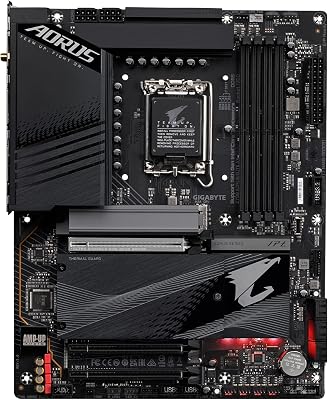
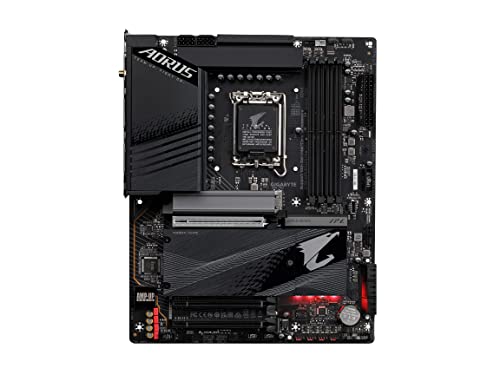
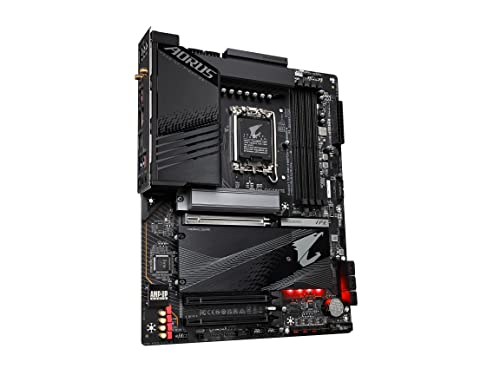
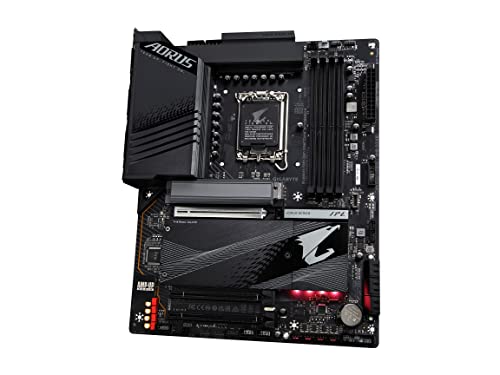
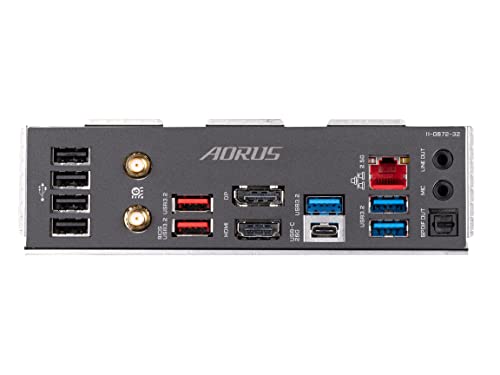
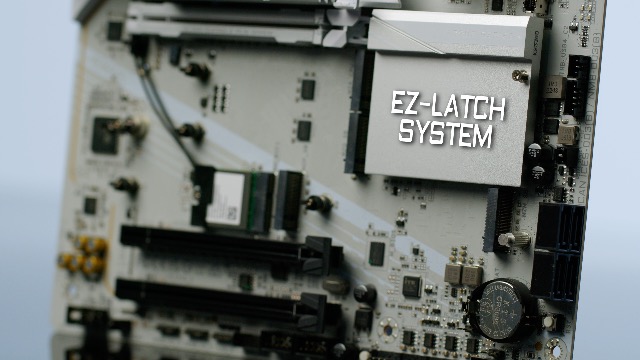
GIGABYTE Z790 AORUS Elite AX LGA 1700 ATX Motherboard, Support Intel Core 14th/13th/12th Gen, DDR5, 16+1+2 Power Phase, 4X M.2, PCIe 5.0, USB-C 3.2, WIFI6E, 2.5GbE, Q-Flash, EZ-Latch, RGB Fusion
In Stock
Updated: May 26, 2026


As an Amazon Associate we earn from qualifying purchases. Product prices and availability are accurate as of the date/time indicated.
The GIGABYTE Z790 AORUS Elite AX is the Intel-platform home-server pick — and again, an honest one: this is a consumer enthusiast board, not a server board. It runs Intel 12th/13th/14th-gen Core CPUs on LGA 1700, supports fast memory, and is loaded with M.2 slots, USB and Wi-Fi. At around $190 it makes a powerful, storage-rich foundation for a home server built around an Intel CPU and integrated graphics for transcoding.
Pick this board if you prefer Intel and want a fast home server or NAS with plenty of NVMe storage — Intel iGPUs are popular for hardware media transcoding, and the abundant M.2 slots suit a tiered storage build. The strong VRM handles higher-core Core CPUs comfortably for sustained tasks. But be clear-eyed: there is no IPMI, no out-of-band management, and only consumer (non-ECC) memory support in practice. It is a great consumer board pressed into home-server service, not an enterprise platform.
Pros: Powerful Intel LGA1700 platform, many M.2 slots for storage, iGPU-friendly for transcoding, Wi-Fi onboard.
Cons: Consumer board, NOT a true server platform: no IPMI/BMC, no ECC, no Xeon support; standard ATX feature set.
4. MSI MAG B550 Tomahawk Gaming Motherboard (AMD AM4)
27
Prime
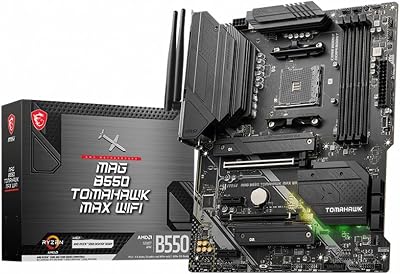
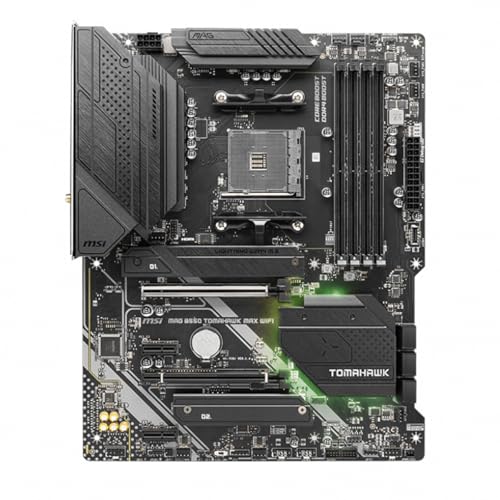
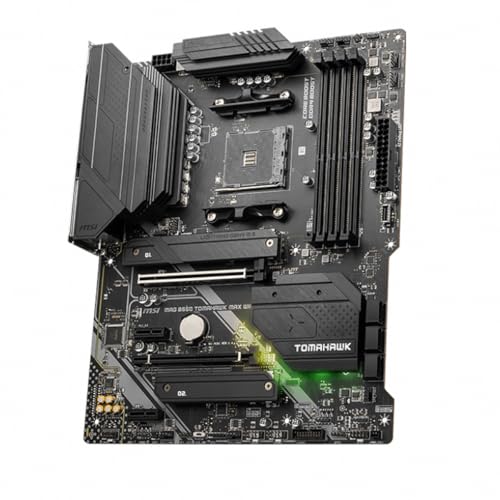
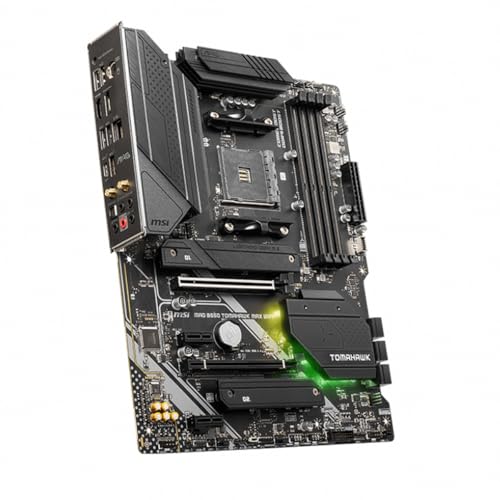
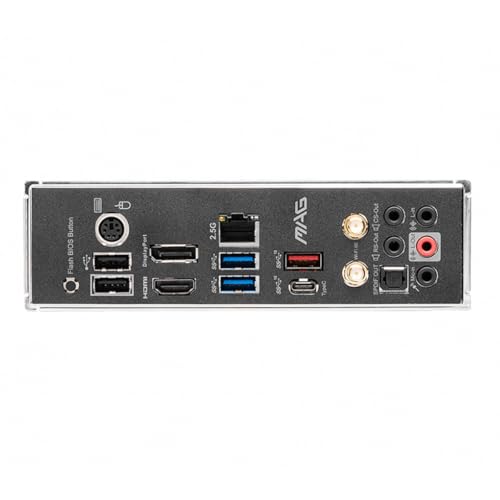
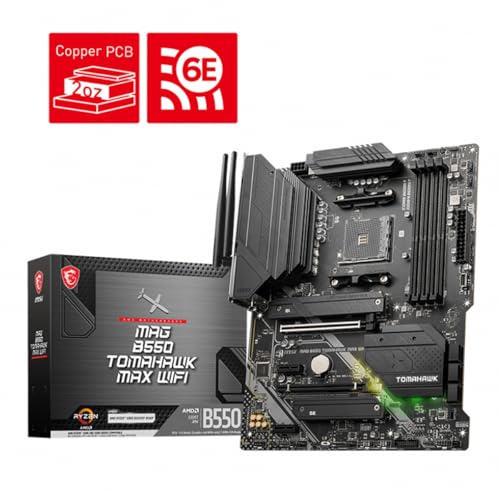
MSI MAG B550 Tomahawk MAX WiFi Gaming Motherboard (AMD Ryzen 5000 Series, AM4, DDR4, PCIe 4.0, SATA 6Gb/s, M.2, USB 3.2 Gen 2, HDMI/DP, Wi-Fi 6E, Bluetooth 5.2, 2.5Gbps LAN, ATX)
In Stock
Updated: May 27, 2026


As an Amazon Associate we earn from qualifying purchases. Product prices and availability are accurate as of the date/time indicated.
The MSI MAG B550 Tomahawk is a long-celebrated AM4 board and our pick for a rock-solid, mature home server — with the same honest framing: it is a consumer gaming board, not a server board. It supports Ryzen 5000-series CPUs on the proven AM4 platform, DDR4 memory, PCIe 4.0 and a famously robust VRM and cooling design. At around $160 it pairs with affordable, plentiful AM4 chips for a dependable always-on build.
This is the board for a stable, cost-effective home server or NAS using the mature AM4 ecosystem, where CPUs and DDR4 are cheap and well understood. The Tomahawk’s strong power delivery and reputation for reliability make it a trusted base for a machine that runs 24/7, and PCIe 4.0 plus dual M.2 cover fast storage. As ever, though, there is no BMC/IPMI and no validated server ECC — it is a superb consumer board doing home-server duty, which for many self-hosters is exactly enough.
Pros: Proven AM4 platform, famously robust VRM and cooling, affordable mature CPUs, dependable for 24/7 home-server use.
Cons: Consumer board, NOT a true server platform: no IPMI/BMC, no validated server ECC, no Xeon/EPYC support.
5. MSI B550M PRO-VDH WiFi ProSeries Motherboard (AMD AM4)

24
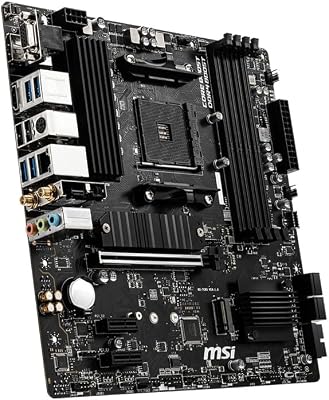
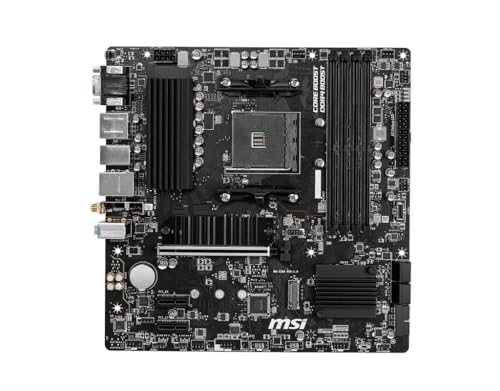
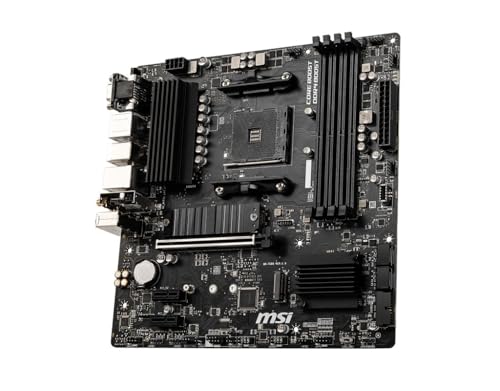
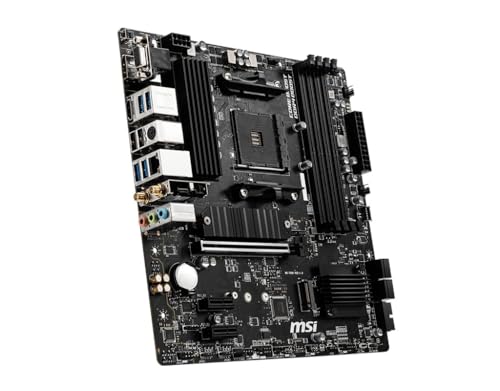
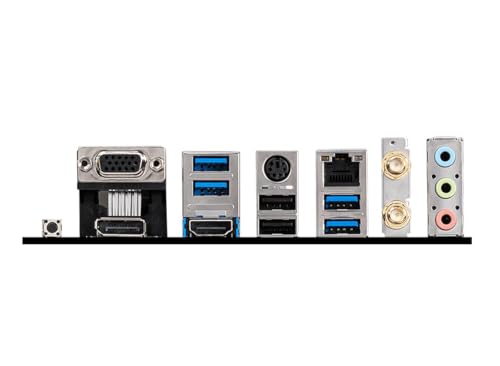
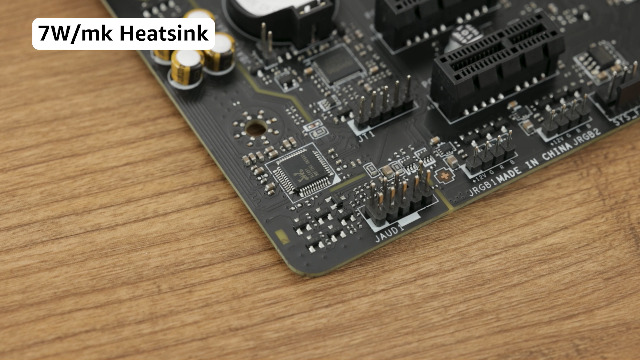
MSI B550M PRO-VDH WiFi ProSeries Motherboard (AMD Ryzen 5000, AM4, DDR4, PCIe 4.0, SATA 6Gb/s, M.2, USB 3.2 Gen 1, Wi-Fi, Bluetooth, D-SUB/HDMI/DP, Micro-ATX)
In Stock
Updated: May 27, 2026






As an Amazon Associate we earn from qualifying purchases. Product prices and availability are accurate as of the date/time indicated.
The MSI B550M PRO-VDH WiFi is the compact, budget-friendly home-server pick, and the most affordable way onto a capable AM4 build — with the now-familiar honest note that it is a consumer board, not a server board. It is a Micro-ATX B550 board supporting Ryzen 5000 CPUs, DDR4, PCIe 4.0 and onboard Wi-Fi, in a smaller footprint for compact cases. At around $100 it keeps a home-server build cheap and space-efficient.
Choose this board for a small, low-cost home server, NAS or always-on utility box where a compact Micro-ATX footprint and a tight budget matter. It covers the essentials — AM4 CPU support, DDR4, a PCIe 4.0 slot and an M.2 — and the Wi-Fi is a handy bonus for flexible placement. It is naturally more basic than the Tomahawk on power delivery and expansion, and like the others here it offers no IPMI and no validated server ECC. As an inexpensive consumer base for a modest home server, though, it is hard to fault for the money.
Pros: Affordable Micro-ATX AM4 board, compact footprint, onboard Wi-Fi, covers the essentials for a small home server.
Cons: Consumer board, NOT a true server platform: basic VRM/expansion, no IPMI/BMC, no validated server ECC.
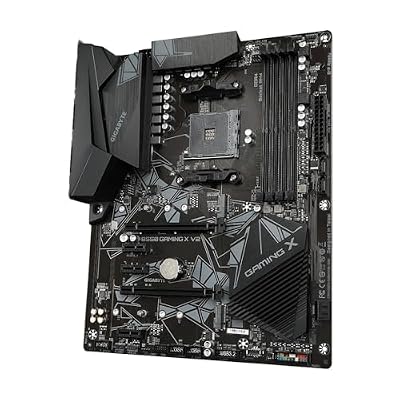
6. GIGABYTE B550 Gaming X V2 AMD AM4 ATX Motherboard
6
GIGABYTE B550 Gaming X V2 AMD AM4 ATX Motherboard, Supports Ryzen 5000/4000/3000 Series Processors, DDR4, 10+3 Power Phase, 2X M.2, PCIe 4.0, Front USB-C, GbE LAN, Q-Flash Plus, RGB Fusion
In Stock
$129.99
Save $40.00
Updated: 2 days ago



As an Amazon Associate we earn from qualifying purchases. Product prices and availability are accurate as of the date/time indicated.
Rounding out the list is the GIGABYTE B550 Gaming X V2, the cheapest base here and a budget full-size AM4 board — included with the clearest caveat of all: this is a consumer gaming board, in no way a server board. It supports Ryzen 3000/4000/5000 CPUs on AM4 with DDR4 and PCIe 4.0 in a standard ATX layout. At around $90 it is the most affordable foundation for a home server if you simply want full-size expansion on a shoestring.
Pick this board only as a low-cost home-server or self-hosting starter where budget trumps everything and you understand exactly what you are getting. You get AM4 CPU support, a PCIe 4.0 slot, M.2 storage and a full ATX board’s expansion for very little money. What you absolutely do not get is anything server-grade: no IPMI/BMC, no validated server ECC, no Xeon/EPYC support, and a more basic VRM than the pricier boards. It is a cheap consumer board that can host a light home server, and it should be understood as nothing more than that.
Pros: Lowest-priced AM4 ATX base, full-size expansion, PCIe 4.0 and M.2 for a bare-bones home server.
Cons: Consumer board, NOT a true server platform: most basic VRM here, no IPMI/BMC, no ECC validation, no Xeon support.
How to Choose a Server Motherboard (and Spot One That Isn’t)
The first step is being honest about what you actually need, because ‘server motherboard’ covers two very different things. A true server or workstation board — like the ASUS Pro WS W890-SAGE here — supports server CPUs (Intel Xeon or AMD EPYC), validated ECC memory, and usually a BMC with IPMI for remote management. If you need data integrity and uptime for real workloads, only a board with those features qualifies; everything else on this list is a consumer board that can host a home server, not a genuine server platform.
ECC memory support is the single clearest dividing line. ECC catches and corrects single-bit memory errors, which matters enormously for file servers, virtualization and anything where silent data corruption is unacceptable. A true server/workstation board validates and guarantees ECC operation; some consumer AM5 boards may run ECC UDIMMs unofficially, but that is not the same as validated support, and Intel consumer platforms generally do not offer it. If ECC is a hard requirement, buy a real workstation/server board and do not rely on a consumer board’s unofficial behaviour.
Remote management — a BMC with IPMI — is the other hallmark of a true server board, and none of the consumer boards here have it. IPMI lets you power-cycle, monitor and even reinstall a headless machine remotely, which is invaluable for a server you cannot physically reach. For a home server in your own house you can usually live without it, but for anything resembling real server duty it is a feature you will badly miss on a consumer board. Factor it into which class of board you actually need.
If a home server is genuinely your goal, then choose a consumer board on its real merits and stop worrying about the server label. Prioritise platform longevity (AM5 like the B650 board gives the longest upgrade path, AM4 the cheapest mature parts), storage expansion (M.2 and SATA counts), networking, and a solid VRM for 24/7 operation. The Z790 board suits an Intel transcoding host, the B550 Tomahawk a reliable AM4 build, and the cheaper MSI and GIGABYTE B550 boards a budget box. Decide first whether you need a true server board or a capable home-server base, then pick accordingly from this list — and never mistake a consumer ATX board for a data-centre platform.
Frequently Asked Questions
What makes a motherboard a true server motherboard?
Three things define a real server (or workstation) board: support for server-class CPUs such as Intel Xeon or AMD EPYC, validated ECC (error-correcting) memory for data integrity, and typically a BMC with IPMI for out-of-band remote management. On this list, only the ASUS Pro WS W890-SAGE meets that bar. The other boards are consumer platforms that can host a home server but lack these enterprise features.
Can I use a consumer motherboard as a server?
Yes, for a home server, NAS or self-hosting box, a good consumer board like the B550 Tomahawk or B650 AORUS Elite works very well. You simply do not get validated ECC, IPMI remote management or Xeon/EPYC support. For a home environment you can reach physically, that is usually fine; for workloads that demand data integrity and remote management, choose a true server/workstation board instead.
Do I need ECC memory for a home server?
It depends on the workload. ECC corrects single-bit memory errors and is strongly recommended for file servers (especially with ZFS), virtualization or anything where silent data corruption would be costly. If that describes your build, choose a board with validated ECC support such as the ASUS Pro WS W890-SAGE. For a casual media server, non-ECC on a consumer board like the ones here is commonly accepted.
Which board here is best if I just want a home server?
For a modern, long-life home server, the GIGABYTE B650 AORUS Elite AX (AM5) is the strongest consumer pick. If you prefer Intel and want NVMe-heavy storage with iGPU transcoding, the Z790 AORUS Elite AX fits well. For a reliable, affordable AM4 build, the MSI B550 Tomahawk is a trusted choice. All three are consumer boards doing home-server duty — not true server boards.
Related Guides
- Best Motherboards
- Best AM5 Motherboards
- Best NAS and Home Server Builds
- Best CPUs for Developers and Servers
- Best NVMe SSDs for Storage
- Best Power Supplies for 24/7 Builds
Affiliate Disclosure: As an Amazon Associate, we earn from qualifying purchases. If you click a link and make a purchase, we may earn a small commission at no extra cost to you. Prices and availability are accurate as of publication and may change.
Ready to decide? Our #1 pick for 2026 is the ASUS Pro WS W890-SAGE.
Live price & availability on Amazon.


