

- Top Pick: AMD Ryzen 9 9950X3D 16-Core Processor
- Best Value: The Complete Computer Organization and Architecture Developer’s Handbook: A Practical Guide to Computer Systems, CPU Architecture, Memory, I/O, and Exam Success (Developer's Handbook)
- Premium Choice: Quick Boot: A Guide for Embedded Firmware Developers, 2nd edition
🛒 Best Price Today on Amazon
Prime members get fast, free shipping on everything above, plus member-only deals. New members get a 30-day free trial — cancel anytime.
- Top Cpus Developers Picks for 2026
- Best CPUs for Developers at a Glance
- 1. AMD Ryzen 7 5800X 8-Core, 16-Thread Unlocked Desktop Processor
- 2. AMD Ryzen 7 5700X 8-Core, 16-Thread Unlocked Desktop Processor
- 3. AMD Ryzen 5 5600X 6-Core, 12-Thread Unlocked Desktop Processor
- 4. AMD Ryzen 5 5600G 6-Core, 12-Thread Processor with Radeon Graphics
- 5. AMD Ryzen 5 5500 6-Core, 12-Thread Unlocked Desktop Processor
- 6. AMD Ryzen 3 3200G 4-Core Processor with Radeon Graphics
- How to Choose a CPU for Development
- Related Guides
- Frequently Asked Questions
- Related Guides
- Related Articles
Top Cpus Developers Picks for 2026
Here are our current top cpus developers picks, compared on real Amazon owner reviews, price, and features. Live prices update below.
As an Amazon Associate we earn from qualifying purchases at no extra cost to you.





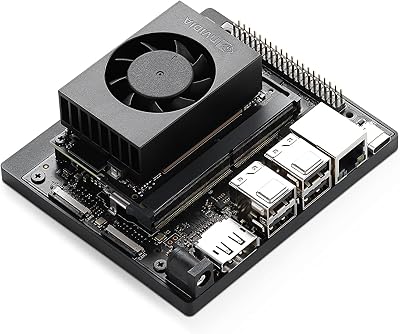


A developer’s CPU is judged by a different scorecard than a gamer’s. Compiling large codebases, running containers, spinning up virtual machines, and juggling an IDE, a database and a dozen browser tabs all reward high core and thread counts, while quick edit-build-test loops and single-threaded tooling still lean on strong per-core speed. The sweet spot for most developers is a processor that offers plenty of threads for parallel work and solid single-thread performance for everything else. This guide rounds up the best CPUs for developers in 2026 on exactly those terms, across a range of budgets.
Our picks were chosen on what genuinely speeds up a development workflow: core and thread count for parallel compiles, containers and VMs; single-thread performance for responsive everyday work; whether integrated graphics let you skip a discrete GPU on a headless or office build; platform value; and overall cost, with prices from around $48 to around $220. We lead with the highest-thread chips because that is what heavy builds reward, and we are honest about where the entry options run out of road for serious work. Below is an at-a-glance comparison of all six, then a closer look at each and a buyer’s guide built around cores, threads and single-thread speed.
Best CPUs for Developers at a Glance
| Processor | Best For | Standout Spec | Approx Price |
|---|---|---|---|
| AMD Ryzen 7 5800X | Fastest heavy compiles + VMs | 8 cores / 16 threads, high clocks | around $210 |
| AMD Ryzen 7 5700X | Best value 8-core dev chip | 8 cores / 16 threads, efficient | around $220 |
| AMD Ryzen 5 5600X | Balanced everyday dev | 6 cores / 12 threads, strong single-thread | around $180 |
| AMD Ryzen 5 5600G | Dev box with no discrete GPU | 6c/12t + Radeon graphics | around $185 |
| AMD Ryzen 5 5500 | Budget multi-thread dev | 6 cores / 12 threads, low cost | around $84 |
| AMD Ryzen 3 3200G | Entry/light tasks only | 4 cores + Radeon; light work only | around $48 |
1. AMD Ryzen 7 5800X 8-Core, 16-Thread Unlocked Desktop Processor
12


As an Amazon Associate we earn from qualifying purchases. Product prices and availability are accurate as of the date/time indicated.
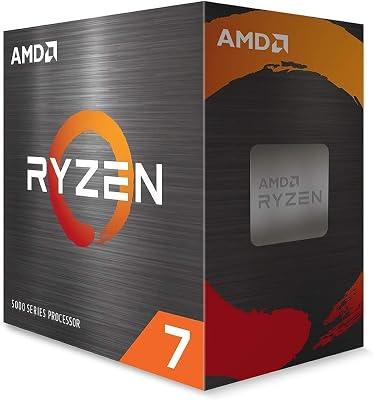
The AMD Ryzen 7 5800X is the performance pick for a developer workstation, and it leads this list for good reason. It pairs eight cores and sixteen threads with high boost clocks and a generous cache, giving you both the parallel muscle for heavy compiles and the strong single-thread speed that keeps interactive tooling snappy. At around $210 it is the chip to reach for when build times and multitasking are costing you real productivity.
This is the processor for developers who compile large projects, run multiple containers or virtual machines, and want headroom for everything at once. The sixteen threads slash parallel build times and let you keep VMs, databases and an IDE running simultaneously, while the high clocks ensure single-threaded steps and everyday responsiveness stay quick. It runs hotter and demands decent cooling, but for a developer who values fast iteration above all, the 5800X delivers the most capable performance here on the affordable AM4 platform.
Pros: Eight cores and sixteen threads, high boost clocks, large cache, excellent for heavy compiles and VMs.
Cons: Runs hot and needs good cooling; no integrated graphics, so a discrete GPU is required.
2. AMD Ryzen 7 5700X 8-Core, 16-Thread Unlocked Desktop Processor

2
As an Amazon Associate we earn from qualifying purchases. Product prices and availability are accurate as of the date/time indicated.
The AMD Ryzen 7 5700X is the value 8-core developer pick, offering nearly the same parallel capability as the 5800X for a similar or better street price, with lower power and heat. It brings eight cores and sixteen threads at slightly more conservative clocks and a lower TDP, making it efficient and easy to cool. At around $220 it is a smart way to get serious thread count without the 5800X’s thermal demands.
This is the chip for the developer who wants eight cores and sixteen threads for fast parallel compiles, containers and VMs but prefers a cooler, quieter, more efficient machine. The thread count keeps heavy builds and virtualization moving quickly, the lower power draw makes it friendly to modest coolers and small cases, and single-thread performance remains strong for everyday work. For most developers building a balanced, efficient workstation, the 5700X is arguably the sweet-spot pick — almost all of the 5800X’s parallel grunt with less heat to manage.

Pros: Eight cores and sixteen threads, efficient and cool-running, low TDP, superb value for parallel workloads.
Cons: Slightly lower clocks than the 5800X; no integrated graphics, so a discrete GPU is needed.
3. AMD Ryzen 5 5600X 6-Core, 12-Thread Unlocked Desktop Processor

10
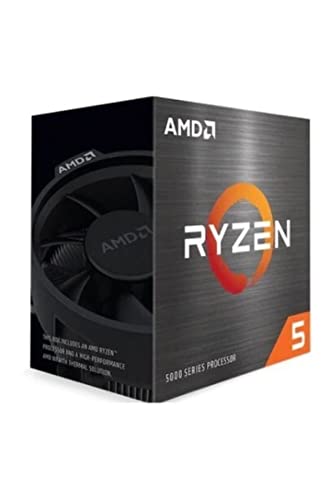
AMD Ryzen 5 5600X 6-core, 12-thread unlocked desktop processor with Wraith Stealth cooler | 6 Cores and 12 Threads, 3.7ghz Base, Up to 4.6ghz Boost, 32MB L3, 65W Tdp, AM4, Boxed Unit Includes Wraith Stealth Cooler
In Stock


As an Amazon Associate we earn from qualifying purchases. Product prices and availability are accurate as of the date/time indicated.
The AMD Ryzen 5 5600X is the balanced everyday-development pick, with excellent single-thread performance and a sensible six cores and twelve threads. It clocks high for its class and ships with a cooler, making it a responsive, well-rounded chip for coding, moderate compiles and general workstation duty. At around $180 it is a popular, cost-effective choice for developers whose builds are not enormous.
This is the processor for developers who value snappy, responsive performance and handle moderate parallel workloads rather than constant heavy compiles. The strong single-thread speed keeps your editor, debugger and quick build-test loops feeling instant, the twelve threads comfortably run several containers or a VM or two, and the included cooler keeps the build simple. If your work is more code-and-iterate than compile-the-world, the 5600X offers an ideal blend of responsiveness and value — step up to an 8-core only if build-time parallelism is your bottleneck.
Pros: Strong single-thread speed, six cores and twelve threads, high clocks, includes a cooler, great value.
Cons: Six cores limit very heavy parallel compiles; no integrated graphics for a display-only build.
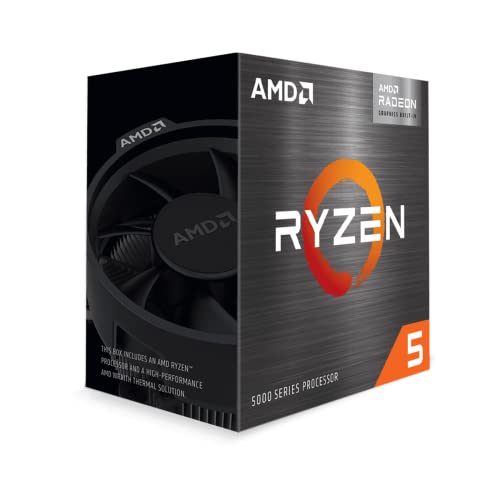
4. AMD Ryzen 5 5600G 6-Core, 12-Thread Processor with Radeon Graphics

11
AMD Ryzen™ 5 5600G 6-Core 12-Thread Desktop Processor with Radeon™ Graphics
In Stock



As an Amazon Associate we earn from qualifying purchases. Product prices and availability are accurate as of the date/time indicated.
The AMD Ryzen 5 5600G is the developer pick for a build with no discrete graphics card. It combines six cores and twelve threads with integrated Radeon graphics, so it drives displays on its own — ideal for a headless server, a compact dev box, or any workstation where you would rather not buy a GPU. At around $185 it delivers capable multi-threaded development plus onboard graphics in one chip.
This is the processor for developers who want a self-contained machine: a home-server host, a CI runner, a small-form-factor desk PC, or a budget workstation that skips a graphics card entirely. The twelve threads handle containers, VMs and parallel builds well, the integrated Radeon graphics cover desktop and multi-monitor output without a discrete card, and the package keeps cost and complexity down. Its cache and clocks trail the X-series chips slightly, but for a no-GPU developer build with solid multi-thread performance, the 5600G is the practical, sensible choice.
Pros: Six cores and twelve threads plus integrated Radeon graphics — no discrete GPU needed for a dev box.
Cons: Smaller cache and slightly lower compile throughput than the X-series; iGPU is for display, not GPU compute.
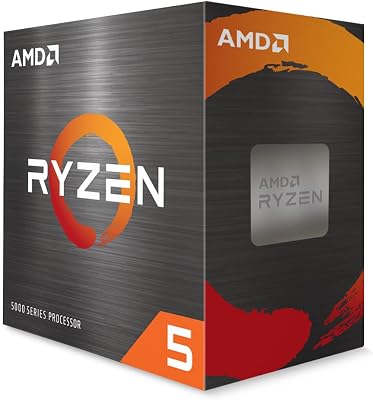
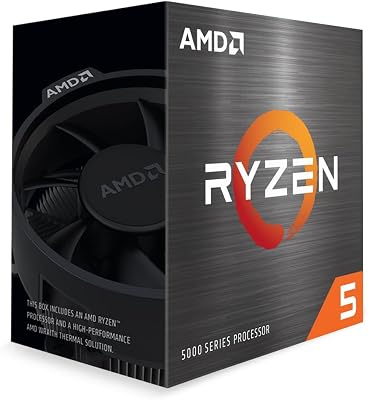
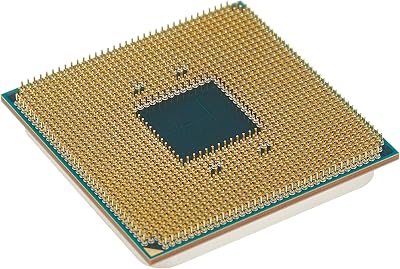
5. AMD Ryzen 5 5500 6-Core, 12-Thread Unlocked Desktop Processor
14
Prime
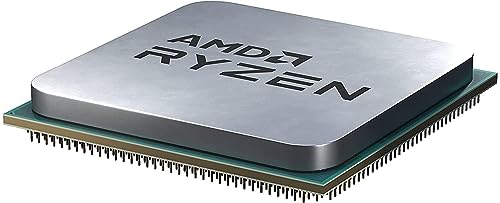
AMD Ryzen 5 5500 6-Core, 12-Thread Unlocked Desktop Processor with Wraith Stealth Cooler
In Stock





As an Amazon Associate we earn from qualifying purchases. Product prices and availability are accurate as of the date/time indicated.
The AMD Ryzen 5 5500 is the budget multi-thread developer pick, bringing six cores and twelve threads at a remarkably low price. It ships with a cooler and offers genuine parallel capability for the money, making it an excellent foundation for an affordable development machine. At around $84 it is the value standout for developers who need threads without spending much.
This is the chip for the budget-conscious developer or a secondary build that still needs real multi-threading for containers, VMs and parallel compiles. Twelve threads at this price comfortably outclass any quad-core for development work, the bundled cooler keeps the build cheap and simple, and single-thread performance is respectable for everyday coding. It lacks integrated graphics and uses a smaller cache than the pricier chips, so pair it with a basic GPU — but as an inexpensive way to get six cores and twelve threads for development, the 5500 is hard to beat.
Pros: Six cores and twelve threads at a very low price, includes a cooler, real multi-thread value for developers.
Cons: No integrated graphics (needs a GPU); smaller cache and lower clocks than the 5600X/5700X.
6. AMD Ryzen 3 3200G 4-Core Processor with Radeon Graphics
2
As an Amazon Associate we earn from qualifying purchases. Product prices and availability are accurate as of the date/time indicated.
Rounding out the list is the AMD Ryzen 3 3200G, the entry-level option — and we include it with an honest caveat for developers. It is a four-core chip (without simultaneous multithreading) that includes Radeon graphics, so it boots and drives a display on its own. At around $48 it is the cheapest pick here, but four cores and no extra threads make it suitable for light tasks rather than serious development.
Where this chip fits is a very light or learning-oriented setup: a beginner’s coding PC, a simple scripting or web-edit machine, or a low-cost box that needs onboard graphics. It will run an editor and small projects fine, and the integrated Radeon graphics save you a GPU. But for heavy compiles, multiple containers or VMs, its four cores are a real limitation — the six-core, twelve-thread 5500 is a far better developer foundation for not much more money. Choose the 3200G only for genuinely light workloads, and step up if your development is at all demanding.
Pros: Very cheap, includes Radeon graphics for a display-only build, fine for light coding and learning.
Cons: Only four cores and no extra threads — underpowered for heavy compiles, containers or VMs; light tasks only.
How to Choose a CPU for Development
For development, start with core and thread count, because so much of a developer’s workload is parallel. Compiling large codebases, running multiple containers, and hosting virtual machines all scale with threads, which is why the eight-core, sixteen-thread 5800X and 5700X lead this list — they cut build times and let you run more at once. Six-core, twelve-thread chips like the 5600X, 5600G and 5500 are a strong middle ground for moderate workloads, while a four-core part like the 3200G is best reserved for light tasks. Match the thread count to how heavy your builds really are.
Single-thread performance still matters enormously, so do not chase cores alone. Many everyday actions — incremental compiles, launching tools, single-threaded build steps, and general UI responsiveness — depend on how fast each core is. The X-series chips here clock high and feel snappy, which keeps the edit-build-test loop tight. The ideal developer CPU balances plenty of threads for the heavy parallel jobs with strong per-core speed for everything else, rather than maximising one at the expense of the other.
Decide whether you need integrated graphics, because it changes which chip makes sense. If you are building a headless server, a CI runner, a small-form-factor box, or simply want to skip a graphics card, the 5600G and 3200G include Radeon graphics and drive displays on their own. If you already have or plan a discrete GPU — useful for GPU compute, ML work or just display output — then the 5800X, 5700X, 5600X and 5500, which have no iGPU, give you more CPU for the money. Let your graphics plan steer the choice.
Finally, weigh platform value, cooling and budget together. All six chips here use the mature AM4 platform, where motherboards and DDR4 are affordable and well understood — a cost-effective base for a developer workstation. The 5800X runs hottest and benefits from a good cooler, while the 5700X, 5600X, 5500 and 3200G are easier to cool, and several include a stock cooler to keep the build cheap. Set your budget, size the thread count to your compile and virtualization needs, decide on integrated versus discrete graphics, and pick the developer CPU on this list that fits how you actually build.
Frequently Asked Questions
How many cores and threads do I need for development?
It depends on your workloads. For heavy compiles, multiple containers and virtual machines, an eight-core, sixteen-thread chip like the Ryzen 7 5800X or 5700X pays off by cutting build times and handling parallel work. For moderate development, a six-core, twelve-thread CPU such as the 5600X, 5600G or 5500 is plenty. A four-core part like the 3200G suits only light coding — it is underpowered for demanding builds.
Is single-thread or multi-thread performance more important for coding?
Both matter, which is why balance is key. Multi-thread performance (more cores and threads) speeds up parallel jobs like compiling and running VMs and containers, while single-thread speed keeps incremental builds, tooling and general responsiveness snappy. The best developer CPUs, like the X-series Ryzen chips here, offer plenty of threads and high per-core clocks together rather than favouring one extreme.
Do I need a CPU with integrated graphics for a dev machine?
Only if you do not want a discrete GPU. The Ryzen 5 5600G and Ryzen 3 3200G include Radeon graphics, which is ideal for a headless server, a CI runner, a compact dev box, or any build where you would rather skip a graphics card. If you already have or plan a discrete GPU, the 5800X, 5700X, 5600X and 5500 (which lack an iGPU) give you more CPU performance for the money.
Which of these CPUs is best for compiling large projects?
The AMD Ryzen 7 5800X is the strongest pick for heavy compiles, with eight cores, sixteen threads and high clocks that shorten build times and handle parallel work and VMs well. The Ryzen 7 5700X is a close, more efficient and cooler-running alternative at similar value. Both eight-core chips clearly outpace the six- and four-core options here for large, parallel compilation workloads.
Related Guides
- Best CPUs for Your Build
- Best CPUs for Programming
- Best AM4 Motherboards
- Best CPU Coolers
- Best NVMe SSDs for Fast Builds
- Best RAM for Your Workstation
Affiliate Disclosure: As an Amazon Associate, we earn from qualifying purchases. If you click a link and make a purchase, we may earn a small commission at no extra cost to you. Prices and availability are accurate as of publication and may change.










