- Top Pick: NerdOCTAXE Rev3.1 ASIC Bitcoin Miner 12TH/s, 240W High Efficiency BTC Miner with RGB Lighting for Home Mining
- Best Value: Opportunity Starts Within: Transform every obstacle or opposition into an opportunity
- Premium Choice: ArsenalPC MES2X Dual GPU AI Workstation – AMD Ryzen 9-9950X3D2 16 core 4.3GHz – Dual GPU GeForce RTX 5090-8TB (2x4TB RAID) NVMe SSD – 256GB DDR5-1600W – Windows 11 Pro – Liquid Cooled
🛒 Best Price Today on Amazon
Prime members get fast, free shipping on everything above, plus member-only deals. New members get a 30-day free trial — cancel anytime.
- Top Psus Machine Learning Picks for 2026
- Best PSUs for Machine Learning at a Glance
- 1. CORSAIR RM1000x ATX 3.1 PCIe 5.1 Ready Fully Modular 1000W Power Supply
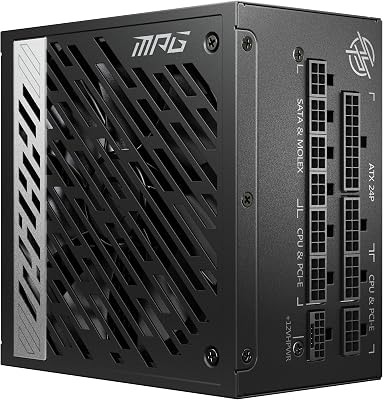
- 2. msi MPG 1000W 80+ Gold Power Supply with Japanese Capacitors
- 3. Corsair RM850, RM Series, 80 Plus Gold, 850 W Fully Modular ATX Power Supply
- 4. MSI MAG A850GL PCIE5, Fully Modular Compact Gaming 850W Power Supply, 80+ Gold
- 5. Thermaltake Smart 700W 80+ White Certified PSU with 120mm Fan
- 6. CORSAIR CX650 80 Plus Bronze Non Modular Low-Noise ATX 650 Watt Power Supply
- How to Choose a PSU for Machine Learning
- Frequently Asked Questions
- Related Guides
- Related Articles
- Related Guides
Top Psus Machine Learning Picks for 2026
Here are our current top psus machine learning picks, compared on real Amazon owner reviews, price, and features. Live prices update below.
As an Amazon Associate we earn from qualifying purchases at no extra cost to you.



Check Price on Amazon →


A machine learning workstation lives or dies by its power supply. Training runs push a GPU to sustained, near-maximum load for hours at a time, and multi-GPU rigs stack two, three or four of those cards into a single chassis. Unlike a gaming PC that draws hard only in bursts, a deep-learning box hammers the rails continuously, so the PSU needs genuine wattage headroom, high efficiency to keep heat and your power bill down, and clean, stable delivery under a constant load. This guide rounds up the best PSUs for machine learning in 2026, leading with the high-wattage modular units that suit training GPUs and being upfront about which models are too small for a multi-GPU build.
Our picks were chosen on what actually matters for ML hardware: total wattage and how much headroom it leaves above a power-hungry GPU, 80 PLUS efficiency rating, modular cabling for clean airflow inside a packed case, and value. Wattage is the headline number throughout, because a 1000W unit comfortably feeds a high-end training card plus CPU with room to grow, while a 650W or 700W supply is really a single-GPU or gaming-grade choice. We have called that out honestly for every model rather than pretending a small PSU fits a multi-GPU rig. Below is an at-a-glance comparison of all six, then a closer look at each and a buyer’s guide built around headroom, efficiency and cabling.
Best PSUs for Machine Learning at a Glance
| Power Supply | Best For | Standout Spec | Approx Price |
|---|---|---|---|
| CORSAIR RM1000x ATX 3.1 | Multi-GPU training headroom | 1000W, 80+ Gold, fully modular, ATX 3.1 | around $160 |
| MSI MPG 1000W 80+ Gold | High-wattage value rig | 1000W, 80+ Gold, Japanese caps | around $161 |
| Corsair RM850 80+ Gold | Single high-end training GPU | 850W, 80+ Gold, fully modular | around $249 |
| MSI MAG A850GL PCIE5 | Compact single-GPU build | 850W, 80+ Gold, PCIe 5, modular | around $110 |
| Thermaltake Smart 700W White | Light single-GPU only | 700W, 80+ White, 120mm fan | around $54 |
| CORSAIR CX650 80+ Bronze | Entry single-card box | 650W, 80+ Bronze, non-modular | around $79 |
1. CORSAIR RM1000x ATX 3.1 PCIe 5.1 Ready Fully Modular 1000W Power Supply

CORSAIR RM1000x ATX 3.1 PCIe 5.1 Ready Fully Modular 1000W Power Supply – Low-Noise, Cybenetics Gold Efficiency, Native 12V-2x6 Connector – Black


As an Amazon Associate we earn from qualifying purchases. Product prices and availability are accurate as of the date/time indicated.
The Corsair RM1000x is the standout pick for machine learning and the unit to lead any serious training build around. It delivers a full 1000W with 80 PLUS Gold efficiency, fully modular cabling, and ATX 3.1 / PCIe 5.1 readiness, which means it is built for the latest power-hungry GPUs and the transient spikes they produce. At around $160 it is the sensible foundation for a workstation that runs hard for hours.
This is the PSU to choose when you are feeding a high-end training GPU now and want room to add a second card later. A genuine 1000W leaves substantial headroom above a flagship GPU plus a many-core CPU, so the supply runs well inside its comfort zone instead of pinned at its limit during long training runs — exactly where efficiency and longevity live. The low-noise design keeps things quiet under sustained load, and fully modular cables let you wire only what a dense ML rig needs. For multi-GPU headroom done right, the RM1000x is the clear first choice.
Pros: Full 1000W with multi-GPU headroom, 80+ Gold efficiency, ATX 3.1 ready, fully modular.
Cons: More wattage than a single-GPU box needs; premium price for the tier.
2. msi MPG 1000W 80+ Gold Power Supply with Japanese Capacitors
The MSI MPG 1000W is the high-wattage value pick for a machine learning rig. It matches the headline number that matters most here — a true 1000W — with 80 PLUS Gold efficiency and 100% Japanese capacitors for reliability under sustained, heavy load. At around $161 it sits right alongside the Corsair on capability and is an excellent alternative for a training-focused build.
This is the PSU for the builder who wants ample wattage for a demanding or future multi-GPU setup and prioritises long-term durability. The 1000W rating comfortably powers a top-tier training GPU and a high-core-count CPU with headroom to spare, the Japanese capacitors are the kind of component quality you want when the supply is loaded for hours, and the Gold efficiency keeps waste heat manageable inside a packed workstation. If your priority is high-wattage capability with proven internals, the MSI MPG 1000W earns its place near the top of the list.

Pros: True 1000W for heavy or multi-GPU loads, 80+ Gold, premium Japanese capacitors.
Cons: Overkill for a modest single-GPU machine; check cable lengths for large cases.
3. Corsair RM850, RM Series, 80 Plus Gold, 850 W Fully Modular ATX Power Supply

Corsair RM Series™ RM850 - 850 Watt 80 PLUS® Gold Certified Fully Modular PSU (Renewed)


As an Amazon Associate we earn from qualifying purchases. Product prices and availability are accurate as of the date/time indicated.
The Corsair RM850 is the pick for a single high-end training GPU. It provides 850W with 80 PLUS Gold efficiency and fully modular cabling — a quieter, well-built supply with enough capacity for one flagship card and a strong CPU. At around $249 it is the priciest unit on this list, reflecting the RM series’ premium build, low-noise operation and long warranty.
This is the PSU for the workstation that runs a single powerful GPU rather than a stack of them. 850W gives sensible headroom above one high-end training card plus the rest of the system, so the supply stays comfortable through long sessions without the extra cost of a 1000W unit you would not fully use. The fully modular cables keep a tidy single-GPU build clean, and the Gold efficiency limits heat. If you are committed to one card and value Corsair’s refined RM build quality, the RM850 is a strong, if premium, choice — just note it is a single-GPU supply, not a multi-GPU one.
Pros: 850W for a single flagship GPU, 80+ Gold, refined low-noise fully modular build.
Cons: Highest price here; 850W is not enough headroom for a multi-GPU training rig.
4. MSI MAG A850GL PCIE5, Fully Modular Compact Gaming 850W Power Supply, 80+ Gold

MSI MAG A850GL PCIE5, Fully Modular Compact Gaming 850W Power Supply, 80+ Gold, ATX 3.1 & PCIe 5.1 Ready, Native Dual-Color 12V-2x6 Cable, 10 Year Warranty


As an Amazon Associate we earn from qualifying purchases. Product prices and availability are accurate as of the date/time indicated.
The MSI MAG A850GL is the compact 850W pick. It pairs an 850W output with 80 PLUS Gold efficiency, full modularity and native PCIe 5 connectivity in a shorter-than-average body designed to fit tighter cases. At around $110 it is an affordable way to power a capable single-GPU machine learning or creator workstation.
This is the PSU for a single-GPU build where space is at a premium and value matters. The 850W rating handles one high-end card plus CPU with reasonable headroom, the PCIe 5 cabling is ready for modern GPUs without adapters, and the compact dimensions ease installation in smaller or crowded chassis. Gold efficiency keeps it cool and economical under sustained load. For an affordable, modern, compact 850W supply for a single training card, the A850GL is a smart pick — but like the RM850, treat it as a single-GPU unit rather than a base for multiple cards.
Pros: Affordable 850W, 80+ Gold, native PCIe 5, fully modular and compact for tight builds.
Cons: 850W ceiling rules out multi-GPU; short cables may not suit very large cases.
5. Thermaltake Smart 700W 80+ White Certified PSU with 120mm Fan

Thermaltake Smart 700W 80+ White Certified PSU, Continuous Power with 120mm Ultra Quiet Fan, ATX 12V V2.3/EPS 12V Active PFC Power Supply PS-SPD-0700NPCWUS-W


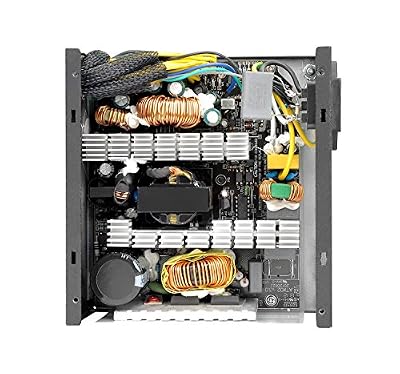
As an Amazon Associate we earn from qualifying purchases. Product prices and availability are accurate as of the date/time indicated.
The Thermaltake Smart 700W is the budget single-GPU option, and honesty matters here: at 700W with only an 80 PLUS White rating, it is the weakest supply on this list for machine learning. It is a basic, non-modular unit with a 120mm cooling fan, priced at around $54 — fine for a light single-card machine, but not built for the sustained, multi-GPU loads ML training demands.
This is the PSU to consider only for an entry-level single-GPU workstation or a general-purpose desktop on a tight budget. The 700W output can feed one mid-range card plus CPU, but it leaves little headroom for a power-hungry training GPU and none at all for a second card, and the 80 PLUS White efficiency runs warmer and less economically than the Gold units above under long, heavy load. If you are doing serious training, step up to a 1000W Gold unit; the Smart 700W is best understood as a light-duty, single-GPU budget supply rather than a true ML choice.
Pros: Affordable 700W, simple 120mm-cooled design, fine for a light single-GPU desktop.
Cons: Lowest efficiency (80+ White) and only 700W — weak for training and unsuitable for multi-GPU.
6. CORSAIR CX650 80 Plus Bronze Non Modular Low-Noise ATX 650 Watt Power Supply

CORSAIR CX650 Small 650W Power Supply – Black | Low-Noise, Non-Modular, 80 PLUS Bronze, NA


As an Amazon Associate we earn from qualifying purchases. Product prices and availability are accurate as of the date/time indicated.
Rounding out the list is the Corsair CX650, the entry single-card pick — and, like the Thermaltake, one to be candid about. At 650W with an 80 PLUS Bronze rating and non-modular cabling, it is the lowest-wattage supply here and the least suited to a machine learning rig. At around $79 it is a dependable budget unit, but its capacity targets a single mid-range GPU, not a training workstation.
This is the PSU for a basic single-GPU build or a secondary machine where cost is the priority and the GPU is modest. The 650W output is enough for one mainstream card plus CPU, and Corsair’s CX line is reliable and quiet for the money, but 650W simply does not leave room for a high-end training GPU’s sustained draw, let alone a second card, and the non-modular cabling clutters a dense build. For real machine learning work, treat the CX650 as a single-card entry option only and look to the 850W and 1000W units above for the headroom training needs.

Pros: Affordable, reliable 650W Corsair build, quiet operation, fine for one mainstream GPU.
Cons: Lowest wattage here, 80+ Bronze and non-modular — not for high-end or multi-GPU ML rigs.
How to Choose a PSU for Machine Learning
Choosing a PSU for machine learning starts with wattage and headroom, because training is a sustained, full-load workload rather than the bursty demand of gaming. Add up your GPU’s draw and your CPU’s draw, then leave generous room on top — running a supply near its limit for hours generates heat, stresses components and shortens its life. That is why the 1000W RM1000x and MSI MPG 1000W lead this list: they give a high-end card and a strong CPU real breathing space, and they leave the door open to a second GPU later. An 850W unit suits one flagship card; 650W and 700W supplies are single-GPU, gaming-grade choices rather than ML ones.
Multi-GPU is the dividing line that catches people out. Two, three or four training cards multiply your power needs fast, and a 650W or 700W PSU — like the CX650 or Thermaltake Smart here — cannot feed even a second high-end GPU, no matter how good the brand is. If a multi-GPU rig is your goal or even a possibility, start at 1000W and check that the unit has enough PCIe power connectors for every card you plan to install. Buying a small supply now almost always means buying a bigger one again later.
Efficiency is the next priority, because an ML box converts a lot of power for long stretches. The 80 PLUS rating tells you how much of the wall power reaches your components rather than becoming waste heat: Gold, as on the RM1000x, MSI MPG, RM850 and A850GL, is the practical sweet spot for a workstation, running cooler and cheaper than the 80 PLUS Bronze CX650 or White Thermaltake. Over thousands of training hours that efficiency gap shows up in both temperatures and your electricity bill, so favour Gold for a machine that runs hard.
Finally, weigh cabling and reliability for a dense, always-on build. Fully modular supplies like the RM1000x, MSI MPG, RM850 and A850GL let you connect only the cables a packed multi-GPU rig needs, improving airflow where heat is already a concern, while non-modular units like the CX650 add clutter. Look too for quality internals — the MSI MPG’s Japanese capacitors and Corsair’s RM build are reassuring under constant load — and modern ATX 3.1 / PCIe 5 support if you run the latest GPUs. Size for headroom, demand Gold efficiency, plan for the GPUs you might add, and pick the supply on this list that matches your real training ambitions.
Frequently Asked Questions
How many watts does a machine learning PC need?
It depends on your GPUs. A single high-end training card plus a strong CPU is well served by an 850W supply like the Corsair RM850 or MSI A850GL, with sensible headroom. For a multi-GPU rig, or to leave room to add a second card, start at 1000W like the RM1000x or MSI MPG. Always size for headroom above your expected draw rather than buying the bare minimum, since training loads the PSU continuously.
Why are 650W and 700W PSUs not ideal for machine learning?
Because training pulls sustained, near-maximum power and multi-GPU rigs stack several hungry cards. A 650W CX650 or 700W Thermaltake Smart can power a single mid-range GPU, but they leave little headroom for a flagship training card and cannot feed a second one at all. Running a small supply at its limit for hours also generates heat and stress. For serious ML work, step up to an 850W or 1000W Gold unit.
Does 80 PLUS efficiency matter for a training rig?
Yes, more than for a gaming PC, because an ML box converts power at high load for long periods. An 80 PLUS Gold supply — the RM1000x, MSI MPG, RM850 and A850GL here — wastes less energy as heat than an 80 PLUS Bronze CX650 or White Thermaltake. Over thousands of training hours that means lower temperatures inside the case and a smaller electricity bill, so Gold is the practical choice for a hard-working workstation.
Do I need a fully modular PSU for a multi-GPU build?
It is strongly recommended. A multi-GPU machine learning rig is dense and runs hot, so a fully modular supply like the RM1000x or MSI MPG lets you install only the cables you actually use, improving airflow around the cards. A non-modular unit such as the CX650 forces every cable into the case whether you need it or not, adding clutter exactly where you want clean airflow. For a packed training box, modular cabling is worth it.
Related Guides
- Best Power Supplies
- Best GPUs for Your Build
- Best PC Cases
- Best CPU Coolers
- Best Gaming and Workstation PCs
- Best NVMe SSDs
Affiliate Disclosure: As an Amazon Associate, we earn from qualifying purchases. If you click a link and make a purchase, we may earn a small commission at no extra cost to you. Prices and availability are accurate as of publication and may change.