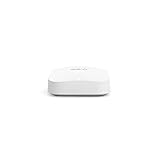
- Top Pick: Amazon eero Pro 6E mesh wifi router – Supports internet plans up to 2.5 Gbps, Coverage up to 2,000 sq. ft., Connect 100+ devices, 1-pack
- Best Value: Amazon eero Pro 6E mesh wifi system – Supports internet plans up to 2.5 Gbps, Coverage up to 6,000 sq. ft., Connect 100+ devices, 3-pack
- Premium Choice: Amazon eero Pro 6E mesh wifi system – Supports internet plans up to 2.5 Gbps, Coverage up to 4,000 sq. ft., Connect 100+ devices, 2-pack
The Amazon eero Pro 6E is a tri-band WiFi 6E mesh router built around 2.5 Gbps wired networking and coverage up to about 2,000 sq ft per node, at an asking price around $200. It is the premium tier of Amazon’s eero ecosystem and one of the most popular WiFi 6E mesh systems for buyers who want a clean, app-managed approach to whole-home networking. This eero Pro 6E review covers the WiFi standard, range, ports, gaming features and overall value, and explains how it compares with the BE-class WiFi 7 routers and other mesh options also covered in this guide.
- Amazon eero Pro 6E at a Glance
- WiFi Standard and Speed Class
- Range, Coverage and Mesh Capability
- Ports, USB and Wired Backhaul
- Gaming Latency, QoS and Security Features
- Who Is the eero Pro 6E For?
- Pros and Cons
- Is the eero Pro 6E Worth It?
- Frequently Asked Questions
- More Gaming Router Reviews
- Related Articles
- Related Articles

Amazon eero Pro 6E mesh wifi router - Supports internet plans up to 2.5 Gbps, Coverage up to 2,000 sq. ft., Connect 100+ devices, 1-pack


As an Amazon Associate we earn from qualifying purchases. Product prices and availability are accurate as of the date/time indicated.
🛒 Best Price Today on Amazon
Prime members get fast, free shipping on everything above, plus member-only deals. New members get a 30-day free trial — cancel anytime.
As an Amazon Associate we earn from qualifying purchases.




Amazon eero Pro 6E at a Glance
| Component | Specification |
|---|---|
| WiFi standard | WiFi 6E (802.11ax with 6 GHz) |
| Band class | Pro 6E (tri-band) |
| Bands | Tri-band (2.4 GHz + 5 GHz + 6 GHz) |
| Coverage | Up to 2,000 sq ft per node |
| WAN port | 2.5 Gbps |
| LAN ports | Gigabit |
| USB | No |
| Mesh-capable | Yes (eero mesh) |
| Price | Around $200 |
WiFi Standard and Speed Class
The Amazon eero Pro 6E is a tri-band WiFi 6E mesh router. WiFi 6E adds the 6 GHz band on top of the familiar 2.4 GHz and 5 GHz radios, which is the headline reason to choose a 6E mesh over a WiFi 6 mesh. In a mesh system the 6 GHz band is particularly useful as a dedicated backhaul channel between nodes, freeing the 5 GHz radio for client devices and reducing the overhead that affected earlier WiFi 5 and WiFi 6 mesh kits.
Amazon’s eero ecosystem is designed to make the WiFi 6E experience invisible to the user — setup, node management and updates are handled through the eero app, and node coordination happens automatically rather than requiring per-band configuration. For a buyer who values minimal setup over manual tuning, that approach is part of the appeal. For context on the broader WiFi 6E market, see our best WiFi 6E routers guide.
Range, Coverage and Mesh Capability
The eero Pro 6E is rated for up to about 2,000 sq ft of coverage per node, which makes it a strong fit for medium to fairly large homes as a single node and for large or multi-floor homes when used as a multi-pack. Mesh is the whole point of the eero ecosystem: nodes coordinate automatically so the network appears as one seamless WiFi name across the home, and devices roam between nodes without dropping the link.
Seamless roaming matters in practice for any device that moves around the house — a phone in a video call, a handheld console carried between rooms, a laptop used in different parts of the home. That experience is genuinely useful in larger homes where a single router cannot reach every corner. For an overview of mesh options, see our best mesh WiFi systems guide.
Ports, USB and Wired Backhaul
The eero Pro 6E supports broadband plans up to 2.5 Gbps via its multi-gig wired port, which is the key practical advantage over older eero hardware that capped at Gigabit. Beyond that, the eero approach is deliberately minimal: there is no USB port and the wired layout is kept simple in favour of clean industrial design.
For gamers, a wired connection between the eero Pro 6E and a gaming PC or console remains the most effective way to keep latency low and consistent, even within a mesh system. Wired backhaul between nodes is also supported and recommended where it can be run — in a tri-band mesh, wired backhaul frees up the 6 GHz radio for client devices, which is the cleanest way to extract maximum performance from the system.
Gaming Latency, QoS and Security Features
WiFi 6E reduces wireless latency for compatible client devices through the clean 6 GHz band, and a tri-band mesh further reduces in-home contention because backhaul traffic between nodes can travel on a separate radio rather than competing with client traffic. The eero app handles QoS and basic security; an optional eero Plus subscription adds advanced security, parental controls and additional features.
eero networks are also tightly integrated with Alexa smart-home features, which is a real advantage for households that already use Alexa. The trade-off is less granular control than enthusiast routers: the eero approach prioritises automatic behaviour over per-band configuration, which suits users who want it to just work but frustrates those who want to tinker. For wider tuning advice, see our low-latency gaming network guide.
Who Is the eero Pro 6E For?
The eero Pro 6E is for the buyer who wants a premium WiFi 6E mesh experience with minimal setup and clean industrial design. If you have a larger or multi-floor home, a broadband plan up to 2.5 Gbps, modern WiFi 6E-capable client devices, and you value Alexa integration and the eero app, the eero Pro 6E is squarely your mesh.
With more than 5,970 customer reviews on Amazon, the eero Pro 6E is one of the best-vetted premium meshes available — buyers can be confident the system is stable and well supported. It is not the right pick for buyers who specifically want WiFi 7 features or who need flexible per-port wired configuration with USB — for those, see the BE-class routers reviewed earlier or our best WiFi 7 routers guide.
Pros and Cons
Pros: True tri-band WiFi 6E mesh with 6 GHz spectrum; supports broadband plans up to 2.5 Gbps; clean industrial design; mature eero app and Alexa integration; rated up to 2,000 sq ft per node; large body of positive customer reviews.
Cons: Not WiFi 7; no USB port; advanced security features require an eero Plus subscription; less flexible than enthusiast routers for power-user configuration.
Is the eero Pro 6E Worth It?
At around $200 the Amazon eero Pro 6E is a strong choice for the buyer who values mesh coverage and the eero ecosystem above raw configurability. The combination of tri-band WiFi 6E, support for 2.5 Gbps broadband plans and mature eero software makes it a sensible premium mesh for large modern homes.
Buyers who specifically need WiFi 7 should look at newer eero 7 hardware or the BE-class routers earlier in this guide; for everyone else who values the eero approach it earns a recommendation. The eero Pro 6E is also a popular pick for households that already use Alexa, since the integration is unusually smooth versus generic router brands. See also our best gaming routers guide.
Frequently Asked Questions
Is the Amazon eero Pro 6E good for gaming?
Yes, especially on a wired connection. WiFi 6E reduces wireless contention on compatible devices, and the tri-band mesh keeps client traffic off the dedicated backhaul band.
Does the eero Pro 6E support broadband plans above 1 Gbps?
Yes. It supports plans up to roughly 2.5 Gbps through its multi-gig wired port.
How much coverage does an eero Pro 6E node provide?
Each eero Pro 6E node is rated for up to about 2,000 sq ft of coverage. Multi-pack configurations extend coverage further across larger homes.
Do I need an eero Plus subscription?
No, the eero Pro 6E works as a router and mesh without a subscription. eero Plus adds advanced security and parental control features for users who want them.
More Gaming Router Reviews
- Amazon eero 7 Dual-Band Mesh WiFi 7 Router Review
- ASUS RT-AX82U Gaming Router Review (AX5400)
- TP-Link Archer AX21 WiFi 6 Router Review (AX1800)
- TP-Link Archer AX55 WiFi 6 Router Review (AX3000)
- TP-Link Archer AXE75 WiFi 6E Router Review (AXE5400)
- TP-Link Archer BE550 WiFi 7 Router Review (BE9300)
- TP-Link BE400 WiFi 7 Router Review (BE6500)
- TP-Link Archer AX11000 Tri-Band Gaming Router Review
Affiliate Disclosure: As an Amazon Associate, we earn from qualifying purchases. If you click a link and make a purchase, we may earn a small commission at no extra cost to you. Prices and availability are accurate as of publication and may change.
Related Articles
Looking for more on this topic? Browse the hand-picked guides below — each one applies the same scoring rubric used in this review.