- Top Pick: XP-PEN Artist12 11.6 Inch FHD Drawing Monitor Pen Display Graphic Monitor with PN06 Battery-Free Multi-Function Pen Holder and Glove 8192 Pressure Sensitivity
- Best Value: XPPen Artist12 Pro 11.6" Drawing Tablet with Screen Pen Display Full-Laminated Graphics Tablet with Tilt Function Battery-Free Stylus and 8 Shortcut Keys(8192 Levels Pen Pressure and 72% NTSC)
- Premium Choice: XPPen Artist 12 3rd 11.9" Drawing Tablet with Screen, 16K, X4 Pen, AG Glass
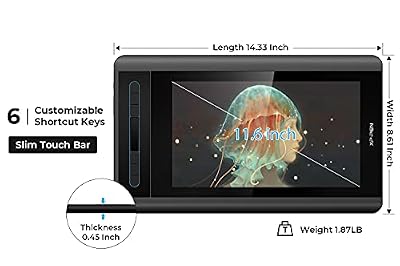
The XP-PEN Artist 12 is one of the most popular entry-level pen displays on the market, and the reason is simple: it puts an 11.6-inch FHD IPS screen directly under your stylus at a price that used to belong to screenless tablets. At around $230, the Artist 12 is the cheapest comfortable way to draw directly on the picture you are creating, with 8,192 pressure levels and a battery-free pen. This XP-PEN Artist 12 review covers the display quality, pen feel, drivers and where it sits in the ecosystem.

XP-PEN Artist12 11.6 Inch FHD Drawing Monitor Pen Display Graphic Monitor with PN06 Battery-Free Multi-Function Pen Holder and Glove 8192 Pressure Sensitivity



As an Amazon Associate we earn from qualifying purchases. Product prices and availability are accurate as of the date/time indicated.
🛒 Best Price Today on Amazon
Prime members get fast, free shipping on everything above, plus member-only deals. New members get a 30-day free trial — cancel anytime.
As an Amazon Associate we earn from qualifying purchases.


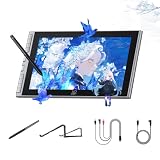


XP-PEN Artist 12 at a Glance
| Component | Specification |
|---|---|
| Active area | 11.6-inch IPS display, 1920 x 1080 (FHD) |
| Pressure levels | 8,192 |
| Stylus type | Battery-free passive pen (P05R) |
| Resolution | 5,080 lpi |
| Report rate | approx 60 Hz display / 266 pps pen |
| Tilt support | No (on this generation) |
| Express keys | 6 customisable shortcut keys + touch bar |
| Connection | HDMI + USB (wired) |
| Approx price | around $230 |
Pen Performance & Pressure
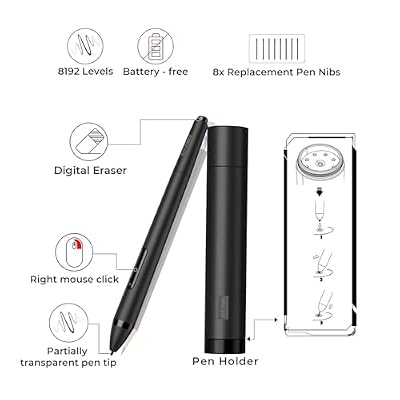
The Artist 12 ships with XP-PEN’s P05R battery-free passive stylus, which delivers 8,192 levels of pressure sensitivity. There is no battery to charge and no cable to plug into the pen — it draws power wirelessly from the display surface, like every modern stylus on a quality pen display. Pressure tracking is responsive, with low initial activation force, and the two side buttons are remappable in the driver. Tilt is not included on this generation, which is the main feature compromise versus newer XP-PEN displays such as the Artist 15.6 Pro V2 — for line art, lettering and notes it is rarely missed, but artists who paint with tilt-sensitive brushes may find it limiting.
What matters more on a pen display than on a screenless tablet is the pen-tip-to-cursor offset, sometimes called parallax. The Artist 12 has a small but visible gap between the etched glass surface and the LCD layer below — typical for displays at this price tier and one of the things you pay more for when you step up to a fully laminated panel such as the Artist 15.6 Pro V2. In practice the offset is small enough that you adapt to it within an hour of use, but if you have used a laminated Wacom Cintiq or a similar high-end display, you will notice the difference immediately. For lineart, calligraphy and detail work, you may want to tilt the display slightly toward you so your eye-line approaches the work surface perpendicular, which minimises the perceived offset.
Build & Materials
The Artist 12 is a compact, lightweight pen display in a slim plastic chassis with an anti-glare etched glass surface. The textured glass gives the pen tip a satisfying paper-like resistance, which is one of the bigger differences between a good and a mediocre pen display. There are 6 ExpressKeys plus a small touch bar (used for zoom or brush-size control) along the left edge, and the orientation can be flipped for left-handed users. There is no built-in stand — the display lies flat on the desk by default, and XP-PEN sells an adjustable stand separately, or many users prop the display on a laptop stand. Display brightness and colour gamut are adequate for hobbyist use: XP-PEN quotes a 72% NTSC colour gamut for the Artist 12 panel, which translates roughly to full sRGB coverage and is fine for most general digital art and online publishing workflows. It is not a wide-gamut display in the way a professional reference monitor is, so colour-critical print work calls for a step up to a more capable display — but for the audience this product is targeted at, the panel is well chosen. Viewing angles are good thanks to the IPS technology, and the anti-glare etched-glass finish keeps reflections under control in typical desk-lamp lighting.
Software Compatibility & Drivers
XP-PEN’s drivers support Windows, macOS and Linux, with full pressure-sensitivity support in Photoshop, Clip Studio Paint, Krita, Affinity Photo, Illustrator, SAI and many others. The driver utility lets you remap the ExpressKeys and touch bar per-application, calibrate the screen and adjust pressure curves. Out of the box the display is recognised as a secondary monitor over HDMI, and the USB connection handles pen input and power. Connection involves an included 3-in-1 cable (HDMI + USB-A + USB-A for power), which is more cabling than a screenless tablet but unavoidable for a display.
Use Cases — Art, 3D and Note Taking
The Artist 12 is at its best as a first pen display for serious hobbyists and aspiring professional illustrators. Drawing directly on your art is a meaningful step up from a screenless tablet — hand-eye coordination becomes effortless, and the workflow feels closer to drawing on paper. For 3D artists, it works as a sculpting input in ZBrush and Blender, though the FHD resolution and 11.6-inch size are tight for complex scenes. For educators and live presenters, the screen makes annotation and whiteboarding far more natural than a screenless tablet. For travel and small workspaces, the compact size is a clear advantage over larger pen displays. The display draws power over USB from the connected computer in most setups, but a separate USB power adapter is included in the box for situations where the host machine cannot supply enough power on the included USB-A port — useful for older laptops with weaker USB ports.
What’s in the Box
XP-PEN includes the Artist 12 pen display, the P05R battery-free stylus, a pen stand with replacement nib storage, eight replacement nibs, the 3-in-1 HDMI/USB connection cable, a separate USB extension cable, an artist glove, a cleaning cloth and a Quick Start guide. There is no separate display stand in the box — most users either work with the display flat or buy XP-PEN’s adjustable stand separately.
Verdict — Is the XP-PEN Artist 12 Worth It?
At around $230 the XP-PEN Artist 12 is the most affordable comfortable way to draw on a screen rather than next to one. You get FHD resolution, 8,192 pressure levels, a battery-free pen and a useable colour gamut for hobbyist work — and you give up tilt, a stand, and the colour accuracy of pricier displays. If you have been working with a screenless tablet and want to make the jump to drawing on-screen without breaking your budget, the Artist 12 is the obvious starting point. For an upgrade later, see our pick of the XP-PEN Artist 15.6 Pro V2. To pair it with capable drawing hardware, see our best RTX 5070 gaming laptops guide and our best gaming laptops under $1,200 roundup for affordable host systems.
Frequently Asked Questions
Does the XP-PEN Artist 12 pen need charging?
No. The P05R stylus is battery-free and draws power wirelessly from the display surface, so it never needs charging or batteries.
What resolution is the XP-PEN Artist 12 display?
It is a 1920×1080 (FHD) IPS display, 11.6 inches on the diagonal.
Does the XP-PEN Artist 12 come with a stand?
No. A stand is not included with this generation. The display sits flat on the desk by default, and an adjustable stand is sold separately.
How many ExpressKeys does the XP-PEN Artist 12 have?
It has 6 customisable ExpressKeys plus a small touch bar for zoom and brush-size control.
More Drawing Tablet Reviews
- XPPen Artist 15.6 Pro V2 Review: 16K Pressure Pen Display
- XPPen Deco 640 Review: 6×4 Drawing Tablet with 16K Pressure
- GAOMON M10K Review: 10×6 Drawing Tablet with Touch Ring
- GAOMON S620 Review: 6.5×4 Battery-Free Drawing Tablet
- HUION HS610 Review: Battery-Free Stylus, Tilt, and 8192 Pressure
- HUION Inspiroy 2 Large Review: 10×6 Scroll Wheel Drawing Tablet
- GAOMON PD1161 Review: 11.6″ FHD Pen Display for Hobbyists
- Wacom Intuos Small Bluetooth Review: Beginner-Friendly Drawing Tablet
Affiliate Disclosure: As an Amazon Associate, we earn from qualifying purchases. If you click a link and make a purchase, we may earn a small commission at no extra cost to you. Prices and availability are accurate as of publication and may change.
Related Articles
Looking for more on this topic? Browse the hand-picked guides below — each one applies the same scoring rubric used in this review.