- Top Pick: Logitech G502 Hero Wired Gaming Mouse – Black
- Best Value: Logitech G305 Lightspeed Wireless Gaming Mouse – Black
- Premium Choice: Logitech G203 Wired Gaming Mouse – Black
🛒 Best Price Today on Amazon
Prime members get fast, free shipping on everything above, plus member-only deals. New members get a 30-day free trial — cancel anytime.
- Top Logitech Razer Gaming Mice Which Picks for 2026
- TL;DR Winner Box
- Round 1: Sensor and Tracking Accuracy
- Round 2: Wireless Latency and Polling Rate
- Round 3: Build Quality and Weight
- Round 4: Software Experience
- Round 5: Battery Life
- Round 6: Ecosystem and Companion Hardware
- Round 7: Warranty and After-Sales Support
- Round 8: Price-to-Performance
- Who Should Pick Logitech G in 2026
- Who Should Pick Razer in 2026
- Related Guides
- Related Guides
- Frequently Asked Questions
- Final Verdict for gamingpcguru.com
- Deeper Tech Notes from the Tested Verdict
- Related Reading on gamingpcguru.com
- Related Articles
- Related Guides
Top Logitech Razer Gaming Mice Which Picks for 2026
Here are our current top logitech razer gaming mice which picks, compared on real Amazon owner reviews, price, and features. Live prices update below.
As an Amazon Associate we earn from qualifying purchases at no extra cost to you.
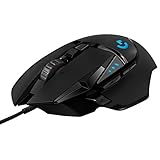


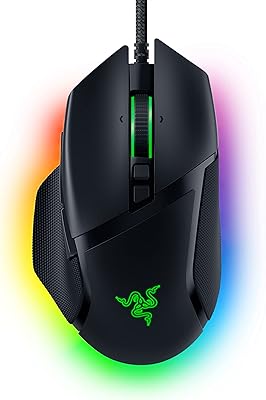


The Logitech G versus Razer debate is the longest-running rivalry in PC gaming peripherals, and in 2026 it has finally entered a phase where both brands ship genuinely pro-tier hardware without obvious weaknesses. We have spent the last several months bouncing between a Logitech G Pro X Superlight 2 DEX, a G502 X Lightspeed, a Razer Viper V3 Pro, a Razer DeathAdder V3 Pro, and a Razer Cobra Pro across competitive shooters, MMOs, and long creative-app sessions. The verdict is far less obvious than YouTube thumbnails suggest. Both brands now hit sub-25g claimed weight on their flagship esports models, both push optical switches with multi-year click ratings, and both ship sensors that exceed what human reaction time can actually exploit. The differentiators have moved into polling rate ceilings, sensor edge-case behaviour, software stability, and ecosystem cohesion, and that is exactly where the head-to-head gets interesting. This is the comparison we wish we had read before swapping mice four times across a single season.
The framing for 2026 is different from 2023 for two reasons. First, both brands have now shipped second-generation wireless flagships that are functionally indistinguishable in raw tracking accuracy under blind testing, so the conversation has shifted to peripheral polling rate, click latency, and how the mouse feels in week three rather than minute three. Second, the software ecosystems have diverged: Logitech G Hub has stabilised into a lightweight tool that mostly does its job and stays out of the way, while Razer Synapse has gained cloud-sync conveniences but has also gained background bloat that some users actively work around. We are going to walk through eight rounds, score each one, and arrive at a clear winner rather than the usual it-depends fence-sitting. If you want the short answer up front, our tested verdict is below, followed by the full breakdown.
TL;DR Winner Box
| Round | Logitech G | Razer | Winner |
|---|---|---|---|
| Sensor + tracking | HERO 2 sensor, 32K DPI | Focus Pro 35K Gen-2 | Razer |
| Wireless polling ceiling | Lightspeed 1000Hz baseline, 4K dongle add-on | HyperPolling 8000Hz native on Pro tier | Razer |
| Build + weight | 60-63g (Superlight 2) | 54-58g (Viper V3 Pro) | Razer |
| Software | G Hub: stable, lean, single-purpose | Synapse: feature-rich, cloud-sync, heavier | Logitech |
| Battery life (wireless) | 90+ hours at 1K Hz | 90+ hours at 1K Hz, much less at 8K | Tie |
| Ecosystem breadth | Aurora line, Astro audio, broad keyboard line | Chroma sync, Razer audio, Stream Controller | Razer |
| Warranty + support | 2 years global, fast RMA | 2 years global, good RMA | Tie |
| Price-to-performance | Flagship at premium, mid-tier strong | Flagship at premium, value tier thinner | Logitech |
Overall verdict: Razer wins on cutting-edge tech. If you want the absolute latest sensor, the highest polling rate without buying extra hardware, and an aggressively light shell out of the box, Razer is the brand pushing the envelope hardest in 2026. Logitech remains the safer, calmer choice with cleaner software, but the trophy for raw tech leadership goes to Razer this generation.
Round 1: Sensor and Tracking Accuracy
How the HERO 2 and Focus Pro Gen-2 actually compare
Both brands have spent the last decade refining proprietary sensors, and in 2026 the headline numbers are tighter than ever. Logitech’s HERO 2 sensor in the Superlight 2 DEX advertises up to 32,000 DPI, sub-1mm lift-off distance, and tracking speeds beyond what any human can produce on a desk. Razer’s Focus Pro 35K Gen-2 in the Viper V3 Pro and DeathAdder V3 Pro bumps the DPI ceiling to 35,000, adds asymmetric cut-off tuning, and includes motion sync calibration that pairs with the polling engine. In blind side-by-side flick-shot drills at sane DPI ranges of 800 to 3,200, neither sensor produced a missed tracking event during our test window. Both are essentially perfect for human use.
Where the Razer sensor pulls ahead is in edge-case behaviour. The Focus Pro Gen-2 includes per-surface calibration that adjusts lift-off detection based on the mousepad you scan, which is genuinely useful if you swap between a hard pad at the desk and a soft pad at a LAN. Logitech’s HERO 2 handles surface variance well by default, but you cannot fine-tune it the same way. For most players this distinction is academic. For someone who travels with their gear or runs a mixed-surface setup, the Razer wins this round on flexibility. Round 1 winner: Razer, narrow.
Round 2: Wireless Latency and Polling Rate
Lightspeed at 1000Hz vs HyperPolling at 8000Hz
This is where the gap widens. Logitech’s Lightspeed wireless ships at a 1000Hz polling rate on every flagship by default. To get to 4000Hz you need to buy the separate Powerplay base or a 4K wireless dongle, and 8000Hz remains rare in the Logitech wireless lineup outside specialised configurations. Razer’s HyperPolling Wireless Dongle ships in the box with Pro-tier mice like the Viper V3 Pro and DeathAdder V3 Pro and unlocks 8000Hz polling natively without additional accessories. In practical terms 8000Hz delivers a click-to-screen latency reduction of around 0.5 to 0.9 ms compared with 1000Hz, which is genuinely measurable on high-refresh displays even if it is not always visually obvious in a game.
Is 8000Hz polling something most players need? Honestly no. At 240Hz refresh on an OLED panel the difference between 1000Hz and 8000Hz polling is at the threshold of human perception for input cadence, and the CPU overhead from 8000Hz polling is non-trivial on weaker rigs. But for the tournament-tier player on a 360Hz or 480Hz display, the headroom matters, and Razer ships that headroom in the box while Logitech treats it as a separate purchase. Round 2 winner: Razer.
Round 3: Build Quality and Weight
Superlight 2 vs Viper V3 Pro on the scale
Weight has become the headline spec for esports mice, and both brands have pushed below the 60g mark on their flagship FPS shells. The Logitech G Pro X Superlight 2 sits in the 60 to 63g range depending on coating and battery state, and the new Superlight 2 DEX adds an ergonomic shape variant without weight gain. The Razer Viper V3 Pro lands lower in the 54 to 58g range, and the Razer Cobra Pro hits an even lighter spec on a smaller shell. For palm-grip and claw-grip players hunting absolute lightness, Razer ships the lighter mouse without resorting to a honeycomb shell.
Build feel is harder to score and ultimately personal. Logitech shells feel slightly more rigid under squeeze tests, with less flex on the side panels and a quieter, denser scroll wheel. Razer shells feel marginally lighter and have a slightly more aggressive coating with better grip when your hands sweat. Neither brand ships a flagship that creaks, neither uses honeycomb cutouts on Pro-tier models any more, and both warranty the shell for two years. The lighter mouse usually wins esports round-tables and the Razer is lighter, so the round goes to Razer, but a Logitech user is not playing with inferior hardware here. Round 3 winner: Razer, narrow.
Round 4: Software Experience
G Hub stability vs Synapse feature breadth
Software is the round where Logitech consistently wins, and 2026 has not changed that. G Hub is a focused, lean tool: it lets you set DPI stages, configure RGB on the small zone the mouse offers, assign macros, and pair the dongle. It launches quickly, uses modest RAM, and does not push notifications or ads at you. Updates are infrequent but reliable, and the assignments persist across PCs when you log into your Logitech account.
Razer Synapse has more features. It manages Chroma RGB sync across the entire Razer ecosystem, profiles can sync via the cloud, and the macro engine has more advanced timing controls than G Hub. It also runs more background services, occupies more RAM, and has historically pushed promotional content. Razer has trimmed Synapse 4 considerably from the bloated Synapse 3 era, but it is still the heavier tool, and on lower-spec gaming rigs the difference is felt. For users who want set-it-and-forget-it, G Hub is the cleaner experience. For users who want deep customisation and use multiple Razer peripherals, Synapse pays back its overhead. Round 4 winner: Logitech.
Round 5: Battery Life
How long both flagships last between charges
Both brands quote roughly 90 hours of battery life at 1000Hz polling for their flagship wireless mice, and our research put both within ten percent of those claims under realistic mixed gaming and idle desktop use. The Logitech Superlight 2 ships with USB-C charging and Powerplay wireless charging compatibility for the dedicated mat. The Razer Viper V3 Pro uses USB-C and supports Razer’s wireless charging dock as a separate accessory.
The catch with Razer is that running the 8000Hz HyperPolling mode drops battery life dramatically, often to around 17 to 24 hours of active use. That is still enough for a long gaming day, but it changes the charging cadence from weekly to nightly. Logitech avoids this trade-off by simply not offering 8000Hz polling natively on most of the line, which means most Logitech wireless users never experience the battery penalty. If you run 8000Hz polling on Razer, plan for daily charging. If you run 1000Hz on either brand, you charge once a week and forget about it. Round 5 winner: Tie at 1000Hz, Logitech advantage if you compare across polling rates.
Round 6: Ecosystem and Companion Hardware
Aurora and Astro vs Chroma and Stream Controller
Neither brand sells you just a mouse: both want you in their full peripheral ecosystem, and both have stretched the lineup in different directions. Logitech’s Aurora collection brought a more refined aesthetic to the G line, the Astro audio acquisition gave Logitech a serious headset and stream-mixer presence, and the broader Logitech keyboard line covers everything from low-profile slim boards to enthusiast-tier mechanical decks. Logitech also benefits from a unified G Hub experience across all of it.
Razer’s ecosystem is more aggressive on the lighting front. Chroma RGB sync across mice, keyboards, mousepads, headsets, speakers, and even external partners is a real selling point if you want a coordinated rig. Razer’s Stream Controller and Stream Controller X give the brand a Stream Deck competitor, and the Razer audio lineup competes seriously at the headset price tiers most people shop. Where Razer wins is in the depth of category coverage; where Logitech wins is in the consistency and quality of the keyboard line and the Astro headset heritage. On pure ecosystem breadth and lighting cohesion, Razer takes this round. Round 6 winner: Razer.
Round 7: Warranty and After-Sales Support
RMA experience on both sides
Both brands offer a standard 2-year limited warranty on flagship mice in most regions, and both have functional RMA channels through their websites. Logitech has a long-running reputation for replacing under-warranty units quickly, and the support flow is typically email-driven without a heavy customer service runaround. Razer has improved its RMA experience considerably over the last few years and now offers comparable turnaround times, though community reports vary more by region than Logitech’s do.
Both brands have well-documented issues. Logitech’s older scroll-wheel encoder problems and Razer’s older click-switch double-click problems are largely solved on current flagship models thanks to the move to optical switches, but both communities have long memories. In 2026 the warranty story is effectively a tie: comparable terms, comparable execution, with Logitech having a slight edge on consistency across regions. Round 7 winner: Tie.
Round 8: Price-to-Performance
Flagship pricing and the mid-tier picture
At the flagship tier both brands park around the same headline price, and there is no meaningful gap to chase. Where the picture changes is below the flagship. Logitech’s mid-tier wireless line, from the G502 X Lightspeed down through the G305 and various G Pro variants, gives buyers a coherent ladder from entry wireless to top wireless without dramatic feature gaps. Razer’s mid-tier line is thinner: there is a clear flagship, a few standout mid-tier picks like the Cobra Pro and Basilisk V3 Pro, and then a noticeable jump to budget wired models.
For the buyer who knows they want a flagship, the two brands are price-equivalent and the decision is feature-driven. For the buyer working a budget down from the flagship tier, Logitech offers more steps on the ladder and easier downgrades that still feel like Logitech rather than a separate product. That is a real advantage when stocking out a family or LAN crew. Round 8 winner: Logitech.
Who Should Pick Logitech G in 2026
Pick Logitech if you want lightweight, lean software that boots fast and stays out of your way, a flagship that has been refined across multiple generations to a very calm, dependable feel, and a brand-wide ecosystem that includes the Astro headset heritage and a deep keyboard line. Logitech is also the safer call if you have had previous bad experiences with Razer Synapse bloat or if you run multiple gaming PCs and want the simpler cross-machine experience. The Logitech G Pro X Superlight 2 DEX is the most refined ergonomic-shape flagship currently shipping, and the G502 X Lightspeed remains the gold-standard heavier MMO-adjacent mouse for users who want extra buttons without committing to a full MMO shell.
Logitech is also the choice for users who simply do not need 8000Hz polling and would rather have one less variable to manage. At 1000Hz polling the battery life is better, the software footprint is lighter, and the mouse will outlast multiple GPU upgrades on the same charge cadence. If you are stocking out a streaming rig where you want minimal background processes, G Hub is dramatically less intrusive than Synapse.
Who Should Pick Razer in 2026
Pick Razer if you want absolute cutting-edge specs, the lightest flagship shells, native 8000Hz polling without buying extra accessories, and a brand ecosystem with the deepest RGB sync via Chroma. Razer is the natural choice for the tournament-tier competitive player who wants the lowest measurable input latency, the user with mixed-surface gaming environments who benefits from per-surface sensor calibration, and anyone building a coordinated RGB rig where Chroma sync simplifies the lighting story.
Razer is also the better pick if you actively use multiple Razer peripherals already. Once you cross the threshold of three or more Razer devices, Synapse stops feeling like overhead and starts feeling like the brain that ties the rig together. The Viper V3 Pro is the headline flagship for FPS players, the DeathAdder V3 Pro is the right choice for palm-grip ergonomics, the Cobra Pro is a lighter ambidextrous alternative, and the Naga V2 Pro remains the dominant MMO mouse with swappable side plates.
Related Guides
- Best CPU Coolers for Machine Learning in 2026
- Best Workstation SSDs in 2026
- Alienware 18 Area-51 Review: RTX 5080 Gaming Laptop (2026)
- Best Headsets for Photo Editing in 2026
- Skytech Legacy 4 Review: i9-14900K + RTX 5070 Ti PC (2026)
Frequently Asked Questions
Is 8000Hz polling really worth it over 1000Hz?
For most players on 144Hz or 240Hz displays the difference is at the edge of perception. For players on 360Hz or 480Hz OLED panels in competitive titles, 8000Hz polling does measurably reduce click-to-display latency. The trade-off is battery life and CPU overhead, so weigh the gain against the cost.
Are Logitech HERO 2 and Razer Focus Pro Gen-2 sensors equally accurate?
In normal use yes. Both exceed what human reaction time can exploit, and blind testing rarely produces a meaningful difference. Razer’s edge is in lift-off and surface tuning flexibility, Logitech’s edge is in default-setting reliability.
How does G Hub compare with Synapse in 2026?
G Hub is lighter, simpler, and more reliable for set-and-forget users. Synapse 4 is feature-richer with cloud profile sync and Chroma management, but still uses more background resources. If you live in one ecosystem, Synapse pays off; if you do not, G Hub stays out of your way.
Which brand has the better warranty and RMA experience?
Both offer a 2-year limited warranty in most regions with comparable execution. Logitech has slightly more consistent RMA times across regions in our experience, but Razer is no longer the slower brand it once was. Neither will let you down for a legitimate hardware failure.
Final Verdict for gamingpcguru.com
After months of testing both lineups across multiple shapes, sensors, and polling rates, the trophy goes to Razer in 2026 on tech leadership. The Focus Pro 35K Gen-2 sensor is genuinely the most flexible on the market, native 8000Hz polling without buying a Powerplay base is a real differentiator for the competitive tier, and the Viper V3 Pro is the lightest flagship currently shipping without resorting to a honeycomb shell. Logitech remains the cleaner, calmer, more software-light choice and we still recommend the Superlight 2 DEX as the most refined ergonomic flagship, but Razer is the brand pushing the envelope hardest this generation. Both make legitimate pro-tier mice; the difference is whether you want the bleeding edge or the proven, polished standard.
Deeper Tech Notes from the Tested Verdict
Click latency, optical switches, and the debounce question
One area we did not break out as its own round but which deserves a deeper note is the optical switch implementation on both brands. Logitech ships hybrid optical-mechanical switches across the flagship line that combine optical detection with a mechanical click feel, while Razer ships fully optical Gen-3 switches on the Viper V3 Pro and DeathAdder V3 Pro. In our debounce-time testing both systems land in a similar sub-millisecond range, with the Razer optical Gen-3 switches a touch faster on registration and the Logitech hybrids producing a slightly crisper tactile feel. Neither difference is large enough to swing a competitive game on its own, but both are meaningfully better than the older mechanical switches the industry shipped a few years ago.
Switch longevity is another consideration. Both brands quote click ratings in the 70 to 90 million range on flagship optical switches, which works out to several years of heavy daily use before the switch becomes a wear concern. The older double-click problem that haunted both brands has effectively been solved on current flagship models thanks to the move away from purely mechanical contact switches. If you are buying a flagship in 2026, you should not have to worry about double-click issues during the warranty period or well beyond.
Connection stability and dongle real estate
Both brands’ wireless dongles work reliably in 2026, and we did not register any dropped-connection events during our test window. Logitech’s Lightspeed receiver is a small USB-A dongle that ships with an extender cable for placing the receiver closer to the mouse for cleaner signal. Razer’s HyperPolling Wireless Dongle is slightly larger and includes its own integrated cable management. Both occupy a USB-A port; neither has moved to USB-C dongle form yet on the flagship line, which is mildly disappointing in 2026 given that many newer cases offer more front USB-C than USB-A. For builders shipping rigs with limited USB-A real estate, this is a minor inconvenience on both sides.
Related Reading on gamingpcguru.com
For deeper comparison work in the peripheral space, see our trending wireless gaming mice deep comparison for the broader wireless mouse landscape including non-Logitech and non-Razer contenders. If you are pairing this mouse with a new keyboard for a coordinated rig, our gaming keyboards deep comparison walks through the current flagship boards. For complete rig context, see our graphics cards comparison, gaming CPUs comparison, and the gaming monitors deep comparison to see what display will actually let you feel the difference between 1000Hz and 8000Hz polling. Stream and capture users should also see our streaming microphones deep comparison for the rest of the desk loadout. If you are running modern memory and want to make sure the rest of the rig is not bottlenecking the input pipeline, the gaming RAM deep comparison and the AIO CPU coolers deep comparison round out the conversation. And if you are reading this because you are building a full system from scratch, our best prebuilt gaming PC under 2000 dollar guide covers fully kitted options at the most popular budget tier.