Warzone 2.0 Optimal PC Settings & FPS Guide
Warzone 2.0 is a demanding battle royale, and its settings menu offers far more options than most players touch. The right mix can raise the frame rate noticeably without hurting what you need to see, while the wrong mix can leave a powerful PC stuttering in the middle of a fight. This page is a buying and setup guide. We have not run controlled benchmarks on the hardware below, so the settings advice describes what each option does and where it usually trades speed for detail rather than promising specific frame-rate numbers.
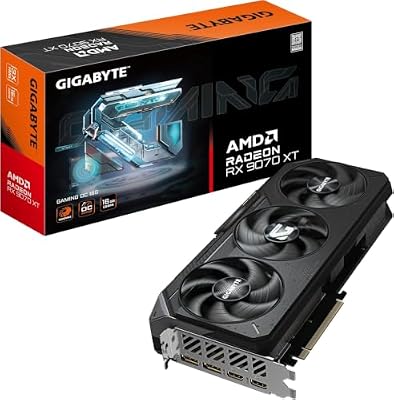
The hero listing is a 1440p, 144Hz-oriented gaming PC setup, and the four alternatives cover the same general class. Read it as a closest-match listing for the kind of system this guide assumes, not as a guarantee of the exact configuration. Check the card for the processor, graphics card, memory and storage before you buy, because a machine that looks similar on the outside can differ in exactly the parts that set your frame rate.

Start With the Settings That Cost the Most
Battle royale maps are large, and the engine draws a lot of distant detail. Most of the frame-rate cost sits in a small group of options, so tune those first. Resolution scale or upscaling, texture quality, shadow quality and the ambient occlusion and lighting options usually take the largest share of the GPU budget. Fixing those few settings gives you more than adjusting twenty small ones.
Resolution Scale and Upscaling
If your build offers a render scale or an upscaling option, it is the most effective lever for a higher frame rate on a mid-range card. Lowering the internal render resolution slightly and letting the upscaler rebuild the image often keeps the picture sharp enough for a fight while freeing a large share of GPU time. Test the change in a practice range, because some upscalers smear distant enemies and fine details more than others.
Texture Quality and Memory
Texture quality mostly costs video memory rather than raw processing. If you have a card with a smaller memory pool, a step down in texture quality can prevent the stutter that appears when the game runs out of memory and streams data at the wrong moment. Our guide to the best GPU for Call of Duty Warzone explains how memory size changes that choice across price tiers.

ChzsyhC 34 Inch Ultrawide Curved Gaming Monitor - WQHD 3440x1440p, 165Hz, 120% sRGB, FreeSync, VESA Mountable (DP&HDMI Cable Incl.) - Immersive PC Monitor for Gamers & Professionals, Black


As an Amazon Associate we earn from qualifying purchases. Product prices and availability are accurate as of the date/time indicated.
Processor Limits in Warzone 2.0
A large map with many players and vehicles asks the processor to keep track of a lot at once. When the frame rate falls while the graphics card shows spare capacity, the processor is usually the limit. Warzone 2.0 benefits from a processor with strong single-core speed, so a chip that looks modest on core count can still perform well. If you are choosing hardware rather than tuning an existing machine, our guide to the best CPU for Call of Duty Warzone covers the processor side in detail.
Telling a CPU Limit From a GPU Limit
Run a match with a monitoring overlay that shows graphics card usage and the frame time. If the graphics card sits near full load while the frame rate is low, lower the graphics settings. If the card sits well below full load and the processor shows a busy core during fights, the processor is the bottleneck and lowering graphics settings will not help much. Our walkthrough on how to check GPU and CPU temperature and load shows how to read those numbers.
Latency Options and Input Setup
Frame rate is only half of a responsive game. Look for a low-latency option in the settings if your graphics driver and the game support one, and enable it if it does not reduce the frame rate you have measured. Display mode matters too. Fullscreen generally gives the cleanest path from the game to the monitor, and it is worth matching the refresh rate in the operating system to the one in the game.
The network side is often ignored. A wired connection removes a source of variation that a Wi-Fi link can introduce, and it is worth checking the router settings before a ranked session. Our note on Ethernet settings for gaming covers the wired setup, and router settings for gaming covers the network configuration that affects spikes in ping.
Hardware Setup for a Stable 144Hz Experience
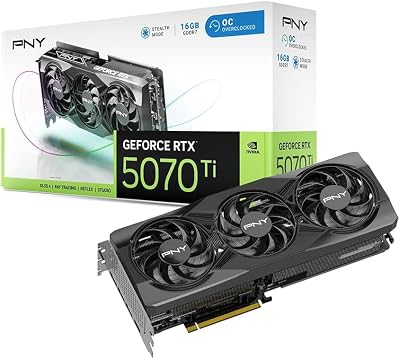
A 144Hz target is a sensible goal for most players at 1440p, and it is reachable on a balanced system with sensible settings. The cards in the table below cover the same range of graphics performance you would look at for this target. Compare them by memory size, cooler design and power requirement rather than by the name alone. For the processor side of that target, our list of best CPUs for 1440p gaming is a good companion, and the graphics card side is covered in the best GPUs for 1440p. Pick the monitor with the same target in mind using our monitor guide, and see the 1440p 144Hz build roundup for complete system examples.

CRUA 34" WQHD 165Hz Ultrawide Curved Gaming Monitor, 1500R, FreeSync, Black | 21:9 Display With 120%sRGB Color, HDMI 2.0, DP 1.4, 3.5mm Audio Out and 75x75mm Wall Mount For PC Gaming, Editing and Work


As an Amazon Associate we earn from qualifying purchases. Product prices and availability are accurate as of the date/time indicated.
| Option | Role in this guide | Best for | What to confirm | Price |
|---|---|---|---|---|
| Hero listing | Primary 1440p system pick | 144Hz target at 1440p | Processor, graphics card, memory, storage | Check current price |
| Alternative 1 | Monitor pairing option | Players buying a display with the system | Refresh rate and panel type | Check current price |
| Alternative 2 | Budget-leaning setup | 1080p or light 1440p use | Whether the frame rate meets your target | Check current price |
| Alternative 3 | Higher-tier setup | Players who want margin for heavy settings | Power supply and case airflow | Check current price |
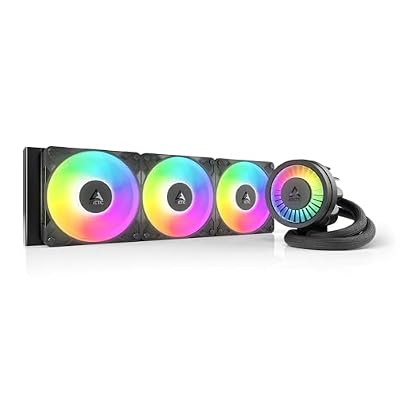
| Alternative 4 | Compact or quiet build | Small cases and low noise | Cooler height and case clearance | Check current price |
Treat the table as a checklist. Two listings with the same headline specification can differ in cooling, noise and warranty, and those differences matter over a long season of play.
Frequently Asked Questions
What is the fastest single change for more FPS in Warzone 2.0?
For most mid-range systems the largest single gain comes from lowering the render resolution or enabling an upscaler, if your build offers one. Texture quality and shadow quality are the next most useful options to tune. Change one setting at a time so you can see which change made the difference.
Does a 144Hz monitor need a top-end graphics card?
Not always. Many players reach a stable 144Hz at 1440p with a balanced mid-range card and sensible settings. A higher-tier card gives you more room to keep detail high, but the processor and the monitor’s refresh rate still set the ceiling.
Should I pick a wired connection for ranked play?
A wired connection is usually more consistent than Wi-Fi, which helps when you care about avoiding spikes in ping. Check your router’s settings before you rely on it, because a poor configuration can add delay even on a wired link.
Why does my frame rate drop in big fights?
Large fights push the processor, the graphics card and the memory at once. Check whether the processor or the graphics card reaches full load during those moments. The answer tells you whether to adjust graphics settings or to look at the processor. Before you buy new parts, check whether your system already meets the general requirements for a modern gaming PC.
Warzone 2.0 rewards a setup that stays steady rather than one that peaks high in an empty lobby. Tune the expensive settings first, confirm which part is the limit, keep the display and network consistent, and use the listing above as a starting point for the hardware you need.