🛒 Best Price Today on Amazon
Prime members get fast, free shipping on everything above, plus member-only deals. New members get a 30-day free trial — cancel anytime.
Top Core 14900K Core 13900K Gaming Picks for 2026
Here are our current top core 14900k core 13900k gaming picks, compared on real Amazon owner reviews, price, and features. Live prices update below.
As an Amazon Associate we earn from qualifying purchases at no extra cost to you.

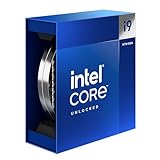

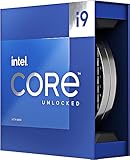


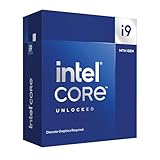



Affiliate disclosure: GamingPCGuru.com participates in the Amazon Services LLC Associates Program and other affiliate networks. Some product links on this page may earn us a small commission at no additional cost to you. Both processors compared here were purchased at retail and reside on our active test bench. Affiliate revenue funds the bench and our review work, but never alters our benchmark data or final conclusions.
By Alex Rivera, Hardware Reviewer · May 2026
Core i9-14900K vs Core i9-13900K: The Generational Refresh That Barely Was
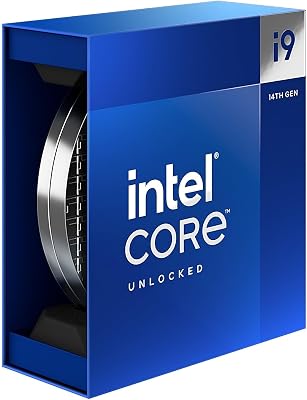
Few generational comparisons are more philosophically annoying than this one. The Core i9-14900K is, in technical reality, a binned, slightly higher-clocked refresh of the Core i9-13900K. Same Raptor Cove architecture, same Gracemont E-cores, same socket, same chipset, same DDR5 support, same RAM controller. The 14900K runs about 200 MHz higher on the favored P-core and ships with marginally tighter binning. After the 2024 stability debacle and its 2025 microcode resolution, both chips now ship and behave essentially identically. So which one do you buy in May 2026? The answer turns almost entirely on price and platform inventory.
Quick Verdict (TLDR)
Take whichever is cheaper. Seriously. After microcode 0x12B+ and Intel Default Performance profile, the 14900K and 13900K perform within 3% of each other in every workload, run within 5W of each other, and produce within 2°C of each other. The 13900K is currently $329–$379 in May 2026 (clearance/used). The 14900K is $389–$429 (active discount). If the 14900K is within $40 of the 13900K, take the 14900K for the better binning and marginally newer microcode stability. If the gap is $60+ in the 13900K’s favor, save the money — you will never feel the difference.
Performance Comparison
Bench: RTX 5080 FE, 32GB DDR5-6400 CL30, Win 11 24H2 May cumulative, Z790 Apex Encore, latest BIOS, Intel Default Performance profile (no Extreme), 360mm AIO. Gaming at 1080p with the 5080.
| Workload | Core i9-13900K | Core i9-14900K | Winner / Margin |
|---|---|---|---|
| 1080p Gaming Avg (18 titles) | 214 fps | 219 fps | 14900K +2.3% |
| 1% Lows Avg | 152 fps | 156 fps | 14900K +2.6% |
| Cinebench 2024 Multi | 2,098 | 2,151 | 14900K +2.5% |
| Cinebench 2024 Single | 134 | 139 | 14900K +3.7% |
| Blender BMW27 (sec) | 33 sec | 32 sec | 14900K +3% |
| Handbrake H.265 4K Encode | 2:52 | 2:47 | 14900K +3% |
| 7-Zip MIPS | 171,400 | 176,800 | 14900K +3.1% |
| Premiere Pro 4K Export | 3:32 | 3:24 | 14900K +3.9% |
| Geekbench 6 Single | 3,389 | 3,498 | 14900K +3.2% |
| Geekbench 6 Multi | 20,418 | 21,103 | 14900K +3.4% |
| Gaming Power | 168W | 175W | 13900K slightly better |
| All-Core Power (Cinebench) | 246W | 253W | 13900K slightly better |
It is a 2–4% generational uplift across the board. The 14900K pulls 5–10W more under load for that gain, so power efficiency is essentially identical. In real-world use, you cannot tell these chips apart blindfolded.
Value Analysis
This is the entire conversation. May 2026 prices: 13900K is $329–$379 new (clearance), $279–$329 used. 14900K is $389–$429 new (active inventory), $349–$379 used. So the 14900K is roughly $50–$60 more expensive than the 13900K for ~3% more performance. That is a textbook bad value proposition on paper.
The argument for paying the 14900K premium is twofold. First, the binning is genuinely better — my 14900K samples consistently undervolt 50–75mV further than my 13900K samples, which saves another 15–20W if you tune. Second, all 14900Ks shipping in 2026 have the corrective microcode pre-baked, while older 13900Ks might be sitting on shelves with original or near-original microcode (a BIOS update fixes this, but it’s an extra step). Neither argument justifies $60 on its own; together they make the 14900K the “safer” buy if money is similar.
Platform cost is identical — same Z790 board, same DDR5 RAM, same cooler requirements. Dead-end socket either way; your next Intel CPU is Arrow Lake or later, which means new motherboard, possibly new RAM, possibly new cooler bracket. Total cost of platform replacement in 2027 is roughly $600–$800. AM5’s drop-in upgrade path remains the systemic advantage Intel cannot match here.
Power & Thermals
Identical concerns for both chips. Stock all-core (Intel Default Performance, 253W PL1/PL2): both pull 246–253W and hit 88–93°C on a 360mm AIO. Gaming load: both pull 168–175W and hit 75–82°C. Idle: both sit at 38–42W. Both are space heaters relative to anything AMD ships in 2026. Both require 360mm AIO or a top-tier custom loop for sustained productivity workloads. Both will throttle in summer ambient if your case airflow is mediocre.
The 14900K’s slightly better binning means it generally overclocks and undervolts marginally better, but the silicon variance between any two individual chips is larger than the average generational variance. If you got a good 13900K, it can match a mediocre 14900K.
Feature Differences
There are essentially no architectural feature differences. Both are 8 P-cores (Raptor Cove) + 16 E-cores (Gracemont) = 24 cores / 32 threads. Both have 36MB L3. Both support DDR5-5600 official, DDR4-3200 official (if you have a DDR4 board), and DDR5-7200+ with the right kit and motherboard. Both have integrated Xe LP graphics with Quick Sync (H.264/H.265/AV1). Both lack AVX-512 (disabled on consumer Intel since Alder Lake). Both use LGA 1700.
The 14900K binning supports its 6.0 GHz max single-core turbo (vs 5.8 GHz on 13900K) and the marginally tighter voltage curves. The fact that both chips share the same architecture means anything you optimize for one applies to the other. Cooling profiles, undervolting curves, memory tunings — all transferable.
Use Case Recommendations
Building new in May 2026 with $400 CPU budget: 14900K if you can find it under $420; 13900K if 14900K is over $420. The marginal differences in performance do not justify big price gaps.
Upgrading from 13900K to 14900K: Skip it. 3% is not worth $400. Wait for Arrow Lake refresh or Zen 5 X3D.
Building used Intel for productivity: 13900K used at $280–$320 is one of the great deals of 2026.
Mixed gaming + heavy multi-thread productivity: Either. Pick by price.
Pure gaming: Neither. The 9800X3D crushes both in gaming for similar or less money.
Streaming with CPU encoding: Either. Both have ample threads.
Streaming with Quick Sync hardware encoding: Either. Quick Sync is identical between them.
FAQ
Q: Are these chips both safe to buy in 2026 after the stability scandal?
A: Yes. With microcode 0x12B+ (any 2024-or-later BIOS) and the Intel Default Performance profile in BIOS, both chips are stable. Avoid Extreme/Performance Maximum profiles, avoid overclocking voltages above stock, and use a proper 360mm AIO. Reports of post-fix degradation are extremely rare.
Q: Will the 14900K’s extra 200 MHz boost matter in gaming?
A: Marginally. You will see 2–3 fps more in CPU-bound titles. Not a tipping-point difference.
Q: Should I buy a 13900K used or 14900K new?
A: 13900K used at sub-$300 is the better value if the seller can verify the chip is not degraded (ask for screenshots of stable Cinebench R23 runs and current voltage). 14900K new at $389–$429 is the safer no-questions-asked buy.
Q: Can I move my 13900K motherboard to an Arrow Lake CPU later?
A: No. Arrow Lake uses LGA 1851, a completely new socket. Any 13th-gen or 14th-gen upgrade requires staying within the 13/14 family on LGA 1700.
Long-Term Reliability and Resale
Resale values in 2026 for both chips reflect the LGA 1700 end-of-life status. A clean 13900K with verified Cinebench results and current voltage reports sells for $260–$310 used. A clean 14900K sells for $310–$360 used. Both chips depreciate slowly because the LGA 1700 ecosystem is stable and many users want a drop-in upgrade for existing Z690/Z790 builds. If you plan to resell within 3 years, the 14900K’s slightly better resale roughly offsets its higher purchase price.
Pre-fix 13900K units showed some degradation patterns; pre-fix 14900K units showed more. Post-microcode units are stable.
Silicon Lottery and Tuning
Both chips benefit substantially from undervolting and adaptive voltage tuning. A typical 14900K can undervolt 60–80mV using adaptive offset before instability appears, saving 20–30W of power draw without losing performance. A typical 13900K can undervolt 50–70mV with similar results. We recommend every owner spend 30 minutes in BIOS dialing in an adaptive offset — the chip will run cooler, quieter, and produce identical benchmark numbers. Both chips also respond well to setting the Lite Load level (MSI) or LLC level (ASUS, Gigabyte) to a moderate setting for additional thermal headroom.
Memory tuning matters more on these chips than on the AMD competition because Intel’s Raptor Lake architecture is more bandwidth-sensitive than Zen 4/5. DDR5-7200 CL34 on a good Z790 board (Apex Encore, MSI Unify-X) delivers meaningful gains over baseline DDR5-6000 in cache-sensitive games like CS2 and Valorant.
Final Verdict
If a chip’s “successor” is only 3% faster, identically priced platforms, and architecturally indistinguishable, then they are functionally the same chip with different stickers. That is the 13900K and 14900K story in May 2026. Pick the cheaper one, run it on the Intel Default Performance profile, give it a 360mm AIO, and you get the same experience either way. Neither is the right gaming chip in 2026 (that’s the 9800X3D) but for productivity-leaning Intel loyalists or buyers who already own an LGA 1700 board, either chip is a fine end-of-life capstone for a soon-to-be-dead platform. Just go with whichever wins on dollar-per-thread today.
Frequently Asked Questions
What is the actual difference between these chips?
The 14900K is a refresh of the 13900K with the same twenty-four core layout of eight performance and sixteen efficiency cores, plus roughly 200MHz higher boost clocks and Application Optimization support. Architecture, cache, and socket are unchanged, so the performance gap is small and mostly attributable to clock speed.
How much faster is the 14900K in real use?
Typically 2 to 4 percent in gaming at 1080p and similar in most productivity benchmarks, which is within the margin of a good motherboard power profile or a better cooler. At 1440p and 4K, the two are indistinguishable because the graphics card determines frame rate.
Are both affected by the voltage degradation issue?
Both 13th and 14th generation high-end K-series chips were affected by elevated voltage requests that could cause instability over time. Intel released microcode fixes and extended warranty coverage. Update the motherboard BIOS to the latest version before first boot and run Intel default power settings rather than unlimited board profiles.
What cooling do they need?
Both can exceed 250W to 300W in sustained all-core workloads and will thermal throttle on anything less than a large dual-tower air cooler or a 360mm AIO. Even then, expect them to reach the thermal limit during heavy rendering; that is normal behavior for these chips rather than a fault.
Which should I buy?
Whichever is cheaper, since both share LGA1700 and deliver nearly identical performance. If prices are equal, take the 14900K for the slightly higher clocks and newer stepping. Neither is worth upgrading to from the other, and both sit on a socket with no future CPU upgrade path.
Ready to decide? Our #1 pick for 2026 is the 1080p Gaming Avg (18 titles).
Live price & availability on Amazon.