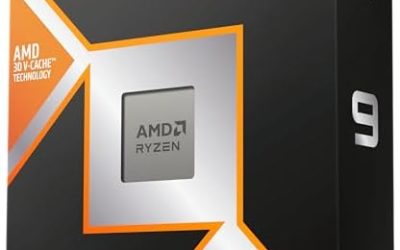
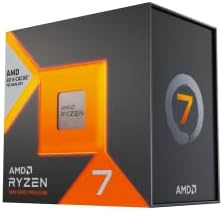
Updated November 2026 – Short answer: a Threadripper runs games fine, but it is rarely the right chip for a gaming PC. A Ryzen 7 9800X3D or Ryzen 9 9950X3D usually plays games faster, and a Threadripper makes sense only if you also do heavy rendering, compiling or virtual machine work.
So, is Threadripper good for gaming? It can play any current title, yet most of what you pay for goes to cores, memory channels and PCIe lanes that games barely touch. This guide explains why, who should still consider one, and what to buy instead.
Is a Threadripper Good for Gaming? The Short Version
Games depend mostly on a few fast cores, large cache and low memory latency. Threadripper chips are built the other way around: many cores, wide memory bandwidth and lots of expansion. The maker positions the Ryzen Threadripper line at creators and professionals, and the Threadripper Pro line at workstations, not at gamers.
Here is the practical picture for anyone asking whether AMD Threadripper is good for gaming:
- It will play games. A 24-, 32- or 64-core part has plenty of single-thread speed to run modern titles without trouble.
- It will rarely lead. Reviewers who compare workstation chips with mainstream gaming chips report that the mainstream parts, especially those with 3D V-Cache, match or beat Threadripper in most games.
- It costs more everywhere. The processor, the sTR5 motherboard, registered memory, the cooler and the power supply all sit in a higher tier than a mainstream build.
Why Threadripper Is Built for Work, Not Play
Many cores that games cannot use
The Threadripper 7980X, for example, is listed by the maker with 64 cores and 128 threads. Most games scale well to about six to eight cores and then flatten out. Past that point, extra cores sit idle during play. A game engine cannot turn 64 cores into 64 times the frame rate, so the extra silicon does nothing for you in a match.
Clock speed and cache behavior
Games reward high sustained clocks on a handful of cores and fast access to cache. The maker lists a base clock of 3.2 GHz and a maximum boost clock of up to 5.1 GHz for the 7980X. That boost is competitive, but the chip splits its cache across many chiplets, and data moving between chiplets adds latency. Mainstream X3D parts stack extra cache on a single chiplet, and reviewers consistently report that this design suits games better.
Memory channels matter little for frame rate
Threadripper 7000 uses a quad-channel DDR5 registered memory platform, while Threadripper Pro 7000WX uses eight channels. That bandwidth helps simulation, rendering and database work. For gaming, reviewers have found that memory speed and latency matter, but channel count beyond two gives little extra. Registered ECC memory is also slower to respond than the fast unbuffered kits gamers use.
Power, heat and size
The 7980X carries a 350 W rating from the maker. That needs a robust cooler, good case airflow and a power supply with headroom for the graphics card too. Idle power and noise are also higher than on a mainstream platform.
Quick Reference: Threadripper vs Gaming-First CPUs
| Use case | Verdict | What to pair it with |
|---|---|---|
| 1080p high refresh esports | Poor value. Works, but a mainstream X3D chip is as fast or faster | Ryzen 7 9800X3D with a mid-range RTX 50-series or Radeon RX 9000 card |
| 1440p high settings | Fine, but the graphics card limits you, not the CPU | Any modern 8-core with an RTX 5070-class or RX 9070-class card |
| 4K single-player | Works, extra cores unused | Spend the savings on the GPU instead |
| Streaming while gaming | Good, but a 16-core Ryzen 9 is usually enough | Ryzen 9 9950X3D or a second capture path |
| Gaming plus 3D rendering, video encoding, virtual machines | Reasonable fit | Threadripper 7960X or 7970X with a mid-range or high-end GPU |
| Pure gaming build | Not recommended | Mainstream AM5 platform |
Is AMD Threadripper Good for Gaming Compared With Ryzen?
Compared with a Ryzen 9 or Ryzen 7 on the AM5 socket, Threadripper offers more of everything except gaming speed per dollar. Ryzen 9000 chips, including the Ryzen 7 9800X3D, run on a mainstream board with ordinary DDR5 and need only a standard cooler and power supply. The Threadripper route asks for an sTR5 board, a bigger chassis and a larger power budget, and the games run about the same or slower.
Reviewers who benchmark both categories report a consistent pattern: workstation chips lead in multi-core rendering and compiling, while the X3D parts lead in games. If your day is split evenly, the choice depends on how many hours you spend waiting on renders versus how many you spend playing.
Is the Threadripper Good for Gaming on sTR5? Platform Costs and Limits
The sTR5 socket is used by both Threadripper and Threadripper Pro. The maker pairs Threadripper with TRX50 boards and Threadripper Pro with WRX90 boards. These boards are large, often use extended form factors, and offer many PCIe slots and memory slots that a gaming build will not fill.
- Memory: registered DDR5 modules, sold as kits sized for four or eight channels, which raises the minimum spend.
- Cooling: the chip is large, so use a cooler explicitly listed for sTR5 and a case that fits a big board.
- Power supply: pick a unit with enough capacity for the CPU rating plus a high-end graphics card, and follow the GPU maker guidance on connectors.
- Upgrade path: the maker has continued the line with newer Zen 5 Threadripper parts, but board and memory choices are narrow compared with AM5, so check the board maker support list before buying.
- Boot time and features: workstation boards often spend longer in memory training at startup and include features aimed at professionals.
AMD Threadripper 7980X vs NVIDIA RTX 4070: Why the Comparison Misleads
People who search for AMD Threadripper 7980X vs NVIDIA RTX 4070 are usually trying to decide where to put money, and the two parts do different jobs. The 7980X is a processor. The GeForce RTX 4070 is a graphics card. In a game, the graphics card draws the picture and the processor feeds it instructions, so you cannot swap one for the other.
If your budget is fixed and the goal is higher frame rates, a stronger graphics card usually does far more than a bigger processor. A 64-core CPU paired with a weak graphics card will lose to a modest CPU paired with a strong one at 1440p and 4K. Put money into the graphics card first, then buy the fastest CPU that fits what is left. The RTX 4070 is also a previous-generation card now, so compare it with the RTX 50-series and Radeon RX 9000 cards that replaced that tier.
When a Threadripper Still Makes Sense
A Threadripper is a defensible choice when the machine earns its keep outside games. Consider one if you:
- Render 3D scenes or long video projects for work and gaming is the second use.
- Compile large codebases or run many virtual machines that benefit from 24 to 64 cores.
- Need many PCIe lanes for several GPUs, fast storage arrays or capture cards.
- Need large amounts of memory, which the platform supports well.
If none of those apply, the extra platform cost buys you nothing in games. A creator who also plays can often get most of the benefit from a Ryzen 9 with 16 cores.
Better Alternatives for a Gaming PC
| Option | Best for | Notes |
|---|---|---|
| Ryzen 7 9800X3D | Top gaming speed on AM5 | 8 cores with stacked cache, the usual pick for pure gaming builds in reviews |
| Ryzen 9 9950X3D | Gaming plus heavy creator work | 16 cores with stacked cache, closest to a Threadripper feel on a normal board |
| Ryzen 7 7800X3D | Gaming on a tighter budget | Previous generation, still capable on AM5 |
| Intel Core Ultra 9 285K | Mixed productivity and gaming | LGA 1851 platform, strong in multi-core work |
| Threadripper 7960X or 7970X | Workstation first, games second | Only if you need the platform features |
For most readers, the AM5 route also leaves a clear upgrade path. You can drop in a newer Ryzen later without replacing the board and memory, which is harder to say about a workstation platform.
Software and Scheduling Notes for Gamers
High core counts can create quirks that mainstream chips avoid. Some older games assume a modest number of logical processors, and a chip with 128 threads can confuse their threading logic or launchers. Reviewers have reported that disabling simultaneous multithreading, or limiting the active core count through the motherboard or AMD’s own tools, can help such games. Those changes are BIOS-level or driver-level, so follow the motherboard manual, change one setting at a time, and remember that altering firmware options can cause instability or affect warranty terms.
Anti-cheat software and game launchers are written with mainstream hardware in mind. Workstation boards also tend to ship with fewer gamer-oriented extras, such as audio codecs tuned for headsets or simple one-click overclocking profiles. None of this blocks gaming, but it adds small points of friction that a mainstream AM5 board does not have.
A Simple Decision Rule
Ask what the computer does for most of its hours. If gaming takes most of them, buy for games: a fast X3D processor and the strongest graphics card the budget allows. If paid work such as rendering or compiling takes most of them, a Threadripper can justify itself, and games come along for free. When the split is unclear, a 16-core Ryzen 9 covers both jobs with less cost and less complexity.
Frequently Asked Questions
Can a Threadripper run games at all?
Yes, a Threadripper runs any current game without trouble. The cores are modern Zen architecture and boost to high clocks. The issue is value and efficiency, not capability.
Is a Threadripper better than a Ryzen 9 for gaming?
No, reviewers generally report that Ryzen 9 and especially X3D chips match or beat Threadripper in games. Threadripper wins in multi-core workloads such as rendering. For games, extra cores past about eight add little.
Does more memory bandwidth help gaming?
Only slightly, because most games depend on memory latency and cache more than on channel count. Quad-channel and eight-channel memory shine in simulation and professional software. A fast dual-channel DDR5 kit is enough for gaming.
Can I use a gaming graphics card with a Threadripper?
Yes, Threadripper boards use standard PCIe slots, so any GeForce RTX or Radeon RX card fits. Follow the card maker guidance on power connectors and use a power supply with enough capacity for both parts.
Is a Threadripper worth it for streaming and gaming together?
It can be, but most streamers do not need it. A 12- to 16-core Ryzen handles a game and an encode together in most setups, and a hardware encoder on the graphics card takes load off the CPU. Choose Threadripper only if you also render or run virtual machines.
Should I wait for newer Threadripper chips before buying?
Not for gaming, since a newer workstation chip will not change the advice. Games still favor fast cores and cache, so a mainstream X3D processor remains the better fit. Check the board maker specifications if you do need a workstation platform.