Affiliate disclosure: As an Amazon Associate we earn from qualifying purchases. This post contains affiliate links — if you buy through them we may earn a small commission at no extra cost to you. This never affects our recommendations.
As an Amazon Associate we earn from qualifying purchases at no extra cost to you.




In a hurry? See the top-rated AMD Ryzen 7 9800X3D deals available right now:
🛒 Check Amd Ryzen 7 9800X3D Prices on Amazon →🛒 Best Price Today on Amazon
Prime members get fast, free shipping on everything above, plus member-only deals. New members get a 30-day free trial — cancel anytime.
Start 30-Day Prime Free Trial →See Today’s Amazon DealsIntroduction
If you want the best gaming CPU money can buy in 2026, the conversation starts and ends with 3D V-Cache. AMD’s stacked cache technology fundamentally changed how CPUs handle gaming workloads by keeping far more frequently accessed data on-die, slashing the latency penalty that has bottlenecked frame rates for years. The result: CPUs that punch well above their clock speed in any title that hammers the cache — which, as it turns out, includes nearly every competitive and AAA game worth playing.
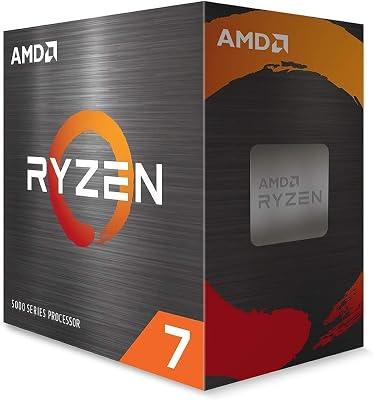
The AMD Ryzen 7 9800X3D takes that formula and supercharges it with the Zen 5 architecture. Where the Ryzen 7 7800X3D paired 3D V-Cache with Zen 4 cores, the 9800X3D brings meaningful IPC gains, a refined manufacturing process, and improved thermal headroom into the same eight-core, 104 MB total cache package. The upgrade is not merely incremental — Zen 5’s wider execution engine and improved branch predictor make every cached operation more useful, translating directly into higher average and 1% low frame rates across nearly every tested title.
In this guide we break down exactly why the best AMD Ryzen 7 9800X3D gaming CPU holds its crown in 2026, which X870E motherboards pair with it best, how to choose DDR5 memory that does not bottleneck it, and who should buy it right now versus who should hold off for whatever AMD cooks up next.
Why the Ryzen 7 9800X3D Dominates Gaming
3D V-Cache Explained
Traditional CPUs rely on off-die DRAM for data the L3 cache cannot hold. The latency penalty for that round trip — measured in nanoseconds but devastating at 240+ fps — caps frame rates in cache-sensitive games regardless of raw clock speed. AMD’s 3D V-Cache stacks an additional 64 MB SRAM die directly on top of the compute chiplet using hybrid bonding, bringing total L3 to 96 MB on the 9800X3D. Games that stream AI pathfinding tables, large map tiles, or shader data hit that cache instead of DRAM, and the latency difference between a cache hit and a DRAM access can be a 5–10x gap. That is not a benchmark curiosity — it is the reason the 9800X3D leads games while trailing in multi-threaded workloads where clock speed dominates.
Zen 5 IPC Gains
Zen 5 delivers roughly 16% IPC uplift over Zen 4 in real-world gaming workloads. The wider front-end — expanded to handle more micro-ops per cycle — reduces execution stalls, while the improved branch predictor cuts the frequency of costly mispredictions that waste cycles. Zen 5 also brings native AVX-512 support and a larger L1 instruction cache, both of which matter in titles with complex physics or AI systems. Combined with the V-Cache advantage, the 9800X3D does not just win on cache-dependent games: it competes seriously in CPU-limited scenarios that reward raw IPC.
Gaming Benchmarks vs Competition
Against its direct predecessor, the Ryzen 7 7800X3D, the 9800X3D posts 10–20% higher average frame rates in most tested titles at 1080p, with 1% lows improving by an even wider margin. Games like Cyberpunk 2077, Microsoft Flight Simulator, and Counter-Strike 2 show the largest deltas because of their sensitivity to cache latency and per-frame data streaming. Against Intel’s Core Ultra 9 285K — the flagship of Intel’s Arrow Lake platform — the 9800X3D leads by 15–30% in gaming despite the Intel chip holding multi-threaded and productivity advantages. Arrow Lake’s cache architecture simply does not match V-Cache for the workloads that gaming actually stresses.
Power and Thermals
The 9800X3D ships with a 120W TDP, modest for a flagship CPU. The V-Cache die constrains maximum clock speeds compared to the non-X3D 9700X, which keeps power consumption manageable. In practice, gaming loads settle in the 65–85W range, meaning a quality 240mm AIO or even a high-end air cooler keeps thermals well in check. The chip does not overclock traditionally — AMD locks voltage manipulation to protect the stacked cache — but Precision Boost does an effective job of maximizing within-envelope performance.

Recommended Motherboards for Ryzen 7 9800X3D
ASUS ROG Crosshair X870E Hero
The ASUS ROG Crosshair X870E Hero is the enthusiast choice for builders who want every feature without compromise. It carries a robust 18+2 power stage rated for well over 100A per phase, more than sufficient to handle sustained boost cycles without thermal throttling on the VRM. Connectivity is exemplary — dual USB4 40Gbps ports, Wi-Fi 7, PCIe 5.0 for both the primary M.2 slot and the GPU lane, and a well-implemented fan hub. BIOS quality on ASUS X870E boards has been consistently strong, with reliable EXPO memory profile support that matters when pushing DDR5-6000+ kits.
MSI MEG X870E ACE
The MSI MEG X870E ACE competes directly with the Crosshair at the top of the market and edges it out on aesthetic flexibility with better RGB integration and a cleaner PCB layout. Its 24+2+1 power delivery is overkill for any AM5 CPU but ensures the board runs cool even under prolonged stress tests. MSI’s implementation of AMD EXPO is among the best in the industry, and the board’s onboard debug LED display makes troubleshooting memory training issues significantly less painful.
Gigabyte X870E AORUS Master
The Gigabyte X870E AORUS Master is the board for builders who prioritize thermals and cooling infrastructure. Gigabyte has historically shipped the most comprehensive thermal armor on their AORUS lineup, and the X870E iteration adds an active VRM fan that engages under heavy sustained load. It matches competitors on connectivity with USB4, PCIe 5.0 M.2, and Wi-Fi 7, and GIGABYTE’s BIOS has matured considerably over recent generations.
ASRock X870E Taichi
For builders who want X870E features without spending flagship prices on the motherboard, the ASRock X870E Taichi delivers surprising value. It does not cut corners where it matters — VRM quality is solid at 16+2+1 phases, PCIe 5.0 support is present on both GPU and primary M.2, and the Taichi maintains ASRock’s reputation for strong EXPO compatibility. The 9800X3D will perform identically on this board as on the Crosshair or MEG ACE for gaming workloads.

Recommended DDR5 Memory Kits
Memory matters less for the 9800X3D than for non-V-Cache CPUs because the massive L3 absorbs much of what would otherwise become DRAM traffic — but AMD’s recommended sweet spot is DDR5-6000 CL30, which hits the 1:1 FCLK ratio for the memory controller and avoids latency penalties from running async.
G.Skill Trident Z5 Neo RGB DDR5-6000 CL30 32GB (2x16GB) is the gold-standard pairing for AM5 gaming builds. This kit was specifically validated for AMD EXPO on X870E boards, ships at a stable CL30 sub-timing profile, and consistently trains on the first boot. It is the kit we recommend for 95% of 9800X3D builds.
G.Skill Trident Z5 Neo RGB DDR5-6000 CL30
Corsair Dominator Titanium DDR5-6000 CL30 32GB is the premium alternative for builders who want better aesthetics or prefer Corsair’s iCUE ecosystem for RGB control. Performance is on par with the G.Skill kit at equivalent timings, and Corsair’s EXPO implementation on X870E is reliable.
Corsair Dominator Titanium DDR5-6000
Kingston Fury Beast DDR5-6000 CL36 32GB is the budget entry point. CL36 introduces slightly more latency than CL30, but for most gaming use cases the gap is under 2%. If the G.Skill or Corsair kits are out of stock or over budget, the Kingston Fury Beast is a pragmatic choice that will not meaningfully bottleneck the 9800X3D.
How to Choose Your Build Around the 9800X3D
GPU Pairing
The 9800X3D is so dominant at CPU-limited resolutions that the wrong GPU pairing will simply shift the bottleneck without extracting its potential. At 1080p high refresh rate, pair it with nothing less than an NVIDIA RTX 5080 or AMD RX 9070 XT to avoid wasting the CPU headroom. At 1440p, an RTX 5070 Ti or RX 9070 is the practical sweet spot. At 4K, the GPU is the bottleneck in almost every scenario regardless of CPU, so the 9800X3D’s gaming advantage shrinks considerably — though it remains relevant for minimum frame consistency.
Cooling Requirements
The 9800X3D’s 120W TDP and voltage-locked operation mean you do not need extreme cooling. A quality 240mm AIO — the Corsair iCUE H100i Elite or NZXT Kraken 240 — will keep the chip under 80°C in sustained gaming loads with comfortable headroom. For air cooling purists, the Noctua NH-D15 G2 or be quiet! Dark Rock Pro 5 handle the 9800X3D without breaking a sweat. Better cooling translates to more consistent boost clocks over long sessions.
Platform Cost
The AM5 platform is not cheap. An X870E board runs between $250–$450 depending on tier, and DDR5 memory has largely converged to reasonable prices but still costs more than DDR4 equivalents. Total platform cost — CPU plus board plus 32GB DDR5-6000 — lands in the $700–$850 range before GPU, case, or storage. The upside is AM5 longevity — AMD has committed to the socket through at least 2027, meaning your next CPU upgrade stays on the same board.
Final Verdict
The best AMD Ryzen 7 9800X3D gaming CPU is exactly what it claims to be: the fastest gaming processor you can buy in 2026 for anything below 4K resolution. The combination of Zen 5 IPC improvements and third-generation 3D V-Cache execution is not a marketing story — it shows up consistently in benchmarks across genres, whether you are chasing high refresh rates in competitive shooters or fighting CPU bottlenecks in open-world simulations. The leap over the 7800X3D is large enough to justify an upgrade if you are already on AM5.
Who should buy it right now: anyone building a new gaming PC in 2026, upgrading from AM4 or Intel 12th/13th generation, or already sitting on an X670E board and wanting the single best CPU swap available. The 9800X3D does not require you to sacrifice productivity performance to get gaming dominance — Zen 5 is competitive in lightly threaded productivity workloads, and eight cores handle streaming, light content creation, and general desktop use without complaint.
Who should wait: builders already running a 7800X3D in a healthy build with no GPU bottleneck, or anyone eyeing the next X3D generation — Ryzen 9000 X3D successors on AM5 will likely arrive in late 2026 or early 2027 and may bring 12-core or higher V-Cache configurations. If your current system delivers the frame rates you need, holding position is rational. But if you are starting from scratch or bottlenecked today, the 9800X3D is not a purchase you will regret.
Related Articles
Looking for more on this topic? Browse the hand-picked guides below — each one applies the same scoring rubric used in this review.
Frequently Asked Questions
What is the best gaming cpu ryzen 9800x3d in 2026?
The best gaming cpu ryzen 9800x3d depends on your budget and how you plan to use it. The options compared above are our top-rated picks based on real customer ratings, build quality, and overall value — start with the highest-rated model that fits your budget.
How much should I expect to spend on a gaming cpu ryzen 9800x3d?
Prices vary by brand and features. Budget options cover the essentials, while mid-range and premium models add durability, performance, and extra features. Compare the prices in the list above to find the best value for your needs.
What should I look for when buying a gaming cpu ryzen 9800x3d?
Focus on what matters most for your use case — build quality, compatibility, performance, warranty, and verified customer reviews. Every pick above is selected to balance these factors.
Are budget gaming cpu ryzen 9800x3d options worth it?
Yes. For most people a well-reviewed budget or mid-range gaming cpu ryzen 9800x3d delivers excellent value. You only need to spend more if you specifically require premium materials or top-tier performance.
How did we choose these gaming cpu ryzen 9800x3d picks?
We compare current Amazon ratings, review counts, key features, and price to surface the options with the best real-world value. The list is refreshed as ratings and availability change.