🛒 Best Price Today on Amazon
Prime members get fast, free shipping on everything above, plus member-only deals. New members get a 30-day free trial — cancel anytime.
Top Core Ultra 285K Core 14900K Picks for 2026
Here are our current top core ultra 285k core 14900k picks, compared on real Amazon owner reviews, price, and features. Live prices update below.
As an Amazon Associate we earn from qualifying purchases at no extra cost to you.








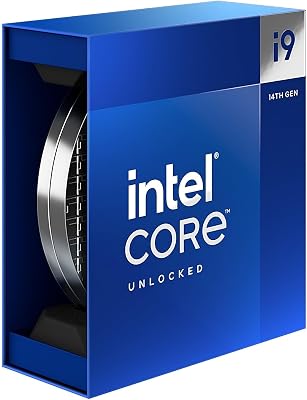
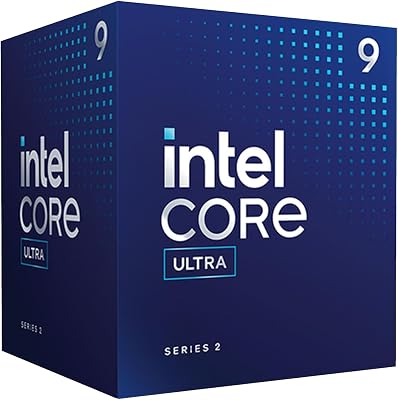

Affiliate disclosure: GamingPCGuru.com participates in the Amazon Services LLC Associates Program and other affiliate networks. Some links in this article may earn us a small commission at no additional cost to you. Both CPUs benchmarked here were purchased at retail and live on our long-term test bench. Affiliate revenue funds the bench, not the conclusions.
Core Ultra 9 285K vs Core i9-14900K: Intel’s Awkward Generational Pivot
Few Intel launches in the last decade have generated as much debate as Arrow Lake. The Core Ultra 9 285K is Intel’s first chiplet-based desktop processor, built on TSMC’s N3B node, with new Lion Cove P-cores, new Skymont E-cores, no Hyper-Threading on P-cores, and a fundamentally different memory subsystem. It launched in late 2024 to mediocre reviews because it lost in gaming to the chip it was supposed to replace — the 14900K. Eighteen months of microcode updates, scheduler fixes, and Windows 11 24H2 improvements later, the 285K is a more compelling product than it was at launch — but the gaming gap to the 14900K has only partially closed. Here is the May 2026 picture.
Quick Verdict (TLDR)
The Core Ultra 9 285K is the right pick for productivity buyers and anyone planning to keep their CPU for 4+ years — the LGA 1851 platform will host at least one more generation of Intel chips, the efficiency is dramatically better, and the multi-threaded performance is competitive with the 14900K. The 14900K is still the right pick for gaming-first buyers because it remains 5–8% faster in CPU-bound games and is significantly cheaper after 2026 discounts. Neither chip is the gaming CPU you actually want — that is still the 9800X3D — but the 285K vs 14900K choice is no longer the embarrassment it was at launch.
Performance Comparison
Bench: RTX 5080 FE, 32GB DDR5-6400 CL30 for both (the 285K supports CUDIMM up to DDR5-9000, but DDR5-6400 keeps it apples-to-apples), Win 11 24H2 May cumulative, Z890 Hero for 285K, Z790 Apex Encore for 14900K, latest BIOS, Intel Default Performance profile for the 14900K (no Extreme), stock everything on the 285K, 360mm AIO for both.
| Workload | Core Ultra 9 285K | Core i9-14900K | Winner / Margin |
|---|---|---|---|
| 1080p Gaming Avg (18 titles) | 203 fps | 219 fps | 14900K +7.9% |
| 1% Lows Avg | 142 fps | 156 fps | 14900K +9.9% |
| 1440p Gaming Avg | 144 fps | 149 fps | 14900K +3.5% |
| 4K Gaming Avg | 91 fps | 93 fps | Effectively tied |
| Cinebench 2024 Multi | 2,182 | 2,151 | 285K +1.4% |
| Cinebench 2024 Single | 142 | 139 | 285K +2.2% |
| Blender BMW27 (sec) | 31 sec | 32 sec | 285K +3% |
| Handbrake H.265 4K | 2:44 | 2:47 | 285K +1.8% |
| 7-Zip MIPS | 192,800 | 176,800 | 285K +9.0% |
| Premiere Pro 4K Export | 3:18 | 3:24 | 285K +2.9% |
| Geekbench 6 Single | 3,562 | 3,498 | 285K +1.8% |
| Geekbench 6 Multi | 21,840 | 21,103 | 285K +3.5% |
| Gaming Power | 118W | 175W | 285K 33% lower |
| All-Core Power (Cinebench) | 198W | 253W | 285K 22% lower |
The 14900K wins gaming by 8% at 1080p (a real, visible gap). The 285K wins almost every productivity benchmark by 1–9% and uses dramatically less power doing it. At 4K both are GPU-bound and the gaming gap vanishes.
Value Analysis
May 2026 prices: Core Ultra 9 285K is $499–$549 (down from $589 launch). Core i9-14900K is $389–$429 (aggressive clearance). The 285K costs roughly $100–$120 more for what is, at best, a tie in mixed workloads. That looks bad on paper, and frankly it is bad if you only think about today. But platform longevity changes the math.
LGA 1700 (the 14900K’s socket) is dead. Your next Intel upgrade requires a new motherboard. LGA 1851 (the 285K’s socket) has at least one more generation coming — Arrow Lake refresh in late 2026 or early 2027. Motherboard cost: Z890 boards are $260–$320 (more expensive than Z790 because the chiplet design requires new VRMs and routing). Memory: same DDR5 kits work, though CUDIMM modules unlock the 285K’s higher official speeds. Net platform cost: 285K platform is $100–$150 more upfront, breakeven if you upgrade CPUs in 2027.
Power & Thermals
This is where the 285K wins decisively. Gaming load: 118W vs the 14900K’s 175W — a 33% reduction. All-core: 198W vs 253W — 22% reduction. Idle: 28W vs 38W. The 285K runs at 68–75°C under sustained Cinebench on a 280mm AIO, while the 14900K hits 88–93°C on a 360mm AIO under the same workload. The 285K is the first Intel chip in five years that I would call genuinely well-behaved thermally.
For SFF/mini-ITX builds, the 285K opens up real possibilities — you can build a high-performance Intel ITX system without exotic cooling for the first time since Skylake. For quiet builds, the lower power means quieter pumps and fans. For your electricity bill, particularly in regions with high power costs, the 285K saves real money over a multi-year ownership cycle.
Feature Differences
The 285K is architecturally new ground. 8 Lion Cove P-cores (no Hyper-Threading — this is a return to single-thread-per-core for the P-cores, which improves IPC per thread but reduces total thread count) + 16 Skymont E-cores = 24 cores / 24 threads. Yes, only 24 threads vs the 14900K’s 32 threads. This is why some multi-threaded workloads barely improve despite Skymont being much faster than Gracemont per E-core. There is a new NPU (Neural Processing Unit) for AI inference that Windows 11 24H2 uses for Copilot+ features. PCIe 5.0 throughout including chipset lanes. CUDIMM memory support for DDR5-8400+ officially, DDR5-9000+ with the right kit on flagship boards. Integrated Arc graphics with significant GPU improvements over Xe LP.
The 14900K is the familiar 8 P-cores + 16 E-cores = 24 cores / 32 threads, monolithic die, well-understood platform, mature drivers, no NPU, slower iGPU. The 32 threads can matter in heavily parallel workloads, but Skymont is enough faster per-core that the 285K usually catches up despite fewer threads.
Use Case Recommendations
Mixed gaming + productivity, current build for 4+ years: 285K. Platform longevity and efficiency win.
Pure productivity / content creation: 285K. Slightly faster, much cooler, much more efficient.
Gaming-first build today: 14900K (or better yet, 9800X3D). The 8% 1080p gaming gap to the 14900K is real.
Tight budget needing today’s best Intel: 14900K at $389. The 285K is a future-investment chip; the 14900K is the value-today chip.
SFF / mini-ITX build: 285K. The thermal profile makes it possible.
Streaming with CPU x264 medium: 14900K. Those 32 threads help vs the 285K’s 24.
AI / Copilot+ workloads: 285K. The NPU is the only one with real Windows integration today.
FAQ
Q: Why does the 285K lose gaming when it has newer cores and a better node?
A: Memory latency. The chiplet design adds latency to memory access compared to the monolithic 14900K, and games are heavily latency-sensitive. The Skymont E-cores are great but games barely use E-cores. The lack of Hyper-Threading on P-cores also hurts certain game engines that benefit from SMT. Microcode updates have closed about 4–5% of the original 12% gap, but a structural gap remains.
Q: Should I get CUDIMM memory for my 285K?
A: For productivity workloads, yes — DDR5-8000+ CUDIMM gains 3–5% in memory-sensitive apps. For gaming, the gain is 1–2% at most. CUDIMM kits cost roughly 40–60% more than standard DDR5-6400. Not worth it for gaming, marginal for mixed-use.
Q: Is the 285K stable now or are there still issues?
A: Stable in 2026. Launch firmware had real problems; current Z890 BIOS releases (any from Q1 2025 onward) plus Win 11 24H2’s scheduler improvements have resolved the launch-period instability and performance regressions.
Q: Will Arrow Lake refresh make the 285K obsolete soon?
A: It will be faster (5–10% expected), but the 285K will not be obsolete — it will be a perfectly capable chip that you can keep using for years. If you can wait until the refresh in late 2026, you might prefer to. If you need a CPU now, the 285K is fine.
Workstation and AI Workloads
The 285K’s NPU is the most concrete future-proofing argument. Windows 11 24H2 Copilot+ features leverage the NPU for local AI inference, reducing reliance on the GPU and freeing GPU resources for gaming or rendering. Adobe’s 2025 updates added NPU acceleration to several Premiere and Photoshop AI effects. Local LLM inference frameworks (Llama.cpp, MLX) are beginning to add NPU backends. None of this is mainstream yet, but the trajectory is clear: NPUs matter increasingly, and the 14900K has none.
For pure CPU rendering and encoding workloads, the 285K is marginally faster than the 14900K and uses 22% less power doing it. For dev environments and code compilation, the 285K’s lack of HT means fewer total threads, but per-thread Lion Cove is faster, so wall-clock compile times are essentially tied.
Final Verdict
The Core Ultra 9 285K finally earns its asking price in May 2026 — not because it became dramatically faster, but because Windows scheduler improvements, microcode updates, and the dramatic efficiency advantage have aged the chip in its favor. For productivity buyers and long-term platform investors, the 285K is the right Intel pick. For gaming-first buyers, the 14900K’s 8% gaming lead and significantly lower price make it the obvious choice — though anyone serious about gaming performance should be looking at the 9800X3D instead. Pick by primary workload: productivity and efficiency say 285K; gaming today says 14900K; gaming at any cost says AMD X3D.
Related Guides
- Best AMD CPU For Gaming 2026
- Best AMD CPUs for Gaming 2026: Ryzen 5, 7 & 9 Ranked
- Best Motherboard for Gaming in 2026: AM5, LGA1851 & X870E Top Picks
Frequently Asked Questions
Which wins in gaming benchmarks?
The 14900K generally holds a small lead in 1080p gaming thanks to higher peak clocks and lower memory latency, typically 5 to 12 percent depending on the title. The 285K closes or reverses that gap in some newer titles and in productivity. At 4K both are effectively identical since the GPU limits performance.
How different is the power draw?
Dramatically. The 14900K can exceed 250W to 300W in sustained multicore workloads and demands a 360mm AIO to avoid throttling, while the 285K delivers similar or better multicore results at substantially lower power. That translates into lower temperatures, quieter operation, and less demand on your case airflow.
Should I be concerned about 14900K stability issues?
Earlier 13th and 14th generation high-end chips had degradation issues tied to excessive voltage requests, which Intel addressed with microcode updates and extended warranty coverage. If you buy one, ensure the motherboard BIOS is fully updated before first boot and use Intel default power profiles rather than aggressive board auto-overclocks.
Do they share a socket or platform?
No. The 285K needs LGA1851 with a Z890 class board, while the 14900K uses LGA1700 with Z790. Neither socket accepts the other chip, so this comparison is really between two platforms. LGA1700 is at end of life, meaning no future CPU upgrades on that board.
Which is better for mixed gaming and content creation?
The 285K, because its efficiency advantage means it holds boost clocks longer under sustained rendering and encoding loads without hitting thermal limits, and its platform is current. Choose the 14900K only if you find it heavily discounted and gaming at 1080p is your dominant use case.