Anyone with an AT&T gateway knows the dead-zone routine: strong signal beside the box, a weak one two rooms away, and a game console or work laptop that drops at the worst moment. The keyword carries a specific constraint, because AT&T hardware comes with its own branded extenders alongside the standard retail models. The decision is whether to match the carrier ecosystem or use a general-purpose extender from a retail brand, and that choice affects setup, support and how many bands you get.
This 2026 guide is for AT&T customers and anyone with a similar home gateway who wants to stretch coverage to a bedroom, garage or basement office. Eight extenders are covered, from carrier-labeled Airties units to simple plug-in repeaters. Two TP-Link Deco mesh kits from the original set were dropped because they replace the router rather than extend it. All notes come from listing titles, so confirm gateway compatibility with your provider. Where a title is silent on a spec, this guide says so rather than filling the gap with guesses.
Quick Picks
As an Amazon Associate we earn from qualifying purchases at no extra cost to you.
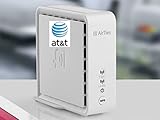



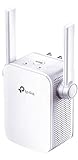
| Product | Best for | Key spec from the title |
|---|---|---|
| AT&T Airties Air 4921 | Carrier-matched coverage | 1600Mbps dual band, 3×3 802.11ac |
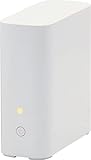
| AT&T Air 4920 Airties | Basic carrier extender | Smart Wi-Fi extender, white |
| Airties Air 4921 (Renewed) | Carrier match, renewed stock | 1600Mbps dual band, renewed |
| Airties Air 4971 | Newer devices, Wi-Fi 6 | Tri-band 802.11ax |
| Generic WiFi Extender Booster | Large-area plug-in | 1200Mbps dual band, 12880 sq ft |
| TP-Link N300 RE105 | Light use, small gaps | Single band, 2.4GHz only, wall plug |
| TP-Link AC750 RE220 (Renewed) | Simple dual-band setup | Up to 750Mbps, one-button setup, app control |
| NETGEAR EAX20 | Wi-Fi 6 apartment upgrade | AX1800, 1,500 sq ft, 20+ devices |
How to Choose
Carrier-branded or general-purpose
Airties extenders carry AT&T branding and are named for the carrier in their titles, which signals they are meant for its gateways. General retail extenders connect to most home networks, but their titles never mention AT&T. Either way, check your gateway model and Wi-Fi band behavior before ordering, and keep the carrier support number handy for setup questions. Some households find that a carrier-labeled unit makes support calls shorter, because the agent recognizes the hardware.
Band count and Wi-Fi generation
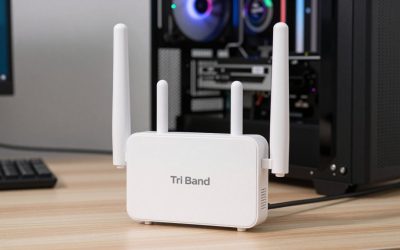
A single-band 2.4GHz extender is the slowest and most crowded option, fine for smart plugs and email but weak for video calls. A dual-band unit adds 5GHz. A tri-band unit adds a second 5GHz channel used as a dedicated link back to the gateway, which protects speed. Wi-Fi 6, written 802.11ax, helps in homes with many connected devices, because it handles several simultaneous streams more gracefully than older standards.
Placement and coverage claims
Place an extender about halfway between the gateway and the dead zone, where it still sees a strong signal. Square-foot claims, such as 12880 or 1,500, are best-case figures that assume open space, so a two-story home needs a more cautious reading than a one-level apartment. Walls, floors, mirrors and appliances cut them down, and brick or concrete can cut them even more. A device that lists access point mode can connect by Ethernet cable for a steadier link. A wired connection to a game console or desktop also keeps those devices off the wireless airtime entirely.
Where budget models cut corners
Low-end extenders typically halve throughput because they receive and rebroadcast on the same band, a problem that tri-band designs are meant to soften. They often skip Ethernet ports, app control and band steering. Ignore giant device-count claims and look at band count, Wi-Fi generation and whether the unit supports access point mode. Also confirm there is a free outlet in the right spot, since a bulky wall unit can block the second socket.
The 8 Best Options
AT&T Airties Air 4921
Meant for AT&T customers who want an extender named for their carrier. The title lists 1600Mbps dual band, 3×3 802.11ac and wireless access point capability. It fits homes where one or two rooms sit too far from the gateway for a reliable signal.
- The carrier branding suggests a straightforward match for AT&T gateways.
- 3×3 antennas and dual band suit a busy household.
- Trade-off: 802.11ac is an older generation than Wi-Fi 6.
Skip it if your devices are mostly Wi-Fi 6 and you want the newest standard, or if you prefer a retail brand over a carrier name.
AT&T Air 4920 Airties
A carrier-branded extender in a white finish for people who want the familiar AT&T look. The title is short and lists only Smart Wi-Fi extender and the color. That brevity means shoppers should look up the full specifications for the model before ordering.
- It carries AT&T and Airties naming.
- The white finish blends into most rooms.
- Trade-off: the title gives no speed, band or standard, so verify those details first.
Skip it if you need specifications in the title before buying, or if you want a unit with a clearly stated Wi-Fi standard.
Airties Air 4921 (Renewed)
The same Air 4921 hardware in a renewed listing. The title lists 1600Mbps dual band, 3×3 802.11ac and access point use, and it carries the Smart AT&T Wi-Fi Extender name. It suits buyers who want to match the carrier hardware and are comfortable with refurbished stock.
- Spec lines match the new Air 4921 listing.
- Renewed supply can ease availability.
- Trade-off: the seller sets the warranty and condition.
Skip it if you want factory-sealed stock, a fresh manufacturer warranty or a Wi-Fi 6 radio. Ask the seller what the renewed label covers and how long returns stay open.
Airties Air 4971
The forward-looking carrier option. The title lists a tri-band 802.11ax Wi-Fi 6 design and describes it as a Smart Wi-Fi extender and wireless access point in white. It is the listing to weigh if the household has new phones, laptops and streaming boxes that can use 802.11ax.
- Tri-band gives a dedicated path back to the gateway.
- Wi-Fi 6 suits a house full of phones, TVs and laptops.
- Trade-off: it is a premium tier within this list.
Skip it if you only need to cover one small gap, since a simpler, single-purpose repeater would be enough.
Generic WiFi Extender Signal Booster
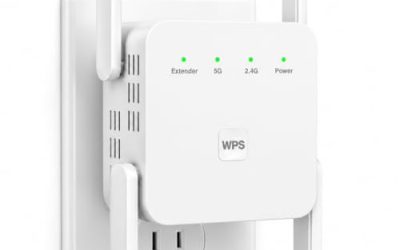
A plug-in repeater for large homes. The title lists 1200Mbps dual band, 12880 sq ft coverage and 105 device compatibility, with no brand name. It targets shoppers who want one plug-in unit to reach a distant garage, shed or upstairs room.
- Dual band lets it use 5GHz.
- The coverage claim is the largest on the list.
- Trade-off: the coverage and device figures are marketing claims; the title offers no brand or Wi-Fi generation.
Skip it if you want brand support, a named Wi-Fi standard or a documented setup process you can verify.
TP-Link N300 RE105
Aimed at light use and small gaps, such as a back bedroom. The title lists single-band 2.4GHz-only operation, wall plug design and access point support. It works as a stopgap for a guest room, patio or a smart plug that sits just outside the main network.
- A wall plug design keeps it tidy.
- Access point mode supports Ethernet-connected setups.
- Trade-off: 2.4GHz only means slower and more crowded connections.
Skip it if you stream video, play online or want a 5GHz network, because a single 2.4GHz channel fills up fast.
TP-Link AC750 RE220 (Renewed)
A step up for people who want dual band and simple setup. The title lists up to 750Mbps, cloud app control, one-button setup and Alexa-device support, in a renewed listing. Choose it for a modest home with a few streaming devices and no need for the latest standard.
- Dual band adds 5GHz.
- One-button setup is friendly for first-timers.
- Trade-off: renewed condition and AC750 speeds are modest.
Skip it if you need Wi-Fi 6, a manufacturer warranty or throughput beyond the stated AC750 class.
NETGEAR EAX20
A Wi-Fi 6 mesh range extender for apartments and smaller homes. The title lists AX1800 dual band, 1,500 sq ft added coverage, 20+ devices and smart roaming. It matches a small home where phones and laptops move from room to room all day.
- Wi-Fi 6 helps with several connected gadgets.
- Smart roaming eases moves between rooms.
- Trade-off: the coverage claim is smaller than the generic unit.
Skip it if you need to cover a large house, since the coverage figure in the title is modest and meant for roughly one floor of an apartment.
Which One Fits Your Situation
You want something made for AT&T
The AT&T Airties Air 4921 is the clearest carrier-named choice with full specs. The Airties Air 4971 is the Wi-Fi 6 version for newer devices. Check that your gateway supports the band layout before ordering, and keep the gateway in an open, central spot so the extender has a clean signal to relay.
You live in an apartment with many devices
The NETGEAR EAX20 lists Wi-Fi 6 and 20+ devices, which suits an apartment. The Air 4971 is the carrier-branded alternative, with an extra band reserved for the link back to the gateway.
You just need a bit more range for a spare room
The TP-Link N300 RE105 handles small gaps. If you also want 5GHz, the TP-Link AC750 RE220 adds a second band, which makes streaming and video calls less of a gamble.
You have a big house and want maximum range
The generic Signal Booster lists the largest coverage claim, but the AT&T Airties Air 4921 offers a named dual-band design with access point support, which allows a wired link for a steadier connection.
Common Mistakes
- Placing the extender in the dead zone instead of halfway to the gateway, where it has nothing strong to repeat.
- Choosing a 2.4GHz-only unit and expecting it to handle video calls and game downloads.
- Believing a coverage claim without allowing for walls and floors, or for the interference that nearby networks create.
- Ignoring the gateway model, then finding the extender will not pair easily or keeps dropping the link.
- Skipping access point mode when an Ethernet cable is available and would give a steadier link, which is the simplest way to avoid wireless slowdowns.
Related guides
- Aio Liquid Coolers For High Performance Gaming
- How To Lower Input Delay In Competitive Shooters
- External Hard Drives For Music Production
Frequently Asked Questions
Do I need an AT&T extender for an AT&T gateway?
Not necessarily. The carrier-branded units are named for AT&T, and the titles say so, while retail extenders generally connect to most networks. Check your gateway and support guidance first, because setup steps differ between carrier units and retail units.
Is a mesh system better than an extender?
For large homes, often yes, because a mesh replaces the router. An extender is simpler and keeps your existing gateway, which many people prefer. Mesh also takes more space on shelves and more setup time.
What does tri-band mean?
A tri-band unit has one 2.4GHz and two 5GHz channels, which is why the design needs more room and more power than a simple repeater. The second 5GHz channel can serve as a link back to the gateway, which protects speed.
Will an extender speed up the internet connection?
No. It extends coverage but cannot exceed the speed of the connection feeding it. It can make a weak room usable, which is usually what a dead-zone problem really needs.