A camping trip changes what a good retro handheld means. At home, a weak battery is a minor annoyance because an outlet is always nearby. At a campsite, every hour of play competes with your phone, your headlamp and your lantern for the same power bank, and there is no cloud save to rescue progress if a device dies mid-session. Weight matters too: anything you carry up a trail has to earn its place in the pack.


So this list is not ranked by raw emulation power. It is ranked by field manners: battery endurance per charge, sleep and resume speed for the short bursts of play that camping actually allows, screens that stay readable in daylight, and shells cheap or tough enough that a drop onto gravel is a bad moment rather than a ruined trip. All five picks run their libraries entirely offline, which is the only way retro gaming works beyond signal range.
As an Amazon Associate, we earn from qualifying purchases.
Quick Answer
The TrimUI Smart Pro is the best camping handheld for most people: its 5000 mAh battery, bright 4.96-inch screen and instant sleep make it easy to live with off-grid. The Miyoo Mini Plus is the ultralight pick for backpackers, the Retroid Pocket 5 is the premium base-camp option, and the RG406H and RG35XX Plus fill the Android and budget slots.
What the Field Demands That Your Sofa Does Not
Battery math comes first. A typical weekend trip gives you maybe three evenings of play, in sessions of twenty to forty minutes around cooking, firewood and weather. A handheld with a 5000 mAh cell and modest power draw can cover that whole trip on one charge if you use sleep instead of full shutdowns and keep Wi-Fi off. Smaller 3000 mAh devices are fine for an overnighter but need a top-up from the power bank on longer trips, so their real cost is measured in phone charges given up.
Sleep and resume shape the experience more than boot speed. Camping play happens in gaps: waiting for water to boil, sheltering from a passing shower, the last half hour in the tent. Devices that wake in a couple of seconds and drop you back into the exact frame you left get played; devices that need a full boot and a menu dive get left in the bag. Save states matter for the same reason, and they also protect you when a battery does run dry, because a state saved at the last save point survives a dead cell.
Daylight is the third factor. Tent shade and tree cover are forgiving, but a screen that washes out in direct sun limits you to evening play. Larger, brighter panels handle glare better, while small 4:3 screens are happiest in shade. Finally, think about consequence: a campsite is dust, grit, damp grass and hard ground. A budget handheld you can replace without wincing is sometimes the smarter tool than a flagship you will baby all weekend.
TrimUI Smart Pro: The Off-Grid Endurance Pick
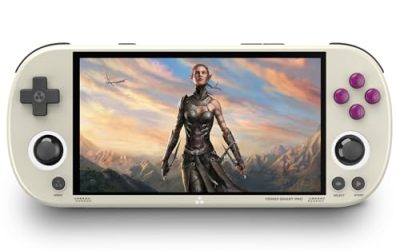
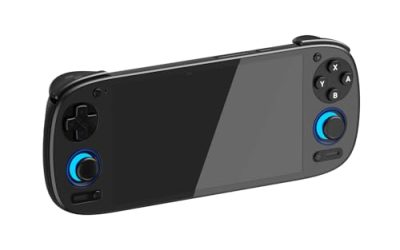
The TrimUI Smart Pro is built almost exactly to this brief. Its 5000 mAh battery is large for its class, the Linux firmware sips power on the classic systems, and sleep is effectively instant, so the device can live in a jacket pocket all weekend and always be ready. The 4.96-inch 1280 by 720 screen is the biggest panel here that still slips into a pack side pocket, and its brightness holds up in daylight better than the smaller 4:3 panels.
Performance covers the 8-bit and 16-bit catalog, PlayStation 1 and a good stretch of Nintendo 64 and Dreamcast, which is honestly the right ceiling for camping: those libraries are deep, forgiving of short sessions and light on battery. There is no touchscreen, so Nintendo DS games that lean on stylus input are off the menu, and the stock firmware benefits from the community CrossMix-OS build, which you should install and configure at home rather than at a picnic table.
Specs
- 4.96-inch IPS display, 1280 by 720, Allwinner A133P quad-core processor, 1 GB RAM, 5000 mAh battery, Linux firmware, Wi-Fi, USB-C charging, microSD storage.
Miyoo Mini Plus: The Ultralight Overnighter
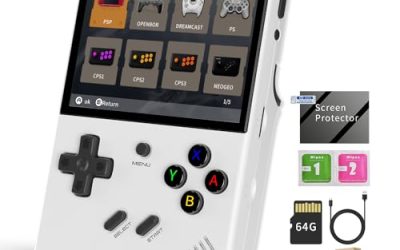
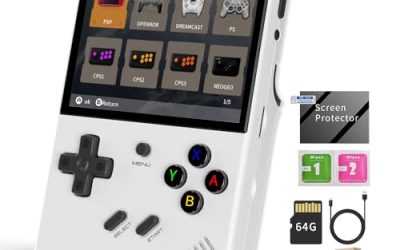
At roughly the size of a deck of cards, the Miyoo Mini Plus is the handheld backpackers actually carry. It weighs so little that the packing decision makes itself, and with the community Onion OS firmware installed it becomes a sleep-and-resume machine: close it mid-level, open it hours later, and you are exactly where you left off. That behavior, plus excellent battery life on the 8-bit and 16-bit systems it runs best, makes it perfect for one or two nights out.
The trade-offs are size-driven. The 3.5-inch screen is sharp at 640 by 480 but small for text-heavy games, there is no touchscreen, and the library tops out around PlayStation 1. Treat it as the specialist it is: a tiny, inexpensive, low-consequence device for classic puzzle, platform and role-playing games in the tent before sleep.
Specs
- 3.5-inch IPS display, 640 by 480, quad-core processor, 3000 mAh battery, Onion OS compatible Linux firmware, Wi-Fi, USB-C charging, microSD storage, no touchscreen.
Anbernic RG406H: The Android All-Rounder
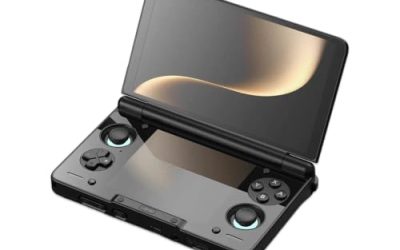
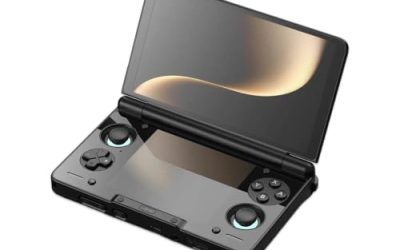
The RG406H is the pick for campers who still want range. Its Unisoc T820 chip and Android 13 open up GameCube, PlayStation 2 and Nintendo DS alongside the classic catalog, and the 4-inch 960 by 720 touchscreen is the sharpest 4:3 panel on this list, which keeps older games looking correct rather than stretched. Hall-effect sticks and triggers remove stick drift from the worry list, a real consideration when a device is bouncing around in a pack.
The 5000 mAh battery is generous, though Android idles less efficiently than the Linux devices here, so switch Wi-Fi and Bluetooth off at the trailhead. It is also the heaviest of the smaller picks, which matters on foot and matters not at all if your campsite is ten steps from the car.
Specs
- 4-inch IPS touchscreen, 960 by 720, Unisoc T820 octa-core processor, 8 GB RAM, 128 GB storage, Android 13, 5000 mAh battery, hall-effect sticks and triggers, Wi-Fi, USB-C charging.
Retroid Pocket 5: The Base-Camp Flagship
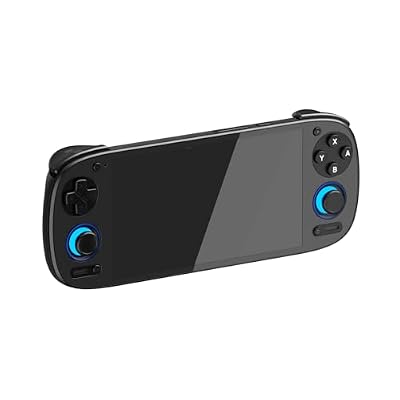
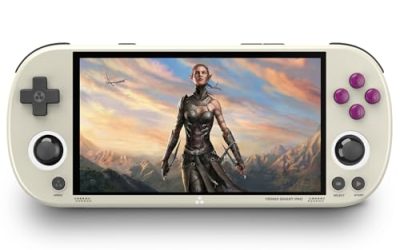
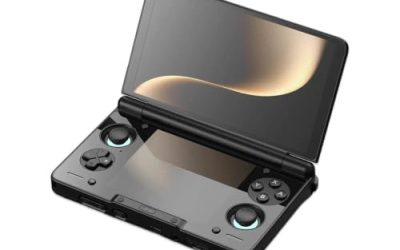
If your camping style involves a base camp, a camp chair and long evenings, the Retroid Pocket 5 justifies its size. The 5.5-inch AMOLED screen is the most readable here in mixed light and the richest looking after dark, the Snapdragon 865 handles GameCube, PlayStation 2 and demanding Nintendo DS titles without drama, and the touchscreen makes dual-screen games play the way they were designed to.
The honest caveat is consequence. This is the most valuable device on the list, and AMOLED glass plus a premium shell ask for a hard case and a little care around grit and drops. Packed properly, it turns a tent into a genuinely comfortable retro lounge; carried loose in a rucksack, it is the one pick here that will make you nervous.
Specs
- 5.5-inch AMOLED touchscreen, 1920 by 1080, Snapdragon 865 processor, 8 GB RAM, 128 GB storage, Android 13, 5000 mAh battery, hall-effect sticks, Wi-Fi, USB-C charging and video output.
Anbernic RG35XX Plus: The Spare and Loaner

Every group trip benefits from a second handheld, and the RG35XX Plus is priced and built for that job. It runs the same classic catalog as the Miyoo Mini Plus on a slightly larger-feeling frame, with a 3300 mAh battery, straightforward Linux firmware and controls that a first-time player understands in a minute. Hand it to a tent-mate for link-free score chasing in puzzle games, or keep it as the backup that saves the evening if the main device dies.
It shares the family limits: no touchscreen, a ceiling around PlayStation 1 and lighter Nintendo 64, and a screen best kept out of direct midday sun. As a deliberate second device rather than a main one, those limits barely register.
Specs
- 3.5-inch IPS display, 640 by 480, Allwinner H700 quad-core processor, 1 GB RAM, 3300 mAh battery, Linux firmware, Wi-Fi, USB-C charging, microSD storage, no touchscreen.
How to Choose
Start with trip length. For a single night, anything here works, so choose by pack weight: the Miyoo Mini Plus or RG35XX Plus. For two to four nights off-grid, the 5000 mAh devices earn their keep, and the TrimUI Smart Pro is the sweet spot of endurance, screen size and modest cost. For car camping and base camps, weight stops mattering and the Retroid Pocket 5 or RG406H become the comfortable choices.
Next, match the library. If your camping games are Game Boy, SNES and PlayStation 1 titles, the Linux trio covers them with the least charging stress. If you want GameCube, PlayStation 2 or stylus-driven DS games in the tent, you need one of the Android picks and its touchscreen. Finally, prepare at home: load the library, set up save states, install firmware updates and charge everything before you leave, because none of that is fun by headlamp.
Who Should Skip These
Skip the budget Linux picks if your trip is really a venue for demanding systems; no amount of battery life compensates for a device that cannot run the games you packed it for, so take the RG406H or Retroid Pocket 5 instead. Skip the flagship if your route involves river crossings, scree or small children sharing the tent; the RG35XX Plus delivers most of the fun at a fraction of the replacement anxiety. And skip retro handhelds entirely if your power budget is already spoken for by safety gear; a phone with a downloaded game library is the rational tool when every milliamp is spoken for twice over.
Frequently Asked Questions
How long will these handhelds last on one charge at a campsite?
On the classic 8-bit and 16-bit systems, the 5000 mAh devices here typically cover a full weekend of evening sessions, while the smaller 3000 mAh class devices suit one to two nights. Demanding systems such as GameCube and PlayStation 2 drain any of them far faster, so treat those as one-evening treats rather than all-trip staples.
Can I charge a retro handheld from a camping power bank?
Yes. All five picks charge over USB-C from the same power bank you carry for your phone, and the Linux devices in particular sip power slowly enough that a partial top-up buys hours of play. Charge during dinner rather than overnight so the bank stays available for lights and phones after dark.
Will cold nights damage the battery or the screen?
Typical camping cold is fine for playing, but avoid charging a lithium battery when it is near freezing, and let a cold device warm up inside the tent before plugging it in. Keep the handheld in a dry bag or inside your sleeping bag’s foot box on frosty nights, which also keeps the battery closer to its efficient range.
Do these handhelds need an internet connection to work?
No. Once your library is loaded and your firmware is set up at home, every pick here runs fully offline, including save states and in-game saves. Turn Wi-Fi off at the campsite: it saves battery and nothing about retro play needs a connection.
Final Verdict
For most campers, the TrimUI Smart Pro is the answer: big battery, bright screen, instant sleep and a price that forgives rough handling. Backpackers should take the Miyoo Mini Plus and forget it is in the pack until the tent is up. The RG406H splits the difference with Android range, the Retroid Pocket 5 is the base-camp luxury, and the RG35XX Plus is the spare that makes group trips better. Pick by trip length and library, charge before you leave, and the gaming side of the campsite looks after itself.
Product and ASIN Reference
| Product | ASIN |
|---|---|
| TrimUI Smart Pro (128GB) | B0CSK9B4G4 |
| Miyoo Mini Plus (Black, 64GB) | B0DC6QHQ3Y |
| Anbernic RG406H (White) | B0DNF3LD4C |
| Retroid Pocket 5 (Black) | B0DT4G4PD2 |
| Anbernic RG35XX Plus | B0CN3CJFZH |