Night play is a different sport from daytime play. The room is dark, someone may be asleep a few feet away, and a screen that seemed pleasantly bright at noon now glares like a headlamp. The qualities that decide a daytime roundup, raw brightness and peak performance, matter far less after dark. What matters instead is how low a screen can go without crushing detail, how much noise the device makes in a silent room, how fast it wakes when you pick it up for twenty minutes before sleep, and whether the battery survives the session without a cable tethering you to the wall. This guide grades five retro handhelds on exactly those night-specific tests, from dual-screen AMOLED flagships down to fanless pocket machines that make no sound at all.

As an Amazon Associate, we earn from qualifying purchases.
Quick Answer
The AYN Thor Pro is the best night handheld here: its AMOLED panels show true blacks, dim smoothly, and the lower screen can carry menus while the main display rests. The Retroid Pocket 5 and Anbernic RG556 bring the same OLED advantage for less, while the fanless Miyoo Mini Plus and TrimUI Smart Pro stay completely silent.
The Four Tests of a Night Handheld
A Screen That Can Go Truly Dim
Minimum brightness is the spec almost nobody prints, and it is the one that decides night comfort. LCD panels keep their backlight on even when showing a dark scene, so a black loading screen still glows grey across the room. AMOLED panels light each pixel on its own, so dark scenes are genuinely dark and the light falling on your eyes drops with the image. A low, smooth brightness floor matters just as much: a screen that jumps from off to harsh in one step forces you to play brighter than you want.
Silence: Fans, Buttons and Coil Whine
A cooling fan that is inaudible over daytime room noise becomes the loudest thing in the house at midnight. Fanless designs remove that problem completely, and among fan-cooled machines, the ones that let their chip idle during 8-bit and 16-bit games rarely spin up at all. Buttons are the second noise source. Soft membrane controls stay quiet; loud, clicky shoulders announce every press through a bedroom wall, which is worth weighing if your night sessions happen next to a sleeping partner.
Sleep and Wake in Seconds
Night sessions are often short and stolen: twenty minutes before sleep, a chapter of an RPG, one more race. A handheld that cold-boots through a minute of logos wastes the session before it starts. Instant sleep and resume, ideally one press to suspend and one press to return to the exact frame, is what turns a short window into real progress. Save states complete the picture by letting you stop mid-boss without hunting for a save point.
Battery That Outlasts the Session
Dim screens sip power, so night play stretches batteries further than the same games would in daylight. A cell in the 5,000 mAh class covers a week of evening sessions between charges, which also keeps the device off the charger and out of the warm, fan-spinning state that fast charging can cause. Nobody wants to end the night untangling a cable in the dark.
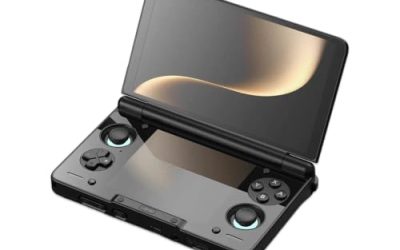
AYN Thor Pro: True Blacks on Two Panels
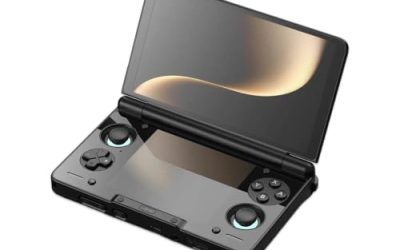
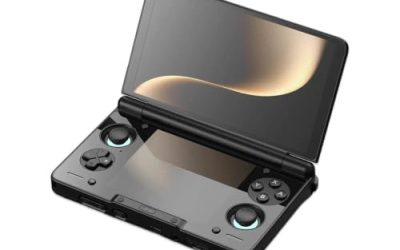
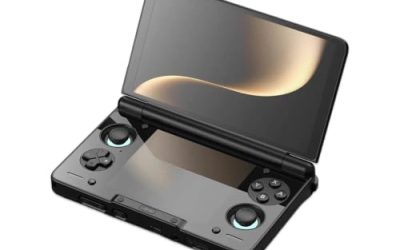
The Thor Pro is a dual-screen clamshell, and night is where that layout earns its keep twice over. Both panels are AMOLED, so the 6.31-inch main screen shows genuine blacks and dims smoothly to comfortable levels, while the smaller lower panel can hold maps, menus and inventory at its own low brightness instead of lighting up the whole display. The Snapdragon 8 Gen 2 is far more power than the cartridge-era libraries need, so during light games the chip loafs and the cooling stays quiet. The 6,000 mAh battery is the largest here, and the clamshell folds shut when you are done, killing the light instantly and protecting both panels overnight.
Specs
- Chip: Qualcomm Snapdragon 8 Gen 2
- Display: 6.31-inch AMOLED main screen, dual-screen clamshell design
- RAM: 12 GB
- Battery: 6,000 mAh
- System: Android 13
- Tier: premium
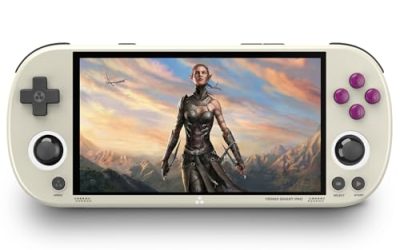
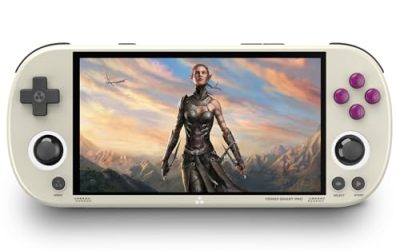
Retroid Pocket 5: The Single-Screen OLED Standard
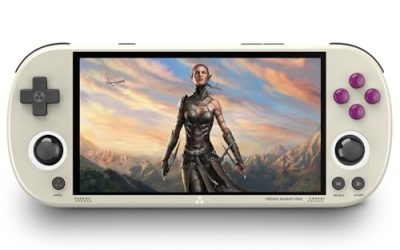
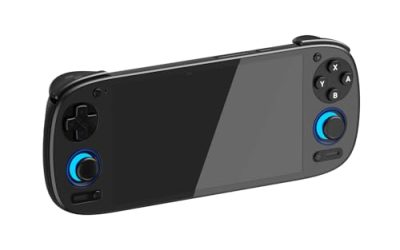
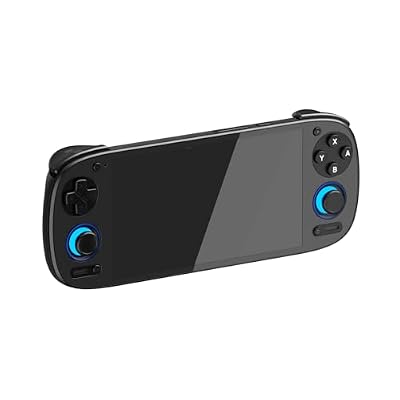
The Pocket 5 takes the same core night argument, one bright-capable AMOLED panel that can also go properly dim, and puts it in a simpler single-screen shell. Its 5.5-inch AMOLED display shows true blacks in dark scenes, the Snapdragon 865 handles everything up to PS2 and GameCube without strain, and lighter systems leave the chip cool and the fan quiet. Android sleep is frugal, so the device can sit on a nightstand for days and still wake with charge to spare. Hall effect sticks and triggers move smoothly and softly, which suits a quiet room better than stiff, snapping controls.
Specs
- Chip: Qualcomm Snapdragon 865
- Display: 5.5-inch AMOLED touchscreen, 1920 by 1080
- RAM: 8 GB
- Battery: 5,000 mAh
- System: Android 13
- Tier: premium
Anbernic RG556: The Battery-First OLED

The RG556 pairs its 5.48-inch AMOLED screen with the biggest battery of the single-screen picks, 5,500 mAh, and that combination is aimed squarely at long, dim evening sessions. AMOLED blacks keep dark dungeon crawlers and horror titles moody instead of washed out, and the Unisoc T820 covers the PS2 library’s lighter half plus everything older. The curved shell is comfortable for the slow, one-more-dungeon pace of night RPG play, and Android standby drain is low enough that nightly charging is unnecessary. It gives up some top-end emulation headroom against the two picks above, but for sessions built around 16-bit and PS1 libraries it never feels short of power.
Specs
- Chip: Unisoc T820
- Display: 5.48-inch AMOLED touchscreen, 1920 by 1080
- RAM: 8 GB
- Battery: 5,500 mAh
- System: Android 13
- Tier: mid-range
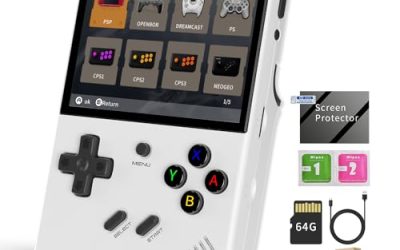
Miyoo Mini Plus: The Silent Pocket Pick
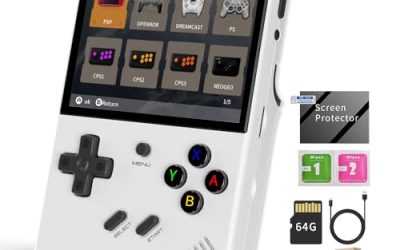
The Mini Plus has no fan, no touchscreen and no moving parts to hear. In a silent room it is simply inaudible, and that alone makes it the most considerate device on this list. The 3.5-inch IPS screen cannot match AMOLED blacks, since its backlight stays on, but at low brightness in a small panel the glow is modest, and the vertical shell is easy to hold one-handed in bed. Under Onion OS, a single press of the power button suspends the game and the next press restores the same frame, which is exactly the rhythm night play follows. The dual-core chip stops at the PS1 era, but for Game Boy, GBA and SNES sessions before sleep, nothing here is simpler.
Specs
- Chip: Dual-core ARM processor
- Display: 3.5-inch IPS, 640 by 480, no touchscreen
- RAM: 128 MB
- Battery: 3,000 mAh
- System: Linux, Onion OS compatible
- Tier: budget
TrimUI Smart Pro: The Wide and Quiet All-Rounder

The Smart Pro is the other fanless design here, stretching the silent formula across a 4.96-inch widescreen. Its IPS panel shares the backlight limitation of the Mini Plus, though the brightness floor is low enough for comfortable dark-room play, and the wide screen suits the PSP library that the smaller machine cannot run. The 5,000 mAh battery is generous for a Linux handheld and carries many evenings of low-brightness play per charge. Soft controls and a slim shell make it easy to hold lying down, and quick sleep keeps short sessions painless. It has no touchscreen, so DS games that lean on stylus input are the gap in its library.
Specs
- Chip: Allwinner A133P
- Display: 4.96-inch IPS, 1280 by 720, no touchscreen
- RAM: 1 GB
- Battery: 5,000 mAh
- System: Linux
- Tier: budget
How to Choose
Start with the screen, because it is the one part you cannot change later. If you play in a fully dark room and dark games fill your library, put an AMOLED model at the top of the list: the Thor Pro, Pocket 5 and RG556 all show true blacks, and the Thor Pro’s second panel is a real advantage for DS games played in bed. If your sessions are short and mostly 16-bit, the fanless Linux pair wins on silence and instant wake, and the choice between them is screen shape: the Mini Plus for 4:3 pocket play, the Smart Pro for widescreen PSP titles.
Then grade the noise honestly. A fan-cooled Android machine is quiet during light games but can spin up under PS2 emulation, so if your night library is heavy, favour the Thor Pro’s headroom, since an underworked chip stays cooler. Finally, match the battery to your charging habits rather than chasing the biggest number: every device here covers a week of evening sessions, so the shape you will actually pick up nightly matters more than the last few hundred milliamp hours.
Who Should Skip These Picks
Skip this list if your night play is really couch play on a television; a docked PC handheld or a home console will serve that better than any of these. Skip the two Linux picks if DS and 3DS games anchor your library, because neither has a touchscreen. And skip the whole category if you mostly play in lit rooms during the day, where peak brightness and raw power, the strengths of larger gaming handhelds, matter more than dim floors and silence.
Final Verdict
The AYN Thor Pro is the best retro handheld for playing at night: true blacks on two AMOLED panels, the biggest battery here, and a clamshell that shuts the light away the moment you are done. The Retroid Pocket 5 is the simpler premium answer, the RG556 stretches dim sessions furthest, and the fanless Miyoo Mini Plus and TrimUI Smart Pro are the picks when silence matters most.
Frequently Asked Questions
Why does AMOLED matter so much for night play?
AMOLED pixels produce their own light, so a black pixel is fully off. Dark scenes stay dark, less light reaches your eyes, and battery drain falls at the same time. An LCD backlight stays on behind the whole image, which is why dark games on LCD handhelds look grey and glow across a dark room.
Are fanless handhelds really silent?
Yes, in practical terms. With no fan and no spinning storage, the only sounds are button presses, and the membrane controls on the Miyoo Mini Plus and TrimUI Smart Pro are soft rather than clicky. Fan-cooled Android handhelds are quiet during light games but can become audible under heavy PS2 or GameCube emulation.
Can I make an LCD handheld easier on the eyes at night?
Mostly. Drop brightness to its lowest comfortable step, choose dark frontend themes where the system offers them, and favour games with darker palettes for the last session of the evening. These steps help, but they cannot switch the backlight off, which is why the AMOLED picks lead this list.
Which of these wakes up fastest for a short session?
The two Linux handhelds. The Miyoo Mini Plus under Onion OS suspends and resumes a game with single presses of the power button, and the TrimUI Smart Pro is nearly as quick. The Android models wake from sleep fast as well, but their frontends take a moment longer to surface after a full shutdown.
Product and ASIN Reference
| Product | ASIN |
|---|---|
| AYN Thor Pro | B0FV3HKG9P |
| Retroid Pocket 5 | B0DT4G4PD2 |
| Anbernic RG556 | B0FKHBVGLQ |
| Miyoo Mini Plus | B0DC6QHQ3Y |
| TrimUI Smart Pro | B0CSK9B4G4 |