An action game forgives a mediocre handheld because your eyes and hands never rest long enough to notice. An RPG session is the opposite test. You hold the machine for two, three, four hours at a stretch, most of that time reading dialogue boxes and menus while your fingers sit nearly still on the shell. By hour three, the specs that decide whether you keep playing are not clock speeds. They are grip shape, screen size for small text, fan noise, heat against your palms, and whether the battery still has enough left that you stop watching the gauge instead of the story.


That is the axis this guide ranks on: sustained comfort across a long session. It is not a genre guide to which machines run which RPG libraries, and it is not a battery roundup. Battery matters here only as one part of session comfort, alongside ergonomics, text legibility, and sleep that resumes exactly where you stopped. The five picks below are grouped by the kind of session they suit, from full-evening campaigns to short bursts between other things.
As an Amazon Associate, we earn from qualifying purchases.
Quick Answer
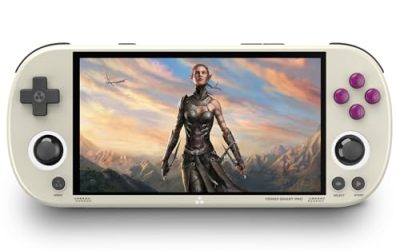
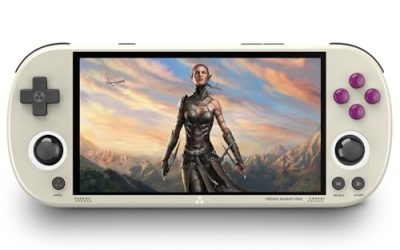
The Retroid Pocket 5 is the best all-round pick for long RPG sessions: a 5.5-inch AMOLED that keeps dialogue text crisp, a 5,000 mAh battery, and fast sleep and resume. The AYN Thor Pro suits players who want a second screen for maps, the Anbernic RG556 is the comfort-first budget route, and the TrimUI Smart Pro and Miyoo Mini Plus cover shorter sessions.
What Hour Three Does to Your Hands, Eyes, and Battery
Grip fatigue is the first wall. In a long RPG session your hands hold one position for minutes at a time, so shell shape matters more than it does in short arcade bursts. Rounded grips that fill the palm spread the load; flat slabs concentrate it on your fingertips. Weight distribution matters as much as total weight: a slightly heavier machine that rests balanced across both hands feels lighter over three hours than a small one you pinch.
Text is the real screen test. RPGs are reading. Small fonts in PlayStation 2 and PSP dialogue, status menus, and item descriptions punish small or low-resolution panels, and eye strain builds quietly until you notice you are squinting. A screen around five and a half inches at 1080p keeps typical RPG fonts comfortable at arm’s length, and high-contrast AMOLED panels keep white text on dark menus easy to parse late at night.
Heat and fan noise creep in. Sustained emulation warms a handheld, and active cooling adds a fan you will hear in a quiet room during dialogue scenes. Machines that run an RPG library well below their ceiling stay cooler and quieter than machines straining at their limit, which is why headroom is a comfort feature in this genre even when the game itself is undemanding.
Interruptions are guaranteed. Long sessions get paused for dinner, doorbells, and life. Instant sleep with low standby drain, plus save states inside the emulator, turn every interruption into a pause instead of a lost dungeon run. A machine that resumes in seconds, exactly on the frame you left, protects the rhythm that makes a forty-hour game finishable.
For the Full-Evening Campaign
AYN Thor Pro: The Second Screen Earns Its Keep
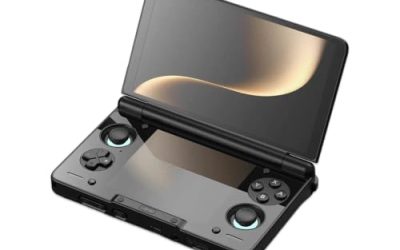
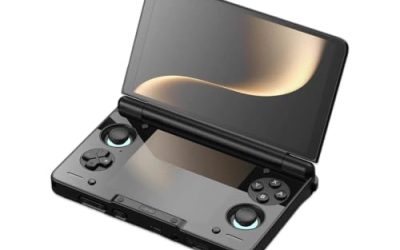
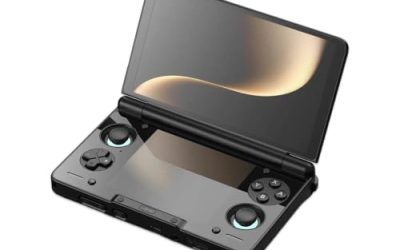
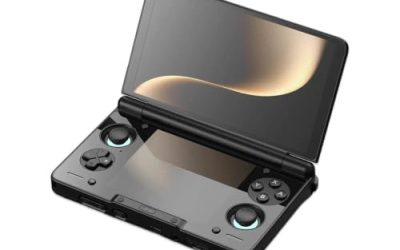
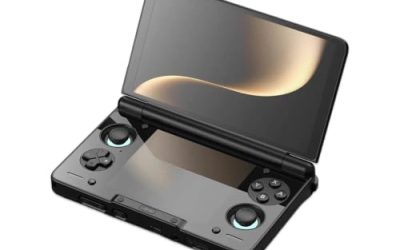
Across a long evening, the Thor Pro’s second screen stops being a novelty and becomes a quality-of-life feature. Maps, inventories, and status screens live on the 3.92-inch lower panel while the 6.31-inch AMOLED main screen stays uncluttered, which cuts the constant menu-diving that breaks the flow of older RPGs. The Snapdragon 8 Gen 2 runs the PlayStation 2 and GameCube RPG libraries far below its ceiling, so the machine stays cool and quiet through dialogue-heavy stretches, and the 6,000 mAh battery covers a full evening without gauge-watching. The clamshell closes to sleep and opens to resume, and it protects both panels when the session ends.
Specs
- Main screen: 6.31-inch AMOLED, 1920 by 1080, 120Hz
- Second screen: 3.92-inch AMOLED touchscreen, 1240 by 1080
- Chip: Qualcomm Snapdragon 8 Gen 2
- Memory: 12 GB RAM, 256 GB storage plus microSD slot
- Battery: 6,000 mAh, USB-C charging
- System: Android, clamshell design with active cooling
Anbernic RG556: The Comfort-First Shell
The RG556 has the most forgiving shell in this group: deep, rounded grips that fill the palm and a balanced weight that disappears over long holds. Its 5.48-inch AMOLED runs at 1080p, large and sharp enough that PSP and PlayStation 2 dialogue stays comfortable, and the 5,500 mAh battery is the biggest here after the Thor Pro. The Unisoc T820 covers PlayStation 2 and GameCube RPGs at playable settings, though it works harder than the Snapdragon machines, so expect more warmth on the most demanding titles. For players whose sessions end because their hands give up before the story does, this is the fix.
Specs
- Screen: 5.48-inch AMOLED, 1920 by 1080
- Chip: Unisoc T820 octa-core
- Memory: 8 GB RAM, 128 GB storage plus microSD slot
- Battery: 5,500 mAh, USB-C charging
- System: Android 13
- Controls: Hall effect sticks and analog triggers
For the Two-Hour Weeknight Session
Retroid Pocket 5: The Balanced Default
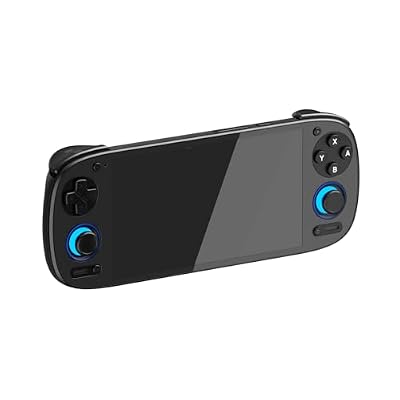
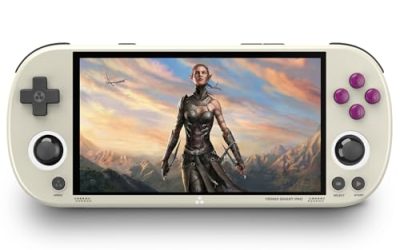
Most long RPG sessions are really two-hour weeknight sessions, and the Pocket 5 is sized exactly for them. The 5.5-inch AMOLED is the text sweet spot, the flat, slim body stays comfortable without being bulky, and the Snapdragon 865 runs the PlayStation 1, PSP, and most PlayStation 2 RPG libraries efficiently, which keeps heat and fan noise low during reading stretches. Sleep and resume are fast, the 5,000 mAh battery covers several evenings of two-hour sessions, and 27W fast charging means a short top-up restores a full session. It is the pick with no real weakness on the comfort axis.
Specs
- Screen: 5.5-inch AMOLED, 1920 by 1080
- Chip: Qualcomm Snapdragon 865
- Memory: 8 GB RAM, 128 GB storage plus microSD slot
- Battery: 5,000 mAh, 27W fast charging over USB-C
- System: Android 13
- Controls: Hall effect sticks and analog triggers
TrimUI Smart Pro: Light, Wide, and Quiet
The Smart Pro is the lightest full-size option here, and for sessions spent reading Game Boy Advance, PlayStation 1, and PSP RPGs, that lightness is its whole argument. The 4.96-inch widescreen suits the PSP library especially well, the Linux system boots and sleeps almost instantly, and the modest Allwinner A133P chip barely warms the shell on the libraries it targets. The honest limits are real: text is smaller than on the 1080p machines, and GameCube or PlayStation 2 RPGs are beyond it. Inside its lane, it asks the least of your hands and your attention.
Specs
- Screen: 4.96-inch IPS, 1280 by 720
- Chip: Allwinner A133P quad-core
- Memory: 1 GB RAM, 128 GB storage on microSD
- Battery: 5,000 mAh, USB-C charging
- System: Linux
- Controls: Analog sticks, digital triggers
For the Short-Burst Grinder
Miyoo Mini Plus: Thirty Minutes at a Time
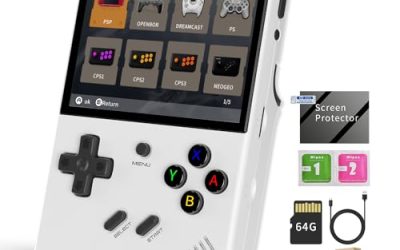
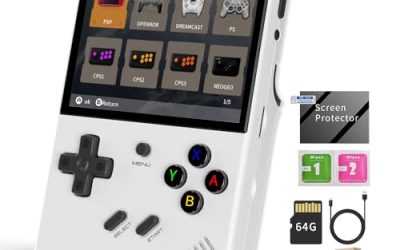
The Mini Plus earns its place by being honest about a different session shape. At roughly 162 grams with a pocketable body, it is the machine that actually gets picked up for a thirty-minute grind before bed, and its one-tap sleep and game-switcher resume make those bursts frictionless. The limits belong in the open: the 3.5-inch screen makes small RPG text tiring across hours, there are no analog sticks, and the library tops out at PlayStation 1. Treat it as a companion for short sessions, not a marathon machine, and it is excellent at exactly that.
Specs
- Screen: 3.5-inch IPS, 640 by 480
- Chip: ARM Cortex-A7 dual-core
- Memory: 128 MB RAM, storage on microSD
- Battery: 3,000 mAh, USB-C charging
- System: Linux, Onion OS community firmware
- Controls: D-pad and face buttons, no analog sticks
How to Choose
Start with your real session length, not your ideal one. If you regularly sit down for three hours or more, prioritize grip shape and screen size: the RG556 for its shell, the Thor Pro if a second screen for maps and menus appeals to you. If your sessions are weeknight two-hour blocks, the Pocket 5 balances text size, weight, and efficiency best. If your RPG time comes in short bursts, the Mini Plus removes every friction between you and the game, and the TrimUI Smart Pro covers the middle ground with a bigger, wider screen.
Then match the screen to your library. Text-heavy PlayStation 2 and PSP games reward the 1080p AMOLED panels; 16-bit and Game Boy Advance RPGs stay perfectly readable on the smaller screens. Finally, weigh sleep behavior: every pick here sleeps and resumes quickly, but if you are constantly interrupted, test the resume path first, because it is the feature you will use most.
Who Should Skip These Picks
Skip this whole list if your RPG sessions happen at a desk or TV: a docked setup with a larger display beats every handheld on text size and ergonomics. Skip the Thor Pro if you know a second screen would distract rather than help, and skip the Miyoo Mini Plus as a main machine if you read small text poorly or plan multi-hour sessions, because its screen will tire your eyes. Skip the TrimUI Smart Pro if your backlog is mostly PlayStation 2. And if your sessions are short arcade bursts rather than long stories, the comfort axis this guide ranks on barely applies to you.
Frequently Asked Questions
How big a screen do I need for RPG text?
Around five and a half inches at 1080p is the comfortable zone for PlayStation 2 and PSP dialogue at arm’s length. Smaller screens handle 16-bit and Game Boy Advance fonts well, but small text in later libraries becomes tiring across a long session.
Does a bigger battery actually change how a session feels?
Yes, indirectly. A battery that comfortably outlasts your longest session removes the habit of checking the gauge and hunting for a cable mid-dungeon. Size the cell to your session length and system tier rather than chasing the biggest number.
Is a second screen worth it for RPGs?
For map- and menu-heavy games, yes: keeping a map or inventory visible removes constant menu switching. It matters most in DS and 3DS libraries and in older games with buried status screens, and least in linear games with clean single-screen interfaces.
How do I stop hand fatigue during long sessions?
Choose a shell with rounded grips that fill your palm, rest the machine on a cushion instead of pinching it in the air, and take the natural breaks the game offers at save points. A balanced mid-weight machine usually beats the lightest one over three hours.
Final Verdict
For most players, the Retroid Pocket 5 is the long-session default: sharp text, low heat, fast resume, and a battery matched to real weeknight play. The AYN Thor Pro is the premium answer when a second screen and a full-evening battery justify the bigger machine, and the Anbernic RG556 is the one to buy when grip comfort is the reason your sessions end early. The TrimUI Smart Pro and Miyoo Mini Plus round out the list for lighter libraries and shorter bursts, each honest about the ceiling it trades for comfort and convenience.
Product and ASIN Reference
| Product | ASIN |
|---|---|
| Retroid Pocket 5 (Black) | B0DT4G4PD2 |
| AYN Thor Pro | B0FV3HKG9P |
| Anbernic RG556 (Blue) | B0FKHBVGLQ |
| TrimUI Smart Pro (White, 128GB) | B0FMJWW5MG |
| Miyoo Mini Plus | B0CGV6CQPL |