Stealth is the genre that punishes hardware weaknesses instead of rewarding raw power. A dropped frame in a racing game costs a corner; a muddy dark scene in a stealth game costs the whole run, because the guard you never saw is the one who raises the alarm. Slow, deliberate play also changes what matters in the controls: you spend half of every session barely tilting the stick to walk instead of run, leaning on save states before risky crossings, and reading shadowed corridors where a washed-out screen turns information into guesswork.

This roundup is organized by era rather than by price. The retro stealth library splits cleanly across three hardware generations, and each one asks for something different. The five picks below are matched to the era they serve best, from a pocket Linux machine that nails the PlayStation originals to dual-screen Android flagships built for the PlayStation 2 and GameCube catalog.
As an Amazon Associate, we earn from qualifying purchases.
Quick Answer
The Retroid Pocket 5 is the best all-round stealth handheld: its Snapdragon 865 runs the PlayStation 2 and GameCube stealth catalog, the AMOLED screen keeps dark scenes readable, and the hall-effect sticks handle slow analog movement well. The AYN Thor Pro adds a second screen and more power, the Anbernic RG556 and RG406H cover smaller budgets, and the Miyoo Mini Plus owns the PS1 era.
The Stealth Library, Era by Era
The first era is the original PlayStation, and it is deeper than most players remember. Metal Gear Solid defined the template, Tenchu: Stealth Assassins built an entire game around rooftop patience, and the Syphon Filter trilogy mixed stealth with third-person shooting. These games were designed before dual-analog became standard, so they play honestly on a d-pad and face buttons, and none of them stresses modern hardware. Any competent handheld runs this era at full speed.
The PSP forms the second era, and it is the genre’s portable golden age. Metal Gear Solid: Peace Walker was built specifically for handheld sessions, with short missions and a base-building loop between them. Metal Gear Acid turned stealth into a card-driven tactics game, Syphon Filter: Dark Mirror and Logan’s Shadow were designed around a single analog nub, and SOCOM: Fireteam Bravo rewarded slow, planned approaches. Because these games were designed for one stick and short sessions, they translate to modern handhelds almost perfectly.
The third era is PlayStation 2 and GameCube, and it is where hardware starts to matter. Metal Gear Solid 2 and 3, the Splinter Cell series, Hitman 2, Sly Cooper and Manhunt all assume two analog sticks, analog camera control and far more processing power. Splinter Cell in particular lives in near darkness, with light and shadow as core mechanics. This era separates the picks below: the Android flagships run it, the budget machines mostly do not, and pretending otherwise would be dishonest.
What Stealth Games Punish in a Handheld
Dark-scene visibility comes first. Stealth games are lit like film noir, and on a mediocre LCD the blacks crush into grey, hiding doorways, patrol routes and the items you are sneaking toward. OLED panels, with true per-pixel blacks, are a genuine gameplay advantage here rather than a luxury. Screen size matters less than contrast, which is why two of the picks below earn their place on panel type alone.
Analog nuance comes second. Stealth movement is graded: tilt slightly to creep, tilt fully to run, and noise is usually tied to speed. Sticks with a clean, wide range and no deadzone slop make that grading reliable, and hall-effect sticks avoid the drift that can nudge a character out of cover mid-session. Long sessions are the third factor. Patient play means a single level can take an hour, so battery life and a sleep mode that resumes instantly are worth more than benchmark peaks. Save states are the fourth: emulation lets you bookmark a moment before a risky corridor, which respects the genre’s trial-and-error design instead of fighting it.
The Five Picks, Matched to an Era
AYN Thor Pro: The Dual-Screen Flagship
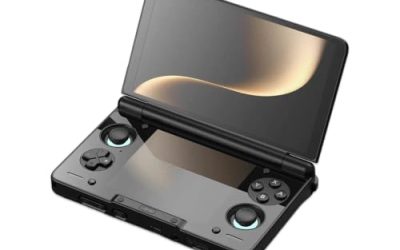
The Thor Pro is the most capable stealth machine here. The Snapdragon 8 Gen 2 handles the PlayStation 2 and GameCube era with headroom, including demanding titles that make lesser chips stutter during camera pans. The 6.31-inch AMOLED main screen renders Splinter Cell’s shadow work with true blacks, and the 3.92-inch second screen is genuinely useful in this genre: park a map, a codec screen or emulator quick-save controls below the action instead of pausing. Dual hall-effect sticks and full analog triggers complete a control layout with no compromises for third-person stealth.
Specs
- Display: 6.31-inch AMOLED main screen, 3.92-inch AMOLED second screen
- Processor: Qualcomm Snapdragon 8 Gen 2
- Operating system: Android 13
- Controls: dual hall-effect analog sticks, analog triggers
- Battery: 6,000 mAh
Retroid Pocket 5: The All-Round Pick
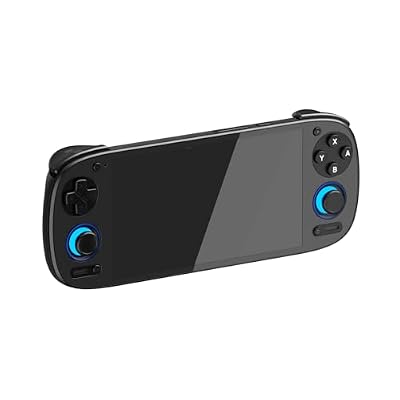
The Retroid Pocket 5 covers all three eras in one shell. The Snapdragon 865 is the established sweet spot for PlayStation 2 and GameCube emulation, running Metal Gear Solid 2 and 3 and the Splinter Cell ports at full speed in the usual emulators. The 5.5-inch AMOLED display keeps night missions legible, and the hall-effect sticks give the fine low-end control that creeping requires. It is the pick for anyone whose stealth library spans from Tenchu on PS1 to Peace Walker on PSP to Sly Cooper on PS2.
Specs
- Display: 5.5-inch AMOLED, 1920 x 1080
- Processor: Qualcomm Snapdragon 865
- Memory: 8 GB RAM, 128 GB storage
- Operating system: Android 13
- Battery: 5,000 mAh
Anbernic RG556: The Dark-Scene Value Pick

The RG556 earns its place on its screen. The 5.48-inch AMOLED panel delivers the same true-black advantage as the flagships, which matters more in this genre than a faster chip. The Unisoc T820 handles the PS1 and PSP eras easily and a good share of the PlayStation 2 catalog, though the heaviest PS2 stealth titles will need settings compromises. For a library weighted toward Peace Walker, Dark Mirror and PS1 originals played in dark rooms, this is the sensible spend. One caution: this model is worth an API and stock check before ordering, as listings vary.
Specs
- Display: 5.48-inch AMOLED, 1920 x 1080
- Processor: Unisoc T820
- Memory: 8 GB RAM, 128 GB storage
- Operating system: Android 13
- Battery: 5,500 mAh
Anbernic RG406H: The 4:3 Era Specialist

The RG406H is built around a 4-inch 960 x 720 touchscreen in the 4:3 aspect ratio the PS1 and much of the PS2 era was drawn for, so those games fill the panel without borders or stretching. The same T820 chip as the RG556 means the same performance story: flawless through PSP, capable but not unlimited on PS2. The horizontal shell and stacked shoulder buttons suit long, slow sessions, and the touchscreen simplifies PSP and Nintendo DS-era menus. Choose it when your stealth backlog is mostly pre-widescreen.
Specs
- Display: 4-inch IPS touchscreen, 960 x 720
- Processor: Unisoc T820
- Memory: 8 GB RAM, 128 GB storage
- Operating system: Android 13
- Battery: 5,000 mAh
Miyoo Mini Plus: The PS1 Purist
The Miyoo Mini Plus cannot touch the PS2 era, and this article will not pretend otherwise. What it does is run the entire PS1 stealth library, Metal Gear Solid, Tenchu and Syphon Filter included, in a 162-gram shell with the best quick-resume software in the class. Onion OS and its Game Switcher return you to the exact moment you left, which suits a genre played in stolen minutes, and save states sit one shortcut away for the corridor that keeps going wrong. The original games were designed for digital input, so the missing analog stick costs nothing here. As a dedicated first-era machine, it is unmatched.
Specs
- Display: 3.5-inch IPS, 640 x 480
- Processor: ARM Cortex-A7 dual-core, 1.2 GHz
- Memory: 128 MB RAM, microSD storage
- Operating system: Linux, Onion OS compatible
- Battery: 3,000 mAh
How to Choose
Start with your library, not the spec sheet. If your stealth backlog is PS1 and PSP, the Miyoo Mini Plus or RG406H covers it completely and the flagships buy you nothing. If PlayStation 2 and GameCube titles are the point, the Retroid Pocket 5 is the floor and the Thor Pro is the ceiling. Next, weigh the screen: players who game in the dark should prioritize OLED, because shadow detail is gameplay information in this genre. Finally, check the sticks. Any pick with dual hall-effect sticks will grade movement speed reliably; single-stick and d-pad-only machines should be matched to the eras designed for them.
Who Should Skip These Picks
Skip this entire category if your stealth interest starts with the PlayStation 3 era or later, because those games sit beyond what retro handhelds emulate reliably. Skip the Miyoo Mini Plus if you need analog movement or any PS2 title. Skip the T820 machines if your list is headed by the most demanding PS2 ports and you are unwilling to adjust emulator settings. And skip emulation handhelds altogether if you want the modern stealth catalog with online features intact; a current console or PC is the honest recommendation there.
Frequently Asked Questions
Which stealth games run well on budget retro handhelds?
The full PS1 library runs well, including Metal Gear Solid, Tenchu and Syphon Filter, and PSP titles such as Peace Walker and Syphon Filter: Dark Mirror also perform strongly on mid-range chips. PlayStation 2 stealth games are the dividing line and need a Snapdragon-class device.
Why does an OLED screen matter so much for stealth games?
Stealth games communicate through shadow: patrol routes, hiding spots and doorways are drawn in near-black tones. OLED panels switch pixels fully off for true black, preserving those gradations, while many LCDs wash them into grey and hide information the game intends you to see.
Can these handhelds play Metal Gear Solid 2 and 3?
Yes, on the Snapdragon 865 and Snapdragon 8 Gen 2 picks, through PlayStation 2 emulation at full speed for most players. The T820-based picks run them with more variable results and may need resolution or settings adjustments, so they are better matched to the PS1 and PSP catalog.
Are save states cheating in stealth games?
They are a tool, and the genre was built on retrying short sections until a route worked. A save state before a guarded corridor simply shortens the walk back from a checkpoint. Players who want the original tension can ignore the feature entirely; nothing forces its use.
Final Verdict
Stealth rewards patience in the player and honesty in the hardware. The Retroid Pocket 5 is the single pick that covers all three eras without drama, the Thor Pro is the no-compromise flagship, the RG556 buys OLED shadow detail for less, the RG406H respects the 4:3 originals, and the Miyoo Mini Plus remains the purest way to replay the PS1 games that started it all. Match the machine to your era and every one of these earns its place.
Product and ASIN Reference
| Product | ASIN |
|---|---|
| AYN Thor Pro | B0FV3HKG9P |
| Retroid Pocket 5 (Black) | B0DT4G4PD2 |
| Anbernic RG556 (Blue) | B0FKHBVGLQ |
| Anbernic RG406H (White) | B0DNF3LD4C |
| Miyoo Mini Plus | B0CGV6CQPL |