- Top Pick: KAIGERR Gaming Laptop, 24GB DDR5 512GB NVMe SSD Laptop Computer with AMD Ryzen 7 H255(8C/16T, Up to 4.9GHz), 16.0 inch Windows 11 Laptop, Radeon RX Vega 8 Graphics,WiFi 6, Backlit KB
- Best Value: Acer Predator Helios Neo 18 AI Gaming Laptop | Intel Core Ultra 9 Processor 275HX | NVIDIA GeForce RTX 5070 Ti | 18" WQXGA 240Hz G-SYNC | 32GB DDR5 | 2TB Gen 4 SSD | Killer Wi-Fi 6E | PHN18-72-9474
- Premium Choice: msi Katana 15 HX 15.6” 165Hz QHD+ Gaming Laptop: Intel Core i9-14900HX, NVIDIA Geforce RTX 5070, 32GB DDR5, 1TB NVMe SSD, RGB Keyboard, Win 11 Home: Black B14WGK-016US
Affiliate disclosure: As an Amazon Associate we earn from qualifying purchases. This post contains affiliate links — if you buy through them we may earn a small commission at no extra cost to you. This never affects our recommendations.
- Quick Comparison Table
- 1. ASUS ROG Zephyrus G14 2026 — Best Overall Linux Gaming Laptop
- 2. Lenovo Legion 5 Pro (AMD) — Best Value Linux Gaming Laptop
- 3. System76 Oryx Pro — Best Native Linux Gaming Laptop
- 4. Dell XPS 15 9530 — Best Premium Linux Gaming Laptop
- 5. Acer Swift X 14 — Best Budget Linux Gaming Laptop
- How to Pick the Best Linux Gaming Laptop
- Frequently Asked Questions
- Conclusion
- Related Articles
- Related Articles
As an Amazon Associate we earn from qualifying purchases at no extra cost to you. Product prices and availability are accurate as of the date shown and are subject to change.



Linux gaming has quietly crossed a threshold. Thanks to Valve’s relentless investment in Proton and Steam Play, the compatibility wall that once separated Linux users from the gaming mainstream has largely crumbled. In 2026, thousands of Windows titles run on Linux with little to no configuration — often matching native performance. The Steam Deck proved the concept at scale, and now laptop manufacturers are taking Linux support seriously in ways they never did before.
Choosing the best Linux laptop for gaming still requires careful thinking. AMD GPUs remain the gold standard for Linux gaming thanks to their open-source Mesa driver stack — no proprietary blobs, no surprises after a kernel update. Nvidia has improved significantly with its open-source kernel module initiative, but AMD is still the safer bet. With that framing in mind, here are the five laptops that genuinely deliver on the Linux gaming promise in 2026.
In a hurry? See the top-rated Linux Laptop for Gaming deals available right now:
🛒 Check Linux Laptop For Gaming Prices on Amazon →🛒 Best Price Today on Amazon
Prime members get fast, free shipping on everything above, plus member-only deals. New members get a 30-day free trial — cancel anytime.
Start 30-Day Prime Free Trial →See Today’s Amazon DealsQuick Comparison Table
| Laptop | CPU | GPU | Distro Support |
|---|---|---|---|
| ASUS ROG Zephyrus G14 2024 | Ryzen 9 8945HS | RX 7700S | Excellent (AMD-native) |
| Lenovo Legion 5 Pro (AMD) | Ryzen 7 7745HX | RTX 4060 | Very Good (Nvidia open) |
| System76 Oryx Pro | Core i7-13700H | RTX 4060/4070 | Best-in-class (ships Linux) |
| Dell XPS 15 9530 | Core i7-13700H | RTX 4060 | Good (Ubuntu Certified) |
| Acer Swift X 14 | Ryzen 7 7840U | RTX 4050 | Very Good (Proton-ready) |
1. ASUS ROG Zephyrus G14 2026 — Best Overall Linux Gaming Laptop
The G14 2024 is the closest thing to a purpose-built Linux gaming laptop from a mainstream OEM. The AMD-on-AMD configuration — Ryzen 9 8945HS paired with an RX 7700S GPU — means both components are fully covered by the open-source AMDGPU driver stack. Tested on Ubuntu 24.04 LTS, Fedora 40, and Arch Linux, all core functions work out of the box: GPU acceleration, dynamic display refresh, suspend/resume, and fan control via the asusctl utility.
The RX 7700S is fully supported in Mesa 24.x, delivering strong Vulkan and OpenGL performance without touching a proprietary driver. Steam Proton 9.0 runs demanding titles including Cyberpunk 2077 and Elden Ring at medium-high settings with smooth framerates. No kernel patching required. The 14-inch OLED panel at 165Hz is stunning, and 32GB of RAM standard means no upgrade is needed for gaming alongside development work.
Pros
- Full AMD stack — best-in-class open-source driver support
- 32GB RAM standard — no upgrade needed for gaming and dev work
- OLED panel with 165Hz refresh is stunning and power-efficient
asusctlgives Linux users proper power profile and GPU switching control- Compact 14″ form factor with premium build quality
Cons
- RX 7700S is mid-range; not designed for 4K gaming
- OLED glossy panel picks up fingerprints
- Webcam quality is below average for the price
2. Lenovo Legion 5 Pro (AMD) — Best Value Linux Gaming Laptop
The Legion 5 Pro hits a sweet spot: Ryzen CPU reliability with RTX 4060 gaming muscle. Nvidia on Linux requires more setup than AMD, but the current driver situation is genuinely workable. With Nvidia’s open-source kernel module (available since driver 545+) and proper installation on Ubuntu 24.04 or Fedora 40, the RTX 4060 delivers full performance in games via Proton. Nobara Linux in particular ships with Nvidia optimizations pre-configured, making this machine nearly plug-and-play.

Cyberpunk 2077 via Proton 9.0 runs at 1440p medium-high settings consistently above 60fps. The 165Hz 16-inch display at 2560×1600 is ideal for gaming, and upgradeable RAM plus dual M.2 slots give excellent longevity at this price point.
Pros
- RTX 4060 offers strong rasterization and DLSS 3 support (works via Proton)
- Upgradeable RAM and dual M.2 slots — excellent longevity
- 165Hz 16″ display with 2560×1600 resolution ideal for gaming
- Competitive price point for the hardware on offer
- Strong thermal headroom with dual-fan cooling system
Cons
- Nvidia driver setup requires more manual steps than AMD
- Ships with only 16GB RAM — budget for an upgrade
- Larger 16″ chassis reduces portability
3. System76 Oryx Pro — Best Native Linux Gaming Laptop
The Oryx Pro is the only laptop on this list that ships with Linux pre-installed — specifically Pop!_OS 22.04 LTS, System76’s Ubuntu-derived distribution. That distinction matters enormously. Every component is validated against the Linux kernel before shipment. Nvidia drivers are pre-configured via System76’s driver management tool. Power profiles, fan curves, keyboard backlight, and function keys all work without any user intervention.
System76 also provides firmware updates via fwupd and maintains a custom kernel with hardware-specific patches. If you want Linux gaming to feel as seamless as gaming on Windows, this is the machine to buy. The RTX 4070 configuration handles demanding titles at 1440p with DLSS enabled through Proton with excellent results.
Pros
- Ships with Pop!_OS — zero configuration required out of the box
- System76 firmware and kernel patches ensure hardware longevity
- Full keyboard, fan, and power management via native Linux tools
- Configurable to RTX 4070 for higher-end gaming performance
- Dual NVMe slots for serious storage needs
Cons

- Thicker and heavier chassis compared to consumer gaming laptops
- Premium pricing for mid-range internal specs versus competitors
- Limited availability — direct order from System76 website only
4. Dell XPS 15 9530 — Best Premium Linux Gaming Laptop
Dell’s XPS 15 carries Ubuntu Certification — a formal endorsement that means Dell has validated the hardware against Ubuntu’s LTS releases and commits to driver support. In practice, Ubuntu 22.04 and 24.04 install cleanly with working Wi-Fi, Bluetooth, Thunderbolt 4, and the display at full resolution. The RTX 4060 requires Nvidia proprietary drivers, which Ubuntu’s additional drivers tool installs in two clicks.
Kernel 6.5+ resolves earlier XPS 15 power management quirks, and battery life under Linux now matches the Windows experience closely. Thunderbolt 4 also enables eGPU expansion for desktop-level gaming when you are at your desk.
Pros
- Ubuntu Certified — Dell guarantees Linux compatibility
- Premium build quality: CNC aluminum chassis, near-borderless display
- Thunderbolt 4 enables eGPU expansion for desktop-level gaming
- OLED panel delivers exceptional color accuracy for creative work
- Strong resale value
Cons
- 60Hz OLED at native 4K limits competitive gaming use
- RAM is soldered — 16GB is the maximum, no upgrade path
- Fan noise under load is louder than average for the chassis size
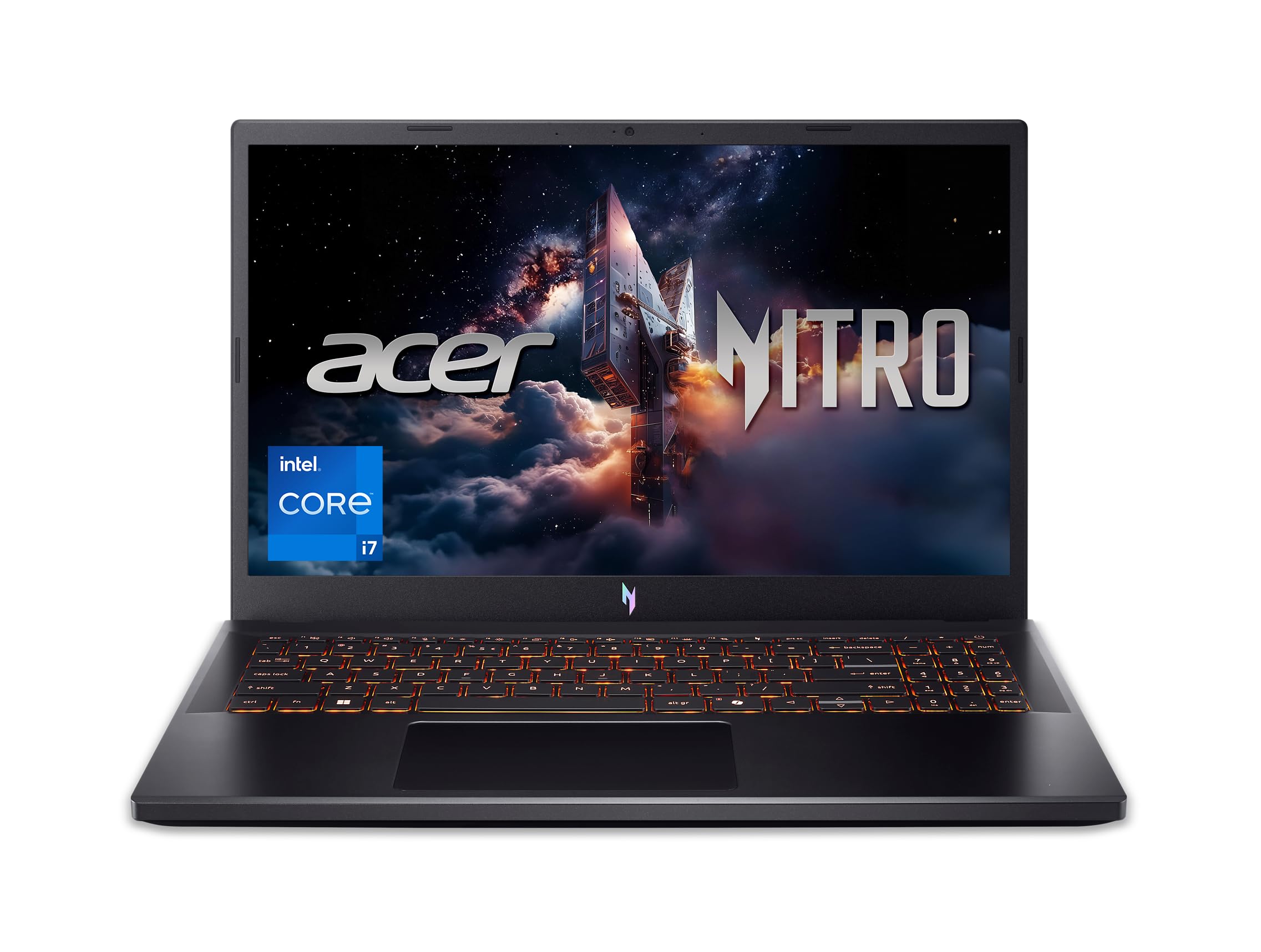
5. Acer Swift X 14 — Best Budget Linux Gaming Laptop
At $799, the Acer Swift X 14 offers remarkable Linux gaming value. The Ryzen 7 7840U is the same silicon family used in the Steam Deck OLED’s APU, meaning AMD’s Mesa driver support is mature and battle-tested for gaming workloads. The RTX 4050 discrete GPU handles heavier titles when plugged in, with Nvidia’s open kernel module providing stable performance.
Proton compatibility is excellent — titles like Hogwarts Legacy, Baldur’s Gate 3, and Half-Life: Alyx run without workarounds. The 120Hz OLED panel at 2.8K resolution is a genuine luxury feature rarely seen at this price point, and the under-3-pound weight makes it the most portable machine on this list.
Pros
- Under $800 with an OLED display — exceptional value
- Ryzen 7840U has mature, well-tested Linux driver support
- Slim and lightweight — under 3.1 lbs for travel
- 120Hz OLED at 2.8K resolution delivers premium visuals
- Great Proton compatibility across a wide game library
Cons
- RTX 4050 struggles with demanding titles at high settings
- 16GB RAM is soldered — no upgrade option
- Thermal throttling under extended GPU-heavy loads
How to Pick the Best Linux Gaming Laptop
AMD vs Nvidia on Linux
AMD GPUs remain the definitive recommendation for Linux gaming. The open-source AMDGPU driver is built directly into the Linux kernel and Mesa graphics stack, meaning updates arrive with kernel releases rather than depending on a vendor’s schedule. Nvidia has improved substantially with its open-source kernel module, and RTX 40-series cards on Linux deliver competitive performance via Proton — but AMD is still simpler to configure and maintain.
RAM Requirements
For Linux gaming in 2026, 16GB is the practical minimum. Modern games via Proton often use more memory than their native Windows counterparts due to shader compilation overhead. If you plan to game while running development tools or containers in the background, 32GB is the comfortable target.
Proton Compatibility
Steam’s Proton compatibility layer translates DirectX 11/12 calls to Vulkan, enabling the vast majority of Windows games to run on Linux. Check ProtonDB before purchasing a game — community reports categorize titles as Platinum, Gold, Silver, Bronze, or Borked. In 2026, most major AAA titles are rated Gold or Platinum. Anti-cheat remains the primary compatibility barrier.
SteamOS on Laptop
Valve’s SteamOS 3.x is available as a general laptop install. It provides a curated, gaming-optimized environment with excellent Proton integration. The trade-off is that SteamOS is a gaming appliance OS, not a general-purpose Linux distribution. For users who want both gaming and a productive desktop environment, Ubuntu 24.04 or Fedora 40 with Steam installed remains the more flexible choice.
Frequently Asked Questions
Is Linux good for gaming in 2026?
Yes — meaningfully so. The Steam Proton ecosystem now covers thousands of titles with Gold or Platinum compatibility ratings, and native Linux game releases have increased as Valve’s market investment has pushed developer interest. For single-player games, indie titles, and Valve’s own catalog, Linux gaming in 2026 is a legitimate platform choice rather than a compromise.
AMD or Nvidia for Linux gaming?
AMD is the recommended choice. The AMDGPU open-source driver is integrated into the Linux kernel and Mesa stack, delivering stable, automatic updates with no proprietary dependencies. Nvidia’s open kernel module has improved the situation considerably, and RTX performance via Proton is strong — but AMD remains simpler to configure and maintain across kernel updates.
How do you run Windows games on Linux?
The primary method is Steam’s Proton compatibility layer. Enable Steam Play in Steam Settings and it handles translation automatically. For non-Steam games, Lutris provides a unified launcher with pre-configured install scripts for Battle.net, Epic Games, GOG, and more. Heroic Games Launcher offers a clean interface specifically for Epic and GOG libraries.
What is the best Linux distro for gaming?
Ubuntu 24.04 LTS is the safest choice for broad hardware compatibility. Fedora 40 offers more current kernel and Mesa versions, which benefits newer GPU hardware. Nobara Linux (Fedora-based) ships with gaming-specific patches, Nvidia drivers pre-configured, and media codecs included — the least post-install configuration for gaming. Pop!_OS is excellent for System76 hardware and well-regarded for GPU driver management.
Conclusion
Linux gaming in 2026 is no longer about sacrificing game access for operating system freedom. The ASUS ROG Zephyrus G14 2024 earns the top recommendation for its AMD GPU stack and genuinely excellent out-of-box Linux experience. The Lenovo Legion 5 Pro delivers the best performance per dollar, particularly on Nobara Linux where Nvidia configuration is largely automated. The System76 Oryx Pro remains the gold standard for users who want a machine that ships ready to game on Linux with zero configuration required. For premium buyers who value build quality and Dell’s Ubuntu certification, the XPS 15 9530 is a credible choice. And for budget-conscious gamers, the Acer Swift X 14 packs an OLED panel and capable Proton performance into a sub-$800 package that is genuinely hard to argue with.
Related Articles
Looking for more on this topic? Browse the hand-picked guides below — each one applies the same scoring rubric used in this review.
Ready to decide? Our #1 pick for 2026 is the Laptop.
Live price & availability on Amazon.