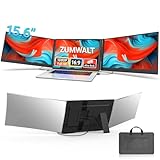
- Top Pick: 15.6" Laptop Screen Extender, 1080P FHD Triple Portable Monitor for Laptops, Ultra-Slim Travel Dual Monitor Fit for 12"-17.3" Laptops, USB-C Plug&Play Extended Screen Compatible with Win/Mac/Android
- Best Value: VueForge Laptop Screen Extender, 15.6” Ultra-Slim Triple Portable Monitor for Laptop, Two Cable USB-C/HDMI Plug-Play, Travel Dual Monitor for 13–17.3" Laptops, MacOS/Windows/Android
- Premium Choice: Kado 2-Pack Dual 22" Flat Screen 1920×1080 75Hz FHD Computer Monitor
Turning a laptop into a two-monitor workstation used to require a desk, a stand, and a spare display. Now, portable screen extenders clip onto your laptop lid and fold out extra panels wherever you are, delivering the productivity of a dual or even triple-monitor setup in a package that travels with you.
We looked at the leading options for adding monitors to a laptop, from lightweight clip-on extenders to matched desktop two-packs, to help you find the right way to double, or triple, your screen space. Here’s how they compare and which approach fits your workflow.
As an Amazon Associate we earn from qualifying purchases at no extra cost to you.

Check Price on Amazon →


Check Price on Amazon →


Check Price on Amazon →
🎮 Get More From Your Setup — Free
Prime Gaming gives you free PC games every month, in-game loot, and a free Twitch channel sub — plus fast free shipping on all the gear above. New members get a 30-day free trial.
Watch: Two Monitor Laptop — Video Review
Design & Build
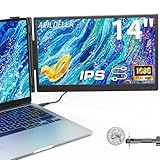
Two philosophies dominate. Portable clip-on extenders, like the VueForge, DZVW, Miesebe, and KEFEYA models, mount to the back of your laptop lid and swing out FHD IPS panels that fold flat for transport. Many are triple-panel designs offering two extra screens, while the KEFEYA is a simpler 14-inch dual. These are slim and light, built for mobility. The alternative is a desktop two-pack like the Kado dual 22-inch flat screens, two matched standalone monitors for a permanent home setup. Clip-on extenders win for portability and single-unit convenience; the Kado pack wins for screen size and all-day desk ergonomics.
Performance
The portable extenders run 1080p FHD IPS panels, ideal for spreadsheets, code, documents, and reference material beside your main display. Connectivity is the key detail: models use USB-C single-cable or two-cable USB-C plus HDMI setups, and driving multiple external panels often requires DisplayLink drivers, so a quick install may be needed. Ultra-slim builds, some just 0.16 inches thick like the Miesebe, keep weight down, and features like rotation and detachable panels add flexibility. The Kado 22-inch two-pack, by contrast, offers larger 75Hz screens with more working area for a stationary setup. All target productivity rather than high-refresh gaming.
Pros & Cons
- Instant dual or triple screens that travel with your laptop
- Slim, foldable panels that attach as a single unit
- Flexible connectivity via USB-C and HDMI
- Desktop two-packs offer larger, matched screens for home
- Multi-panel output often needs DisplayLink drivers
- Added weight can stress lighter laptop hinges
- Portable panels are smaller than desktop monitors
Alternatives to Consider
If you work mostly at one desk, a pair of standalone monitors like the Kado dual 22-inch set gives the best ergonomics and screen area for the money. If you only occasionally need extra space, a single portable monitor is lighter than a triple extender. And frequent travelers who want maximum panels should weigh a triple extender against the hinge strain and weight it adds. Match the solution to how mobile you are and how many screens you truly need.
Related Guides
- Best Portable Gaming Device 2026: Handhelds, Gaming Laptops & Cloud Solutions
- Laptop Screen Extender Portable (2026)
- Best Gaming Computers & Laptops at Best Buy 2026: Expert Reviews
- Best Cooling Pad for Gaming Laptop 2026: Thermal Performance & Reviews
- Laptop Screen Extender Portable (2026)
Frequently Asked Questions
Can any laptop use a screen extender?
Most modern laptops can, but running multiple external panels usually needs enough USB-C or HDMI outputs, or DisplayLink drivers to split one port. Check your laptop’s ports and support before buying a dual or triple extender.
Do screen extenders need external power?
On laptops with full-function USB-C, the cable often supplies power and video together. Driving two or three panels may draw more, so keeping your charger connected ensures stable power and full brightness.
Are portable extenders as good as real monitors?
For productivity, they’re excellent and far more portable, though panels are smaller and cap at 60Hz. For the largest workspace and best ergonomics at a fixed desk, standalone monitors like the Kado two-pack are better.
Will an extender damage my laptop hinge?
Quality extenders distribute weight with padded magnetic mounts, but heavier triple models can stress lighter hinges. Choose a size matched to your laptop and a lighter panel if your hinge feels delicate.
Verdict
Adding monitors to a laptop is easier than ever, and the right choice depends on where you work. For mobile multi-screen productivity, clip-on extenders like the VueForge, DZVW, and Miesebe triples or the simpler KEFEYA dual are excellent, while the Kado 22-inch two-pack is the pick for a permanent desk setup. Confirm your laptop’s ports, be ready for a possible DisplayLink install, and enjoy a genuine multi-monitor workflow anywhere.