Affiliate disclosure: As an Amazon Associate we earn from qualifying purchases. This post contains affiliate links — if you buy through them we may earn a small commission at no extra cost to you. This never affects our recommendations.
A 17-inch gaming laptop is a commitment — you’re trading portability for screen real estate, and in 2025, that trade pays off beautifully. Whether you’re playing open-world RPGs, working in video editing software, or running multiple windows during a stream, a 17-inch display fundamentally changes the experience. The best 17-inch gaming laptops in 2025 pair massive screens with GPUs capable of driving them at high frame rates. The challenge has always been weight — most 17-inch models clock in over 5.5 lbs, making them better described as desktop replacements than portable machines. If you’re mostly gaming at a desk or moving between home and a single fixed location, the immersive screen advantage makes these laptops deeply compelling purchases.
In a hurry? See the top-rated 17-Inch Gaming Laptops deals available right now:
🛒 Check 17-Inch Gaming Laptops Prices on Amazon →🛒 Best Price Today on Amazon
Prime members get fast, free shipping on everything above, plus member-only deals. New members get a 30-day free trial — cancel anytime.
Start 30-Day Prime Free Trial →See Today’s Amazon DealsTop Picks at a Glance
| Product | Best For |
|---|---|
| MSI Cyborg 17 Core 7 RTX 4060 | Best 17″ overall |
| MSI Thin 15 i7 RTX 4050 | Mid-range value |
| MSI Thin 15 i5 RTX 4050 | Budget gateway |
| MSI Thin Gaming i5 RTX 3050 | Entry large-screen |
| ASUS ROG Zephyrus G15 RTX 4060 | Premium performance |
As an Amazon Associate we earn from qualifying purchases at no extra cost to you.





MSI Cyborg 17 Core 7 RTX 4060
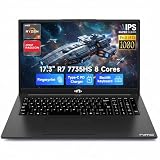
The MSI Cyborg 17 is built for gamers who want a massive screen without going full enthusiast pricing. The 17.3-inch FHD 144Hz panel is excellent for gaming, and the RTX 4060 drives it comfortably at high settings in demanding titles. The Intel Core 7 processor handles multitasking and content creation without complaint. The translucent bottom panel is a fun aesthetic touch. Thermals are well-managed through MSI’s dual-fan design, and the keyboard has satisfying travel for long gaming sessions.
- Pros: Large 17.3″ display, strong RTX 4060, Core 7 CPU, good thermal management, bold design
- Cons: Heavy at 5.5+ lbs, average battery life, no QHD panel option at this price
MSI Thin 15 i7 RTX 4050
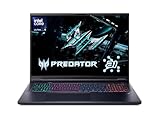
While technically a 15-inch machine, the MSI Thin 15 i7 earns its place here as the closest large-display value alternative under $950. The i7 CPU pairs nicely with the RTX 4050 for creative workflows, and the 144Hz 1080p display is sharp and responsive. For buyers who want near-17-inch performance in a lighter body, this is a practical compromise. Gaming at 1080p high settings runs smoothly across most game libraries.
- Pros: Strong i7 + RTX 4050 combo, portable weight, 144Hz display, competitive price
- Cons: Not actually 17 inches, RTX 4050 limits 1440p gaming
MSI Thin 15 i5 RTX 4050
The entry point of this list, the MSI Thin 15 i5 is for budget shoppers who want a reliable gaming laptop under $750. The 15-inch 144Hz IPS panel and RTX 4050 handle 1080p gaming at high settings without issue. This is one of the best value plays in the entire gaming laptop market — it punches well above its price tag in gaming performance even if the screen size does not satisfy the 17-inch brief.
- Pros: Excellent price-to-performance, RTX 4050 gaming, 144Hz display, light chassis
- Cons: 15-inch panel, no webcam, average build quality compared to premium picks
MSI Thin Gaming i5 RTX 3050
The RTX 3050 configuration delivers entry-level discrete GPU gaming in MSI’s Thin chassis. Esports titles run beautifully at 144fps, and medium-setting AAA gaming is achievable. The older GPU architecture means fewer performance optimizations going forward, but for the price it is a solid buy. Best for students and casual gamers who want a lightweight gaming machine at a budget price.
- Pros: Slim and light, 144Hz display, decent esports gaming, good value
- Cons: RTX 3050 is aging, weaker AAA performance, older architecture misses DLSS 3 FG
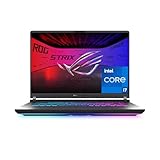
ASUS ROG Zephyrus G15 RTX 4060
The ASUS ROG Zephyrus G15 sets the bar for performance and display quality in the near-17-inch segment. The 165Hz QHD display is exceptional, AMD Ryzen 9 is a powerhouse for creative work and streaming, and the RTX 4060 handles 1440p gaming with DLSS comfortably. If you are upgrading from a desktop setup and want a machine that matches that experience as closely as possible, the Zephyrus G15 is the answer.

- Pros: Best-in-class display quality, strong AMD CPU, excellent battery, premium chassis
- Cons: Expensive, 15-inch form factor despite near-17-inch performance, no webcam
Buying Guide
Why Choose a 17-Inch Gaming Laptop
The primary advantage of a 17-inch gaming laptop is immersion. A larger display creates a genuinely cinematic gaming experience without external monitors. It also provides more screen real estate for multitasking — productivity apps, streaming software, and games all benefit from the extra pixels. Content creators editing 4K footage or working in DaVinci Resolve will find the extra screen space dramatically improves workflow efficiency.
Display Spec Priorities for 17-Inch
At 17 inches, resolution and refresh rate matter even more than on smaller screens. A 1080p panel at 17.3 inches has lower pixel density (127 PPI) than a 1080p 15.6-inch display (141 PPI), making the image slightly softer. Prioritize 1440p QHD panels at 17 inches for genuinely sharp visuals, especially for non-gaming content. Minimum refresh rate target: 144Hz. 240Hz is excellent for competitive gaming but not necessary for cinematic single-player experiences.
Weight and Portability Considerations
Most 17-inch gaming laptops weigh 5.5-7 lbs and have thicker chassis to accommodate larger cooling systems. These are genuinely heavy machines — factor in a charger (often 230W+ bricks) and backpack weight becomes significant. Treat 17-inch gaming laptops as semi-portable desktop replacements rather than daily commute machines. They are perfect for moving between home and a dorm or apartment, but less suited for classroom carry.
Thermal Performance at 17 Inches
Larger chassis means more room for cooling hardware, and 17-inch gaming laptops generally thermal-throttle less than 14-15 inch counterparts. This means sustained performance over longer gaming sessions is better. Look for models with at least three heat pipes and dual fans, large exhaust vents, and configurable fan profiles. MSI’s Cooler Boost and ASUS’s ROG Armoury Crate both offer excellent manual fan control.

FAQ
Are 17-inch gaming laptops worth it in 2026?
Yes, if you prioritize screen size and gaming at a desk. They are heavier and less portable but offer an immersive gaming experience that smaller laptops cannot match. For desktop replacement use, 17-inch laptops are excellent value compared to building a dedicated gaming PC plus a monitor.
Can a 17-inch laptop fit in a backpack?
Most standard backpacks accommodate up to 15.6-inch laptops. A 17.3-inch laptop requires a specifically sized laptop backpack or briefcase. Several brands make 17-inch compatible bags, and the investment is worth it for daily transport.
What GPU do I need for 17-inch 1440p gaming?
For consistent 1440p gaming at high settings on a 17-inch panel, the RTX 4060 is the practical minimum in 2025. The RTX 4070 or higher is recommended for maxed settings without relying heavily on DLSS Quality mode to hit target frame rates.
Is 17-inch good for content creation?
Excellent. Video editors, graphic designers, and 3D artists all benefit from 17-inch displays. The extra screen space reduces the need for an external monitor and improves multi-window workflows significantly. Pair with a color-accurate QHD panel for the best creative results.

Verdict
For 17-inch gaming in 2025, the MSI Cyborg 17 Core 7 RTX 4060 is the best overall pick, delivering a large immersive display and strong GPU performance at around $1,250. Budget buyers who want to maximize gaming performance per dollar should consider the MSI Thin 15 i5 RTX 4050 as a stepping stone. The ASUS ROG Zephyrus G15 stands apart for buyers who prioritize display quality and CPU horsepower above all.
Related Articles
Looking for more on this topic? Browse the hand-picked guides below — each one applies the same scoring rubric used in this review.
Frequently Asked Questions
Is a 17-inch laptop too big to be portable?
They typically weigh between 2.5 and 3.5 kilograms plus a 240-330 watt power brick, and many will not fit in a standard 15-inch backpack. If you move daily, this is a real burden. If the laptop lives on a desk and travels occasionally, the extra screen and cooling headroom are worth it.
Do bigger laptops actually run cooler?
Usually yes. A 17-inch chassis has room for larger heatsinks, longer heat pipes, bigger fans and more exhaust area, so it can sustain higher CPU and GPU power without throttling. That often means a 17-inch machine outperforms a 15-inch model with identical components, and does so more quietly.
What resolution suits a 17-inch screen?
1080p on 17 inches gives around 130 pixels per inch, which looks slightly soft up close. 1440p at roughly 170 PPI is the better match and is now common at 165-240Hz. 4K on 17 inches looks stunning but requires a flagship GPU to drive at playable frame rates in modern titles.
How is battery life on a 17-inch gaming laptop?
Poor by design. The larger panel consumes more power and manufacturers often cannot fit a proportionally larger battery due to weight limits. Expect three to five hours of light use and roughly an hour when gaming unplugged, with heavy performance throttling on battery. Plan to stay near an outlet.
Should I get 17 inches or use a 15-inch laptop with an external monitor?
If you game mostly at one desk, a 15 or 16-inch laptop plus a good external monitor gives better image quality for the money and is far easier to carry. Choose 17 inches when you regularly game away from your desk and want the full screen without carrying additional hardware.
Ready to decide? Our #1 pick for 2026 is the MSI Cyborg 17 Core 7 RTX 4060.
Live price & availability on Amazon.