Affiliate disclosure: As an Amazon Associate we earn from qualifying purchases. This post contains affiliate links — if you buy through them we may earn a small commission at no extra cost to you. This never affects our recommendations.
The QLED vs OLED debate has defined the gaming monitor market for the past three years, and in 2026 both technologies have pushed further than ever. OLED panels now hit 1000+ nits in gaming mode with anti-burn-in coatings. QLED monitors now reach 2000+ nits peak brightness with mini-LED local dimming that closes the contrast gap. Which technology actually delivers a better gaming experience depends on how and where you game.
This guide cuts through the spec-sheet marketing to explain what each technology does, where it excels, and which monitors we recommend at every price point.
In a hurry? See the top-rated QLED vs OLED for Gaming deals available right now:
🛒 Check Qled Vs Oled For Gaming Prices on Amazon →🛒 Best Price Today on Amazon
Prime members get fast, free shipping on everything above, plus member-only deals. New members get a 30-day free trial — cancel anytime.
Start 30-Day Prime Free Trial →See Today’s Amazon DealsTechnology Overview
What Is QLED?
QLED (Quantum Light-Emitting Diode) is an LCD-based technology. A traditional LCD backlight shines through a layer of quantum dots — semiconductor nanocrystals — that convert backlight photons into more saturated, precise colors. The key word is “convert”: QLED is still a backlit LCD panel, not a self-emitting one. Modern QLED monitors pair quantum dot color with mini-LED backlight arrays and hundreds of local dimming zones to dramatically improve contrast compared to standard LCDs.
The result: extremely high brightness (1500–2000+ nits peak), excellent color volume, and no organic materials that can degrade. The tradeoff: local dimming halos around bright objects on dark backgrounds, and contrast ratios that, while vastly improved, still can’t reach true zero black.
What Is OLED?
OLED (Organic Light-Emitting Diode) uses a fundamentally different approach: each pixel generates its own light. There is no backlight. When a pixel displays black, it simply turns off — producing genuinely zero light emission and infinite contrast ratio. This self-emitting property gives OLED its signature characteristics: perfect black levels, pixel-perfect local contrast, and response times measured in fractions of a millisecond (0.1ms typical).
Modern gaming OLEDs use WOLED (white OLED with color filters) or QD-OLED (quantum dot layer over blue OLED) for enhanced brightness and color gamut. QD-OLED panels from Samsung Display have pushed peak brightness to 1000+ nits in 2025–2026 models while retaining the perfect black advantage. The tradeoff: organic materials can suffer burn-in from prolonged static images, and panel cost remains higher than equivalent QLED options.
Head-to-Head Gaming Comparison
Contrast and Black Levels
OLED wins decisively. Infinite contrast ratio is not a marketing number — it’s a physical reality of per-pixel light emission. In a dark room, OLED displays show night scenes, space environments, and shadowed areas with a depth and realism that no QLED panel can replicate. Even the best mini-LED QLED panels with 1152+ dimming zones show faint halos around stars in space games or streetlights in night driving games. OLED shows none of this.
For horror games, dark RPGs, cinematic narrative games, and any genre with dramatic lighting, OLED’s contrast advantage translates directly into a more immersive visual experience.
Response Time and Motion Clarity
OLED wins. OLED’s pixel response time averages 0.1ms — fast enough that the concept of pixel smearing essentially doesn’t apply. LCD-based QLED panels, even fast ones, typically achieve 1–2ms GtG response times with overdrive, and fast moving objects can still exhibit subtle trailing at 144Hz. At 240Hz and beyond, the gap narrows significantly, but OLED retains an edge in motion clarity that competitive gamers who scrutinize fast-moving targets will notice.
Peak Brightness
QLED wins clearly. In full-screen sustained brightness, current QLED monitors hit 600–800 nits sustained, with peak HDR bursts up to 2000 nits on mini-LED models. OLED panels sacrifice brightness for power management and burn-in prevention — typical OLED gaming monitors sustain 250–400 nits full-screen, with small-window HDR peaks of 600–1000 nits on the latest QD-OLED panels.
If you game in a bright room with sunlight or overhead lighting, QLED’s higher brightness means you won’t fight screen reflections or wash-out nearly as much. OLED in a bright room loses much of its contrast advantage when ambient light overpowers the black levels.
Color Accuracy and Gamut
QD-OLED wins; standard QLED is comparable. QD-OLED panels combine quantum dot color enhancement with OLED’s per-pixel control, achieving near-100% DCI-P3 and excellent Delta-E accuracy out of the box. Standard QLED with quantum dot backlighting also hits high color gamut coverage (90–95% DCI-P3 typical) and is excellent for color-sensitive work. WOLED panels without quantum dot enhancement can slightly underperform on color saturation at the extreme ends of the gamut.
Burn-in Risk
QLED wins on long-term safety. OLED organic materials degrade over time with sustained static images — the concern is legitimate for gamers who play titles with persistent static HUDs (health bars, minimaps, inventory overlays) for thousands of hours. Panel manufacturers have implemented pixel refreshers, logo dimming, and screen savers to mitigate risk, and in practice burn-in takes years of heavy static-content use to become visible. Still, QLED carries zero burn-in risk by design — a meaningful consideration for users who play the same game with a fixed HUD for 10+ hours per day.
Price
QLED wins at equivalent sizes. A 27-inch QLED gaming monitor at 165Hz runs $250–$450 at comparable specs to an OLED that costs $500–$800. The price gap has narrowed significantly in 2025–2026 as OLED panel costs drop, but QLED remains the better-value option at the same resolution and refresh rate, especially in the 27-inch and smaller segments. At 32-inch and above, QD-OLED premium pricing is more justified by the display quality delivered.
Which Should You Buy? Our Recommendation
Buy OLED if: you game primarily in a dark or dim room, you prioritize image quality above all else, you play dark/atmospheric/cinematic games, you want the lowest possible response time for competitive games, or you’re willing to pay a premium for the best available display technology.
Buy QLED if: you game in a bright environment, you use your monitor for creative work requiring sustained high brightness, you play games with static HUDs for very long daily sessions, your budget is under $400 for a 27-inch panel, or you want zero burn-in risk regardless of usage patterns.
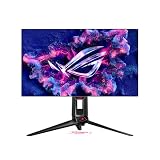
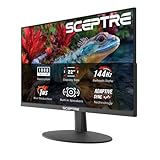
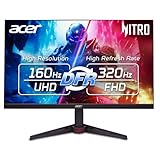
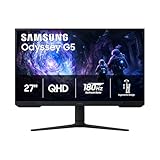
Recommended Gaming Monitors
As an Amazon Associate we earn from qualifying purchases at no extra cost to you.


FAQ
Does OLED burn-in actually happen on gaming monitors in 2026?
It can, but it’s much less common than early OLED TV reports suggested. Modern gaming OLED monitors implement automatic pixel refreshers (running during standby), logo brightness compensation, and screen shift functions. In real-world gaming use at normal daily hours (4–8 hours), burn-in typically takes 3–5 years to become visible if it occurs at all. Rotating between multiple games, using the monitor for varied content, and enabling screen savers dramatically reduce risk. It’s a real limitation to be aware of, not necessarily a dealbreaker.
Is QD-OLED better than WOLED for gaming?
Yes, in most measurable ways. QD-OLED (Samsung Display’s technology) adds a quantum dot color conversion layer over a blue OLED emitter, resulting in wider color gamut, higher peak brightness, and better color volume than traditional WOLED (LG Display’s white OLED with color filters). WOLED panels remain excellent and are found in many top gaming monitors, but QD-OLED represents the current state-of-the-art in OLED gaming display technology. Both are significantly better than LCD-based alternatives for dark-room gaming.
What refresh rate do I need for competitive gaming?
For casual and single-player gaming, 144Hz is the sweet spot — the jump from 60Hz is enormous, and diminishing returns set in past 165Hz for most players. For competitive gaming (CS2, Valorant, Apex Legends), 240Hz+ provides a meaningful advantage in fast-target tracking and input latency perception. OLED panels at 240Hz+ combine fast refresh with the 0.1ms response time advantage, making them the preferred choice for serious competitive players. QLED at 240Hz IPS is a strong alternative that costs significantly less.
Is a mini-LED QLED monitor a good compromise between QLED and OLED?
Mini-LED QLED is an excellent compromise for bright-room use. Modern mini-LED monitors with 1000+ dimming zones get close to OLED contrast performance in most gaming scenarios while hitting 1500–2000 nits peak brightness that no OLED matches. The remaining disadvantages versus OLED are dimming zone halos in very dark scenes and slightly slower pixel response time. For users who need high brightness and good contrast without burn-in risk, mini-LED QLED is the strongest middle-ground option in 2026.
Which is better for HDR gaming — QLED or OLED?
For HDR in a dark room: OLED wins. True tone-mapping requires genuinely dark blacks to make bright highlights pop — OLED delivers this naturally. For HDR in a bright room: mini-LED QLED wins. Higher sustained full-screen brightness means HDR highlights remain visible against ambient light. The best HDR gaming experience overall is an OLED panel in a light-controlled room — this is the setup professional gaming monitor reviewers consistently rate highest for pure HDR image quality.
Final Verdict
In 2026, OLED is the superior gaming display technology for image quality in controlled lighting conditions. Infinite contrast, 0.1ms response time, and per-pixel precision create a gaming visual experience that QLED cannot match. If you can control your room’s ambient light and game across a variety of titles, an OLED monitor will deliver the best image quality currently available.
QLED earns its place as the practical recommendation for gamers who game in bright rooms, need sustained high brightness for HDR, want zero burn-in risk, or are working within a tighter budget. Mini-LED QLED has narrowed the gap significantly — for the right user, a 2000-nit mini-LED panel is a genuinely compelling alternative to OLED.
Check the recommended monitors above for our current picks across both technologies at every price point, updated for 2026 panel availability.
Related Articles
Looking for more on this topic? Browse the hand-picked guides below — each one applies the same scoring rubric used in this review.
Frequently Asked Questions
Which technology looks better for gaming?
OLED emits light per pixel, giving perfect blacks, infinite contrast and near-instant response measured in microseconds, which produces exceptionally clean motion. QLED uses an LED backlight with quantum dots and Mini LED zones, delivering much higher brightness but visible blooming around bright objects on dark backgrounds. In a dark room OLED wins clearly.
Does room lighting change the answer?
Yes, decisively. In a bright room with windows behind you, a Mini LED QLED at 1500 nits or more retains punchy highlights and resists reflections better, while OLED contrast advantages are washed out by ambient light. Match the panel to your room rather than to benchmark charts taken in a blacked-out test lab.
How serious is OLED burn-in for gamers?
The risk applies to static elements such as health bars, minimaps and taskbars displayed for thousands of hours at high brightness. Modern panels counter it with pixel shifting, logo dimming and periodic compensation cycles, and most manufacturers now include burn-in cover in the warranty. Vary content, hide taskbars and avoid maximum brightness to be safe.
Is OLED good as a PC monitor?
It is excellent for motion clarity, but the non-standard subpixel arrangements used by QD-OLED and WOLED can cause slight colour fringing on small text at close viewing distances. Recent panels have improved this considerably. If you read a lot of text at a desk, view one in person or choose a higher pixel density model.
Which offers better value?
QLED is cheaper at every size and dominates the large-screen market above 75 inches, making it the better choice for a big living room display on a budget. OLED costs more but delivers a visibly superior image at 42 to 65 inches. Decide by room brightness, screen size and how much you value contrast.