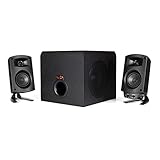
The Klipsch ProMedia 2.1 is one of the longest-running flagship-tier PC speaker systems in the category, and one of only a small handful to carry THX certification on the desktop. It is a powered 2.1 system, with two satellite speakers featuring Klipsch’s signature horn-loaded tweeter design and a large, dedicated subwoofer that sits on the floor. The price (around $250 to $300 depending on retailer) puts the ProMedia firmly in the premium tier, well above the Logitech Z313 and Z623 in this guide. This Klipsch ProMedia 2.1 THX review covers the sound quality and bass response, connectivity and controls, build, setup, who they suit and a verdict.


As an Amazon Associate we earn from qualifying purchases. Product prices and availability are accurate as of the date/time indicated.
🛒 Best Price Today on Amazon
Prime members get fast, free shipping on everything above, plus member-only deals. New members get a 30-day free trial — cancel anytime.
As an Amazon Associate we earn from qualifying purchases.


![[Upgraded] Computer Speakers for Desktop PC, USB Plug-n-Play, External Speakers for Laptop, Mini PC Sound Bar with Stereo Loud Sound, Enhanced Bass, Compatible with Windows, macOS, ChromeOS, Linux](https://m.media-amazon.com/images/I/416h3bKRiuL._SL160_.jpg)


Klipsch ProMedia 2.1 at a Glance
| Feature | Specification |
|---|---|
| Configuration | 2.1 THX-certified (two satellites + dedicated subwoofer) |
| Total power output (RMS / Peak) | 200W Peak (manufacturer specified) |
| Driver size | 3-inch midrange + horn-loaded tweeter per satellite; 6.5-inch dedicated subwoofer |
| Frequency response | 31Hz – 20kHz (manufacturer specified) |
| Connectivity | 3.5mm analogue input; mains power |
| Controls | Front-mounted volume / bass control on right satellite; headphone jack |
| Headphone output | Yes (on right satellite) |
| Subwoofer | Yes — large, dedicated mains-powered subwoofer |
| Approx. price | Around $270 |
Sound Quality & Bass Response
Before getting into the specifics of this speaker system it is worth a brief refresher on the technical choices that shape any PC speaker review: channel configuration (2.0 versus 2.1), power delivery (USB-bus power versus mains power) and connection type (3.5mm analogue, USB digital or Bluetooth). A 2.0 system consists of two stereo satellite speakers with the bass and treble drivers contained within each cabinet — simple, tidy and the right answer for the majority of desk setups where the speakers sit either side of a monitor. A 2.1 system adds a dedicated subwoofer, which usually lives on the floor and reproduces the lowest frequencies. The advantage is genuine low-end extension for games, films and electronic music; the trade-off is desk and floor footprint plus extra cabling. Most office and casual-gaming users are well served by a competent 2.0 set; gamers and film viewers who want chest-thumping bass benefit from 2.1.
Power matters too. USB-bus-powered speakers — the Amazon Basics Stereo, Logitech S150 and original Creative Pebble belong here — draw their power from the computer’s USB port and produce modest, near-field volume that suits a single user at a desk. Mains-powered speakers (such as the Edifier R1280T, Logitech Z313 and Klipsch ProMedia 2.1) draw from a wall outlet and can drive much louder, fuller sound, with room to fill a small or medium room. As a rule, USB-powered 2.0 sets sit in the budget tier and prioritise convenience; mains-powered 2.0 and 2.1 sets occupy the mid and upper tiers and prioritise sound quality and headroom. The Creative Pebble V2 sits in between — USB-C bus-powered but with a higher 8W RMS rating than the original Pebble.
Finally, connectivity. The traditional PC speaker input is a single 3.5mm analogue jack, which works with any computer, console, phone or tablet with a headphone output. USB speakers add a digital audio path, bypassing the PC sound card and often acting as a USB sound card themselves. Bluetooth, where present, allows wireless playback from a phone or tablet, which is useful when the same speakers are used for music as well as PC audio — the Edifier R1280T is a good example of a desk speaker that adds RCA inputs but keeps to wired connections. A headphone output on the speaker unit is a quietly important convenience: a forward-facing 3.5mm jack lets you plug headphones into the speakers themselves rather than reaching behind the PC each time you want a private listening session.
The ProMedia 2.1 is the premium 2.1 reference point in this guide and the only THX-certified set in the list. The most distinctive sonic feature is the horn-loaded tweeter design on each satellite — Klipsch’s signature acoustic approach, which delivers high-frequency clarity, precision and dynamic punch that conventional dome-tweeter satellites cannot match. The result is detail and presence that is genuinely above the rest of the field. The dedicated 6.5-inch subwoofer extends the system down to a manufacturer-claimed 31Hz, which is meaningfully deeper than any other speaker in this guide and is the basis for the THX certification — chest-thumping film and game low-end with the precision and integration that the THX standard demands. The mid-range, handled by the 3-inch satellite midrange driver, is full and articulate. For games, films, music and serious desktop listening alike, the ProMedia delivers a level of performance that the budget and mid-tier rivals in this guide simply do not approach. The wider premium category is covered in our best THX-certified speakers guide.
Connectivity & Controls
Connectivity is relatively traditional for a system this premium: a 3.5mm analogue input feeds audio in from the PC, laptop, phone, tablet or console. There is no Bluetooth, no USB audio path and no RCA on the standard ProMedia 2.1 — Klipsch’s design priority is sound quality and signal purity from a clean analogue input rather than feature breadth. Controls live on the front of the right satellite: a volume dial, a bass-level dial and a forward-facing 3.5mm headphone jack. The headphone jack on a flagship system is genuinely useful, and the front-mounted bass control allows easy tuning of subwoofer level to taste without diving into software.
Build & Aesthetics
This is where the ProMedia justifies the price step over the budget 2.1 systems in this guide. The satellites are substantial, with the signature Klipsch copper-colour tweeter horn visible at the top of each cabinet — visually distinctive and unmistakably Klipsch on the desk. Cabinet construction feels solidly built rather than budget plastic, and the design has aged well across a long sales life. The dedicated subwoofer is large and heavy — a serious enclosure with a side-firing 6.5-inch driver, intended to sit on the floor near the desk. The overall impression on the desktop is of a flagship PC speaker system rather than a glorified budget set, and the ProMedia’s longevity in the market is itself evidence that buyers consistently rate the build and sound.
Setup & Placement
Setup is straightforward despite the premium status. Connect the satellite cables to the subwoofer (the sub contains the amplification for the whole system, as with most powered 2.1 designs), run the 3.5mm cable from the satellites to the PC headphone output, plug the subwoofer into mains and switch on. Placement matters: the satellites benefit from being symmetrical either side of the monitor and angled slightly inward toward the listening position, close to ear height. The subwoofer should sit on a firm floor surface — not on a thick carpet — and is happy roughly between or to one side of the seated listening position. Allow the rear-ported subwoofer a small amount of breathing space behind it. Compare with budget 2.1 options in our best 2.1 PC speakers guide.
Who It’s For
The ProMedia 2.1 is for the buyer who wants flagship-tier 2.1 desktop sound, values the THX certification and Klipsch horn-loaded tweeter design and is willing to spend significantly more than a Logitech Z313 or Z623 to get there. If you spend serious time gaming, watching films or listening to music on a desk and want a single 2.1 system that genuinely competes with separates-grade audio in clarity and bass depth, the ProMedia is the defining premium choice in this guide. It is not for buyers chasing the absolute cheapest 2.1 (the Z313 is the right answer there), not for buyers who want Bluetooth (no major-brand THX-certified 2.1 is built around wireless) and not for buyers who can stretch only to a bookshelf 2.0 (the Edifier R1280T is the obvious choice in that case). For premium 2.1, the ProMedia remains the obvious answer.
Pros and Cons
Pros: THX-certified premium 2.1 sound; signature Klipsch horn-loaded tweeter design for distinctive high-frequency clarity; 31Hz – 20kHz response with genuine low-end reach; substantial dedicated subwoofer; forward-facing headphone jack; long-proven reliability.
Cons: Premium price compared with budget 2.1 rivals; no Bluetooth or USB audio; cabinet styling is distinctive rather than universally subtle; the subwoofer is large and demands genuine floor space.
Verdict
At around $270 the Klipsch ProMedia 2.1 is the defining premium 2.1 PC speaker system, and the only THX-certified set on most buyers’ shortlists. It justifies the price step over the Logitech Z313 and Z623 with a level of sonic clarity, low-end reach and build quality that the budget 2.1 systems do not approach, and the design has earned its longevity in the market on consistent delivery rather than marketing. Buyers who want flagship desktop sound with a single integrated 2.1 system will find the ProMedia is exactly what the category is built around. Wider premium coverage is in our best THX-certified speakers guide.
Frequently Asked Questions
Why is the Klipsch ProMedia 2.1 THX-certified?
It meets the THX certification standard for clarity, dynamic range and consistency, which on a desktop 2.1 system means the speakers can reproduce reference-level film and game audio with the precision and low-end reach that THX requires.
How deep does the Klipsch ProMedia subwoofer go?
The manufacturer specifies the system’s frequency response down to 31Hz, which is meaningfully deeper than any of the budget or mid-tier rivals in this guide.
Does the Klipsch ProMedia 2.1 have Bluetooth?
No. The standard ProMedia 2.1 is wired-only, with a single 3.5mm analogue input. Klipsch’s design priority is sound quality and signal purity from a clean analogue input.
Is the Klipsch ProMedia 2.1 worth the price over the Logitech Z623?
For buyers who value THX certification, the horn-loaded Klipsch tweeter design and a fuller premium build, yes. For buyers who simply want a loud 2.1 system at a lower price, the Logitech Z623 in this guide remains very capable.
More PC Speaker Reviews
- Creative Pebble V2 USB-C Computer Speakers Review
- Logitech Z623 400W 2.1 THX Speaker System Review
- Amazon Basics Stereo 2.0 PC Speakers Review (USB-Powered)
- Creative Pebble 2.0 Channel Stereo Speakers Review
- Logitech S120 2.0 Stereo Speakers Review
- Edifier R1280T Powered Bookshelf Speakers Review (2.0)
- Amazon Basics USB-Powered Computer Speakers Review
- Logitech Z313 2.1 Multimedia Speaker System Review
Affiliate Disclosure: As an Amazon Associate, we earn from qualifying purchases. If you click a link and make a purchase, we may earn a small commission at no extra cost to you. Prices and availability are accurate as of publication and may change.
Related Articles
Looking for more on this topic? Browse the hand-picked guides below — each one applies the same scoring rubric used in this review.