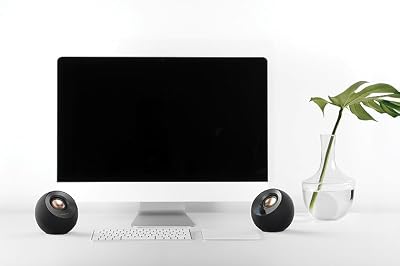
The Creative Pebble V2 is the modernised upgrade to the original Creative Pebble — same iconic spherical cabinets, same 45-degree upward-angled drivers, but with a step up in power (8W RMS, double the original) and a switch from old micro-USB power to a contemporary USB-C connection. The price stays close to the original (around $40), which makes the V2 the natural step up for buyers who have heard the original and decided they want a little more headroom. This Creative Pebble V2 review covers the sound quality and bass response, connectivity and controls, build, setup, who they are for and a verdict.

Creative Pebble V2, 2.0 USB Desktop Stereo Speakers for PC/Laptop, Black | 2.0 desktop speakers, USB-Powered, Compact, Stereo, Desktop Speakers, PC Audio, Minimal Design, Laptop Speakers, Black


As an Amazon Associate we earn from qualifying purchases. Product prices and availability are accurate as of the date/time indicated.
🛒 Best Price Today on Amazon
Prime members get fast, free shipping on everything above, plus member-only deals. New members get a 30-day free trial — cancel anytime.
As an Amazon Associate we earn from qualifying purchases.


Creative Pebble V2 at a Glance
| Feature | Specification |
|---|---|
| Configuration | 2.0 stereo (two satellites, no subwoofer) |
| Total power output (RMS / Peak) | 8W RMS / 16W Peak |
| Driver size | 2.25-inch full-range drivers, angled 45 degrees up |
| Frequency response | 100Hz – 17kHz (manufacturer specified) |
| Connectivity | 3.5mm analogue input; USB-C for power |
| Controls | Right-cabinet rotary volume / power dial |
| Headphone output | No |
| Subwoofer | No (2.0 stereo design) |
| Approx. price | Around $40 |
Sound Quality & Bass Response
Before getting into the specifics of this speaker system it is worth a brief refresher on the technical choices that shape any PC speaker review: channel configuration (2.0 versus 2.1), power delivery (USB-bus power versus mains power) and connection type (3.5mm analogue, USB digital or Bluetooth). A 2.0 system consists of two stereo satellite speakers with the bass and treble drivers contained within each cabinet — simple, tidy and the right answer for the majority of desk setups where the speakers sit either side of a monitor. A 2.1 system adds a dedicated subwoofer, which usually lives on the floor and reproduces the lowest frequencies. The advantage is genuine low-end extension for games, films and electronic music; the trade-off is desk and floor footprint plus extra cabling. Most office and casual-gaming users are well served by a competent 2.0 set; gamers and film viewers who want chest-thumping bass benefit from 2.1.
Power matters too. USB-bus-powered speakers — the Amazon Basics Stereo, Logitech S150 and original Creative Pebble belong here — draw their power from the computer’s USB port and produce modest, near-field volume that suits a single user at a desk. Mains-powered speakers (such as the Edifier R1280T, Logitech Z313 and Klipsch ProMedia 2.1) draw from a wall outlet and can drive much louder, fuller sound, with room to fill a small or medium room. As a rule, USB-powered 2.0 sets sit in the budget tier and prioritise convenience; mains-powered 2.0 and 2.1 sets occupy the mid and upper tiers and prioritise sound quality and headroom. The Creative Pebble V2 sits in between — USB-C bus-powered but with a higher 8W RMS rating than the original Pebble.
Finally, connectivity. The traditional PC speaker input is a single 3.5mm analogue jack, which works with any computer, console, phone or tablet with a headphone output. USB speakers add a digital audio path, bypassing the PC sound card and often acting as a USB sound card themselves. Bluetooth, where present, allows wireless playback from a phone or tablet, which is useful when the same speakers are used for music as well as PC audio — the Edifier R1280T is a good example of a desk speaker that adds RCA inputs but keeps to wired connections. A headphone output on the speaker unit is a quietly important convenience: a forward-facing 3.5mm jack lets you plug headphones into the speakers themselves rather than reaching behind the PC each time you want a private listening session.
The Pebble V2’s headline improvement over the original Creative Pebble is the doubled power rating — 8W RMS against 4.4W — which translates into a more confident performance at desk distance and meaningfully more headroom before the small drivers lose composure. The sound character is the familiar Pebble tuning: warm, full and surprisingly pleasant for a USB-bus-powered 2.0 set, with the 45-degree upward-angled drivers projecting sound directly toward the listener at typical seated desk height. The published 100Hz lower bound is unchanged — the V2 does not extend to true sub-bass any more than the original — but within the 100Hz to 17kHz range the V2 plays louder and more confidently than the original Pebble in the same range. For voice content, casual music and gaming at desk distance, the V2 is one of the most engaging USB-bus 2.0 sets available. For genuine film-grade low end, look at the Logitech Z313 or Z623 in this guide. The wider USB tier is covered in our best USB-powered speakers guide.
Connectivity & Controls
Connectivity is where the V2 modernises the formula. The 3.5mm analogue audio input is unchanged from the original — a single jack into the PC, laptop, phone or console — but power moves from micro-USB on the original to USB-C on the V2, which is the right call for 2026 desks where most peripherals have already moved to USB-C and the older micro-USB connector has become awkward. USB-C is also more durable as a daily-use connection. There is no USB digital audio path (the USB is for power only), no Bluetooth and no RCA on the V2 — for wireless Pebble buyers, look at the newer Pebble Pro variants in the Creative line. Controls are unchanged: the right-cabinet rotary dial combines on/off and volume, easy to find by touch. There is no headphone passthrough.
Build & Aesthetics
The V2 inherits the iconic spherical Pebble design that earned the original its reputation, and the look is as deliberately tidy on a modern desk as it has always been. The matte black finish is unobtrusive, the cabinets are small enough to sit close to a monitor base without crowding the desk, and the 45-degree upward driver angle is integral to the cabinet shape rather than a separately moulded stand. Build is plastic but solid, and the V2 maintains the original’s clean aesthetic without changing what worked. The USB-C connection at the back of the right cabinet is the only externally visible difference from the original. For desks where styling and footprint matter, the Pebble V2 remains one of the most visually polished budget options in this guide.
Setup & Placement
Setup is the same zero-fuss process as the original Pebble. Plug the USB-C cable into a free port on the PC, laptop, USB hub or USB-C charger (the V2 accepts power from any standard USB-C source, which is a useful flexibility), plug the 3.5mm jack into the PC headphone output, turn the right-cabinet dial on, listen. There is no driver to install, no software, no pairing. Placement-wise, follow the same rules as the original — symmetrical either side of the monitor, with the upward-angled drivers pointing toward where your head sits when you are seated. The compact cabinets disappear on a tidy desk and the USB-C cable can run cleanly to a USB-C charger on a power strip if PC USB ports are full. Wider category coverage is in our best PC speakers guide.
Who It’s For
The Pebble V2 is for the buyer who liked the design and approach of the original Creative Pebble but wants a small step up in power and modern USB-C connectivity. If you spend most of your time on a desk, listen mainly to voice content, light music and casual gaming, and want the most polished modern budget USB 2.0 set on the market, the V2 is squarely your choice. It is not for buyers who want film-grade low end — for that, look at the Logitech Z313 or Z623 — and it is not for buyers who want Bluetooth, in which case the Pebble Pro variants in the wider Creative line are a better starting point. For the modern, tidy budget desk, the V2 is one of the best choices available. Compare with bigger systems in our best gaming speakers guide.
Pros and Cons
Pros: Doubled power over the original Pebble (8W RMS / 16W Peak); modern USB-C power connection; same warm, surprising sound character that made the original Pebble popular; same iconic upward-angled spherical design; effectively zero-configuration setup.
Cons: Still 100Hz lower bound — no real sub-bass; no Bluetooth (look at Pebble Pro); no USB digital audio path; no headphone passthrough; modest total volume limits use to near-field desk listening.
Verdict
At around $40 the Creative Pebble V2 is the natural modern upgrade to the original Pebble — same iconic shape, same warm sound character, more power, modern USB-C connectivity. It is one of the most polished budget USB 2.0 sets available in 2026 and a sensible choice for buyers who want the original’s strengths with a small step up in volume headroom and connector modernity. Buyers who want wireless playback should look at the Pebble Pro variants; buyers who want real bass should look at the 2.1 options in this guide. For the modern, tidy budget desk, the V2 earns the same easy recommendation that has carried the Pebble line for years. Wider category coverage is in our best budget PC speakers guide.
Frequently Asked Questions
How is the Creative Pebble V2 different from the original Pebble?
The V2 doubles the power output to 8W RMS (16W peak) versus the original’s 4.4W RMS, and replaces the original’s micro-USB power connection with modern USB-C. The audio input, cabinet shape and driver angle are unchanged.
Does the Creative Pebble V2 have Bluetooth?
No. The V2 is wired-only with a 3.5mm analogue input and USB-C for power. For Bluetooth, look at the Pebble Pro variants in the Creative line.
Can the Pebble V2 be powered from a USB-C charger?
Yes. The V2 accepts power from any standard USB-C source — a PC port, a USB-C hub or a USB-C wall charger — which is a useful flexibility when PC USB ports are full.
Is the Pebble V2 louder than the original?
Yes, meaningfully. The doubled RMS power translates into a more confident performance at desk distance and more headroom before the small drivers lose composure.
More PC Speaker Reviews
- Logitech Z623 400W 2.1 THX Speaker System Review
- Amazon Basics Stereo 2.0 PC Speakers Review (USB-Powered)
- Creative Pebble 2.0 Channel Stereo Speakers Review
- Logitech S120 2.0 Stereo Speakers Review
- Edifier R1280T Powered Bookshelf Speakers Review (2.0)
- Amazon Basics USB-Powered Computer Speakers Review
- Logitech Z313 2.1 Multimedia Speaker System Review
- Logitech Z130 PC Speakers Stereo 2.0 Review
Affiliate Disclosure: As an Amazon Associate, we earn from qualifying purchases. If you click a link and make a purchase, we may earn a small commission at no extra cost to you. Prices and availability are accurate as of publication and may change.
Related Articles
Looking for more on this topic? Browse the hand-picked guides below — each one applies the same scoring rubric used in this review.