- Top Pick: [Upgraded] Computer Speakers for Desktop PC, USB Plug-n-Play, External Speakers for Laptop, Mini PC Sound Bar with Stereo Loud Sound, Enhanced Bass, Compatible with Windows, macOS, ChromeOS, Linux
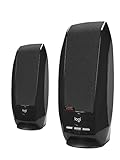
- Best Value: Logitech S150 USB Speakers with Digital Sound
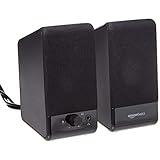
- Premium Choice: Amazon Basics Stereo 2.0 Speakers for PC or Laptop with Volume Control, 3.5mm Aux Input, USB-Powered, 1 Pair, Black
‘USB speakers’ usually means one of two things: speakers that draw their power over a USB port (so there is no separate power brick), or speakers that take their audio digitally over USB (a built-in DAC). It is worth being clear which you want, because in this affordable desktop class most compact speakers are USB-powered while still taking their audio over a 3.5mm cable or Bluetooth — true USB-audio input is rarer. This guide rounds up the best USB-friendly speakers in 2026 for a PC or laptop, and we flag honestly how each one connects so you are not surprised in the box.
- Best USB Speakers at a Glance
- 1. Amazon Basics Stereo 2.0 Speakers for PC or Laptop with Volume Control, 3.5mm Audio
- 2. Creative Labs Pebble 2.0 Channel Computer Stereo Speakers – Black
- 3. Edifier R1280T Powered Bookshelf Speakers – 2.0 Active Near Field Studio Monitors
- 4. Bose Companion 2 Series III Multimedia Speakers – for PC (with 3.5mm AUX & PC Input)
- 5. Anker Soundcore 2 Portable Bluetooth Speaker with Stereo Sound, Bluetooth 5
- 6. Anker Soundcore Upgraded Bluetooth Speaker with IPX5 Waterproof, Stereo Sound
- How to Choose USB Speakers
- Frequently Asked Questions
- Related Guides
- Related Articles
- Related Guides
Our picks were chosen on what matters for a tidy desktop audio setup: a clean USB-powered design where possible, sound quality for the money, a connection that suits a computer, and value. We have included a deliberate spread, from around $21 up to around $120, and we note where a model is really a 3.5mm-powered or Bluetooth speaker rather than a USB one. A couple of entries here are primarily Bluetooth or 3.5mm devices that merely charge or power over USB — useful, but not ‘USB audio’ — and we say so plainly. Below is an at-a-glance comparison of all six, then a closer look at each and a buyer’s guide built around USB power, USB audio and connectivity.
As an Amazon Associate we earn from qualifying purchases at no extra cost to you.
![[Upgraded] Computer Speakers for Desktop PC, USB Plug-n-Play, External Speakers for Laptop, Mini PC Sound Bar with Stereo Loud Sound, Enhanced Bass, Compatible with Windows, macOS, ChromeOS, Linux](https://m.media-amazon.com/images/I/416h3bKRiuL._SL160_.jpg)




🛒 Best Price Today on Amazon
Prime members get fast, free shipping on everything above, plus member-only deals. New members get a 30-day free trial — cancel anytime.
Best USB Speakers at a Glance
| Speaker | Best For | Standout Spec | Approx Price |
|---|---|---|---|
| Amazon Basics 2.0 PC Speakers | Simple USB-powered desktop | USB-powered, 3.5mm audio | around $16 |
| Creative Pebble 2.0 | Best USB-powered value | USB-powered, 3.5mm audio | around $21 |
| Edifier R1280T Bookshelf | Best sound (not USB) | Active 2.0, RCA/AUX in | around $120 |
| Bose Companion 2 Series III | Premium desktop audio | 3.5mm + PC input | around $99 |
| Anker Soundcore 2 Portable | USB-charged Bluetooth | Bluetooth 5, USB charging | around $30 |
| Anker Soundcore (IPX5) | Rugged USB-charged Bluetooth | IPX5, USB charging | around $25 |
1. Amazon Basics Stereo 2.0 Speakers for PC or Laptop with Volume Control, 3.5mm Audio

Amazon Basics Stereo 2.0 Speakers for PC or Laptop with Volume Control, 3.5mm Aux Input, USB-Powered, 1 Pair, Black


As an Amazon Associate we earn from qualifying purchases. Product prices and availability are accurate as of the date/time indicated.
The Amazon Basics 2.0 desktop speakers are the simplest genuine USB pick here, and they fit the USB brief well: they draw their power over USB from your computer, so there is no wall adapter, and take their audio over a standard 3.5mm cable. A front volume dial keeps control easy. At a rock-bottom price they are the no-fuss way to add sound to a PC or laptop.
For the USB use-case this is the cleanest budget answer: plug the USB lead into a spare port for power and the 3.5mm into your headphone jack for audio, and you are done — one fewer cable to the wall and nothing to charge. The sound is modest, aimed at everyday system audio, YouTube and casual gaming rather than critical listening, but the compact footprint suits a crowded desk. To be precise about the connection: this is USB-powered, not USB-audio, so the music still travels over the 3.5mm cable. As an affordable, tidy, USB-powered desktop speaker, it does exactly what most people mean by ‘USB speakers.’
Pros: USB-powered (no wall plug), simple 3.5mm audio, front volume control, very affordable.
Cons: USB carries power only, not audio; modest sound for casual use.
2. Creative Labs Pebble 2.0 Channel Computer Stereo Speakers – Black

Creative Pebble 2.0, USB Desktop Stereo Speakers for PC/Laptop, Black | USB-Powered, 2.0 Speaker, Compact, Stereo, PC Speakers, Laptop Speakers, Minimal Design, Desktop Audio, Black


As an Amazon Associate we earn from qualifying purchases. Product prices and availability are accurate as of the date/time indicated.
The Creative Pebble 2.0 is the best USB-powered value pick, and a deserved desktop favourite. These compact spherical speakers are powered entirely over USB and take their audio over 3.5mm, with up-firing drivers angled toward you for clearer sound than their tiny size suggests. At around $21 they punch well above their price.
For the USB use-case the Pebble nails the brief: a single USB cable supplies power (no adapter, nothing to charge) while the 3.5mm lead handles audio, keeping a desk clean and uncluttered. The angled drivers and surprisingly warm tuning make them noticeably more pleasant than typical bundled speakers for music, video and casual gaming. As with the Amazon Basics set, be clear that this is USB-powered rather than USB-audio — the sound arrives over 3.5mm — but for a clean, great-sounding, USB-powered desktop pair at a tiny price, the Pebble is the standout and an easy first recommendation.
Pros: USB-powered, angled drivers for clear sound, warm tuning, outstanding value, tidy design.
Cons: Audio is 3.5mm, not USB; limited bass and no Bluetooth.
3. Edifier R1280T Powered Bookshelf Speakers – 2.0 Active Near Field Studio Monitors

Edifier R1280T Powered Bookshelf Speakers -2.0 Near Field Studio Monitor | 2.0 Active Near Field Studio Monitor Speaker - Wooden Enclosure - 42 Watts RMS Power




As an Amazon Associate we earn from qualifying purchases. Product prices and availability are accurate as of the date/time indicated.
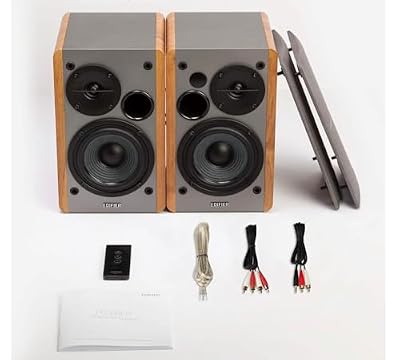
The Edifier R1280T is the best-sounding pick on this list by a clear margin — but it is important to be honest that it is not a USB speaker. These are active 2.0 bookshelf monitors with their own amplifier and power supply, taking audio over dual RCA and AUX inputs, with bass and treble controls and a remote. At around $120 they are the premium, audiophile-leaning option here.
We include them because anyone shopping for desktop speakers deserves to know the trade-off: if sound quality is your real priority, the R1280T’s larger drivers, wood cabinets and proper amplification deliver a fuller, richer sound than any USB-powered compact set can. The catch for this guide is the connection — they plug into the wall for power and accept RCA/AUX, not USB, so they do not satisfy a strict USB-power or USB-audio requirement. If you can live with a power cable and a 3.5mm-to-RCA adapter from your PC, they are the clear sound upgrade; if you specifically need USB, choose the Pebble or Amazon Basics instead.
Pros: Excellent full sound, larger drivers, bass/treble controls and remote, true bookshelf audio.
Cons: Not a USB speaker — mains-powered with RCA/AUX inputs; larger and pricier.
4. Bose Companion 2 Series III Multimedia Speakers – for PC (with 3.5mm AUX & PC Input)

HyperX Cloud III – Wired Gaming Headset, PC, PS5, Xbox Series X|S, Angled 53mm Drivers, Spatial Audio, Memory Foam, Durable Frame, Ultra-Clear 10mm Mic, USB-C, USB-A, 3.5mm – Black




As an Amazon Associate we earn from qualifying purchases. Product prices and availability are accurate as of the date/time indicated.
The Bose Companion 2 Series III is the premium desktop pick, with the polished sound Bose is known for — but like the Edifier, it connects via 3.5mm rather than USB. These compact powered speakers take a 3.5mm AUX input plus a second PC input and run from their own power supply, delivering clear, room-filling audio from a small footprint. At around $99 they are a refined choice.
For desktop listening they are excellent: Bose’s tuning gives clean mids and more presence than the price and size imply, and the dual inputs let you keep both a computer and another source connected. The honest caveat for this guide is the connection — audio arrives over 3.5mm and power comes from the wall, so these are not USB speakers in either sense. If you want premium desktop sound and have a 3.5mm output and a spare outlet, they are a lovely upgrade; if a USB connection is a hard requirement, the USB-powered Pebble or Amazon Basics are the right call instead.
Pros: Refined Bose sound, clean mids, dual inputs, compact premium desktop design.
Cons: Not USB — 3.5mm audio and mains power; pricey for the size.
5. Anker Soundcore 2 Portable Bluetooth Speaker with Stereo Sound, Bluetooth 5

Anker soundcore 2 Portable Bluetooth Speaker, 24-Hour Playtime, IPX7 | 12W Stereo Sound, Wireless Stereo Pairing, Bluetooth 6, Bassup, Wireless Speaker for Home, Shower, Outdoors, Travel, Camping




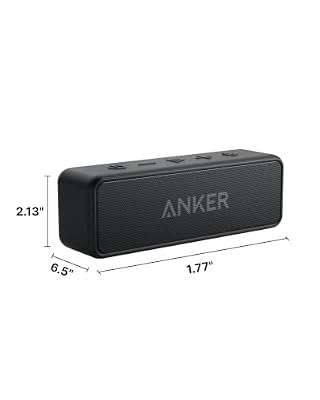
As an Amazon Associate we earn from qualifying purchases. Product prices and availability are accurate as of the date/time indicated.
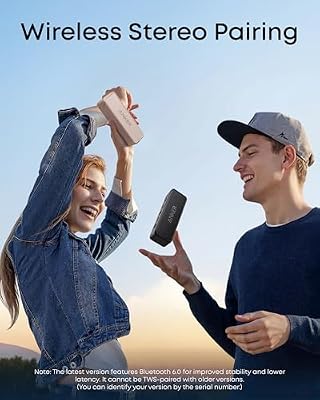
The Anker Soundcore 2 is a portable Bluetooth speaker that earns a place here on a technicality worth being upfront about: it charges over USB but takes its audio wirelessly over Bluetooth 5, not over a USB-audio connection. It is a rugged, battery-powered stereo speaker with strong bass for its size and long battery life. At around $30 it is a versatile little unit.
For a desk it is a flexible option if your priority is going wireless and portable rather than running a wired USB feed: pair it to your PC or phone over Bluetooth, top it up from any USB port when the battery runs low, and carry it elsewhere when you are done. The sound is fun and bass-forward for casual listening. But to be precise for this guide: the USB port here is for charging, and audio is Bluetooth — so it is not a USB-audio speaker. If you want wireless flexibility and USB charging it is great; if you need a wired USB connection to your computer, look at the Pebble or Amazon Basics.
Pros: Bluetooth 5 wireless, USB charging, strong bass for its size, portable and rugged.
Cons: Audio is Bluetooth, not USB; USB is charge-only; not a wired desktop speaker.
6. Anker Soundcore Upgraded Bluetooth Speaker with IPX5 Waterproof, Stereo Sound

Anker soundcore Upgraded Bluetooth Speaker, IPX5 Waterproof, Stereo Sound | 24H Playtime, Portable Wireless Speaker for iPhone, Samsung and More


As an Amazon Associate we earn from qualifying purchases. Product prices and availability are accurate as of the date/time indicated.
Rounding out the list is the upgraded Anker Soundcore with IPX5 water resistance — and, like its sibling above, it belongs in the ‘USB-charged Bluetooth’ camp rather than the USB-audio one. It is a rugged, waterproof portable stereo speaker that charges over USB and streams audio over Bluetooth, with a long-lasting battery. At around $25 it is the cheapest wireless option here.
On or off the desk it is a hardy all-rounder: the IPX5 rating shrugs off splashes, the battery lasts for hours, and you can recharge from any USB port before carrying it to the kitchen, garden or gym. For a computer it works fine as a wireless speaker over Bluetooth. The honest point for this guide is the same as before — USB is used for charging, and the audio is Bluetooth, so this is not a USB-audio device. If rugged wireless portability with USB charging suits you it is a bargain; if you specifically need wired USB audio to a PC, the USB-powered Pebble or Amazon Basics are the better match.
Pros: IPX5 waterproof, Bluetooth wireless, USB charging, long battery, cheapest wireless pick.
Cons: Bluetooth audio (not USB); USB charge-only; portable rather than a desktop speaker.
How to Choose USB Speakers
The first thing to settle is what you actually mean by ‘USB,’ because the word covers two different things. USB-powered speakers draw their electricity from a USB port, so there is no wall adapter — but they often still take their audio over a 3.5mm cable. USB-audio speakers take the sound itself digitally over USB via a built-in DAC. In this affordable class, USB-powered-with-3.5mm-audio is by far the most common arrangement, so decide whether you need true USB audio or simply want to lose the power brick.
Be wary of the label, because plenty of ‘USB’ speakers are really Bluetooth or 3.5mm devices that merely charge or power over USB. On this list, the Amazon Basics set and the Creative Pebble are genuinely USB-powered (audio over 3.5mm); the Anker Soundcore pair are Bluetooth speakers that charge over USB; and the Edifier R1280T and Bose Companion 2 are mains-powered speakers with 3.5mm or RCA inputs and no USB role at all. Knowing which camp a speaker falls into before you buy prevents the classic disappointment of unboxing a ‘USB speaker’ that needs a wall socket.
Next, match the connection to your computer and your priorities. If you want the tidiest possible setup with one fewer cable to the wall, a USB-powered pair like the Pebble plugs into a spare USB port for power and a headphone jack for audio. If you want to go wireless, a Bluetooth unit like the Soundcore frees you from cables entirely and charges from any USB port. And if sound quality outranks cable-tidiness, accept a mains plug and choose proper powered monitors or premium desktop speakers instead.
Finally, weigh sound quality and budget against the form factor. Tiny USB-powered speakers like the Pebble and Amazon Basics are about convenience and a clean desk; they sound good for the size but cannot match larger drivers. If audio fidelity is the goal, the Edifier R1280T’s bookshelf monitors or the Bose Companion 2 deliver a fuller, richer sound — at the cost of needing mains power and a 3.5mm/RCA connection rather than USB. Decide whether USB power, USB audio, wireless freedom or outright sound quality matters most, then pick the speaker here that honestly fits that need.
Frequently Asked Questions
What is the difference between USB-powered and USB-audio speakers?
USB-powered speakers take only their electricity from a USB port and usually receive audio over a separate 3.5mm cable — like the Creative Pebble and Amazon Basics here. USB-audio speakers receive the sound itself digitally over USB through a built-in DAC. Both plug into a USB port, but only USB-audio models carry the music over USB, so check which type you are buying.
Are any of these speakers true USB-audio speakers?
In the strict sense, no — this affordable class is dominated by USB-powered-with-3.5mm-audio designs. The Pebble and Amazon Basics draw power from USB but take audio over 3.5mm; the Anker Soundcore models are Bluetooth speakers that charge over USB; and the Edifier and Bose are mains-powered with 3.5mm/RCA inputs. If you need a built-in USB DAC specifically, look at higher-tier models that list ‘USB audio’ explicitly.
Which speakers here genuinely use a USB connection?
For the cleanest USB experience, the Creative Pebble and the Amazon Basics 2.0 speakers are USB-powered, so they run from a spare USB port with no wall adapter (audio over 3.5mm). The two Anker Soundcore units use USB only to recharge their batteries and stream audio over Bluetooth. The Edifier and Bose do not use USB at all — they need mains power and a 3.5mm or RCA input.
Should I pick USB-powered speakers or Bluetooth for my PC?
Choose USB-powered speakers like the Pebble if you want a permanent, no-fuss desktop pair with one fewer cable to the wall and no battery to manage. Choose a Bluetooth speaker like the Anker Soundcore if you value wireless freedom and want to move the speaker around, accepting that you recharge it over USB and stream audio wirelessly rather than over a wired USB link.
Related Guides
- Best Gaming Speakers
- Best Computer Speakers
- Best Bluetooth Speakers
- Best Gaming Headsets
- Best Soundbars for Desks
- Best Budget Gaming Setup
Affiliate Disclosure: As an Amazon Associate, we earn from qualifying purchases. If you click a link and make a purchase, we may earn a small commission at no extra cost to you. Prices and availability are accurate as of publication and may change.