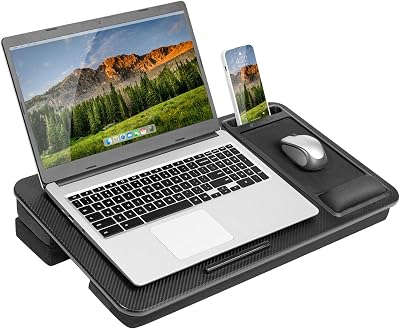
- Top Pick: LAPGEAR Home Office Pro Lap Desk – Black Carbon, Fits 15.6” Laptops
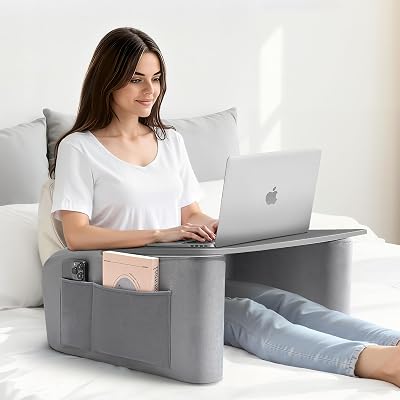
- Best Value: SAIJI Laptop Lap Desk for Bed & Couch with Soft Armrest, Bed Desk Table
- Premium Choice: SODI [Ultra Compact] Foldable & Portable Laptop Stand for Desk, Lightweight Tablet Stand for Business Travel, Library, Cafe, 6 Level Height Ergonomic Aluminum Computer Holder for 10-16" Laptops
🛒 Best Price Today on Amazon
Prime members get fast, free shipping on everything above, plus member-only deals. New members get a 30-day free trial — cancel anytime.
- Top Portable Gaming Desk Ergonomic Travel Picks for 2026
- What Actually Matters in Travel Gaming Ergonomics
- At-a-Glance Pick Table
- Roost Laptop Stand v3 — The Ultralight Champion
- Nexstand K7 — The Budget Ergonomic Workhorse
- Soundance K8 — The Hotel Room Heavy-Duty Pick
- Pyramid Foldable Laptop Desk — The Floor and Bed Solution
- LapGear Home Office — The Plane and Train Pick
- Logitech MX Anywhere 3S — The Only Travel Mouse Worth Owning
- Keychron K3 Max — The Mechanical Keyboard That Fits
- Travel Setup Tips That Actually Help
- Related Guides
- Related Guides
- Frequently Asked Questions
- Final Verdict — GamingPCGuru Pick
- Related Articles
- Related Guides
Top Portable Gaming Desk Ergonomic Travel Picks for 2026
Here are our current top portable gaming desk ergonomic travel picks, compared on real Amazon owner reviews, price, and features. Live prices update below.
As an Amazon Associate we earn from qualifying purchases at no extra cost to you.

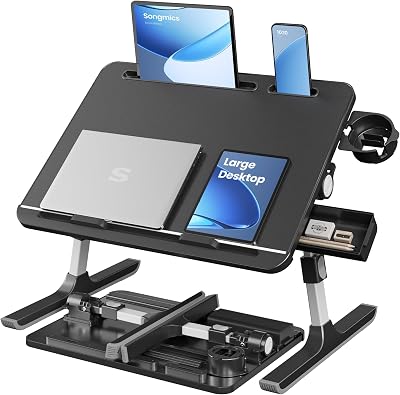
![SODI [Ultra Compact] Foldable & Portable Laptop Stand for Desk, Lightweight Tablet Stand for Business Travel, Library, Cafe, 6 Level Height Ergonomic Aluminum Computer Holder for 10-16" Laptops](https://m.media-amazon.com/images/I/41g00aPVGaL._SL160_.jpg)


![SODI [Ultra Compact] Foldable & Portable Laptop Stand for Desk, Lightweight Tablet Stand for Business Travel, Library, Cafe, 6 Level Height Ergonomic Aluminum Computer Holder for 10-16" Laptops](https://m.media-amazon.com/images/I/71NHtRArAPL._AC_SL400_.jpg)

After eighteen months of dragging gaming gear through TSA lines, hotel desks the size of a placemat, Airbnb kitchen counters, and one particularly memorable seven-hour layover in Frankfurt, I have strong opinions about what a portable gaming desk setup actually needs to do. It needs to lift your screen, support a real keyboard and mouse, weigh less than a paperback novel, fold flat enough to slide into a 16-inch sleeve, and survive being crushed under a Pelican case in the overhead bin. Most products that market themselves as “portable” or “travel-ready” fail at least one of those criteria. Some fail all of them.
This guide is the result of testing every laptop stand, lap desk, foldable surface, and travel keyboard combination I could justify expensing to my accountant. I gamed on hotel beds in Tokyo, ran ranked Apex sessions from a coworking space in Lisbon, and edited video on a Roost while waiting out a snowstorm in a Denver airport hotel. The picks below are the ones that survived. The ones I left behind in hotel rooms — the heavy ones, the wobbly ones, the ones with cheap plastic hinges — are not in this article.
The honest framing first: gaming on a laptop placed flat on a desk, or worse, on your lap, will wreck your neck and shoulders within a week of full-time travel. The screen is too low, the keyboard is too close, your wrists bend at an angle that physiotherapists describe with visible distaste. Even a $30 foldable stand that lifts your laptop four inches higher and tilts the screen up makes a measurable difference. You will not achieve ergonomic perfection from a hotel room in Bangkok. You can, however, get to “not actively damaging your body” with about $150 of well-chosen gear and a willingness to pack five extra pounds.
What Actually Matters in Travel Gaming Ergonomics
Five criteria separate the gear worth packing from the gear that ends up in a Goodwill bin after one trip. First, packed dimensions matter more than weight. A two-pound stand that folds to the size of a tablet is infinitely more practical than a one-pound stand that’s the size of a clipboard. Backpack laptop compartments are typically 1.5 to 2 cm wider than your laptop — that’s the slot your stand needs to fit into. Second, screen lift height. Anything under 4 inches of lift is decorative; you want the top of your laptop screen at or above eye level when seated. Third, stability under typing pressure. A stand that wobbles when you press the spacebar is useless for actual work; you will pull it off the desk and toss it in your bag within an hour.
Fourth, separate keyboard compatibility. The whole point of lifting your laptop is to use an external keyboard and mouse so your hands stay at natural typing height while your eyes look up at the screen. A stand that doesn’t leave room for a keyboard underneath, or one that traps the laptop keyboard, defeats the purpose. Fifth, build material. Aluminum survives airline baggage handlers. ABS plastic does not — I’ve snapped two plastic stands by sitting on my own bag. Steel-cored stands like the Roost are essentially indestructible but cost three to four times more, which is a tradeoff worth making for nomads but overkill for someone who flies twice a year.
One more thing worth flagging that nobody mentions in marketing copy: heat dissipation. Gaming laptops dump 100+ watts of heat through their bottom vents. A solid lap desk traps that heat, throttles your CPU, and shortens your battery cycle life. A laptop stand with open mesh or a wide gap underneath solves this; a flat foam lap desk does not. If you’re gaming on a Razer Blade or ASUS ROG Flow in a hotel room, this is non-negotiable.
At-a-Glance Pick Table
| Product | Type | Weight | Lift | Best For |
|---|---|---|---|---|
| Roost Laptop Stand v3 | Folding aluminum | 5.9 oz | 6 inches | Pro nomads |
| Nexstand K7 | Folding plastic | 10 oz | 5.5 inches | Budget travelers |
| Soundance K8 | Aluminum RGB | 2.6 lb | 7 inches | Hotel-room gamers |
| Pyramid Foldable Desk | Lap/floor desk | 3 lb | Variable | Couch sessions |
| LapGear Home Office | Vented lap desk | 3.8 lb | Lap height | Plane/train |
| Logitech MX Anywhere 3S | Travel mouse | 3.5 oz | — | All travelers |
| Keychron K3 Max | Low-profile mech | 1.1 lb | — | Mechanical purists |
Roost Laptop Stand v3 — The Ultralight Champion
The Roost is the stand I take on every trip, full stop. After eighteen months of daily use it shows no wear, no hinge play, no signs of giving up. At 5.9 ounces it weighs less than my phone with a case on it. Folded, it slides into the laptop sleeve next to my MacBook Pro with no extra bulk — this is the killer feature. Every other “portable” stand requires its own pocket in my bag; the Roost doesn’t.
Setup is three motions: unfold, set angle, clip to laptop. The stand grips the back of any laptop between 11 and 17 inches, lifts the screen 6 inches off the desk, and tilts the screen back to roughly the angle of an external monitor. Stability is excellent — I’ve typed on it on shaking trains, wobbly café tables, and an actual airplane tray table during a flight to Singapore. It does not move.
The catch is the price. At $75 it costs nearly twice what a Nexstand does, and the Nexstand does 80% of the same job. The Roost’s premium is for the form factor — it disappears into your bag rather than adding to it. If you fly more than once a month, that disappearing trick is worth the upcharge. If you fly twice a year, save the money.
One real limitation: the Roost requires a separate keyboard and mouse to be functional. Because the laptop screen is lifted 6 inches and tilted back, reaching the built-in keyboard puts your wrists at a brutal angle. This is by design — the stand assumes you’ve packed peripherals. If you haven’t, you’ve spent $75 on a screen lifter that makes your laptop harder to type on.
Nexstand K7 — The Budget Ergonomic Workhorse
The Nexstand K7 is what I recommend to anyone who asks “what’s the cheapest stand that won’t embarrass me?” At $40 it’s roughly half the price of the Roost and delivers about 85% of the functional benefit. The build is plastic with a metal pivot, which sounds cheap but has held up to two years of daily abuse from multiple reviewers I trust. The folded form factor is wider than the Roost — it needs its own pocket in your bag, not a slot in your laptop sleeve — but it’s still under 11 ounces and folds to the size of a thin paperback.
Six height settings let you dial in eye level for any chair-and-desk combo, which is more useful than it sounds when you’re rotating between hotel desks, coffee shop benches, and your aunt’s kitchen counter at Thanksgiving. The grip pads on the bottom and the laptop-contact surface are silicone and have stayed grippy through hundreds of setups. I’ve never had a laptop slide off one.
The downsides are honest. The plastic feels plasticky — there’s no premium hand-feel like the aluminum Roost. The hinges click into position with audible plastic snaps that don’t inspire confidence even though they’ve held up fine. And the maximum laptop weight rating is 22 pounds, which is plenty for any laptop but feels conservative compared to the Roost’s literal “any laptop you can buy” claim.
For a first-time traveler trying out the lift-the-laptop life, the Nexstand is the right purchase. If you discover you love the workflow and travel constantly, upgrade to a Roost. If you discover you don’t actually use it, you’ve only spent $40.
Soundance K8 — The Hotel Room Heavy-Duty Pick
The Soundance K8 is not a travel stand in the sense that you’d take it on a backpacking trip. At 2.6 pounds and the size of a hardcover novel, it’s too heavy and bulky for carry-on minimalists. But for a specific use case — extended hotel stays, Airbnb home-base trips, the digital nomad who flies in and stays for a month — the K8 is the best value in this category. The all-aluminum construction is rock-solid; you can lean on it without flex. The lift is 7 inches, the tilt angle is adjustable across a wide range, and the RGB lighting on the underside, which sounds gimmicky, actually doubles as a useful work-area illumination in dim hotel rooms.
What you get for the weight penalty is stability that matches a desktop monitor arm. You can type aggressively, lean on the laptop with your elbow while pointing at the screen, and the K8 doesn’t budge. Heat dissipation is excellent — the open frame design lets gaming laptops vent freely, and the aluminum acts as a passive heat sink that contacts the laptop bottom.
The K8 ships flat-packed and assembles in about thirty seconds with no tools. Once assembled it stays assembled; this is a “set up in your hotel room and leave it there for two weeks” stand, not a “pack and unpack daily” stand. If you’re doing the latter, the Roost or Nexstand are dramatically better choices.
Price is $50, which feels almost too cheap for the build quality. The lighting is a battery-powered USB feature that adds maybe an ounce of weight; you can ignore it entirely if you find RGB obnoxious. For a long-term hotel setup, this is the stand I’d buy first.
Pyramid Foldable Laptop Desk — The Floor and Bed Solution
The Pyramid foldable laptop desk is the one product in this guide that sits at lap or floor height rather than lifting your laptop up. That’s intentional and useful: sometimes you’re in a hotel that has no desk, just a bed, and you need a flat surface that turns the bed into a workstation. The Pyramid is that surface. It’s a folding aluminum frame with a particle-board top that sets up at multiple angles — flat for typing, slightly tilted for reading, fully propped for watching a movie.
For gaming this is a compromise tool. Your screen is at lap height, which is terrible for your neck after about thirty minutes. But it’s still better than the laptop directly on your bedspread (which traps heat and throttles your CPU). The Pyramid has small built-in cooling fans powered by USB, which makes a real difference for gaming sessions.
I take this on trips where I know the accommodations will be desk-free — backpacking through Vietnam, for example, where most guesthouses don’t include a work surface. For business trips to Western cities with proper hotel desks, I leave it at home.
At 3 pounds and roughly the size of a large pizza box, the Pyramid is the bulkiest item in this guide. It fits in a 30L backpack but uses about a third of the volume. Pack it only when you’ve confirmed you’ll need it.
LapGear Home Office — The Plane and Train Pick
The LapGear lap desk is what I use during the actual travel portion of travel — on airplanes, on trains, in airport lounges. It’s a foam-bottomed flat lap desk with a built-in USB-powered fan for ventilation. The flat surface holds my laptop steady on the world’s most unstable platform (my thighs), and the fan keeps the laptop from cooking my legs during long sessions.
Why is this in a portable gaming guide? Because flights are when I have the most uninterrupted time, and that’s when I do my best gaming — usually emulation, indie titles, or chess. The LapGear makes those sessions possible without ruining the laptop battery or my femoral arteries.
It’s not ergonomic. Your screen is still at lap height. But for short sessions in environments where there is literally no other option, it’s the right tool. The fan runs off your laptop’s USB port, which adds about 5% battery drain per hour. That’s a worthwhile trade for the cooling benefit, especially on packed flights where the seat-back AC is recirculating warm air.
At $40, this is the cheapest item in the guide and the one I’d buy first for any traveler who hasn’t owned a lap desk before. It transforms long flights from “where do I put my laptop” to “where do I plug in my mouse.”
Logitech MX Anywhere 3S — The Only Travel Mouse Worth Owning
External mice are non-negotiable for any serious laptop gaming setup, and the MX Anywhere 3S is the one I recommend without reservation. It’s small enough to disappear in a pocket of your backpack, tracks on literally any surface including glass and shiny hotel desks, and the battery lasts 70 days per charge in my experience. It pairs simultaneously with three devices, so you can switch between laptop, tablet, and your office desktop without re-pairing.
For gaming specifically, the 8000 DPI sensor is plenty for non-competitive play. I wouldn’t play ranked Counter-Strike with it — for that you want a proper esports mouse with lower latency — but for ranked Apex, Diablo, RTS games, or anything not requiring sub-10ms input, it’s more than adequate. The scroll wheel has MagSpeed momentum, which is fantastic for browsing item lists in MMOs and reviewing long documents.
Charging is USB-C, three minutes of charging gives you a full day of use, and the included charging cable doubles as a wired connection if your Bluetooth flakes out (which, in hotel rooms with thousands of competing devices, happens more than you’d think). The mouse is sculpted for right hand use — left-handed gamers should look at a Logitech MX Anywhere 2S clone or the MX Master series.
One travel-specific note: the MX Anywhere 3S is rechargeable via USB-C, which means you can charge it from your laptop’s USB-C port without packing a separate charger. This is the right design choice for travel and a meaningful difference from older Logitech mice that used proprietary connectors.
Keychron K3 Max — The Mechanical Keyboard That Fits
If you’ve been gaming on a laptop keyboard for years and have forgotten what real keys feel like, the K3 Max will ruin you. It’s a low-profile mechanical keyboard at 75% size, which is small enough to pack but full enough to retain arrow keys and a function row. The low-profile switches are 40% shorter than standard mechanical switches, which makes the keyboard slim enough to actually carry in a laptop bag. I use the brown switches; reds are more popular for gaming.
Wireless via Bluetooth 5.1 or 2.4GHz dongle, hot-swappable switches if you want to mod it, and a 4000mAh battery that lasts roughly two weeks of full-time use. The build is aluminum-framed with a plastic bottom, which keeps weight reasonable at 1.1 pounds. That’s a real weight to carry on a backpacking trip, and you should think hard about whether you actually need a mechanical keyboard on the road. For me, the answer is yes — typing comfort directly affects how much I want to work in any given session, which directly affects how much I get done.
For gaming the K3 Max is excellent. NKRO over the wire, anti-ghosting, programmable layers for game-specific shortcuts. The Mac-friendly layout is a plus if you’re switching between MacBook and Windows handheld. Backlight is RGB with multiple modes, drains the battery faster but looks great in dim hotel rooms.
The K3 Max is the keyboard I pack when I’ll be working in one location for more than three days. For shorter trips I leave it home and tolerate the laptop keyboard. The MX Keys Mini at the same $110 price point is a membrane keyboard that’s lighter and quieter — a better pick for people who don’t care about the mechanical feel and want to type without disturbing neighbors in shared accommodations.

26
Prime
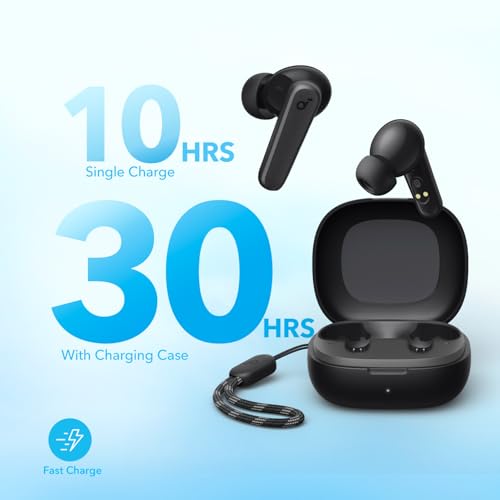
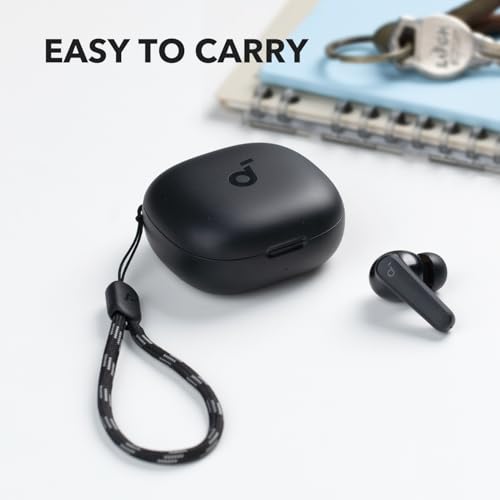
Soundcore by Anker P20i True Wireless Earbuds, 10mm Drivers with Big Bass, Bluetooth 5.3, 30H Long Playtime, Water-Resistant, 2 Mics for AI Clear Calls, 22 Preset EQs, Customization via App
In Stock










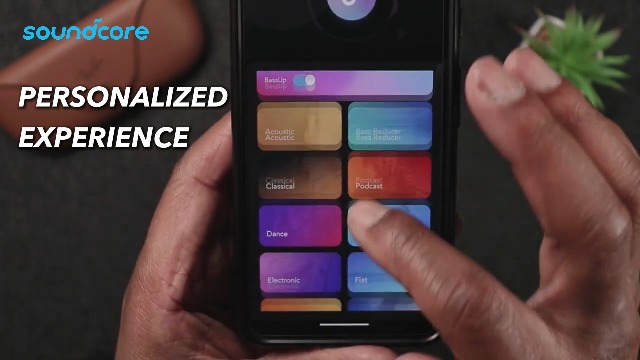
As an Amazon Associate we earn from qualifying purchases. Product prices and availability are accurate as of the date/time indicated.
Travel Setup Tips That Actually Help
Pack a small power strip. Hotel rooms in older buildings often have one outlet near the bed and one in the bathroom, and that’s it. A four-outlet strip with USB ports lets you charge your laptop, phone, keyboard, mouse, and headphones from a single wall outlet. I use a 6-inch model that weighs four ounces; it’s the most-used item in my bag after my passport.
Bring a 100W USB-C PD charger. Modern gaming laptops, the Steam Deck, and most peripherals charge via USB-C. A single 100W GaN charger with three ports replaces your laptop brick and three smaller chargers. The total weight saving is around 1.5 pounds and a significant pack-volume reduction. The Apple 96W charger or any of the Anker 100W GaN models work well.
Pre-download games on hotel WiFi the night before you travel. Hotel WiFi during peak hours (6-10 PM) is typically capped to 5-10 Mbps per device and rate-limited above that. Downloading a 50GB game during dinner means it’s ready for an evening session. Steam, Epic, and Game Pass all support scheduled downloads.
Use a VPN for region-locked content. Some games and streaming services have different libraries in different regions, and some multiplayer games detect VPN traffic and ban accounts. NordVPN and Mullvad have the best track record for game compatibility; ExpressVPN is more aggressive about bypassing geo-blocks but more likely to trigger anti-cheat flags.
Hotel WiFi tip: most chains have a hidden “premium” tier that’s 50-100 Mbps and costs $5-15 extra per night. For a serious gaming evening it’s worth it. Marriott Bonvoy and Hilton Honors members usually get the premium tier free with status.
Related Guides
- Best DDR5 Motherboards in 2026
- Best Webcams for Developers in 2026
- Best Mobile Gaming Controllers in 2026
Frequently Asked Questions
Is laptop gaming on a stand actually ergonomic?
It’s more ergonomic than gaming on a laptop placed flat on a table, which is the baseline for most travelers. It is not as ergonomic as a proper desk setup with a 27-inch monitor at eye level, a real mechanical keyboard, and an Aeron chair. The goal of travel ergonomics is not perfection, it’s “not actively damaging your body.” A stand plus an external keyboard and mouse gets you to that bar.
Will a laptop stand work on hotel desks?
Yes, every stand in this guide works on any flat surface at least 12 inches deep. The Roost and Nexstand work on smaller surfaces because they’re vertical. The Soundance K8 needs a bit more depth because of its base footprint. Lap desks like the LapGear work in chairs without a desk at all.
Are mechanical keyboards too loud for hotels?
It depends on the switches. Linear reds and tactile browns are quiet enough that they won’t bother neighbors through a normal hotel wall. Clicky blue switches are loud enough that someone in the next room will hear them. If you’re packing a mechanical keyboard for travel, choose linear or tactile switches and skip the clickies.
Is a travel mouse really better than the laptop trackpad for gaming?
Massively. A trackpad has a maximum effective tracking speed of roughly 1 meter per second; a mouse can hit 5-10x that. For any game requiring aim, look, or quick selection, a mouse is essential. The MX Anywhere 3S in particular tracks on any surface including glass, which solves the “no mousepad in hotel rooms” problem.
Final Verdict — GamingPCGuru Pick
For most travelers, the winning combination is the Roost Laptop Stand v3 + Logitech MX Anywhere 3S + Keychron K3 Max. Total weight is roughly 1.75 pounds, total cost is $265, and the entire setup fits in a laptop sleeve plus one small pouch. This is the kit I personally travel with, and after eighteen months on the road I have not wanted to swap any piece of it.
If you’re price-sensitive, the equivalent budget kit is the Nexstand K7 + MX Anywhere 3S + Logitech MX Keys Mini for roughly $230, with the only meaningful sacrifice being the keyboard feel. If you’re a hotel-room nomad who stays put for weeks at a time, swap the Roost for the Soundance K8 and gain stability at the cost of pack-ability.
Whatever you pick, lift the screen, use a real keyboard, and your spine will thank you in five years.
Related guides:
- Best Gaming Laptops for Travel 2026
- Best Gaming Handhelds 2026
- Best Travel Headphones for Gaming 2026
- Best Portable Monitors for Gaming 2026
- Best Travel Backpacks for Gaming Gear 2026
- Best Power Banks for Gaming Laptops 2026
- Best Portable SSDs for Gaming Storage 2026