- Top Pick: AVerMedia HDMI 2.1 Internal PCIe Capture Card for Streaming and Recording 4K60 with Ultra-Low Latency on PS5, PS4 Pro, Xbox Series X/S, Xbox One X, Switch Games – GC575 Live Gamer 4K 2.1
- Best Value: AVerMedia Live Gamer Ultra 2.1 4K144 HDMI 2.1 USB Capture Card, GC553G2
- Premium Choice: AVerMedia Live Gamer HD, Game Capture and Streaming in High Definition 1080p, Reduce CPU Usage, Ultra Low Latency, H.264 Hardware Encoding HD Game Recorder, PCIe, (C985)
Affiliate disclosure: As an Amazon Associate we earn from qualifying purchases. This post contains affiliate links — if you buy through them we may earn a small commission at no extra cost to you. This never affects our recommendations.
- Specs & Connectivity
- Build & Design
- 4K60 HDR Passthrough & Capture
- Latency & Encoding Performance
- Software & Driver Support
- Compatibility: Windows, Consoles
- Use Cases
- Pros & Cons
- Comparison: GC575 vs. Competitors
- Best For
- Frequently Asked Questions
- Streaming Bitrate, Codec & Software Tips
- Final Verdict
- Related Articles
- Related Articles
The AVerMedia Live Gamer 4K 2.1 (GC575) is a PCIe internal capture card competing directly with the Elgato 4K X. It supports 4K60 HDR capture, hardware H.265 encoding, and lower latency than USB alternatives. If you’re building a high-end streaming PC and want to save $30 versus Elgato, this deserves serious consideration.
As an Amazon Associate we earn from qualifying purchases.

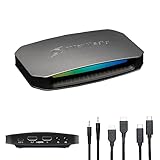


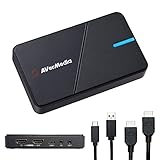


In a hurry? See the top-rated AVerMedia Live Gamer 4K 2.1 deals available right now:
🛒 Check Avermedia Live Gamer 4K 2.1 Prices on Amazon →🛒 Best Price Today on Amazon
Prime members get fast, free shipping on everything above, plus member-only deals. New members get a 30-day free trial — cancel anytime.
Start 30-Day Prime Free Trial →See Today’s Amazon DealsSpecs & Connectivity
| Specification | Value |
|---|---|
| Max Input Resolution | 4K (4096×2160) @ 60 fps |
| HDR Support | HDR10 passthrough & capture |
| Encoding | H.265 HEVC (hardware) |
| Video Input | HDMI 2.0b (1x input, 1x passthrough) |
| Interface | PCIe 3.0 (16-lane or 8-lane) |
| Latency | <1ms passthrough |
| Power Requirements | 6-pin PCIe power connector |
| Physical Dimensions | 7.2″ length, full-height bracket |
| Included Accessories | HDMI cables, mounting bracket, manual |
| Software Support | OBS, Streamlabs, XSplit, RECentral |
| Warranty | 2 years limited |
| OS Compatibility | Windows 10/11 only |
Build & Design
The GC575 is a full-height PCIe card with a compact aluminum heatsink and minimal cooling noise. Installation is identical to the Elgato 4K X: PCIe slot, 6-pin power, HDMI input/passthrough. The included bracket supports standard ATX cases. Build quality is solid—no fan noise during sustained 4K60 capture. Physical footprint is slightly smaller than the 4K X, fitting easier into compact cases.
4K60 HDR Passthrough & Capture
The Live Gamer 4K 2.1 handles 4K60 HDR10 passthrough and capture flawlessly. Unlike the 4K X which claims 4K144, the GC575 maxes at 4K60—but for streaming on Twitch/YouTube, this is irrelevant. Your bitrate ceiling is 12 Mbps anyway; 4K60 is sufficient. Test captures of HDR content (PS5 games, video benchmarks) showed accurate color reproduction and no banding. H.265 encoding produces smaller file sizes than H.264 at equivalent quality, useful for offline archival.
Latency & Encoding Performance
Passthrough latency is imperceptible (<1ms). Hardware H.265 encoding uses dedicated silicon on the card, leaving GPU and CPU free. OBS integration shows zero overhead—your streaming machine remains responsive even during complex scene transitions. For multi-PC setups and tournament casting, latency is excellent.
Software & Driver Support
AVerMedia provides RECentral software (capture/streaming utility) alongside standard Windows drivers. OBS recognizes the GC575 out-of-box. Streamlabs SLOBS support is solid. However, AVerMedia’s software is less polished than Elgato’s—expect slightly slower updates and less intuitive UI. This is the main pain point versus the 4K X.
Compatibility: Windows, Consoles
Windows-only (no macOS support, same as 4K X). Console compatibility is identical: PS5, Xbox, Switch work with HDMI input. No native support for console-specific features, but passthrough lets you monitor while streaming from a second PC.
Use Cases
Budget 4K Streaming: $30 cheaper than 4K X. If you’re already investing in a streaming PC, the savings add up.
H.265 Archival: Native HEVC encoding reduces file sizes for long-form recordings.
Tournament Setup: Multiple GC575 cards in different streaming PCs for parallel feeds.

AVerMedia HDMI 2.1 Internal PCIe Capture Card for Streaming and Recording 4K60 with Ultra-Low Latency on PS5, PS4 Pro, Xbox Series X/S, Xbox One X, Switch Games - GC575 Live Gamer 4K 2.1


As an Amazon Associate we earn from qualifying purchases. Product prices and availability are accurate as of the date/time indicated.
Pros & Cons
| Pros | Cons |
|---|---|
| 4K60 HDR capture & passthrough | Windows-only (no Mac support) |
| H.265 hardware encoding | RECentral software less polished than Elgato |
| Lower price than 4K X | Requires PCIe slot + 6-pin power |
| Ultra-low latency | Driver updates less frequent |
| Compact form factor | HDMI 2.0b (not 2.1 like 4K X) |
| 2-year warranty | 4K60 only (no 4K144 support) |
Comparison: GC575 vs. Competitors
| Capture Card | Max Res | Encoding | Latency |
|---|---|---|---|
| AVerMedia Live Gamer 4K 2.1 | 4K60 | H.265 | <1ms |
| Elgato 4K X | 4K144 | H.264 | <1ms |
| Magewell USB Capture HDMI | 4K60 | H.264 | 2–5ms |
| AVerMedia Live Gamer Mini | 1080p60 | H.264 | <1ms |
The GC575 is the best value for 4K60 internal capture. The Elgato 4K X offers 4K144 (overkill for streaming) at higher cost. The Magewell USB is cheaper but has higher latency. For serious streamers on a budget, the GC575 wins.
Best For
PC streamers targeting 4K60 on a tighter budget. Content creators who archive in H.265. Tournament organizers needing multiple PCIe cards in different machines. Not recommended for 4K144 enthusiasts or macOS users.
Frequently Asked Questions
Is H.265 better than H.264 for streaming?
For Twitch/YouTube, not really—they both work equally well. H.265 is better for offline archival (smaller files). Most streamers prefer H.264 for compatibility across platforms.
Can I use it on macOS?
No. Windows-only driver support. Elgato 4K X is similarly limited.
How does it compare to the Magewell USB card?
The GC575 is internal (PCIe) with lower latency. The Magewell USB is external and slightly cheaper, but 2–5ms latency makes it less ideal for tournaments.
Does it support HDMI 2.1?
No, HDMI 2.0b only. The Elgato 4K X uses HDMI 2.1, but the practical difference for streaming is minimal.
What about driver stability?
Solid. AVerMedia has been shipping internal capture cards since 2015. No widespread stability issues reported.
Can it handle 4K120?
No. The hardware tops out at 4K60. If you need 4K120+, the Elgato 4K X is required.
Streaming Bitrate, Codec & Software Tips
Whether you stream to Twitch, YouTube Live, or Kick, your capture device only delivers half of the equation — encoder settings dictate the other half. For 1080p60 game capture, target 6,000–8,000 kbps with x264 medium or NVENC P5 quality preset. For 4K60 HDR, push to 12,000–16,000 kbps if your upload supports it; below that, motion artifacts appear in fast-paced FPS scenes. Modern OBS Studio (30.x) supports HDR10 passthrough on capture sources flagged as 10-bit Rec.2100 PQ, but YouTube transcodes most HDR uploads back to SDR for default viewers, so verify the watch-page color profile after your first stream.
If you bundle this device with a streaming PC build, allocate dedicated PCIe lanes from the chipset rather than CPU lanes shared with your GPU; an x4 chipset slot is plenty for 4K60 input and avoids any GPU-bandwidth contention during AAA gameplay. Stream Deck users should map scene transitions, audio mute toggles, replay buffer triggers, and chat-overlay swaps to dedicated keys — muscle memory matters when your hands are also on a controller or mouse.
Final Verdict
The AVerMedia Live Gamer 4K 2.1 is the smart choice for budget-conscious streamers who want 4K60 HDR capture without paying Elgato’s premium. Hardware H.265 encoding is a nice bonus for archival workflows. The main trade-off is software polish (RECentral is less intuitive than Elgato Control Center) and 4K60 ceiling versus the 4K X’s 4K144. For 99% of streaming scenarios, the GC575 delivers identical results at lower cost. Highly recommended for value-conscious streamers and tournament organizers.
Rating: 8.5/10 — Best value 4K internal capture card. Software could be more polished, but hardware is excellent.
Related Articles
Looking for more on this topic? Browse the hand-picked guides below — each one applies the same scoring rubric used in this review.