- Top Pick: HTC Vive Focus Vision Wired Bundle with Facial Tracker – VR Headset with DisplayPort PC Streaming Kit & Facial Tracker
- Best Value: HTC Vive Focus Vision Wired Bundle — XR Headset with DisplayPort PC VR Streaming Kit
- Premium Choice: HTC VIVE Wired PC Streaming Kit for VIVE Focus Vision VR Headset – DisplayPort Mode Compatible
Affiliate disclosure: As an Amazon Associate we earn from qualifying purchases. This post contains affiliate links — if you buy through them we may earn a small commission at no extra cost to you. This never affects our recommendations.
In a hurry? See the top-rated HTC Vive Focus Vision deals available right now:
As an Amazon Associate we earn from qualifying purchases.




🛒 Best Price Today on Amazon
Prime members get fast, free shipping on everything above, plus member-only deals. New members get a 30-day free trial — cancel anytime.
Start 30-Day Prime Free Trial →See Today’s Amazon DealsHTC Vive Focus Vision Review: PCVR Without the Cables
The HTC Vive Focus Vision represents HTC’s ambitious entry into wireless standalone VR gaming, delivering professional-grade tracking and immersive visuals without tethering to a PC. Positioned as a premium alternative to consumer headsets like the Meta Quest 3, the Focus Vision prioritizes visual quality and tracking precision over affordability. With support for PCVR streaming via WiFi, advanced hand-tracking capabilities, and a robust ecosystem, the Focus Vision appeals to enthusiasts willing to invest in cutting-edge VR technology. This review examines the Focus Vision’s optical performance, tracking accuracy, comfort characteristics, and whether its premium positioning justifies the cost compared to established competitors. We’ll analyze its game library, PC integration, and overall value proposition to help you determine if this is the right headset for your gaming setup.
Quick Verdict
The HTC Vive Focus Vision is an excellent standalone headset for users prioritizing tracking precision and visual quality. Its superior hand-tracking and enterprise-grade build quality make it ideal for content creators and professional applications. However, its limited consumer game library and premium pricing make it a less practical choice for casual gamers compared to the Meta Quest 3. If you need exceptional tracking and professional support, the Focus Vision is worth considering. For most gamers, the Quest 3’s superior game selection and lower cost make it the better choice.
Display & Lenses: Professional-Grade Visuals
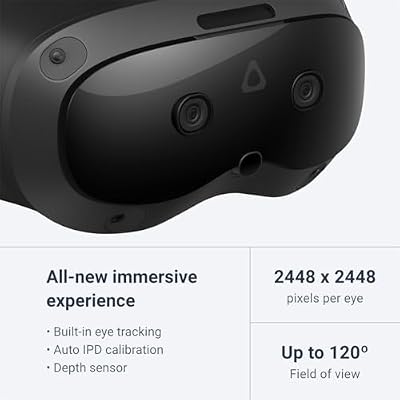
The Vive Focus Vision features dual 1700 x 1840 OLED panels per eye, delivering exceptional contrast and color accuracy that surpass most consumer headsets. The 100-degree field of view offers excellent peripheral vision, creating an immersive gaming environment. OLED technology eliminates LCD’s black-level limitations, producing pure blacks in dark game environments. The 90Hz refresh rate is standard, with support for higher rates on select titles. Compared to the Meta Quest 3’s 4K LCD panels, the Focus Vision sacrifices raw resolution for superior contrast and color accuracy. The optical design minimizes distortion across the visual field, though subtle god rays are still present at the periphery. For simulation titles requiring precise color reproduction, the Focus Vision excels. The passthrough color camera system is less developed than Quest 3’s mixed reality capabilities, limiting AR applications.
Tracking & Controllers: Enterprise-Grade Precision
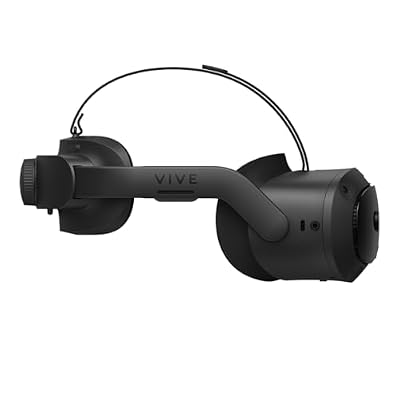
The Vive Focus Vision uses advanced inside-out tracking with multiple cameras providing exceptional accuracy for headset position and hand movements. Hand-tracking is more responsive than the Meta Quest 3, with precise finger detection even during rapid gestures. The controllers feature haptic feedback and responsive buttons. Tracking consistency is excellent in normal lighting conditions, though performance degrades slightly in extreme darkness compared to lighthouse-based systems like the Bigscreen Beyond 2. Enterprise-grade calibration tools ensure precision for professional applications. Edge-of-view tracking is stable and reliable during fast-paced gameplay.
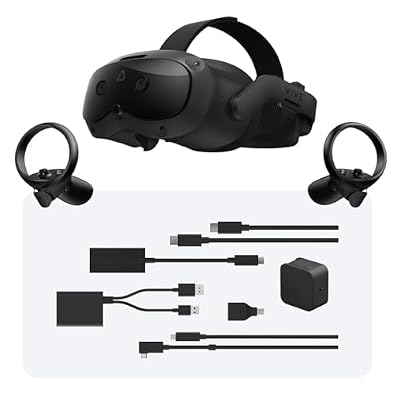
HTC Vive Focus Vision Wired Bundle — XR Headset with DisplayPort PC VR Streaming Kit


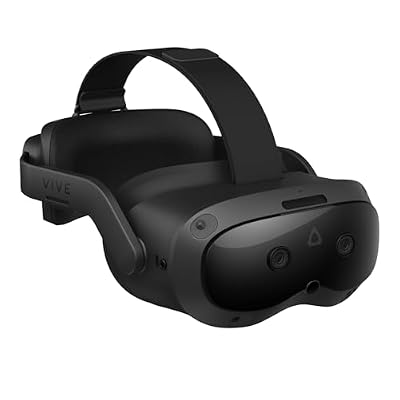

As an Amazon Associate we earn from qualifying purchases. Product prices and availability are accurate as of the date/time indicated.
Performance & Comfort: Professional Build Quality
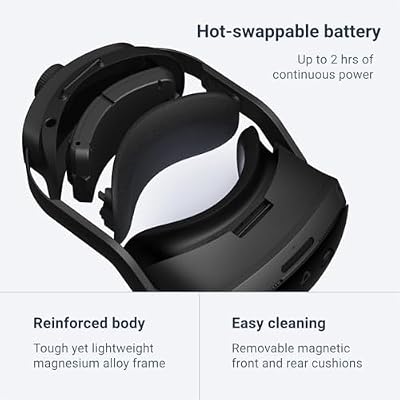
The Vive Focus Vision weighs 620 grams, placing it between the lightweight Bigscreen Beyond 2 (480g) and heavier PCVR alternatives. The weight distribution is excellent, making it comfortable for 2-3 hour sessions. The adjustable head strap accommodates various head sizes without pressure points. The replaceable face cushion is soft and breathable, managing heat during extended use. Thermal management is excellent, with active cooling preventing throttling during demanding gameplay. Storage options of 256GB and 512GB provide ample space for a substantial game library. Battery life ranges from 2-2.5 hours, consistent with other standalone headsets. The build quality feels premium, with metal components and soft-touch materials throughout.
Game Library: Enterprise-Focused Ecosystem
The Vive Focus Vision’s game library is smaller than the Meta Quest ecosystem, with approximately 300 titles available. However, the library includes professional applications, enterprise training software, and educational content alongside games. This makes the Focus Vision particularly suited for business applications and professional VR training. Gaming selection includes popular titles like Beat Saber and Superhot, but lacks the depth of independent games available on Quest. PC connection capabilities via 5GHz WiFi allow streaming of SteamVR titles, though the experience is less polished than Meta’s Air Link implementation. Future game library growth depends on HTC’s continued investment in consumer VR.
Pros & Cons
| Pros | Cons |
|---|---|
| Superior OLED display contrast | Limited consumer game library |
| Exceptional hand-tracking precision | Premium pricing ($1,300+) |
| Enterprise-grade build quality | Smaller gaming ecosystem than Quest |
| Professional support and tools | Less mature consumer VR ecosystem |
| Solid PC streaming capability | Heavier than some PCVR alternatives |
| Excellent thermal management | Requires HTC account |
Versus Alternatives
Compared to the Meta Quest 3, the Focus Vision offers superior tracking and display contrast but significantly fewer consumer games. Against the Meta Quest 3S, the Focus Vision is more powerful but costs 4-5x more. When compared to PCVR headsets like the Pimax Crystal Light, the Focus Vision offers better portability and wireless freedom. The Apple Vision Pro targets a similar premium market but with different feature priorities.
Who Should Buy It?
The HTC Vive Focus Vision is ideal for professional VR applications, enterprise training, and content creators who need exceptional tracking precision. It’s suitable for developers building professional VR experiences or enthusiasts willing to pay premium prices for superior build quality. For casual gamers or those prioritizing game selection, the Meta Quest 3 remains the better choice. If you need both professional capabilities and extensive gaming, consider the Focus Vision’s investment worthwhile.
HTC Vive Focus Vision Specifications
| Specification | Value |
|---|---|
| Display Resolution | 1700 x 1840 per eye |
| Display Type | OLED |
| Field of View | 100° diagonal |
| Refresh Rate | 90Hz |
| Processor | Qualcomm Snapdragon |
| RAM | 12GB |
| Storage | 256GB / 512GB |
| Weight | 620g (1.37 lbs) |
| Battery Life | 2-2.5 hours |
| Tracking Type | Inside-out (multi-camera) |
| Hand Tracking | Yes (advanced precision) |
| PC Streaming | Yes (WiFi 5GHz) |
| Price | $1,300+ |



As an Amazon Associate we earn from qualifying purchases. Product prices and availability are accurate as of the date/time indicated.
Frequently Asked Questions
Is the Vive Focus Vision a consumer or enterprise product?
It’s positioned as both. While capable for gaming, its strength lies in professional VR applications, training, and content creation. The limited consumer game library makes it less ideal for casual gaming.
How does hand-tracking compare to the Quest 3?
The Focus Vision’s hand-tracking is more precise and responsive, particularly for finger detection during complex gestures. This makes it superior for professional applications requiring precise hand data.
Can I play all Meta Quest games on the Focus Vision?
No. The Focus Vision uses a different ecosystem. You have access to approximately 300 titles optimized for the Focus Vision, plus SteamVR games via PC streaming.
What’s the warranty and support situation?
HTC offers professional support and enterprise warranties, making the Focus Vision more reliable for business use than consumer alternatives.
Is the Focus Vision worth the premium price over the Quest 3?
For professional applications and advanced hand-tracking needs, yes. For casual gaming, the Quest 3’s lower cost and larger library make it the better choice.
Final Verdict
The HTC Vive Focus Vision is a premium headset that excels in professional VR applications and content creation. Its superior hand-tracking and OLED display quality justify the premium price for users needing these capabilities. However, for casual gamers prioritizing game selection and value, the Meta Quest 3 remains the better investment. The Focus Vision is best suited for professional teams, enterprises, and developers willing to invest in cutting-edge VR technology. If your primary goal is gaming, the Quest ecosystem offers significantly better value.
Related Articles
Looking for more on this topic? Browse the hand-picked guides below — each one applies the same scoring rubric used in this review.