Esports is won and lost on latency. A few milliseconds of delay or a single lag spike at the wrong moment can cost a round, so the network feeding your PC matters as much as the rig itself. A good esports router keeps ping low and consistent: it prioritises your game traffic with Quality of Service (QoS), offers gaming acceleration features, and — crucially — provides fast, wired Gigabit ports so you can plug in directly rather than relying on WiFi alone. This guide rounds up the best routers for esports in 2026 across the range competitive players actually shop for: a dedicated WiFi gaming router, value WiFi 6 routers, and capable mesh and VPN-class options for larger homes.
- Best Routers for Esports at a Glance
- 1. ASUS AC2900 WiFi Gaming Router (RT-AC86U) – Dual Band Gigabit Wireless Internet
- 2. TP-Link AX1800 WiFi 6 Router (Archer AX21 V5) – Dual Band Wireless Internet, Gig
- 3. TP-Link Festa FR365, AX3000 WiFi 6 VPN Router, Up to 5 Gigabit WAN + 1 USB 3.0 W
- 4. TP-Link Deco XE75 AXE5400 Tri-Band WiFi 6E Mesh System – Covers up to 2900 Sq.Ft
- 5. Amazon eero Pro 6E mesh wifi router – Supports internet plans up to 2.5 Gbps, Co
- 6. ASUS N900 WiFi Router (RT-N66U) – Dual Band Gigabit Wireless Internet Router, 4
- How to Choose a Router for Esports
- Frequently Asked Questions
- Related Guides
- Related Articles
Our picks were chosen on what genuinely drives competitive networking: support for QoS and traffic prioritisation, gaming-oriented features, wired Gigabit connectivity, and WiFi standard and reliability — balanced against value. We have avoided quoting invented ping figures; instead we explain where each router fits and who it is for, with prices from around $52 up to around $200. The list spans an ASUS gaming router with dedicated game-acceleration tools, affordable WiFi 6 routers, mesh systems for whole-home coverage, and a VPN router for advanced setups. Below is an at-a-glance comparison, then a closer look at each and a buyer’s guide built around latency, QoS and wired connections — the things that actually matter for esports.
🛒 Best Price Today on Amazon
Prime members get fast, free shipping on everything above, plus member-only deals. New members get a 30-day free trial — cancel anytime.
Best Routers for Esports at a Glance
| Router | Best For | Standout Spec | Approx Price |
|---|---|---|---|
| ASUS AC2900 RT-AC86U Gaming Router | Dedicated game acceleration | Gaming QoS, Gigabit wired | around $113 |
| TP-Link Archer AX21 (AX1800) WiFi 6 | Best value esports router | WiFi 6, QoS, Gigabit ports | around $52 |
| TP-Link Festa FR365 (AX3000) VPN Router | Wired throughput + VPN | 5x Gigabit WAN, WiFi 6 | around $99 |
| TP-Link Deco XE75 (AXE5400) WiFi 6E Mesh | Whole-home low-lag coverage | Tri-band WiFi 6E, mesh | around $100 |
| eero Pro 6E Mesh WiFi | Big-home mesh up to 2.5Gbps | WiFi 6E mesh, 2.5Gbps support | around $200 |
| ASUS N900 RT-N66U Dual-Band Router | Budget wired-first backup | Gigabit wired, 4 LAN ports | varies |
1. ASUS AC2900 WiFi Gaming Router (RT-AC86U) – Dual Band Gigabit Wireless Internet

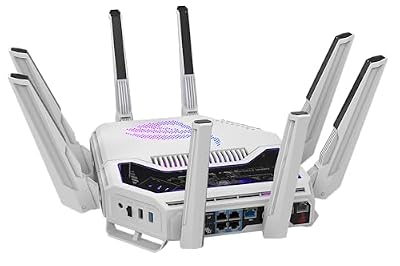
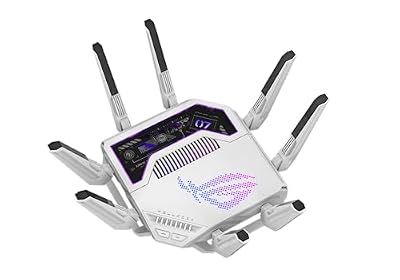
ASUS GT-BE19000AI Tri-Band WiFi 7 AI Gaming Router - 10G, Game Boost | Coverage up to 3,500 Sq. Ft., 10G Port x2, 2.5G Port x4. Game Boost for Low Latency Gaming & Streaming. VPN support








As an Amazon Associate we earn from qualifying purchases. Product prices and availability are accurate as of the date/time indicated.
The ASUS RT-AC86U is the most genuinely esports-focused router on this list, which is why it leads. It is a dual-band AC2900 gaming router with ASUS’s gaming-oriented feature set, including adaptive QoS that prioritises game traffic and game-acceleration tools designed to keep competitive ping low and stable. It pairs that with Gigabit wired LAN ports for direct, low-latency connections. At around $113 it is a purpose-built choice for serious play.
For esports specifically, this is the pick because it targets the right problems: the gaming QoS prioritises your match traffic over background downloads and other devices, the game-acceleration features aim to reduce latency to game servers, and the Gigabit wired ports let you skip WiFi entirely for the most consistent connection. ASUS’s firmware is well regarded for control and stability. If you want a router built around competitive gaming rather than one that merely tolerates it, the RT-AC86U is the clear standout.
Pros: Gaming-focused QoS and acceleration, Gigabit wired ports, strong ASUS firmware.
Cons: WiFi 5 (AC) rather than WiFi 6; dual-band only.
2. TP-Link AX1800 WiFi 6 Router (Archer AX21 V5) – Dual Band Wireless Internet, Gig
The TP-Link Archer AX21 is the best-value esports router, and an outstanding all-rounder. It is a dual-band AX1800 WiFi 6 router with Gigabit ports and QoS support, bringing the lower-latency, higher-efficiency benefits of WiFi 6 to a very affordable price. At around $52 it is the cheapest way on this list to get a modern, capable router with the features competitive players want.
For esports, this is the pick for the player who wants low, consistent ping without overspending. WiFi 6 handles congestion better than older standards — useful in a busy household — the built-in QoS lets you prioritise gaming traffic, and the Gigabit LAN ports mean you can hard-wire your PC for the most stable connection. It is not a flashy gaming router, but it covers the essentials that actually reduce lag, and at this price it is the value champion of the list and an easy recommendation for most setups.
Pros: Affordable WiFi 6, QoS traffic prioritisation, Gigabit ports, excellent value.
Cons: Entry-level AX1800 throughput; no dedicated gaming dashboard.
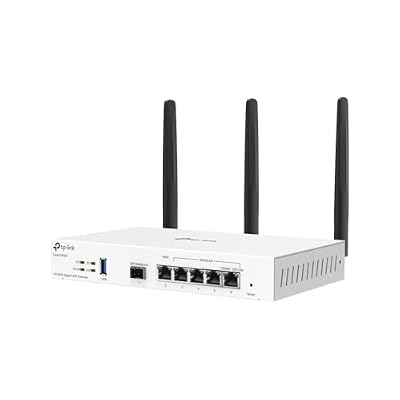
3. TP-Link Festa FR365, AX3000 WiFi 6 VPN Router, Up to 5 Gigabit WAN + 1 USB 3.0 W

TP-Link Festa FR365, AX3000 WiFi 6 VPN Router | Up to 5 Gigabit WAN + 1 USB 3.0 WAN + 1 SFP, Self-Organizing Network, Free Cloud, Seamless Roaming, Not Work with Omada




As an Amazon Associate we earn from qualifying purchases. Product prices and availability are accurate as of the date/time indicated.
The TP-Link Festa FR365 is the wired-throughput and VPN pick. It is an AX3000 WiFi 6 router with an emphasis on connectivity: multiple Gigabit ports (including flexible WAN configuration), a USB 3.0 port, and built-in VPN capability. At around $99 it suits the player who wants strong wired performance and more advanced networking control than a basic router offers.
For esports, the appeal here is the wired backbone and configurability rather than gaming branding. The Gigabit ports give your PC a fast, direct, low-latency link — the most reliable way to play competitively — while the higher AX3000 WiFi 6 rating handles wireless devices well. The VPN support is a bonus for privacy or remote access rather than an esports feature in itself. If you value robust wired connectivity and the flexibility of a business-leaning router, the Festa FR365 is a capable, well-priced option, though casual users may not need its extra features.
Pros: AX3000 WiFi 6, multiple Gigabit ports, VPN capability, strong wired backbone.
Cons: VPN and business features add complexity casual gamers may not need.
4. TP-Link Deco XE75 AXE5400 Tri-Band WiFi 6E Mesh System – Covers up to 2900 Sq.Ft

TP-Link Deco XE75 AXE5400 Tri-Band WiFi 6E Mesh System, 1-Pack | Whole Home WiFi Router Replacement, Covers up to 2900 Sq.Ft, Gaming & Streaming WiFi, 6GHz Band, WPA3, AI-Driven


As an Amazon Associate we earn from qualifying purchases. Product prices and availability are accurate as of the date/time indicated.
The TP-Link Deco XE75 is the whole-home coverage pick. It is a tri-band AXE5400 WiFi 6E mesh system covering up to around 2,900 square feet, adding a third 6GHz band that can carry traffic with less congestion. At around $100 it is the choice for gamers whose biggest enemy is distance from the router rather than the router itself.
For esports, a mesh system serves a specific need: if your gaming PC is far from the router or behind walls, weak WiFi causes lag and dropouts no amount of QoS can fix. The Deco XE75’s mesh spreads strong coverage across a large home, and the WiFi 6E 6GHz band offers a cleaner lane for latency-sensitive traffic where supported. For the lowest, most consistent ping, wire your PC into a Deco node’s Gigabit port rather than relying on the wireless backhaul. As a coverage-first solution for a big house, the XE75 is a strong pick — just remember that wired is still king for competitive play.
Pros: Tri-band WiFi 6E mesh, wide whole-home coverage, clean 6GHz band, Gigabit node ports.
Cons: Mesh wireless backhaul adds latency vs wired; coverage-first rather than gaming-tuned.
5. Amazon eero Pro 6E mesh wifi router – Supports internet plans up to 2.5 Gbps, Co

Amazon eero Pro 6E mesh wifi router - Supports internet plans up to 2.5 Gbps, Coverage up to 2,000 sq. ft., Connect 100+ devices, 1-pack


As an Amazon Associate we earn from qualifying purchases. Product prices and availability are accurate as of the date/time indicated.
The eero Pro 6E is the premium big-home mesh pick. It is a WiFi 6E mesh system that supports internet plans up to 2.5Gbps and blankets large homes in coverage, with eero’s famously simple app-based setup and management. At around $200 it is the most expensive option here and is aimed at users who prize coverage, capacity and ease of use across a whole house.
For esports, the eero Pro 6E is best understood as a coverage-and-convenience solution rather than a latency-tuned gaming router. Its strengths are blanketing a large home with fast WiFi 6E, supporting high-bandwidth multi-gigabit plans, and being effortless to manage — valuable if many devices share your network. It does not offer the granular gaming QoS dashboards of the ASUS, and as with any mesh, the lowest, most consistent ping comes from wiring your PC into a node. If whole-home WiFi 6E and simplicity matter to you and you wire your gaming rig, it is an excellent — if pricey — choice.
Pros: WiFi 6E mesh, supports up to 2.5Gbps plans, wide coverage, very easy app setup.
Cons: Most expensive here; lacks granular gaming QoS, best wired for low ping.
6. ASUS N900 WiFi Router (RT-N66U) – Dual Band Gigabit Wireless Internet Router, 4
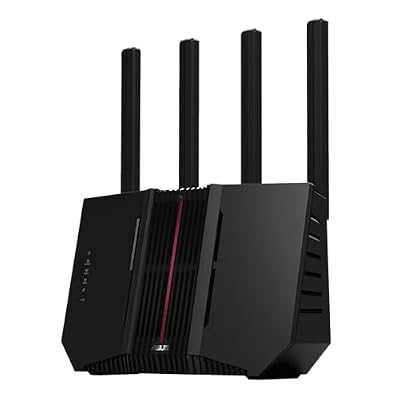
ASUS RT-BE92U WiFi 7 Router - Tri-Band (6GHz), 9.7 Gbps, x2 WAN, Mesh | Coverage up to 2,500 Sq. Ft., Subscription Free Network Security, Parental Controls Included, 2.5G Port x4, VPN support


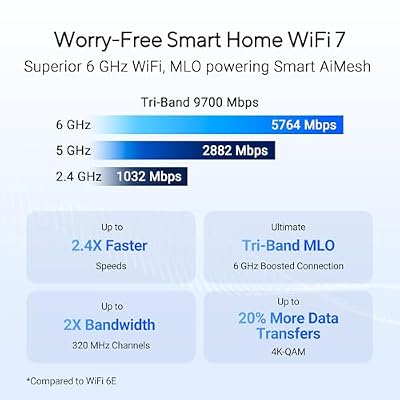

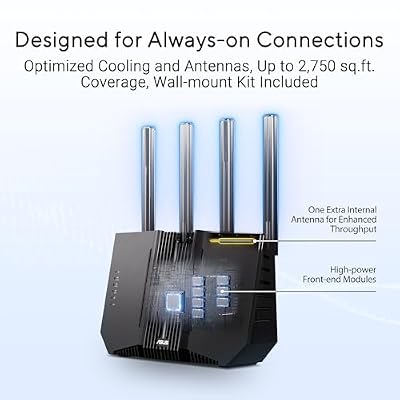



As an Amazon Associate we earn from qualifying purchases. Product prices and availability are accurate as of the date/time indicated.
Rounding out the list is the ASUS RT-N66U, included with full honesty as the budget wired-first or backup pick. It is an older dual-band N900 (WiFi 4 / Wireless-N) router with Gigabit wired ports and four LAN connections. Its WiFi is well behind modern standards, so it is not a wireless performer for a busy home — but its wired Gigabit ports and ASUS firmware still work for a hard-wired setup.
For esports, the only sensible case for this router today is wired use — and on that front it can serve. If you connect your gaming PC directly via Ethernet to one of its Gigabit ports, the wired link bypasses its dated WiFi entirely and delivers a stable, low-latency connection to a fast switch or modem. It makes a reasonable budget backup or a wired-only router for a single competitive PC, but anyone relying on wireless should choose a WiFi 6 model like the Archer AX21 instead. We list it for what it genuinely is: an aging router whose wired ports remain useful, not a modern esports wireless solution.
Pros: Gigabit wired ports usable for a hard-wired PC, four LAN ports, proven ASUS firmware.
Cons: Old WiFi 4 (Wireless-N) standard; weak wireless, wired-only by today’s standards.
How to Choose a Router for Esports
Choosing a router for esports starts with latency, because competitive gaming lives and dies on low, consistent ping. The single most effective step is to connect your gaming PC by wire: an Ethernet cable into a Gigabit LAN port — as every router here provides — gives a more stable, lower-latency connection than any WiFi, free from interference and congestion. Before anything else, plan to hard-wire your rig and treat WiFi performance as the backup, not the primary path, for your most important games.
Quality of Service (QoS) is the next feature to look for, and it is what lets a router actively protect your ping. QoS prioritises your game traffic over background downloads, streaming and other devices, so a roommate’s update or a 4K stream does not spike your latency mid-match. The ASUS RT-AC86U offers gaming-specific adaptive QoS and acceleration tools, while value routers like the Archer AX21 include solid general QoS. If a busy household shares your connection, prioritise a router with capable QoS.
WiFi standard and coverage matter for everything not hard-wired, and for where your rig sits relative to the router. WiFi 6 (as on the Archer AX21 and Festa) handles congestion better and is the sensible modern baseline; WiFi 6E (the Deco XE75 and eero Pro 6E) adds a cleaner 6GHz band. If your PC is far from the router or behind walls, a mesh system fixes coverage dead zones that cause dropouts — but remember a mesh’s wireless backhaul adds latency, so wire your gaming node where you can.
Finally, match the router to your home and budget, and be honest about what you need. For a single competitive PC you can hard-wire, an affordable WiFi 6 router like the Archer AX21 or a gaming-tuned RT-AC86U covers the essentials brilliantly. For a large house with many devices, a WiFi 6E mesh like the Deco XE75 or eero Pro 6E solves coverage — just wire your rig into a node. Older routers like the RT-N66U are wired-only propositions today. Decide whether your challenge is latency, coverage or both, prioritise wired Gigabit and QoS, and pick the router on this list that fits how you actually play.
Frequently Asked Questions
Does a gaming router really reduce ping in esports?
A gaming router helps mainly through Quality of Service (QoS), which prioritises your game traffic so background activity does not spike your latency — the ASUS RT-AC86U is built around this. It cannot lower the baseline ping to a distant game server, which is set by your internet connection and distance. The biggest single improvement for most players is wiring the PC into a Gigabit port rather than relying on WiFi.
Should I use WiFi or wired Ethernet for competitive gaming?
Wired Ethernet, every time, for your most important games. A cable into a Gigabit LAN port — which every router here offers — delivers a more stable, lower-latency connection than WiFi, with no interference or congestion. Use WiFi for everything else and reserve a wired link for your competitive PC; it is the most effective and cheapest way to reduce lag spikes.
Is a mesh router good for esports?
A mesh system like the Deco XE75 or eero Pro 6E is excellent for fixing weak coverage in a large home, which otherwise causes dropouts and lag no QoS can solve. The catch is that a mesh’s wireless backhaul between nodes adds latency, so for the lowest, most consistent ping you should wire your gaming PC into a node’s Gigabit port. Use mesh to solve distance, then hard-wire for competition.
Do I need WiFi 6 or WiFi 6E for esports?
WiFi 6 is the sensible modern baseline — routers like the Archer AX21 handle household congestion far better than older standards, which steadies wireless latency. WiFi 6E (the Deco XE75 and eero Pro 6E) adds a cleaner 6GHz band that can help where supported. That said, if you hard-wire your gaming PC, the WiFi standard matters less for that machine — it benefits your other devices most.
Related Guides
- Best Gaming Routers
- Best Mesh WiFi Systems
- Best Network Switches
- Best Gaming PCs
- Best Ethernet Cables for Gaming
- Best Budget Gaming Setup
Affiliate Disclosure: As an Amazon Associate, we earn from qualifying purchases. If you click a link and make a purchase, we may earn a small commission at no extra cost to you. Prices and availability are accurate as of publication and may change.