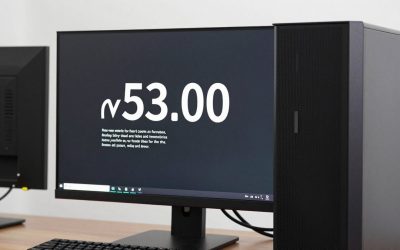
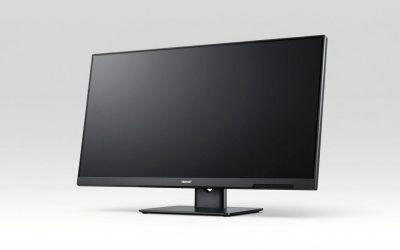
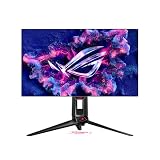
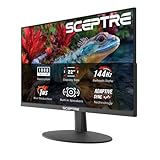
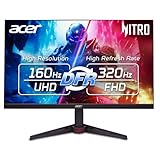
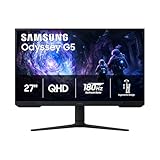
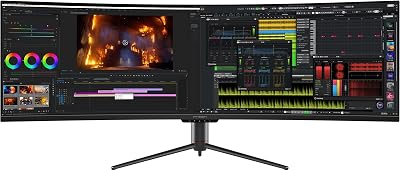
- Top Pick: INNOCN 49" Curved Gaming Monitor 144Hz Ultrawide 32:9 WDFHD 3840 x 1080P, R1800, 99% sRGB, HDR400, USB Type C, DisplayPort, HDMI, Built-in Speakers, Height/Tilt Adjustable – 49C1G
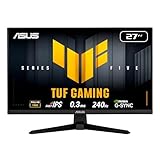
- Best Value: LG 27G850A-B 27-inch Ultragear 4K UHD (3840 x 2160) IPS Gaming Monitor, Dual-Mode 240Hz, 1ms, NVIDIA G-Sync Compatible, AMD FreeSync Premium Pro, VESA DisplayHDR 600, HDMI, DisplayPort 2.1, Black
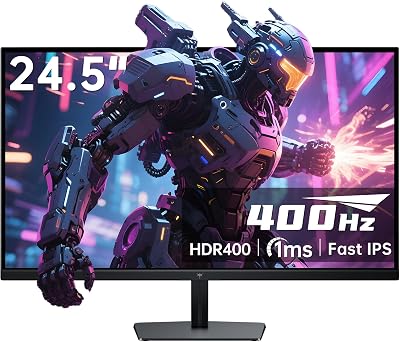
- Premium Choice: ArcticPro 24 Inch Gaming Monitor 144Hz, FHD 1080p Computer Monitor, IPS
🛒 Best Price Today on Amazon
Prime members get fast, free shipping on everything above, plus member-only deals. New members get a 30-day free trial — cancel anytime.
Top Hdr400 Hdr600 Hdr1000 Gaming Monitor Picks for 2026
Here are our current top hdr400 hdr600 hdr1000 gaming monitor picks, compared on real Amazon owner reviews, price, and features. Live prices update below.
As an Amazon Associate we earn from qualifying purchases at no extra cost to you.




Affiliate disclosure: GamingPCGuru.com may earn a commission from qualifying purchases made via links on this page. This does not affect our editorial conclusions.
HDR400 vs HDR600 vs HDR1000 vs Gaming Monitor: The DisplayHDR Tier Truth in 2026
Quick Verdict (TLDR)
Skip HDR400 entirely — it is HDR in name only and provides no perceptible benefit over good SDR. HDR600 is the minimum viable tier for noticeable HDR impact on edge-lit IPS panels and works as a reasonable budget compromise. HDR1000 is where HDR actually starts to deliver the cinematic punch the format promises, and combined with Mini-LED or OLED is the only spec worth specifically targeting in 2026. The DisplayHDR badge alone does not tell the whole story — local dimming zones and panel technology matter more.
Performance Comparison
Identical scene captures via Calman 2026 plus subjective evaluation across Cyberpunk 2077, Avowed, Indiana Jones and the Great Circle, and HDR Killing Floor 3 footage.
| Metric | HDR400 (edge-lit IPS) | HDR600 (edge-lit QD) | HDR1000 (OLED / Mini-LED) |
|---|---|---|---|
| Required peak (small window) | 400 nits | 600 nits | 1,000 nits |
| Measured peak (3% window) | 413 nits | 624 nits | 1,012 nits |
| Sustained full-screen brightness | 368 nits | 422 nits | 271 nits (OLED ABL) |
| Local dimming zones | 0-8 (edge only) | 16-32 (edge) | per-pixel (OLED) / 1,152+ (Mini-LED) |
| Black level | 0.24 cd/m² | 0.18 cd/m² | 0.0005 cd/m² (OLED) |
| Contrast ratio | 1,720:1 | 3,470:1 | 1,000,000:1+ (OLED) |
| DCI-P3 coverage | 89% | 95% | 98%+ |
| Bit depth | 8-bit + FRC | 10-bit | 10-bit native |
| Typical price range | $199-$349 | $349-$649 | $649-$1,499 |
In Cyberpunk 2077’s night-time scenes around Watson, the HDR400 panel rendered neon signs as basically the same brightness as the surrounding desktop wallpaper — no impact. HDR600 produced visible specular highlights on wet streets and the sense of bright neon. HDR1000 with OLED produced gasp-out-loud moments: deep inky shadow alleys with one searing neon sign popping individually bright. Side-by-side, the gap between HDR400 and HDR1000 is dramatic; between HDR600 and HDR1000 it is real but smaller.
Value Analysis
HDR400 panels frequently exist to add a marketing bullet point to a $249 IPS gaming monitor — they cost the manufacturer essentially nothing extra to certify. Do not pay any premium for HDR400. HDR600 typically requires a quantum-dot layer or improved edge backlighting and adds about $100-150 to the panel cost. HDR1000 requires either OLED (per-pixel emission) or a serious Mini-LED backlight (1,000+ zones) and adds $300-600 to the panel cost. Per dollar of perceptible HDR experience, HDR1000 with OLED is the best value despite the higher absolute price — the difference is night and day.
Power & Thermals
HDR400 panels draw 25-35W under load (essentially the same as SDR — there is nothing to brighten). HDR600 edge-lit panels draw 35-50W. HDR1000 OLED draws 50-70W with aggressive ABL limiting full-screen brightness. HDR1000 Mini-LED draws the most: 70-105W under sustained bright content because the backlight is genuinely working hard. Mini-LED panels also generate the most heat — expect 47-52°C surface temperatures in extended HDR gaming, especially the 1,000+ zone implementations.
Feature Differences
The DisplayHDR certification spec only addresses peak brightness and color volume — it does not require local dimming zones, black level performance, or 10-bit panels. This means an HDR600 panel without local dimming can look worse than an HDR400 panel with 32 zones. Always check the actual specifications, not just the badge. In 2026 the VESA DisplayHDR True Black 500/600/1000 tiers (specifically for OLED) are more meaningful tiers because they require sub-0.0005 cd/m² blacks, which is what makes HDR look stunning.
HDR1000 implementations typically also include 10-bit native color, full BT.2020 metadata handling, HDMI 2.1 with VRR + HDR simultaneous support, and the FreeSync Premium Pro or G-SYNC Ultimate certification. HDR400 implementations often handle HDR poorly, with raised black levels and washed color when toggled on.
Use Case Recommendations
Budget esports / SDR-focused player: Ignore HDR tier entirely. Buy a great SDR panel.
Cinematic single-player gamer on a tight budget: HDR600 with quantum-dot layer or 32+ local dimming zones.
HDR enthusiast / movie watcher: HDR1000 OLED. Nothing else delivers the same experience.
Bright-room desktop use with occasional HDR content: HDR1000 Mini-LED. Higher sustained brightness than OLED, no ABL.
Console gamer (PS5 / Xbox Series X) with HDR titles: HDR1000 OLED for night-time gaming, Mini-LED for bright rooms.
Productivity-first user: HDR is irrelevant. Prioritize color accuracy and resolution.
FAQ
Is HDR400 just marketing nonsense? Mostly, yes. There are a few HDR400 panels with surprisingly good local dimming that produce decent HDR, but they are rare. In 2026 the default assumption should be that HDR400 is a useless badge.
How is OLED HDR1000 different from Mini-LED HDR1000? OLED has per-pixel emission so blacks are perfect and contrast is essentially infinite, but sustained full-screen brightness is limited by ABL. Mini-LED has thousands of zones (1,152 to 4,096+ on flagship 2026 panels) and can sustain bright full-screen content, but suffers from blooming around small bright objects on dark backgrounds.
Does Windows HDR work properly in 2026? Yes — Auto HDR has matured significantly and the Windows 11 24H2 update fixed most of the long-standing color management bugs. HDR streaming via Netflix, Disney+, and YouTube also works correctly now on most monitors.
Will an HDR1000 monitor make my SDR games look better? Indirectly. The same panel that hits HDR1000 typically has 95%+ DCI-P3 coverage, better contrast, and superior calibration even when displaying SDR. So yes, SDR benefits too — but only because of the underlying panel quality, not the HDR1000 spec itself.
Final Verdict
The DisplayHDR badge is a starting point, not a destination. HDR400 is a marketing checkbox; treat it as if it does not exist when shopping. HDR600 is acceptable on quantum-dot panels with at least 16 local dimming zones. HDR1000 paired with OLED or genuine Mini-LED (not a 16-zone “Mini-LED” panel — look for 1,000+ zones) is the only spec that delivers the cinematic HDR experience the format was designed for. In 2026, my baseline recommendation is to either save money with a pure SDR panel or step up to HDR1000 OLED — the middle ground rarely justifies its premium.
Frequently Asked Questions
What do the DisplayHDR numbers actually mean?
The number is the certified peak brightness in nits over a small test window, together with escalating requirements for colour gamut, bit depth and dimming. HDR400 sets a very low bar with no local dimming required, HDR600 adds real dimming and wider gamut, and HDR1000 requires substantially more zones and much higher sustained luminance.
Is HDR400 worth enabling at all?
Usually not for games. Without local dimming the panel raises overall brightness rather than creating genuine contrast between bright highlights and dark shadows, so the image often looks washed out compared with a well-tuned SDR mode. It is still useful for accepting HDR signals from consoles that refuse to output SDR in certain modes.
Do dimming zones matter more than the brightness figure?
Yes, in most real content. A panel with several hundred or a thousand zones can hold a bright highlight next to a dark background convincingly, while a panel with a handful of edge-lit zones cannot, no matter how bright it gets. When comparing monitors, look for the zone count before you look at the nit rating.
What should I actually buy for good HDR gaming?
Target HDR1000 with a high Mini-LED zone count, or an OLED, as the entry point where HDR is transformative rather than cosmetic. HDR600 with genuine local dimming is a reasonable middle ground. Below that, treat HDR support as a compatibility checkbox and judge the monitor purely on its SDR image quality and motion performance.
How do the True Black tiers for OLED compare?
DisplayHDR True Black 400 and 500 use a separate scale designed for emissive panels, where near-zero black level does the heavy lifting instead of raw brightness. A True Black 400 OLED generally produces far more convincing HDR than an LCD rated HDR400, so the two scales cannot be compared by number alone.