- Top Pick: Logitech Creators Blue Yeti USB Microphone for PC, Mac, Gaming, Recording, Streaming, Podcasting, Studio and Computer Condenser Mic with Blue VO!CE effects, 4 Pickup Patterns, Plug and Play – Blackout
- Best Value: Logitech Creators Blue Yeti USB Microphone for PC, Mac, Gaming, Streaming, Podcasting, Studio and Computer Condenser Mic with Blue VO!CE Effects, 4 Pickup Patterns, Plug and Play – Midnight Blue
- Premium Choice: Logitech Creators Blue Yeti USB Microphone for PC, Mac, Gaming, Recording, Streaming, Podcasting, Studio and Computer Condenser Mic with Blue VO!CE Effects, 4 Pickup Patterns, Plug and Play – Silver
The Logitech Blue Yeti is arguably the most recognisable USB microphone in streaming and home recording. It is a USB condenser microphone with four switchable polar patterns, built-in headphone monitoring, a mute button and a heavy desktop stand, priced around $92. With more than 56,600 buyer reviews on Amazon it is, by reach, the streaming standard — and the microphone many beginners reach for first, partly because of the reputation and partly because of the unusual feature set at the price. This Logitech Blue Yeti review covers the microphone type and polar patterns, the sound quality and voice capture, the connection and compatibility story, the build and software, and finally who it suits and whether it is worth the money in 2026.
- Logitech Blue Yeti at a Glance
- Microphone Type and Polar Pattern
- Sound Quality and Voice Capture
- Connection and Compatibility (USB / XLR)
- Build, Mute, Monitoring and Software
- Who Is the Logitech Blue Yeti For?
- Pros and Cons
- Is the Logitech Blue Yeti Worth It?
- Frequently Asked Questions
- More Microphone Reviews
- Related Articles
- Related Articles
- Related Guides
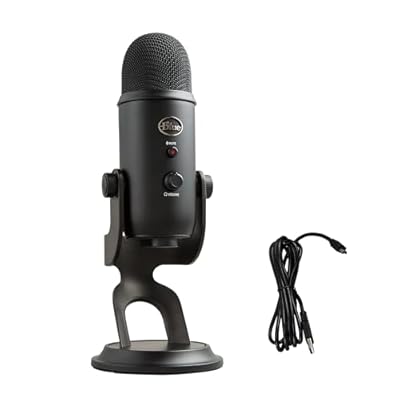
Logitech Creators Blue Yeti USB Microphone for PC, Mac, Gaming, Recording, Streaming, Podcasting, Studio and Computer Condenser Mic with Blue VO!CE effects, 4 Pickup Patterns, Plug and Play - Blackout




As an Amazon Associate we earn from qualifying purchases. Product prices and availability are accurate as of the date/time indicated.
🛒 Best Price Today on Amazon
Prime members get fast, free shipping on everything above, plus member-only deals. New members get a 30-day free trial — cancel anytime.
As an Amazon Associate we earn from qualifying purchases.




Logitech Blue Yeti at a Glance
| Feature | Specification |
|---|---|
| Type | USB condenser |
| Connection | USB |
| Polar pattern | Cardioid, omnidirectional, bidirectional, stereo (4 patterns) |
| Sample rate | 16-bit / 48kHz |
| Headphone monitoring | Yes (built-in 3.5mm) |
| Mute button | Yes |
| Boom arm / stand | Heavy desktop stand included |
| Price | Around $92 |
Microphone Type and Polar Pattern
Before getting into the specifics of this microphone it is worth a brief refresher on the two technical decisions that shape every microphone review: connection (USB or XLR) and capsule type (condenser or dynamic). A USB microphone plugs straight into a PC, Mac or recent console with a single cable and is recognised as an input — no audio interface, no phantom power supply, no mixer — which is why USB has become the default for streamers, podcasters and home callers. XLR is the studio standard: the microphone sends its signal down an XLR cable into an audio interface or mixer, which provides the preamp, the phantom power (for condensers) and the conversion to USB for the computer. Hybrid USB/XLR microphones, such as the FIFINE K688 and Samson Q2U covered in this guide, do both — useful if you want to start on USB now and step up to XLR later without changing microphone.
Capsule type matters just as much. A condenser capsule is sensitive and detail-rich, capturing nuance in voice and instruments well — the studio default for vocal recording in a treated or quiet room. The trade-off is that condensers also pick up more of the room: keyboards, fans, traffic and ambient noise sit nearer the front of the recording. A dynamic capsule is less sensitive and rejects background noise far better, which is why dynamics are the broadcast standard and the natural choice for streamers and podcasters in untreated rooms. Polar pattern is the third decision: cardioid picks up from the front and rejects the sides and rear (the default for solo streaming), omnidirectional picks up from all directions, bidirectional picks up front and rear for two-person interviews, and stereo uses two capsules for a left-and-right image. Keep those three choices in mind — they decide more about how a microphone sounds in your room than the brand name on the body does.
Two practical points round out the refresher. First, your room matters more than most buyers expect. A treated or simply quiet room flatters a sensitive condenser; an untreated bedroom or office with a mechanical keyboard, a desk fan and a window onto a busy street will sound noticeably better through a dynamic, regardless of price. Second, the accessories around the microphone — a stable stand or boom arm, a pop filter to handle plosives and a shock mount to keep desk knocks out of recordings — make a real difference to perceived sound. Some microphones in this guide bundle those accessories (the FIFINE T669 kit and the QuadCast 2 line are good examples), others expect you to source them separately. Either way, factor the accessory budget into the buying decision and treat the microphone as one part of a small system rather than a single magic component.
The Blue Yeti is a USB condenser microphone, which is the most common type for streaming and home recording. Condenser capsules are sensitive and capture detail well, which suits voice work in a reasonably quiet room. The headline feature is the polar-pattern switch: the Yeti offers four patterns — cardioid for solo front-facing recording, omnidirectional for picking up a whole room, bidirectional for two-person interviews face-to-face, and stereo for music or ambience. Most streamers will leave it set to cardioid, but the flexibility is genuinely useful for podcasting, group calls and music. For more on cardioid streaming mics, see our best streaming microphones guide.
Sound Quality and Voice Capture
The Yeti’s sound is full and detailed for a USB condenser at this price. The capsules and 16-bit / 48kHz signal path are well judged for voice, capturing speech with body and clarity that is easily good enough for streaming, podcasts and home video. As a condenser, it does pick up room sound — keyboards, fans and ambient noise sit nearer the front of the recording than they would with a dynamic mic. In a treated or simply quiet room the Yeti sounds confident; in a noisy room a dynamic option will serve you better. For voices over busy environments, see our best dynamic microphones guide.
Connection and Compatibility (USB / XLR)
The Yeti is USB-only, which is the right call for its audience. Plug a single USB cable into a PC, Mac, PS4 or PS5 and it is recognised as an input — no audio interface, no phantom power supply, no extra cables. For a streamer or podcaster who wants a serious-sounding microphone without learning audio engineering, that simplicity is the Yeti’s biggest practical advantage over an XLR rig. Buyers who eventually want to step up to interface-based recording can take what they have learnt on the Yeti and apply it to our best XLR microphones picks.
Build, Mute, Monitoring and Software
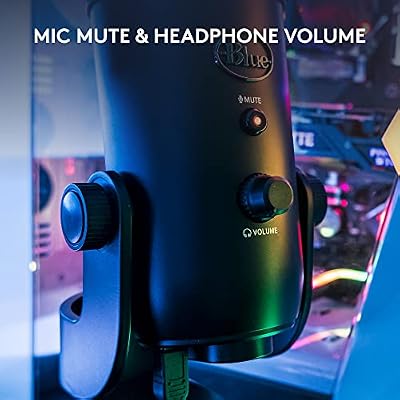
Build quality is one of the Yeti’s strengths. The body is substantial metal and the included desktop stand is heavy and stable — it does not skate around the desk when you lean in. A mute button on the front gives instant silencing for calls and streams, and a 3.5mm headphone jack delivers zero-latency monitoring, so you hear yourself exactly as the microphone hears you. Logitech’s G Hub software exposes gain and pattern controls digitally as well as physically. It is a microphone designed to be used, not just admired.
Who Is the Logitech Blue Yeti For?
The Blue Yeti is for the streamer, podcaster or content creator who wants a recognisable-brand USB microphone with genuine flexibility. If you record in a reasonably quiet room, want the option to switch between solo and group recording patterns, and value a heavy, stable desktop stand and on-mic controls, the Yeti is squarely your microphone. It is less suited to creators in noisy rooms — a dynamic option will reject background sound better — and to users who already own an audio interface, who should look at our best XLR microphones guide instead. For most desk-bound streamers and podcasters, it remains a sensible default.
Pros and Cons
Pros: Four polar patterns for genuine flexibility; substantial metal build and heavy stand; on-mic mute and gain controls; built-in zero-latency headphone monitoring; plug-and-play USB; huge community and tutorial base.
Cons: Condenser capsule picks up room noise; large desktop footprint; USB-only (no XLR upgrade path); the stand is heavy and rigid rather than adjustable like a boom arm.
Is the Logitech Blue Yeti Worth It?
Around $92 the Logitech Blue Yeti remains a well-judged USB condenser microphone. The four polar patterns, the heavy build, the on-mic controls and the simple USB connection deliver a serious-sounding microphone with very little learning curve, and the enormous review base is strong evidence that it holds up in real-world use. The condenser sensitivity and the large stand are honest trade-offs. For the desk-bound streamer or podcaster, it is easy to recommend. Buyers comparing against quieter rooms should also see our best USB microphones roundup.
Frequently Asked Questions
Is the Blue Yeti a good USB microphone for streaming?
Yes — the Blue Yeti remains one of the most popular plug-and-play USB mics for streamers and podcasters thanks to its clear condenser sound, four pickup patterns and onboard gain/mute. For the best results, speak close on the cardioid pattern and add a pop filter.
What is the difference between the Blue Yeti and Blue Snowball?
The Yeti is larger, offers four polar patterns, higher resolution audio and onboard controls; the Snowball is smaller, cheaper and simpler with one or two patterns. For serious streaming the Yeti is worth the extra; the Snowball is a solid budget entry point.
Is the Blue Yeti good for streaming?
Yes. It is the streaming standard for a reason — a USB condenser with four polar patterns, on-mic mute and headphone monitoring that plugs straight into a PC. In a reasonably quiet room it sounds confident.
What polar patterns does the Blue Yeti offer?
Four: cardioid for solo front-facing recording, omnidirectional for whole-room pickup, bidirectional for two-person interviews and stereo for music or ambience.
Does the Blue Yeti need an audio interface?
No. The Yeti is USB-only and connects directly to a PC, Mac, PS4 or PS5 with no audio interface, mixer or phantom power supply required.
Is the Blue Yeti a condenser or dynamic microphone?
It is a USB condenser microphone. Condensers are sensitive and capture voice detail well in quiet rooms; dynamic microphones reject more background noise and suit louder spaces.
More Microphone Reviews
- HyperX QuadCast 2 USB Microphone Review
- HyperX QuadCast 2 S USB Microphone Review (RGB)
- HyperX SoloCast USB Microphone Review
- TONOR TC-777 USB Microphone Review
- FIFINE K669B USB Microphone Review
- FIFINE T669 USB Microphone Kit with Boom Arm Review
- Razer Seiren Mini USB Condenser Microphone Review
- FIFINE AmpliGame A6 Gaming USB Microphone Review (RGB)
Affiliate Disclosure: As an Amazon Associate, we earn from qualifying purchases. If you click a link and make a purchase, we may earn a small commission at no extra cost to you. Prices and availability are accurate as of publication and may change.
Related Articles
Looking for more on this topic? Browse the hand-picked guides below — each one applies the same scoring rubric used in this review.