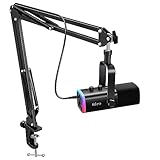
The FIFINE T669 is a USB microphone kit that bundles a serious accessory set with a budget condenser — the kind of complete setup that makes a desk look the part. It includes a USB condenser microphone with a cardioid pickup pattern, an adjustable boom arm, a pop filter and a shock mount, priced around $50. With more than 24,900 buyer reviews on Amazon it is well established. This FIFINE T669 kit review covers the type and polar pattern, sound quality, connection and value.
- FIFINE T669 at a Glance
- Microphone Type and Polar Pattern
- Sound Quality and Voice Capture
- Connection and Compatibility (USB / XLR)
- Build, Mute, Monitoring and Software
- Who Is the FIFINE T669 For?
- Pros and Cons
- Is the FIFINE T669 Worth It?
- Frequently Asked Questions
- More Microphone Reviews
- Related Articles
- Related Articles

FIFINE T669 Studio Condenser USB Microphone for Recording Podcasting | Computer Microphone Kit for Voice Overs, Adjustable Boom Arm Stand, Shock Mount for Vocal, Instruments, Gaming, Streaming


As an Amazon Associate we earn from qualifying purchases. Product prices and availability are accurate as of the date/time indicated.
🛒 Best Price Today on Amazon
Prime members get fast, free shipping on everything above, plus member-only deals. New members get a 30-day free trial — cancel anytime.
As an Amazon Associate we earn from qualifying purchases.




FIFINE T669 at a Glance
| Feature | Specification |
|---|---|
| Type | USB condenser |
| Connection | USB |
| Polar pattern | Cardioid |
| Sample rate | 16-bit / 48kHz |
| Headphone monitoring | No |
| Mute button | No |
| Boom arm / stand | Adjustable boom arm, pop filter and shock mount included |
| Price | Around $50 |
Microphone Type and Polar Pattern
Before getting into the specifics of this microphone it is worth a brief refresher on the two technical decisions that shape every microphone review: connection (USB or XLR) and capsule type (condenser or dynamic). A USB microphone plugs straight into a PC, Mac or recent console with a single cable and is recognised as an input — no audio interface, no phantom power supply, no mixer — which is why USB has become the default for streamers, podcasters and home callers. XLR is the studio standard: the microphone sends its signal down an XLR cable into an audio interface or mixer, which provides the preamp, the phantom power (for condensers) and the conversion to USB for the computer. Hybrid USB/XLR microphones, such as the FIFINE K688 and Samson Q2U covered in this guide, do both — useful if you want to start on USB now and step up to XLR later without changing microphone.
Capsule type matters just as much. A condenser capsule is sensitive and detail-rich, capturing nuance in voice and instruments well — the studio default for vocal recording in a treated or quiet room. The trade-off is that condensers also pick up more of the room: keyboards, fans, traffic and ambient noise sit nearer the front of the recording. A dynamic capsule is less sensitive and rejects background noise far better, which is why dynamics are the broadcast standard and the natural choice for streamers and podcasters in untreated rooms. Polar pattern is the third decision: cardioid picks up from the front and rejects the sides and rear (the default for solo streaming), omnidirectional picks up from all directions, bidirectional picks up front and rear for two-person interviews, and stereo uses two capsules for a left-and-right image. Keep those three choices in mind — they decide more about how a microphone sounds in your room than the brand name on the body does.
Two practical points round out the refresher. First, your room matters more than most buyers expect. A treated or simply quiet room flatters a sensitive condenser; an untreated bedroom or office with a mechanical keyboard, a desk fan and a window onto a busy street will sound noticeably better through a dynamic, regardless of price. Second, the accessories around the microphone — a stable stand or boom arm, a pop filter to handle plosives and a shock mount to keep desk knocks out of recordings — make a real difference to perceived sound. Some microphones in this guide bundle those accessories (the FIFINE T669 kit and the QuadCast 2 line are good examples), others expect you to source them separately. Either way, factor the accessory budget into the buying decision and treat the microphone as one part of a small system rather than a single magic component.
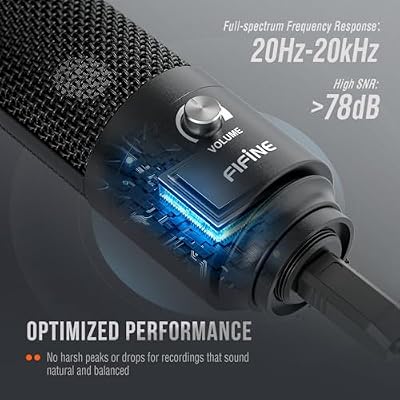
The T669 is a USB condenser — sensitive and detail-rich, well suited to voice work in a reasonably quiet room. It is cardioid-only, picking up sound from the front and rejecting the sides and rear. That is the pattern solo streamers, podcasters and creators use most of the time, and the single-pattern design keeps the price approachable while the bundled accessories add genuine value. For more cardioid USB picks, see our best USB microphones guide.
Sound Quality and Voice Capture
Sound quality is clearly a step above a laptop or headset microphone, delivering the clarity and presence of a budget USB condenser for streaming, podcasts and YouTube. The included pop filter helps with plosives without any extra spend, and the shock mount keeps desk knocks out of recordings — both make a real difference to perceived sound. As a condenser, the T669 is sensitive to room noise, so a quiet space gives the best results.
Connection and Compatibility (USB / XLR)
The T669 is USB-only, with a single cable from the microphone to a PC or Mac. There is no audio interface and no phantom power supply, which is the practical reason kits like this dominate the budget streaming market — you can buy it, plug it in and record. Buyers who later outgrow USB can apply what they have learnt to our best XLR microphones picks.
Build, Mute, Monitoring and Software
The headline of the T669 is the included boom arm, which clamps to the edge of a desk and swings the microphone into position from above — visually a clear upgrade over a tripod, and practically a clear upgrade because it frees up desk space and reduces vibration pickup. The included shock mount sits between the boom arm and the microphone, isolating it further, and the pop filter clips on for plosive control. There is no on-mic mute button and no headphone jack for monitoring; those are sensible omissions for the price.
Who Is the FIFINE T669 For?
The T669 is for the buyer who wants a complete streaming or podcasting setup in one box for around $50. If you do not already own a boom arm, pop filter or shock mount, and you would rather buy a kit than assemble accessories piece by piece, it is squarely your microphone. It is less suited to creators who already own accessories — they will pay for them again — and to those who need on-mic mute or headphone monitoring. For first-time buyers who want the full desk look on a budget it is well judged. For audio-only podcasting, see our best podcast microphones guide.
Pros and Cons
Pros: Complete kit — boom arm, pop filter and shock mount included; accessible price; clear cardioid voice capture; plug-and-play USB; very large buyer review base.
Cons: No mute button; no headphone monitoring; cardioid only; bundled accessories are entry-level rather than premium.
Is the FIFINE T669 Worth It?
Around $50 the FIFINE T669 is one of the easiest budget streaming kits to recommend. The bundled boom arm, pop filter and shock mount add up to a complete setup that would cost more if assembled piece by piece, the cardioid voice capture is clearly above a laptop or headset mic, and the large review base is strong evidence that it holds up. The missing mute and headphone monitoring are honest, sensible omissions. For first-time buyers wanting the full desk setup it is easy to recommend. Buyers focused on the microphone alone should compare with our best USB microphones roundup.
Frequently Asked Questions
Is the FIFINE T669 a complete streaming kit?
Yes. It bundles a USB condenser microphone with an adjustable boom arm, a pop filter and a shock mount — a complete desk setup for around $50.
Does the T669 include a boom arm?
Yes. The headline of the kit is the included adjustable boom arm, which clamps to the edge of a desk and swings the microphone into position from above.
Is the T669 USB or XLR?
It is USB-only. A single cable connects it to a PC or Mac — no audio interface, mixer or XLR cables required.
Does the T669 have a mute button?
No. There is no on-mic mute button or headphone jack — sensible omissions at the kit’s price. Use your operating system or streaming software to mute.
More Microphone Reviews
- Razer Seiren Mini USB Condenser Microphone Review
- FIFINE AmpliGame A6 Gaming USB Microphone Review (RGB)
- FIFINE K688 USB/XLR Dynamic Microphone Review
- Elgato Wave:3 USB Condenser Microphone Review
- Audio-Technica AT2020 XLR Condenser Microphone Review
- Shure SM58 Dynamic Vocal Microphone Review
- Shure SM7B Dynamic Broadcast Microphone Review
- RØDE PodMic Dynamic Microphone Review
Affiliate Disclosure: As an Amazon Associate, we earn from qualifying purchases. If you click a link and make a purchase, we may earn a small commission at no extra cost to you. Prices and availability are accurate as of publication and may change.
Related Articles
Looking for more on this topic? Browse the hand-picked guides below — each one applies the same scoring rubric used in this review.