The RØDE PodMic is RØDE’s purpose-built podcasting microphone — a dynamic XLR mic designed specifically for podcast and broadcast voice recording. It is a cardioid dynamic with an internal shock mount, an integrated swing mount and an internal pop filter, priced around $86. With more than 7,000 buyer reviews on Amazon it is well established. This RØDE PodMic review covers the type and polar pattern, sound quality, connection and value.
- RODE PodMic at a Glance
- Microphone Type and Polar Pattern
- Sound Quality and Voice Capture
- Connection and Compatibility (USB / XLR)
- Build, Mute, Monitoring and Software
- Who Is the RØDE PodMic For?
- Pros and Cons
- Is the RØDE PodMic Worth It?
- Frequently Asked Questions
- More Microphone Reviews
- Related Articles
- Related Articles

RØDE PodMic Cardioid Dynamic Broadcast Microphone, XLR | Internal pop filter and shock mounting, broadcast dynamic capsule, all-metal build. Requires an XLR interface or mixer





As an Amazon Associate we earn from qualifying purchases. Product prices and availability are accurate as of the date/time indicated.
🛒 Best Price Today on Amazon
Prime members get fast, free shipping on everything above, plus member-only deals. New members get a 30-day free trial — cancel anytime.
As an Amazon Associate we earn from qualifying purchases.




RODE PodMic at a Glance
| Feature | Specification |
|---|---|
| Type | Dynamic |
| Connection | XLR (requires audio interface or mixer) |
| Polar pattern | Cardioid |
| Sample rate | Determined by audio interface |
| Headphone monitoring | Through audio interface |
| Mute button | No (on interface) |
| Boom arm / stand | Integrated swing mount; standard thread |
| Price | Around $86 |
Microphone Type and Polar Pattern
Before getting into the specifics of this microphone it is worth a brief refresher on the two technical decisions that shape every microphone review: connection (USB or XLR) and capsule type (condenser or dynamic). A USB microphone plugs straight into a PC, Mac or recent console with a single cable and is recognised as an input — no audio interface, no phantom power supply, no mixer — which is why USB has become the default for streamers, podcasters and home callers. XLR is the studio standard: the microphone sends its signal down an XLR cable into an audio interface or mixer, which provides the preamp, the phantom power (for condensers) and the conversion to USB for the computer. Hybrid USB/XLR microphones, such as the FIFINE K688 and Samson Q2U covered in this guide, do both — useful if you want to start on USB now and step up to XLR later without changing microphone.
Capsule type matters just as much. A condenser capsule is sensitive and detail-rich, capturing nuance in voice and instruments well — the studio default for vocal recording in a treated or quiet room. The trade-off is that condensers also pick up more of the room: keyboards, fans, traffic and ambient noise sit nearer the front of the recording. A dynamic capsule is less sensitive and rejects background noise far better, which is why dynamics are the broadcast standard and the natural choice for streamers and podcasters in untreated rooms. Polar pattern is the third decision: cardioid picks up from the front and rejects the sides and rear (the default for solo streaming), omnidirectional picks up from all directions, bidirectional picks up front and rear for two-person interviews, and stereo uses two capsules for a left-and-right image. Keep those three choices in mind — they decide more about how a microphone sounds in your room than the brand name on the body does.
Two practical points round out the refresher. First, your room matters more than most buyers expect. A treated or simply quiet room flatters a sensitive condenser; an untreated bedroom or office with a mechanical keyboard, a desk fan and a window onto a busy street will sound noticeably better through a dynamic, regardless of price. Second, the accessories around the microphone — a stable stand or boom arm, a pop filter to handle plosives and a shock mount to keep desk knocks out of recordings — make a real difference to perceived sound. Some microphones in this guide bundle those accessories (the FIFINE T669 kit and the QuadCast 2 line are good examples), others expect you to source them separately. Either way, factor the accessory budget into the buying decision and treat the microphone as one part of a small system rather than a single magic component.
The PodMic is a dynamic microphone — less sensitive than a condenser and engineered to reject background noise. RØDE designed it specifically for podcast and broadcast voice work, where the dynamic capsule keeps untreated-room noise out of the recording and the cardioid pattern keeps the focus on the voice in front of it. The combination is exactly what most podcasters need, and the PodMic is a more affordable way into broadcast-style sound than the Shure SM7B. For more podcast-relevant options, see our best podcast microphones guide.
Sound Quality and Voice Capture
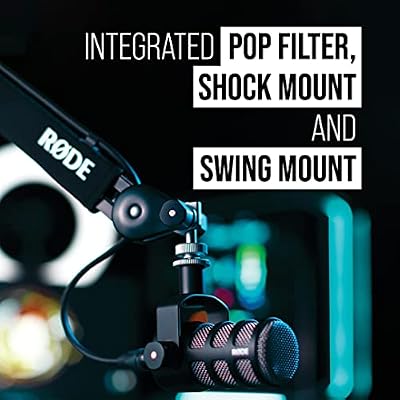
The PodMic’s sound is voiced specifically for podcast and broadcast voice. Voices come through warm, present and broadcast-flavoured — the kind of sound you expect to hear in a podcast intro. Compared with a studio condenser the detail is less hyper-defined, but the PodMic’s tuning makes voices sound polished and ready-to-publish with less work. The internal pop filter handles plosives and the internal shock mount reduces vibration transmitted through the boom arm or stand, so desk knocks and footsteps come through less.
Connection and Compatibility (USB / XLR)
The PodMic is XLR-only and uses the standard XLR workflow into an audio interface or mixer. As a dynamic microphone it does not require phantom power. Its output is more sensible than the Shure SM7B’s, so a typical mid-range interface can drive it without needing an additional preamp, which makes it more straightforward to set up. For interface-based picks more broadly, see our best XLR microphones guide.
Build, Mute, Monitoring and Software
The PodMic is purposefully built for podcast use. The body is substantial metal and the integrated swing mount fits a standard boom arm or microphone stand directly — no extra adapter required, no separate shock mount needed because the internal shock mount handles that job. The internal pop filter is part of the design. There is no on-mic mute, no on-mic gain and no built-in headphone monitoring; in an XLR setup all of those live on the audio interface.
Who Is the RØDE PodMic For?
The PodMic is for the podcaster who wants a purpose-built broadcast-flavoured podcast microphone with the convenience of integrated mount and shock mount, without paying flagship money. If you record podcasts in an untreated room, want a dynamic XLR mic with broadcast tuning and value an integrated mount you can swing directly onto a boom arm without extra hardware, it is squarely your microphone. It is less suited to studio singers who would prefer a sensitive condenser and to streamers chasing the very top-end SM7B sound.
Pros and Cons
Pros: Purpose-built for podcasting with broadcast-tuned sound; dynamic capsule rejects background noise; internal shock mount and internal pop filter; integrated swing mount fits boom arms directly; sensible output level for typical interfaces.
Cons: Requires an audio interface or mixer; no built-in monitoring, mute or gain; less detailed than a studio condenser.
Is the RØDE PodMic Worth It?
Around $86 the RØDE PodMic is one of the best-value broadcast-style XLR microphones for podcasters. The broadcast-tuned dynamic sound, the integrated swing mount and internal shock mount and the sensible output that pairs well with typical interfaces add up to a podcast-ready microphone with very little setup friction. The interface requirement and the lack of built-in features are honest trade-offs of the XLR step. For podcasters it is easy to recommend. Buyers comparing flagship options should also see our best dynamic microphones guide and the Shure SM7B.
Frequently Asked Questions
Is the RODE PodMic good for podcasting?
Yes — it is purpose-built for it. The dynamic capsule rejects untreated-room noise, the cardioid pattern keeps the focus on the voice and the tuning is voiced specifically for podcast and broadcast voice work.
Does the PodMic need phantom power?
No. As a dynamic microphone the PodMic does not require phantom power, which makes it compatible with most basic audio interfaces and mixers.
Is the PodMic USB or XLR?
It is XLR-only. The PodMic uses the standard XLR workflow into an audio interface or mixer. RØDE makes a separate USB/XLR PodMic variant for buyers who want both connections.
Does the PodMic need a separate shock mount?
No. The internal shock mount handles vibration isolation, and the integrated swing mount fits a standard boom arm or microphone stand directly — no extra hardware required.
More Microphone Reviews
- Samson Q2U USB/XLR Dynamic Microphone Pack Review
- Logitech Blue Yeti USB Microphone Review
- HyperX QuadCast 2 USB Microphone Review
- HyperX QuadCast 2 S USB Microphone Review (RGB)
- HyperX SoloCast USB Microphone Review
- TONOR TC-777 USB Microphone Review
- FIFINE K669B USB Microphone Review
- FIFINE T669 USB Microphone Kit with Boom Arm Review
Affiliate Disclosure: As an Amazon Associate, we earn from qualifying purchases. If you click a link and make a purchase, we may earn a small commission at no extra cost to you. Prices and availability are accurate as of publication and may change.
Related Articles
Looking for more on this topic? Browse the hand-picked guides below — each one applies the same scoring rubric used in this review.