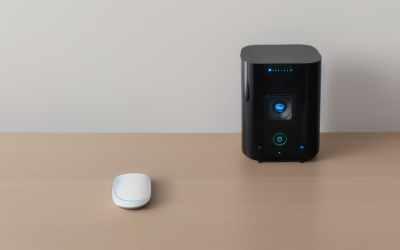
- Top Pick: Fios Tri‑Band Mesh Extender with Wi‑Fi 6 AX3000 Signal Booster, Compatible with Verizon Fios (E3200)
- Best Value: Wi-Fi Extender CE1000A, Wi-Fi 6 Certified, Tri-Band | Wi-Fi 6E Support, MoCA 2.5 Coax, 2.5 Gigabit LAN, Includes Ethernet Cable, Seamless Roaming
- Premium Choice: NETGEAR WiFi Extender EX5000, up to 1,500 sq ft, 1.2 Gbps | Signal Booster for Home, Easy Set Up, 25 devices, Works with any Router, Compact Design, WiFi 5, AC1200
Fios customers have an unusual advantage and an unusual trap. The advantage is that many Fios homes already have coax cabling in the walls, which opens the door to wired backhaul with MoCA. The trap is that a bargain plug-in repeater halves your throughput on a fiber line that could otherwise feed a fast network. Anyone searching for the best wifi extenders for Fios is really choosing between three paths: the matching branded extender, a coax-based unit, or a general-purpose repeater from the open market.
This guide is for Fios households with dead zones in a bedroom, basement, or garage who want a straightforward fix without replacing the router. Nine options are compared using only what their listings state, from Wi-Fi standard and band count to ports, claimed coverage, and device limits. A listing that pairs an extender with another brand’s mesh system was left out, because it would not work alone. All of this applies to a home network built in 2026.
Quick Picks
As an Amazon Associate we earn from qualifying purchases at no extra cost to you.




| Product | Best for | Key spec taken from the product title |
|---|---|---|
| Fios Tri-Band Mesh Extender (E3200) | Matching your Fios setup | Wi-Fi 6, AX3000, tri-band, listed as compatible with Fios |
| CE1000A Wi-Fi 6 Extender | Wiring through coax | Tri-band, MoCA 2.5, 2.5 Gigabit LAN |
| NETGEAR EX5000 | Brand-name simple fix | AC1200, 1,500 sq ft, 25 devices, works with any router |
| Wall-Mount WiFi Extender | Outlet-mounted placement | 1200Mbps dual band, 105 devices, 12880 sq ft |
| 5000 Sq Ft Dual-Band Extender | Small-home coverage | 1200Mbps, 5G, 35 devices |
| Jancane WiFi Extender | Access point mode and Alexa | 5800 sq ft, 55 devices, Ethernet port |
| 9800 Sq Ft WiFi Repeater | Large-claim repeater with Ethernet | 9800 sq ft, Ethernet port, quick setup |
| Long-Range 105-Device Extender | Outdoor-minded setups | 12880 sq ft, 1200Mbps dual band |
| 15715 Sq Ft WiFi Repeater | Multiple working modes | 5 working modes, Ethernet port |
How to Choose
Matching the extender to your Fios gear
Two listings speak directly to Fios: the tri-band mesh extender states compatibility with Verizon Fios, and the CE1000A offers MoCA 2.5 over coax. Everything else is a general Wi-Fi extender that joins your existing network like any other device. In practice, that works with most routers, and the NETGEAR title states it works with any router. Still, check the manufacturer’s page for your specific router model before ordering.
Wi-Fi standard and band count
The biggest performance difference comes from bands and standards. A tri-band design dedicates a band to talking back to the router, which preserves speed for your devices. The two Wi-Fi 6 options, the AX3000 mesh extender and the CE1000A, list tri-band. The others are dual band, meaning they share one radio between the router and your devices, which cuts throughput. If your Fios plan is fast, a dual-band repeater will waste much of it.
Coverage claims and device limits
Coverage numbers vary from 1,500 to 15,715 square feet, and the large figures come from generic listings with unnamed brands. Treat them as marketing rather than measured ranges: a single extender cannot realistically cover an entire large house. The NETGEAR listing is the most modest at 1,500 square feet and 25 devices, and it is the easiest to trust. Place the extender halfway between the router and the weak spot, where it still receives a strong signal to repeat. A unit placed inside the dead zone can only repeat a signal that is already poor.
Ports and where budget models fall short
An Ethernet port lets you plug in a console, TV, or desktop for a stable connection. Several generic repeaters list one, and the CE1000A lists a 2.5 Gigabit LAN. Budget units cut corners on firmware updates, security, and support, so favor a recognizable brand if you can. Ignore claims of being many times faster, because an extender cannot exceed what your router delivers. After setup, walk the problem area with a phone and confirm that the extender, not the distant router, is the network your device joins.
The 9 Best Options
Fios Tri-Band Mesh Extender (E3200)
A Wi-Fi 6 tri-band mesh extender rated AX3000 and described as compatible with Verizon Fios. It is the closest match for households that want an add-on designed around the provider’s ecosystem, so setup and compatibility questions start from a favorable place. The tri-band label is the detail that matters most here, since a spare band for the link back to the router keeps your devices from sharing one radio.
- Strength: tri-band design is better suited to high-speed plans.
- Strength: compatibility with Fios is stated up front.
- Trade-off: the title does not describe ports or coverage.
Skip it if you want a generic unit that works across brands.
CE1000A Wi-Fi 6 Extender
A Wi-Fi 6 certified, tri-band extender with Wi-Fi 6E support, MoCA 2.5 coax, a 2.5 Gigabit LAN port, an Ethernet cable, and seamless roaming. It is for households with coax outlets, where a wired link over the walls can replace a shaky wireless hop. The Wi-Fi 6E support mention and the included Ethernet cable mean it is largely ready to use once you find a coax outlet in the target room.
- Strength: MoCA 2.5 uses existing coax for a stronger backhaul.
- Strength: 2.5 Gigabit LAN suits fast wired devices.
- Trade-off: it only makes sense if your home has coax outlets near the weak zone.
Skip it if your home has no coax wiring in the room you want to cover.
NETGEAR EX5000
A Wi-Fi 5 AC1200 extender listed with up to 1,500 sq ft of coverage, 1.2 Gbps, and 25 devices, with a compact design. The title says it works with any router. It suits an apartment or a single weak bedroom rather than a whole house, and its compact shape keeps it from blocking neighboring outlets.
- Strength: modest, believable coverage claim from a known brand.
- Strength: easy setup is listed.
- Trade-off: Wi-Fi 5 and dual band limit speed on a fast plan.
Skip it if you need Wi-Fi 6 or a wired backhaul.
Wall-Mount WiFi Extender
A wall-mount dual-band extender at 1200Mbps listed for homes and outdoor use, with claims of 12880 square feet and 105 devices. It targets people who want an outlet-mounted unit without a bulky box on a shelf. Treat the large numbers as upper bounds from the seller; the practical benefit is a simple plug-in booster for one problem room.
- Strength: wall-mount design saves space.
- Strength: dual band 5GHz and 2.4GHz.
- Trade-off: the coverage and device claims are far above realistic for one unit.
Skip it if you prefer a recognizable brand.
5000 Sq Ft Dual-Band Extender
A 1200Mbps dual band signal booster rated for 5000 square feet and 35 devices, with a wireless repeater function and an Ethernet port. Its numbers are smaller than other generic listings, which makes it a little easier to take at face value for a modest apartment or a two-bedroom house.
- Strength: a more modest coverage claim than most generics.
- Strength: an Ethernet port is included.
- Trade-off: it is dual band, so speeds may drop on fast plans.
Skip it if your plan is a very fast tier.
Jancane WiFi Extender
An extender listed for up to 5800 square feet and 55 devices, with an Ethernet port, one-key setup, access point mode, and Alexa compatibility. The mix of access point mode and a wired port makes it a candidate for a home office, where you might run a cable from the router and use the unit to broadcast a second Wi-Fi zone.
- Strength: access point mode adds flexibility.
- Strength: one-key setup is listed.
- Trade-off: the title gives no Wi-Fi standard.
Skip it if you need confirmed Wi-Fi 6.
9800 Sq Ft WiFi Repeater
A white repeater and long-range booster with an Ethernet port and quick setup, claiming 9800 square feet. The listing is short on specifics, so it suits shoppers who just want a basic repeater with a wired port and are comfortable reading the product page for the missing details.
- Strength: Ethernet port for a wired device.
- Strength: quick setup is advertised.
- Trade-off: the title lists no brand, bands, or standard.
Skip it if you want to know the bands before buying.
Long-Range 105-Device Extender
A 1200Mbps dual-band extender with 12880 square feet and 105 device claims, aimed at home and outdoor use. If you want to push a signal toward a patio or a detached garage, a signal that survives walls and distance matters more than the number of devices listed.
- Strength: dual band 5GHz and 2.4GHz.
- Strength: simple installation is advertised.
- Trade-off: the coverage and device claims should be treated with caution.
Skip it if outdoor coverage depends on weatherproofing, which the title does not state.
15715 Sq Ft WiFi Repeater
A repeater listed with five working modes, an Ethernet port, and a 15715 square foot claim. It uses mesh and access point language in the title, along with a claim of being faster than older options, which is a claim to approach with caution. Treat it as a flexible, no-frills choice for experimenting with extender placement.
- Strength: five working modes add flexibility.
- Strength: Ethernet port is included.
- Trade-off: the speed claims in the title are not tied to any measured standard.
Skip it if you prefer plain, verifiable specs.
Which One Fits Your Situation
Your Fios plan is a fast one
Go with the Fios Tri-Band Mesh Extender, or the CE1000A if you have coax. Both are tri-band, which protects speed.
Your house has coax outlets in the dead zone
The CE1000A is the only option listing MoCA 2.5, making it the natural choice for wired backhaul.
You want a simple, recognizable brand
The NETGEAR EX5000 is an easy fit for a small area and states that it works with any router.
You need to plug in a console or TV
The Jancane lists an Ethernet port and access point mode, which suits a wired device in a back room.
Common Mistakes
- Buying a dual-band repeater for a fast plan and losing much of the speed.
- Placing the extender in the dead zone instead of halfway to the router.
- Trusting coverage numbers with no brand behind them.
- Skipping the coax option when the wiring is already there.
- Giving the extender a different network name and then wondering why devices stay on the weak signal.
Related guides
- Aio Liquid Coolers For High Performance Gaming
- How To Lower Input Delay In Competitive Shooters
- External Hard Drives For Music Production
Frequently Asked Questions
Will any extender work with a Fios router?
Most extenders connect over Wi-Fi like any other device, so they usually do. Check the manufacturer’s compatibility page for your router.
What is MoCA?
It sends network data over coaxial cable. It can give a stronger link than a wireless extender when coax outlets are available.
Is a mesh extender better than a repeater?
A tri-band mesh unit generally keeps speeds higher than a dual-band repeater, because it uses a dedicated band to reach the router.
Can an extender make my internet faster?
No. It extends coverage, but it cannot exceed the speed of your router, and a wireless repeater usually adds some delay. A wired backhaul, such as MoCA, keeps that loss smaller.