Best PC Settings for Helldivers 2 in 2026
Helldivers 2 rewards a stable frame rate, clear visibility in chaotic firefights and a sensible balance between image quality and responsiveness. The game can look dense and busy on screen, so settings that smear detail or add input delay can cost you as much as low frame rates do. This guide explains how to think about the main PC settings for Helldivers 2 in 2026, which trade-offs matter most, and how to build a configuration that suits your hardware. It describes general approaches rather than exact numbers, because the right values depend on your GPU, your monitor and your target frame rate.
The hero listing above was chosen from a search for gaming monitors suited to 1440p and 144Hz play, and the alternatives came from the same search. Settings advice here is independent of any single product. Check the card for the exact panel and current price before you buy anything. Treat the monitor as the target display, not as a claim about the game’s performance on that model.


Start With Your Target Frame Rate and Resolution
Before changing any slider, decide what you want from the game. A 60 frame-per-second target with high visual quality suits players who prefer a cinematic image. A 100 to 144 frame-per-second target suits players who want faster response and smoother camera movement during fights. Helldivers 2 is fast, so a higher and steadier frame rate usually feels better than a marginal gain in shadow detail. Set your target first, then adjust settings until you reach it consistently. The best FPS gaming roundup explains how frame targets change across shooter genres.
Resolution is the next decision. A 1440p display offers a good balance of sharpness and performance on mainstream GPUs. A 4K display requires more GPU power, and most players will rely on upscaling. Match the render resolution to what your graphics card can sustain, rather than to the monitor’s native resolution alone.
Core Settings That Affect Performance
Upscaling and Render Scale
Upscaling is usually the largest performance lever. If the game offers an upscaler such as DLSS, FSR or XeSS depending on your build and GPU, test the quality modes and choose the lowest one that still looks clean in motion. Render scale is a similar control. Reducing it lowers the internal resolution, and the image is reconstructed to the display size. Check the in-game menu for the options your version provides, since names and availability can change with updates.
Shadows, Effects and Draw Distance
Shadows and effects are expensive in crowded scenes. Lowering shadow quality often brings a large frame rate gain with little visible impact during fast play. Effects settings can affect explosion density and particle clarity, which matter for visibility in combat. Reduce these before you cut textures or resolution if you need more frames. Draw distance affects how far you can see enemies and terrain, so keep it high if you rely on spotting threats at range.
Textures and VRAM
Texture quality changes how sharp surfaces look, but it depends heavily on graphics memory. If your card has limited VRAM, high texture settings can cause stutter even when average frame rates look fine. Check the memory capacity of your GPU and choose a texture level that keeps frame times steady. Stutter is more distracting than a slight drop in texture detail, so prioritise smooth frame delivery.
Anti-Aliasing and Sharpness
Anti-aliasing smooths jagged edges, but some methods cost more than they are worth in fast action. If upscaling is active, it often provides its own edge smoothing, so a separate anti-aliasing option may be redundant. Sharpening can restore detail lost to upscaling, but too much creates halos. Adjust sharpening by looking at distant text and edges in a busy scene.
Comparison Table: Setting Priorities by Hardware Tier
The table groups settings by what they usually cost and what they usually add. Actual results depend on your GPU, CPU, display and driver, so test in your own game.
| Setting | Typical performance cost | Visible impact in play | Suggested priority |
|---|---|---|---|
| Upscaler and render scale | High | Moderate, depends on mode | Adjust first on demanding hardware |
| Shadows | High | Low during fast combat | Reduce early if frame rate dips |
| Effects and particles | Moderate | Moderate, affects battlefield clarity | Keep readable, reduce if needed |
| Textures | Depends on VRAM | Moderate for surface detail | Match to VRAM to avoid stutter |
| Draw distance | Moderate | High for spotting enemies | Keep high where possible |
Display and Sync Settings
Set the game to fullscreen or borderless fullscreen to reduce input delay, and enable adaptive sync if your monitor supports it. If you use a high refresh display, set a frame cap slightly below the refresh rate to keep frame pacing steady. Vsync on a high refresh panel can add lag, so test it before keeping it on. If you run a 144Hz panel, our guide to refresh rates for gaming explains where the frame rate benefits start to level off.
Check the HDR setting carefully. HDR can look excellent on a capable panel, but on a weak HDR display it can look washed out. Enable it only after you confirm the monitor’s brightness and dimming justify the setting.

ChzsyhC 34 Inch Ultrawide Curved Gaming Monitor - WQHD 3440x1440p, 165Hz, 120% sRGB, FreeSync, VESA Mountable (DP&HDMI Cable Incl.) - Immersive PC Monitor for Gamers & Professionals, Black


As an Amazon Associate we earn from qualifying purchases. Product prices and availability are accurate as of the date/time indicated.
Monitor and Resolution Choices
For many players, a 27-inch 1440p monitor with a 144Hz refresh rate provides the best mix of sharpness and smoothness for this kind of game. A 24-inch 1080p panel is easier to drive but looks softer at distance, while a 4K panel can show more detail if your GPU can keep up. The right choice depends on the GPU you own. Our best 1440p monitor for gaming guide compares the options in that tier, and the best 1440p 240Hz gaming monitors roundup covers the high refresh end.
Hardware Pairing: GPU and CPU
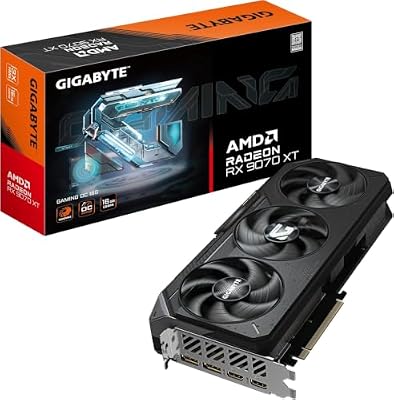
Your GPU sets the ceiling for visual quality, but your CPU can limit frame rate in busy scenes. If you have a strong GPU and see low frame rates with low GPU usage, the processor may be the bottleneck. Check the GPU and CPU load during a heavy fight, and adjust settings accordingly. Our best GPU for Helldivers 2 guide explains how graphics cards compare for this game, and the best CPU for Helldivers 2 roundup covers the processor side.
If you play on a laptop or a tighter budget build, prioritise upscaling and shadow quality first. Those two settings tend to give the most performance per unit of visual loss.
Network and Input Considerations
Helldivers 2 is an online cooperative game, so a stable connection matters as much as frame rate. Wired Ethernet usually gives more consistent results than Wi-Fi, and a clean router setup can reduce spikes. Our best Ethernet settings for gaming guide covers the essentials, and the best router settings for gaming roundup helps you tune the network side. Close background downloads and streaming while you play, since they can add lag and affect squad coordination.
Step-by-Step Tuning Method
Use a simple method. First, set your display to its native resolution and enable adaptive sync or a frame cap. Second, enable the upscaler at a balanced or quality mode. Third, lower shadows and effects until frame rate stays steady in a crowded fight. Fourth, check textures against your VRAM and reduce them if stutter appears. Finally, test draw distance and sharpening in a busy mission. Repeat the process until the game feels smooth and readable.
Frequently Asked Questions
What is the single biggest performance setting in Helldivers 2?
Usually the upscaler and render scale, followed by shadows. Those two options often give the largest gain for the least visual loss, although the exact impact depends on your hardware.
Should I turn on V-Sync?
Test it. On a high refresh monitor, V-Sync can add input delay. Adaptive sync with a frame cap is often a better choice if your monitor supports it.
Is a 1440p monitor good enough for Helldivers 2?
Yes for most players. A 1440p panel gives a sharp image without the GPU load of 4K, and it pairs well with upscaling.
Why does the game stutter even when frame rate looks fine?
Often it is texture memory. If your GPU runs out of VRAM, frame times spike. Lower texture quality and check whether the stutter stops.
Final Recommendation
For most PC players in 2026, the best Helldivers 2 setup starts with a steady target frame rate, a balanced upscaler, reduced shadows and effects, and textures matched to your VRAM. Keep draw distance high for spotting threats, and use adaptive sync or a frame cap rather than leaving V-Sync on. Compare the hero listing and alternatives on their cards if you plan a monitor upgrade, confirm the current price, and then tune the settings in your own game to find the balance that suits your hardware.