- Top Pick: Acer Nitro V 16S AI Gaming Laptop | AMD Ryzen 7 260 Processor | NVIDIA GeForce RTX 5060 Laptop GPU (572 AI Tops) | 16" WUXGA IPS 180Hz Display | 32GB DDR5 | 1TB Gen 4 SSD | Wi-Fi 6 | ANV16S-41-R2AJ
- Best Value: KAIGERR Gaming Laptop, Laptop with AMD Ryzen 7430U(Up to 4.3GHz), 16GB DDR4 512GB SSD Laptop Computer, 1920P FHD Display, WiFi 6, USB3.2, Type_C, Webcam Cover Slide
- Premium Choice: 2026 AMD Gaming Laptop with AMD Ryzen 7 5700U Processor(8C/16T, Up to 4.3GHz), 16GB RAM 512GB NVMe SSD Laptop, Radeon™ Graphics, 15.6" Display Laptop Computer, Backlit KB, WiFi 6, HDMI, Type-C
A laptop meant for both drawing and gaming has to satisfy two different buyers at once. The gamer wants a strong graphics chip and a fast panel, while the digital artist wants a screen that is sharp, comfortable to look at for hours, and paired with enough memory to keep large canvases open. When one machine handles both jobs, the display, the RAM, and the graphics card carry most of the decision.
This 2026 guide compares eight laptops using only what their titles state: processor, graphics, screen size and resolution, refresh rate, memory, storage, and ports. One honest limit up front: none of the titles mention a touchscreen, pen input, or color accuracy, so the drawing side of this list assumes a mouse, a graphics tablet connected by USB, or a pen display. Check those requirements against your own software before you commit to any of these machines.
Quick Picks
As an Amazon Associate we earn from qualifying purchases at no extra cost to you.


| Product | Best for | Key spec from the title |
|---|---|---|
| Acer Nitro V 16S | Gaming plus large canvases | RTX 5060 Laptop GPU, 16″ WUXGA 180Hz, 32GB DDR5 |
| KAIGERR Ryzen 7430U Laptop | Entry-level creative work | 16GB DDR4, 512GB SSD, FHD display |
| Ryzen 7 5700U 15.6″ Laptop | Light games and sketching | 8C/16T, Radeon Graphics, backlit keyboard |
| Light Gaming Laptop, Ryzen 7 5700U | Number-heavy desk use | Numeric keypad, BT5.2, HDMI |
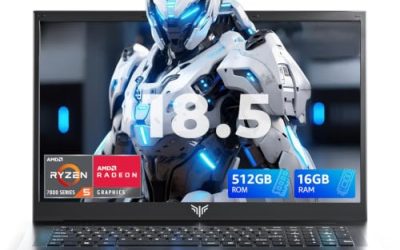
| KAIGERR 18.5-inch | Biggest screen on the list | 18.5 inch display, 16GB RAM, 512GB SSD |
| Intel Core i7 15.6″ Laptop | Students who game casually | Windows 11 Pro, 2 Yr warranty |
| Acer Predator Helios Neo 14 | Compact, sharp-screen creators | RTX 5070, 14.5″ WQXGA 165Hz G-SYNC matte |
| GIGABYTE Gaming A16 | Balanced 16:10 gaming | RTX 5050, 16″ 1920×1200 165Hz |
How to Choose
The graphics chip decides the gaming half
Titles that name a GeForce RTX laptop GPU, such as the 5050, 5060, or 5070, are in a different league from those that list only Radeon Graphics or no graphics chip at all. The latter can handle light games and drawing programs but not demanding recent titles at high settings. If frame rates matter, restrict your shortlist to machines with a named RTX card.
The screen decides the drawing half
A resolution of 1920×1200 (16:10) gives more vertical canvas than standard 1920×1080, and WQXGA on a 14.5-inch panel packs in more detail per inch. Refresh rates of 165Hz or 180Hz help games, and a matte coating cuts reflections when you sketch near a window. Touch and pen support are not claimed in these titles, so plan on external input devices and check that the ports match.
Memory and storage for large files
Sixteen gigabytes is the practical minimum for running a drawing program and a game on the same machine, while 32GB gives room for layered files, a browser full of reference images, and chat apps in the background. Storage matters as well: 512GB fills quickly with game installs and project archives, so 1TB models start with a clear advantage. DDR5 listings carry faster memory than DDR4.
Ports and where budgets cut corners
Look for HDMI and USB-C or Type-C so you can connect a monitor or a drawing tablet without a hub. Entry-level machines often pair a mid-range processor with integrated graphics, modest storage, and a vague display description. Ignore marketing phrases such as light gaming and compare the actual processor and graphics lines, then the resolution, instead.
The 8 Best Options
Acer Nitro V 16S
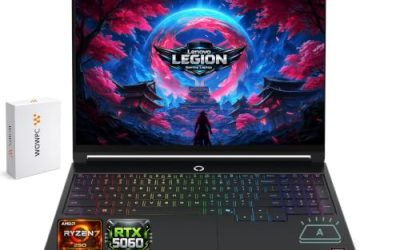
The Nitro V 16S lists an AMD Ryzen 7 260 processor, an RTX 5060 Laptop GPU, a 16-inch WUXGA IPS display at 180Hz, 32GB DDR5 memory, a 1TB Gen 4 SSD, and Wi-Fi 6. That combination covers both halves of this keyword better than most entries here, with room for big canvases and modern games without immediate upgrades. The IPS label on the panel also suggests wide viewing angles, which helps when you tilt the screen while sketching with a tablet on your lap.
- Strength: 32GB DDR5 and a 1TB SSD leave space for layered projects.
- Strength: RTX 5060 Laptop GPU paired with a 180Hz IPS panel.
- Trade-off: no touchscreen or pen support is listed in the title.
Skip it if you want a compact, travel-friendly body or if your drawing workflow needs a built-in pen screen.
KAIGERR Ryzen 7430U Laptop
This KAIGERR model lists an AMD Ryzen 7430U up to 4.3GHz, 16GB DDR4, a 512GB SSD, an FHD display, Wi-Fi 6, USB 3.2, Type-C, and a webcam cover slide. The graphics chip is not named, so expect modest gaming performance and treat it as a sketching-first machine. Students working on illustration coursework and light games between classes are the audience, and the webcam cover suits frequent video calls with classmates or clients.
- Strength: Type-C and USB 3.2 ports for a tablet or monitor.
- Strength: webcam cover slide for privacy during video calls.
- Trade-off: no named discrete graphics card.
Skip it if you play recent demanding games and want high frame rates.
Ryzen 7 5700U 15.6-Inch Laptop
This unbranded 15.6-inch laptop lists a Ryzen 7 5700U with 8 cores and 16 threads, 16GB RAM, a 512GB NVMe SSD, Radeon Graphics, a backlit keyboard, Wi-Fi 6, HDMI, and Type-C. It reads as a general-purpose machine that handles illustration programs and lighter games. The eight-core processor is the main selling point, because rendering exports and switching between several open programs benefit from extra threads more than from a flashy label.
- Strength: 8 cores and 16 threads for multitasking while drawing.
- Strength: HDMI and Type-C for external displays and tablets.
- Trade-off: Radeon Graphics, not a named RTX card.
Skip it if graphics-heavy gaming is your priority or you want a recognizable brand.
Light Gaming Laptop, Ryzen 7 5700U
The second 5700U laptop adds a numeric keypad, Bluetooth 5.2, HDMI, Type-C, and USB 3.2 to the same 16GB RAM and 512GB SSD. The numeric keypad helps with number-heavy tasks and with programs where keypad shortcuts select brush sizes or layers. The title also lists the Light Gaming label, which is a marketing phrase, so judge it by the processor and memory it names rather than the name.
- Strength: numeric keypad and Bluetooth 5.2 for accessories.
- Strength: the same 8-core processor as the other 5700U model.
- Trade-off: the title lists no named graphics card.
Skip it if you want a stronger GPU for current games, or a compact keyboard layout.
KAIGERR 18.5-Inch Light Gaming Laptop
This is the largest screen on the list, at 18.5 inches, paired with a Ryzen 7430U, 16GB RAM, and a 512GB SSD. For drawing, the extra screen area is the appeal, since toolbars, reference images, and the canvas can sit side by side without constant panel switching. It is better suited to a desk than a backpack, so think of it as a portable desktop replacement for an art corner that also runs casual games.
- Strength: 18.5-inch display gives a very large canvas.
- Strength: 16GB RAM and 512GB SSD are stated.
- Trade-off: no resolution, graphics card, or port details are listed.
Skip it if you need a laptop that is easy to carry between classes.
Intel Core i7 15.6-Inch Windows 11 Pro Laptop
This laptop lists an Intel Core i7 processor, 16GB RAM, a 512GB SSD, a 15.6-inch FHD display, a backlit keyboard, Windows 11 Pro, and a 2-year warranty. It targets students who also play casually, and the stated warranty is a rarity among the generic listings here. Windows 11 Pro brings extra management features that a household drawing machine rarely needs, but it is a plus for a laptop shared with schoolwork.
- Strength: 2-year warranty is stated in the title.
- Strength: Windows 11 Pro and a backlit keyboard.
- Trade-off: no graphics card is named.
Skip it if gaming performance is the deciding factor, or if you want a named brand.
Acer Predator Helios Neo 14
The Helios Neo 14 lists an Intel Core Ultra 9 285H, an RTX 5070, a 14.5-inch WQXGA 165Hz G-SYNC matte display, 32GB RAM, and a 1TB SSD. It combines the sharpest screen and the strongest GPU in this lineup, in a more compact size than the 16-inch models. The matte finish is a quiet advantage for illustrators who work near windows, and G-SYNC helps the display stay smooth when a game fluctuates in frame rate.
- Strength: WQXGA matte display with G-SYNC at 165Hz.
- Strength: RTX 5070 with 32GB RAM and a 1TB SSD.
- Trade-off: the smaller 14.5-inch screen offers less canvas space.
Skip it if you want a large display or a lower-tier machine.
GIGABYTE Gaming A16
The Gaming A16 lists an Intel i7-13620H, a GeForce RTX 5050, a 16-inch 165Hz 1920×1200 WUXGA display, a 512GB SSD, 16GB DDR5, and Windows 11 Home. The 16:10 screen suits drawing, and the RTX 5050 gives the gaming side a named GPU. Since it is the entry point to the RTX family in this list, it fits someone who wants a real graphics card and a taller canvas without stepping up to the larger-memory models.
- Strength: 16:10 screen with a 165Hz refresh rate.
- Strength: RTX 5050 with DDR5 memory.
- Trade-off: only 512GB of storage.
Skip it if you store large project libraries and game installs locally.
Which One Fits Your Situation
You want the strongest all-rounder
The Acer Nitro V 16S combines 32GB DDR5, a 1TB SSD, and an RTX 5060 on a 180Hz screen. It leaves the most headroom for both hobbies.
You prioritize a sharp, compact screen
The Acer Predator Helios Neo 14 offers WQXGA and an RTX 5070 in a 14.5-inch body, a good pick for artists who travel with the machine.
You sketch more than you game
The Ryzen 7 5700U laptops or the Intel Core i7 model give enough memory and storage for illustration software and casual games without paying for a discrete GPU.
You want maximum screen area
The KAIGERR 18.5-inch is the only listing at that size, though its title provides few other specifics, so confirm resolution and ports with the seller.
Common Mistakes
- Assuming a gaming laptop comes with a touchscreen or pen support.
- Choosing integrated graphics for demanding games.
- Buying 8GB or 16GB when large layered files are the norm.
- Ignoring the display resolution because the refresh rate looks impressive.
- Skipping external port checks for tablets and monitors.
Related guides
- Aio Liquid Coolers For High Performance Gaming
- How To Lower Input Delay In Competitive Shooters
- External Hard Drives For Music Production
Frequently Asked Questions
Can a gaming laptop be used for digital art?
Yes, with an external tablet or pen display, since these titles do not list built-in pen support. Check that your drawing program runs well on the chosen processor and graphics, and confirm the tablet driver supports your operating system before you order.
How much RAM is enough?
Sixteen gigabytes is a practical minimum for drawing and gaming together. Choose 32GB if you work with layered files or keep many applications open.
Is a higher refresh rate useful for drawing?
It makes cursor motion look smoother, but resolution, aspect ratio, and screen coating matter more for illustration. Treat a 165Hz or 180Hz figure as a gaming bonus, and judge the canvas by how many pixels it offers and how glare is handled.
Is a discrete graphics card necessary?
For recent games, yes. For sketching alone, integrated graphics can be enough.