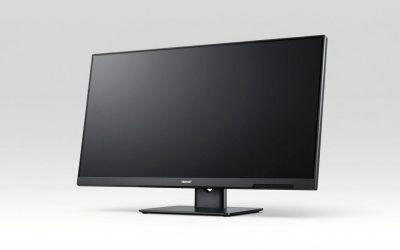
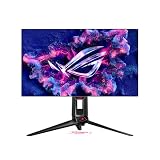
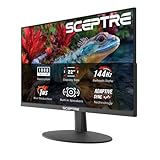
- Top Pick: Sceptre Curved 24-inch Gaming Monitor 1080p R1500 98% sRGB HDMI x2 VGA Build-in Speakers, VESA Wall Mount Machine Black (C248W-1920RN Series)
- Best Value: Sceptre New 22-Inch Gaming Monitor, FHD 1080p, Up to 144Hz, HDMI, DisplayPort, Built-in Speakers, Machine Black (E225W-FW144 Series, 2026)
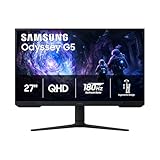
- Premium Choice: Samsung 27" Odyssey G5 (G51F) Series QHD (1440P) Gaming Monitor
Affiliate disclosure: As an Amazon Associate we earn from qualifying purchases. This post contains affiliate links — if you buy through them we may earn a small commission at no extra cost to you. This never affects our recommendations.
Xbox Series X outputs 4K at up to 120Hz with VRR support — but most monitors either lack HDMI 2.1 bandwidth or top out at 60Hz at 4K. Getting the full experience at a desk requires a monitor purpose-built with console gaming in mind. These aren’t just any gaming monitors; they’re vetted specifically for Xbox Series X compatibility, HDMI 2.1 support, and low input lag.
Whether you want native 4K resolution or prefer 1440p for higher frame rates, here are the five best monitors for Xbox Series X in 2026.
In a hurry? See the top-rated Monitors for Xbox Series X deals available right now:
🛒 Check Monitors For Xbox Series X Prices on Amazon →🛒 Best Price Today on Amazon
Prime members get fast, free shipping on everything above, plus member-only deals. New members get a 30-day free trial — cancel anytime.
Start 30-Day Prime Free Trial →See Today’s Amazon DealsTop Picks at a Glance
| Monitor | Resolution | Max Refresh | Panel | Best For |
|---|---|---|---|---|
| LG 27GP850-B | 1440p | 180Hz | Nano IPS | Fast 1440p gaming |
| ASUS TUF VG28UQL1A | 4K | 144Hz | IPS | 4K 120Hz Xbox |
| Samsung Odyssey G7 32″ | 1440p | 240Hz | VA | Curved 1440p |
| Gigabyte M28U | 4K | 144Hz | IPS | 4K value pick |
| Dell S2722DGM | 1440p | 165Hz | VA | Budget curved |
As an Amazon Associate we earn from qualifying purchases at no extra cost to you.





LG 27GP850-B — Best 1440p Monitor for Xbox Series X
- Panel: 27-inch Nano IPS with wide color gamut — colors are accurate and vibrant across the panel without the uniformity issues of VA at this size
- Refresh Rate: 180Hz at 1440p (overclocked); Xbox Series X outputs 1440p 120Hz natively — this panel handles it with bandwidth to spare
- VRR: FreeSync Premium and G-Sync Compatible certified; HDMI 2.0 port connects to Xbox at 1440p 120Hz without requiring HDMI 2.1
- Response Time: 1ms GtG — motion clarity is crisp even in fast-paced Xbox titles like Forza Motorsport and Halo Infinite at 120fps
- Consideration: No HDMI 2.1 port — cannot do 4K 120Hz from Xbox Series X; USB-C and DisplayPort ports require a PC or adapter for full bandwidth
ASUS TUF Gaming VG28UQL1A — Best 4K Monitor for Xbox Series X
- HDMI 2.1 Native: One of few monitors with a true HDMI 2.1 port — connects directly to Xbox Series X for full 4K 120Hz with no adapters or compromises
- 4K 144Hz: IPS panel at 28 inches delivers a comfortable pixel density for desk use; 144Hz ensures Xbox Series X games run at their maximum output
- VRR: FreeSync Premium Pro support engages automatically via Xbox when VRR is enabled in Xbox settings — eliminates tearing in variable-frame-rate titles
- GamePlus Features: ASUS crosshair, frame rate counter, and GameVisual presets accessible without entering full OSD — fast adjustments mid-session
- Consideration: IPS glow visible in dark corners at close viewing distances — a characteristic of IPS panels rather than a defect, but worth knowing
Samsung Odyssey G7 32-Inch — Best Curved Monitor for Xbox
- Curved 1000R: Tightest commonly used curve radius wraps the image around your field of view — immersive for open-world Xbox titles and racing games
- 240Hz at 1440p: VA panel pushes 240Hz — beyond current Xbox Series X output limits, but ensures no overhead bottleneck and PC compatibility
- HDR600: VESA DisplayHDR 600 certification with good local dimming for a VA monitor — HDR games on Xbox show meaningful contrast improvement
- HDMI 2.0 Connectivity: Supports Xbox at 1440p 120Hz via HDMI 2.0; HDMI 2.1 not included — plan for 1440p rather than 4K from Xbox
- Consideration: VA panels have slower pixel response than IPS in high-motion scenes; dark smearing can be visible in very fast camera panning
Gigabyte M28U — Best Value 4K 144Hz Monitor for Xbox
- HDMI 2.1 Port: One HDMI 2.1 port delivers 4K 144Hz from compatible sources; Xbox Series X connects and runs at 4K 120Hz with correct settings
- IPS Panel: 28-inch 4K IPS with accurate colors out of the box; factory calibration report included — minimal setup needed for accurate gaming visuals
- USB-C KVM: Built-in KVM switch lets you share keyboard and mouse between a laptop and Xbox via a single cable — useful hybrid work/gaming desk setup
- OSD Sidekick: Gigabyte’s software lets you adjust monitor settings from PC without touching physical buttons — convenient for tweaking HDR and color settings
- Consideration: Slightly lower peak brightness than premium monitors; HDR performance is functional rather than exceptional compared to OLED panels
Dell S2722DGM — Best Budget Xbox Monitor
- Budget Pricing: Consistently one of the most affordable 1440p 165Hz curved monitors on Amazon — great entry point for desk Xbox gaming
- VA Panel: 27-inch curved VA with high native contrast ratio — blacks are noticeably deeper than IPS at the same price point for atmospheric Xbox games
- 1440p 120Hz: HDMI 2.0 port supports 1440p 120Hz from Xbox Series X — full performance tier without paying for 4K hardware
- FreeSync Premium: VRR compatible via FreeSync; Xbox Series X enables it automatically in the Xbox display settings menu
- Consideration: 165Hz cap is below gaming-specific monitors; response time slightly slower than IPS panels — visible in extremely fast 120fps console gameplay
Buying Guide
Do You Need HDMI 2.1 for Xbox Series X?
Only if you want 4K at 120Hz. Xbox Series X outputs 4K 60Hz over standard HDMI 2.0, and 1440p 120Hz over HDMI 2.0 as well. HDMI 2.1 is only required for 4K 120Hz — the combination that demands the full 48Gbps bandwidth. The ASUS VG28UQL1A and Gigabyte M28U on this list both provide native HDMI 2.1. If you plan to game at 1440p 120Hz, any monitor with HDMI 2.0 is sufficient for Xbox Series X.
4K vs. 1440p on a Monitor: Which Is Better for Xbox?
At 27 inches, 1440p and 4K are both sharp — the pixel density difference is visible but not dramatic. The advantage of 1440p at a monitor is higher achievable frame rates: Xbox Series X hits 120fps more consistently at 1440p than 4K in demanding titles. 4K at 27–28 inches delivers a crisper image in slower-paced, visually rich games. Competitive multiplayer players tend to prefer 1440p for maximum frame rates; single-player exploration gamers often prefer 4K.
VRR and Xbox Series X: What to Enable
Xbox Series X supports VRR via HDMI Forum VRR. In Xbox Settings > General > TV & Display > Video Modes, enable Variable Refresh Rate and 120Hz. Your monitor must support FreeSync (which maps to HDMI Forum VRR on HDMI connections). All five monitors on this list support VRR in some form. When enabled correctly, frame pacing becomes smooth even when a game drops below its target frame rate.
Monitor Size for Desk Xbox Gaming
At desk distance (24–30 inches from screen), 27–32 inches is the ergonomic sweet spot. Larger than 32 inches at desk distance requires significant head movement to see the full screen. The curved monitors on this list (Samsung G7 and Dell S2722DGM) help at 27–32 inches by matching the panel curvature to natural eye arc. If you’re gaming from a couch rather than a desk, a TV rather than a monitor is the better call.
FAQ
Does Xbox Series X support 1440p natively?
Yes — Xbox Series X added native 1440p output support. In display settings, select 1440p and enable 120Hz for monitors with HDMI 2.0 connectivity. This is the ideal setup for monitors like the LG 27GP850-B and Samsung Odyssey G7 that top out at HDMI 2.0 bandwidth but excel at 1440p high refresh rates.
Can I connect Xbox Series X to a monitor without HDMI?
Xbox Series X only outputs via HDMI — there is no DisplayPort, USB-C, or VGA output on the console. If your monitor only has DisplayPort, you need an active HDMI-to-DisplayPort adapter. Note that passive adapters do not work for HDMI 2.1 to DisplayPort; use an active adapter from a reputable brand if required, though signal quality and latency may vary.
What is the best screen size for an Xbox monitor?
27–32 inches at desk gaming distance. 27 inches at 1440p and 28 inches at 4K are both comfortable. 32 inches at 1440p is the maximum for clear pixels at close range without the image feeling soft. Above 32 inches at a desk, most gamers find they prefer to step back — at which point a TV becomes a more practical choice.

Does a gaming monitor reduce input lag compared to a TV?
Dedicated gaming monitors typically operate in a “game mode” equivalent at all times, whereas TVs require manual Game Mode activation to reduce their processing pipeline. In practice, the best gaming TVs match or beat most monitors on input lag in Game Mode. The difference is minimal — under 5ms separates the best monitors from the best TVs. For Xbox desk gaming, a monitor is convenient; for Xbox living room gaming, a TV wins on size.
Will the Xbox Series X work at 144Hz on these monitors?
Xbox Series X outputs a maximum of 120Hz — not 144Hz. Monitors rated at 144Hz or higher will run at 120Hz when connected to Xbox Series X, which is within spec. The excess headroom (144Hz vs. 120Hz) is wasted on console but becomes useful if you also connect a PC to the same monitor for gaming at its full refresh rate.
Final Verdict
If 4K 120Hz from Xbox Series X at a desk is the goal, the ASUS TUF Gaming VG28UQL1A is the most direct solution — native HDMI 2.1, 4K 144Hz IPS panel, and full VRR support deliver the complete Xbox Series X experience. For gamers who prefer 1440p 120Hz and want a faster, sharper panel, the LG 27GP850-B is the best Nano IPS option available. The Samsung Odyssey G7 adds curvature and 240Hz for future-proofing at 1440p. Value hunters should look at the Gigabyte M28U for 4K HDMI 2.1 at a reduced price point, or the Dell S2722DGM for the most affordable entry into curved 1440p 120Hz Xbox gaming.
Related Articles
Looking for more on this topic? Browse the hand-picked guides below — each one applies the same scoring rubric used in this review.
Frequently Asked Questions
Do I need HDMI 2.1 for the Xbox Series X?
You need HDMI 2.1 to run 4K at 120Hz, since that combination requires more bandwidth than HDMI 2.0 provides. For 1440p at 120Hz, HDMI 2.0 is sufficient. Check that the monitor advertises 48Gbps or at least 40Gbps bandwidth rather than just listing HDMI 2.1 features, as some panels use reduced-bandwidth ports.
Does the Xbox Series X support 1440p monitors?
Yes. The Series X and Series S both output 1440p natively, including at 120Hz, which makes 1440p monitors an excellent value pairing. The Series X will also supersample 4K content down where supported. Set the resolution manually in Settings, Display and TV Options after connecting, since the console occasionally defaults to 1080p.
Should I enable VRR or FreeSync?
Yes, if your monitor supports it. Variable refresh rate matches the display to the console output frame by frame, eliminating tearing and smoothing dips below 60 or 120fps. Xbox supports HDMI Forum VRR and AMD FreeSync over HDMI. Confirm the VRR range covers low frame rates, ideally with low framerate compensation for anything under 48fps.
Is HDR worth it on a gaming monitor?
Only above a certain quality bar. DisplayHDR 400 panels lack the brightness and local dimming to show real HDR benefit and often look worse than good SDR. Aim for at least 600 nits peak with local dimming zones, or an OLED. Otherwise leave HDR disabled on the console and enjoy accurate SDR instead.
How low should input lag and response time be?
Target under 10 milliseconds of display input lag and a grey-to-grey response of about 5 milliseconds or less on an IPS panel. Enable the monitor game mode, which bypasses image processing, and turn on Auto Low Latency Mode support so the display switches automatically when the Xbox starts a game.